

Milwaukee Leads State In July Warming As Heat Dome Bakes Wisconsin
New report shows Milwaukee’s July temperatures up 2.9 degrees since 1970 amid rising health risks.

Brittany Caple, right, and her 3-year-old son, Abraham, cool off in the pool Monday, June 20, 2022, at Palmer Park in Janesville, Wis. Angela Major/WPR
As heat blazes across Wisconsin, a new analysis finds that the state’s hottest month has been growing even hotter due to climate change.
Since 1970, July has warmed by an average of 2.6 degrees Fahrenheit in 94 percent of 243 cities analyzed nationwide, according to the nonprofit group Climate Central. Zack Labe, a climate scientist with the group, said climate change also pushed the mercury higher in Wisconsin cities.
“During the month of July, we’re seeing warming across Wisconsin on the order of about 1 to 3 degrees warmer today than in 1970, but we’re seeing much larger warming during the nighttime,” Labe said.
Milwaukee has seen the most July warming on average, while Wausau warmed the least among Wisconsin cities analyzed by Climate Central.
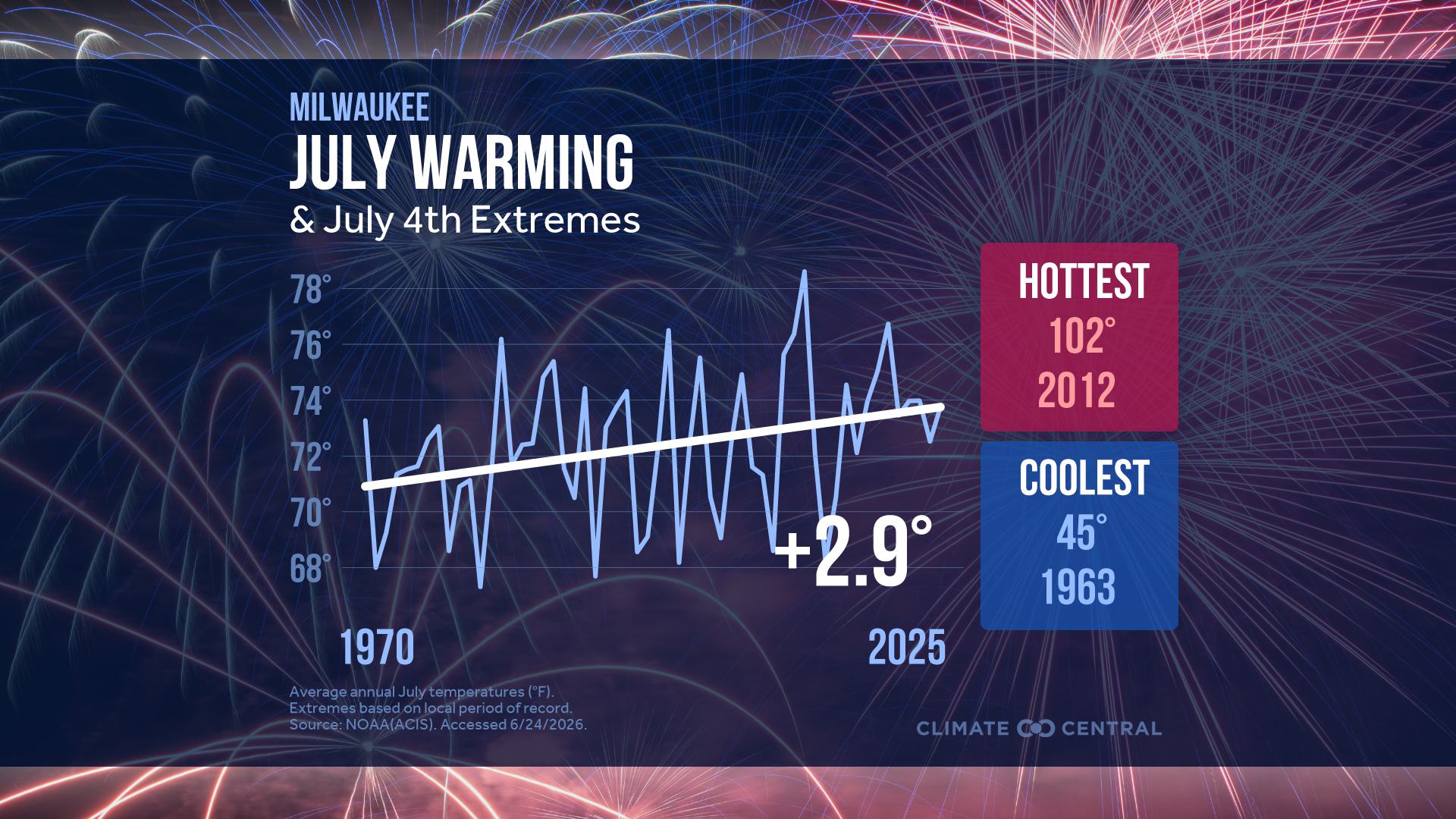
Milwaukee has warmed 2.9 degrees Fahrenheit since 1970. Image courtesy of Climate Central
The findings come as much of Wisconsin has faced extreme heat for days due to a heat dome where a large area of high pressure traps hot air over a region. Climate Central projected 70 percent of the country or about 239 million people will face peak heat Thursday with highs above 90 degrees.
The Milwaukee/Sullivan office of the National Weather Service extended an extreme heat warning through Thursday for parts of east central, south central and southeastern Wisconsin. Southern Wisconsin in particular is likely to see heat indexes over 100 degrees through Thursday with overnight lows higher than 70 degrees.
Wisconsin climate scientists have made similar findings that show counties have seen average summer temperatures warm 1 to 3 degrees since 1950. Nights hotter than 70 degrees have also tripled during that time, according to the Wisconsin State Climatology Office. The number of warm nights has grown from an average of three to eight, said Amanda Latham, a state climate outreach specialist.
“Those really warm nights have become a lot more common in Wisconsin as our climate has gotten warmer and our atmosphere has gotten more humid,” Latham said.
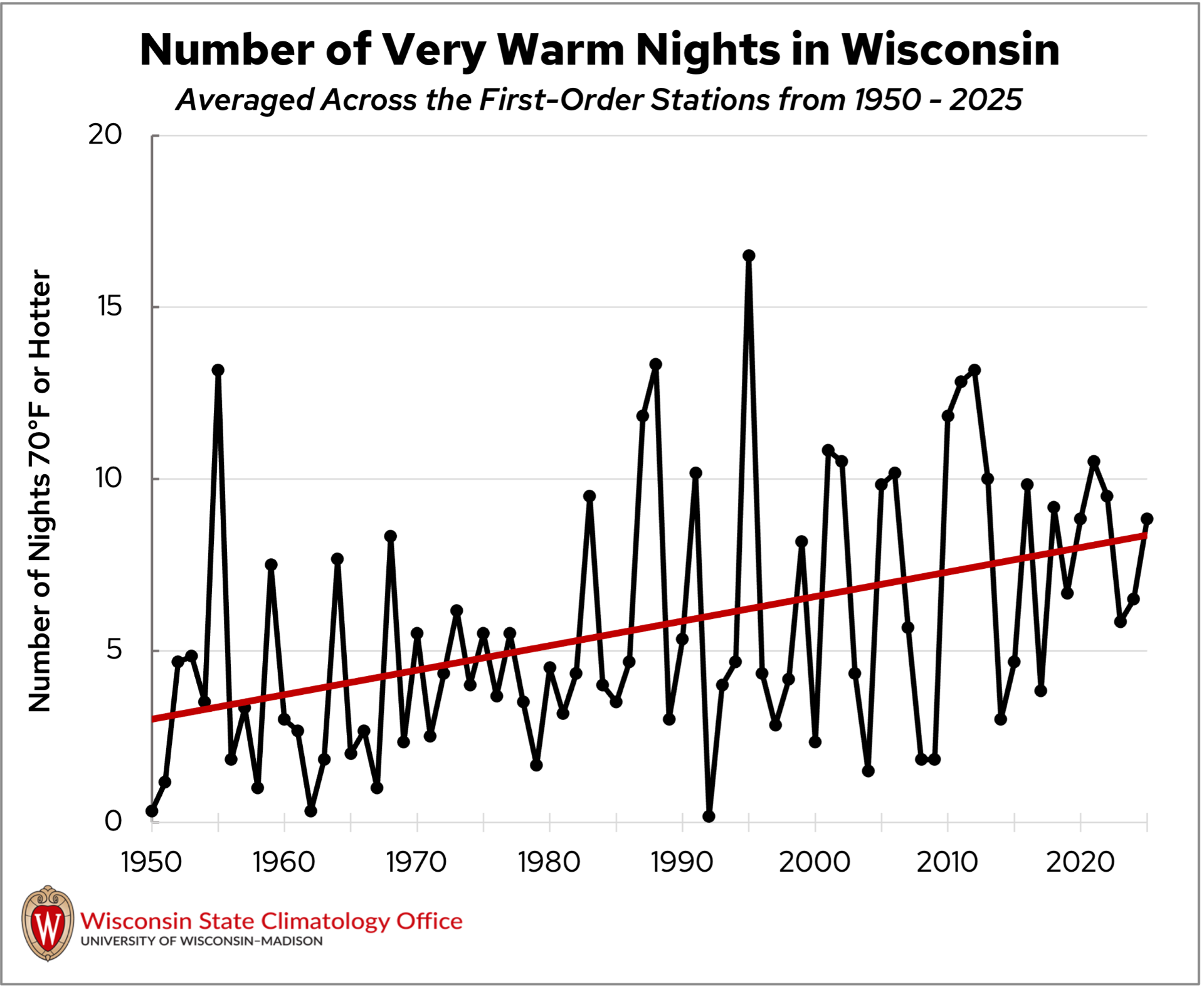
The number of nights hotter than 70 degrees Fahrenheit has tripled since 1950. Image courtesy of the Wisconsin State Climatology Office
On Monday, La Crosse tied a record for its warmest overnight low of 81 degrees, which was last reached in 2012. Latham said multiple warm nights in a row can take a toll on the body, limiting people’s ability to cool off and recover from daytime heat.
“Especially if someone doesn’t have air conditioning at home, or they’re an outdoor worker and they’re really exposed to that heat a lot, that really increases the risk of heat exhaustion or heat stroke,” Latham said.
Extreme heat is the nation’s deadliest weather hazard. Since Monday, hospitals in Milwaukee County have seen a spike in emergency room visits for heat-related illnesses with 52 visits as of Thursday morning. The state’s summer health hazards dashboard shows a similar spike for Wisconsin as a whole with 183 visits for heat-related illnesses since Sunday, including 110 visits on Tuesday.
The Milwaukee Health Department has a map of public places with air conditioning on its website. Milwaukee County Parks also lists dozens of indoor and outdoor pools, splash pads and beaches where people can cool off. In Madison, public health officials have advised that senior and community centers, libraries and malls are good places to stay cool.
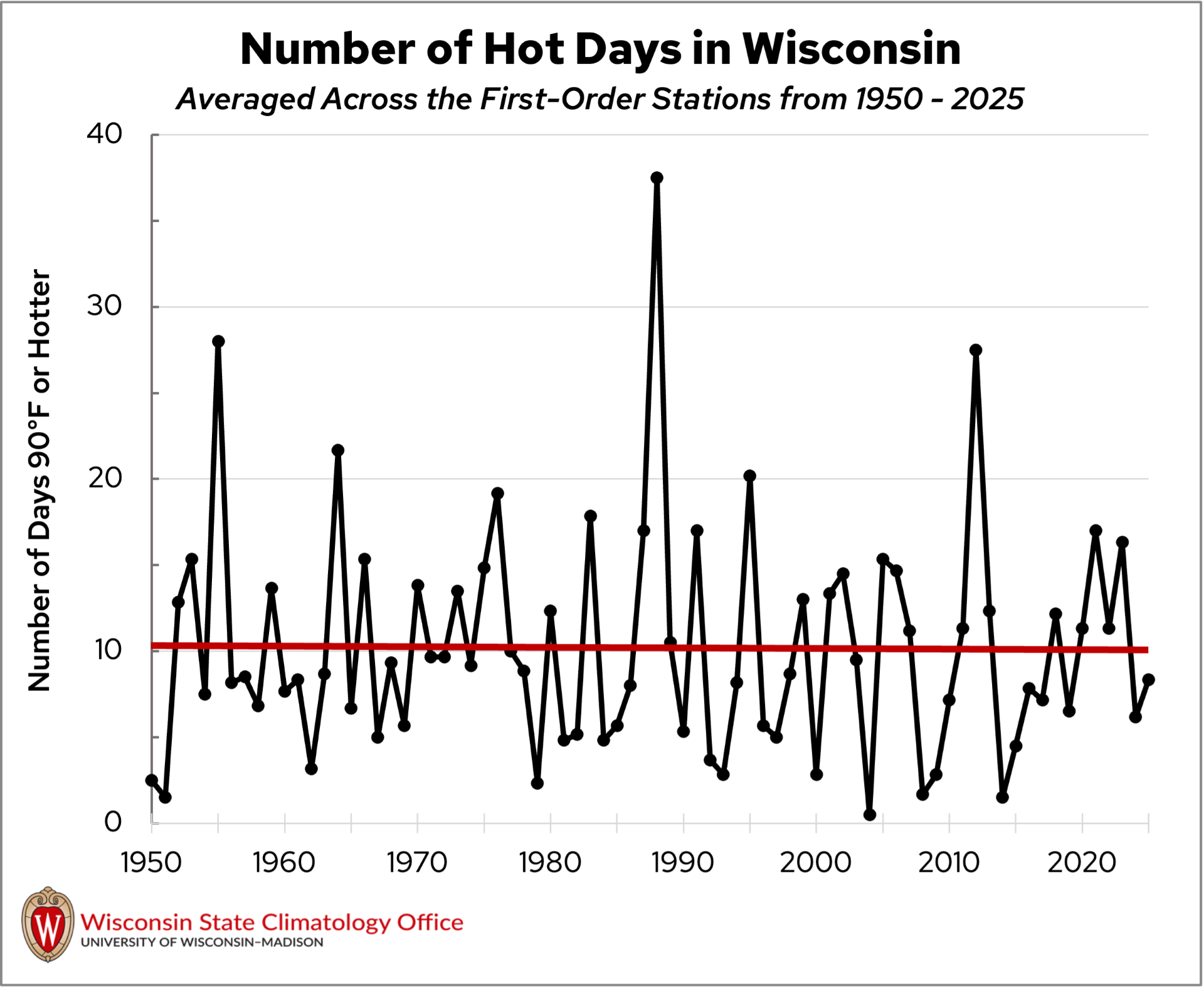
Most of the state has seen no change in the number of days with extreme heat, or hotter than 90 degrees Fahrenheit, since 1950. Image courtesy of the Wisconsin State Climatology Office
As nights grow hotter, most of Wisconsin hasn’t seen a change in the number of 90-degree days since 1950.
Labe said the Midwest is often nicknamed the “warming hole” due to lacking a trend of higher daytime temperatures during the summer.
“It’s an active area of research, but some people link it to increases in cloud cover and more precipitation that we’ve been seeing during the summertime,” Labe said, noting that helps dampen temperatures on hot days.
But that’s likely to change by mid-century. Wisconsin is slated to see roughly triple the number of extremely hot days, increasing from 9 to 26 days.
In the near future, Wisconsin can expect some relief with lower heat and humidity by the end of the weekend. However, much of the state is expected to remain warmer than normal next week.
New analysis says Wisconsin’s hottest month is growing hotter for some cities was originally published by Wisconsin Public Radio.
If you think stories like this are important, become a member of Urban Milwaukee and help support real, independent journalism. Plus you get some cool added benefits.