AI-Powered Cameras Now Watch for Wildfires in Wisconsin
Xcel Energy has 8 cameras each monitoring 70 miles of land across northeast Wisconsin.
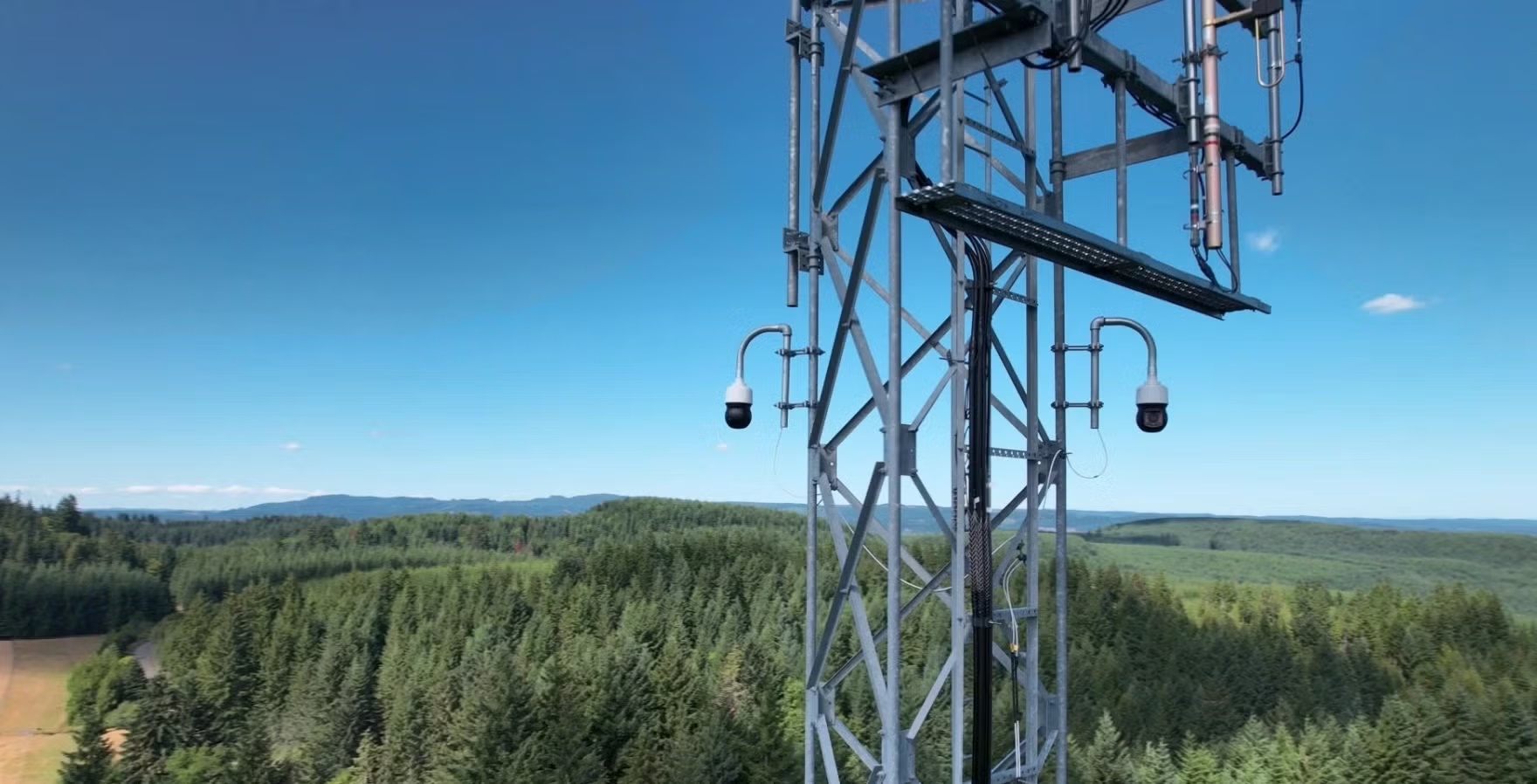
Pano AI cameras are mounted hundreds to thousands of the feet in the air to detect wildfire smoke and hot spots. Photo courtesy of Pano AI
High above tree lines in Wisconsin, artificial intelligence cameras work 24/7 to spot smoke and wildfires.
“We can alert public safety officials and they can take quick action on those fires,” said Greg Bento, Wildfire Command Center manager for Xcel Energy.
He told WPR “Morning Edition” Host Alex Crowe that San Francisco based-company Pano AI reached out to Xcel Energy about its wildfire detection cameras. And last year, the utility company installed eight cameras in Wisconsin. Each can monitor about 70 miles of land.
“These cameras were a tool that did not exist before,” he said. “When we started understanding the capability of what their cameras can do, it became a responsibility as stewards of the public lands that we have right of ways through.”
Since 2022, the average number of wildfires in Wisconsin has increased to more than 1,000 annually, costing more than $1 million. Ahead of the summer wildfire season, the Wisconsin Department of Natural Resources reports more than 620 incidents.
Now, Xcel Energy is considering locations for a new camera in Eau Claire County. It’s expected to be in place by early 2027.
Bento said adding detection cameras to its service area in northwestern Wisconsin is based on fire risk. So far, cameras are installed in Birchwood, Cumberland, Hayward, Luck, Mercer, Spooner, Tomah and Manitowish Waters.
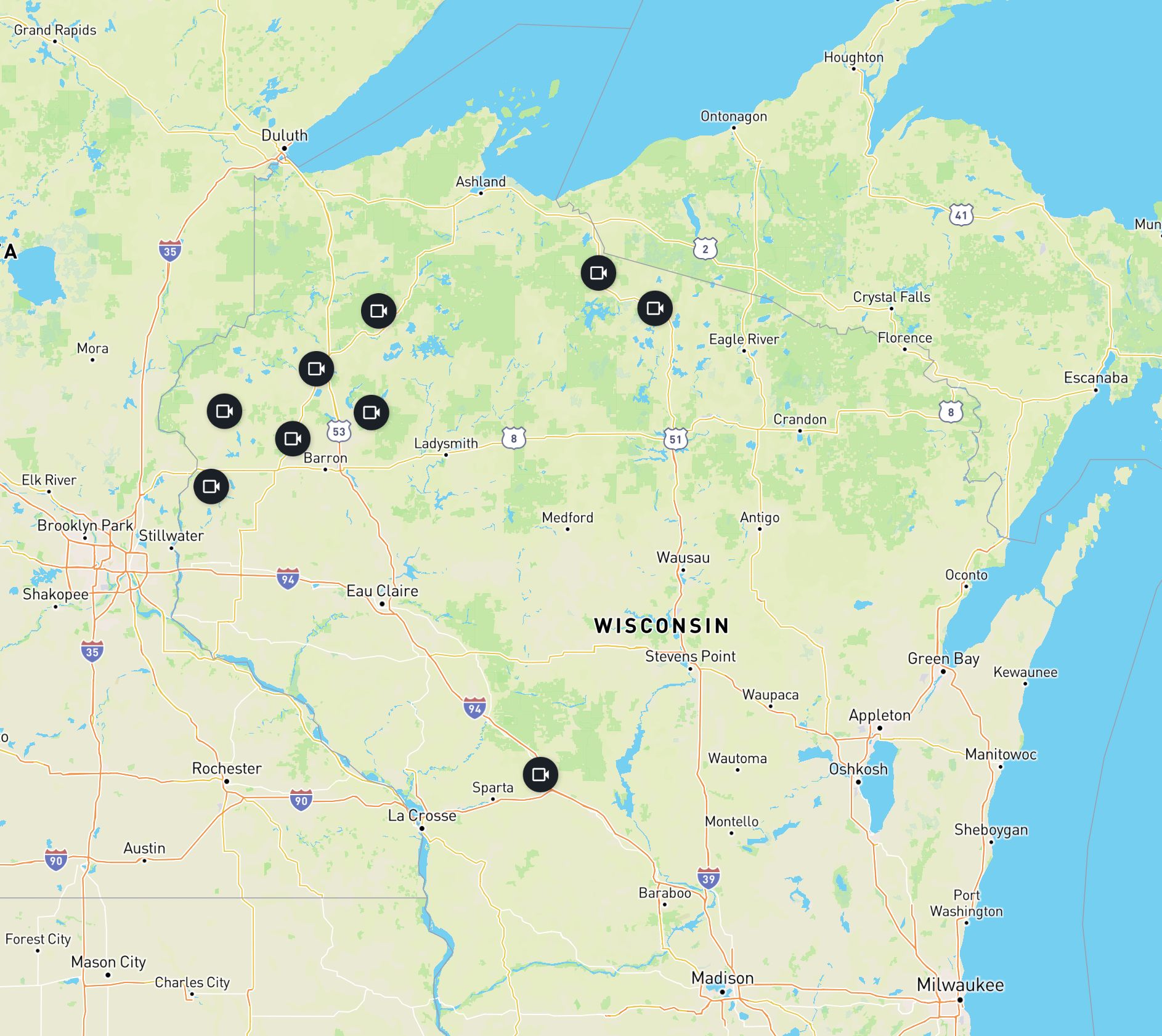
A map of northwestern Wisconsin shows the location of AI-powered cameras detecting wildfires. Map courtesy of Excel Energy
“We share our cameras with local fire departments, the Bureau of Land Management and parks and wildlife agencies,” he said.
Xcel Energy currently operates panoramic cameras in Minnesota, Colorado, Texas and New Mexico. The utility company is footing the annual bill of $50,000 per camera.
To date, Bento said the cameras have detected hundreds of ignition events in those states. In Wisconsin, local fire departments are already taking advantage of the AI resource.
“Sometimes [fire departments] call us and we will workshop the smoke detections,” he said. “Volunteer fire departments don’t have a lot of those resources.”
Bento said a 12-person team from both Xcel and Pano AI watch the cameras 24/7 to validate all smoke and hotspot alerts. While false reports can happen with AI, he said every notification is reviewed.
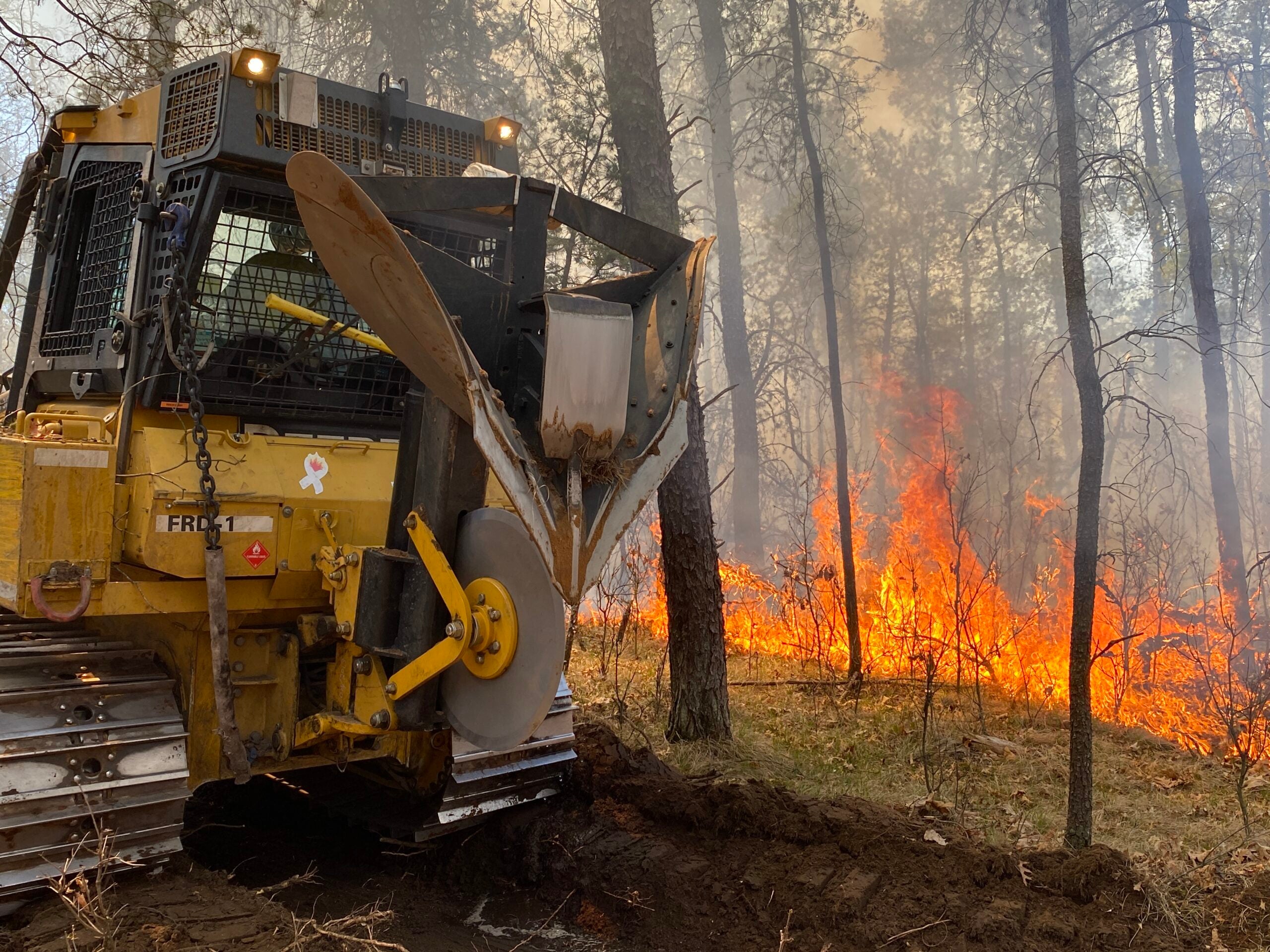
DNR resources work to fight spring wildfires in Wisconsin in 2025. Image courtesy of Wisconsin DNR
“AI helps to rule out things like chimney smoke or steam or dust particles,” Bento said.
Bento said he understands the public’s sensitivity to having AI cameras always watching. But he assures people the angle and height of the cameras result in low-resolution images.
“These cameras are very high up, they have very wide angle cameras,” he explained. “A very tight, controlled group of people at the power company can see them. And then we also share all of the camera views with public safety organizations. The resolution is not a concern for me as a landowner.”
“If there is a residential structure that is within the view, it’s immediately pixelated by the camera itself,” he added.
As summer begins, so does the concern over air quality due to Canadian wildfires. Bento said if smoke crosses the border, Wisconsin agencies now have more situational awareness.
“It could potentially obscure some of the view,” he said. “But we make meteorological observations from our cameras to see what clouds are doing to help inform our decision making.”
AI-powered cameras watch for wildfires in Wisconsin was originally published by Wisconsin Public Radio.
If you think stories like this are important, become a member of Urban Milwaukee and help support real, independent journalism. Plus you get some cool added benefits.