
Tires Harm Human Health, Study Finds
All the city news you can use.
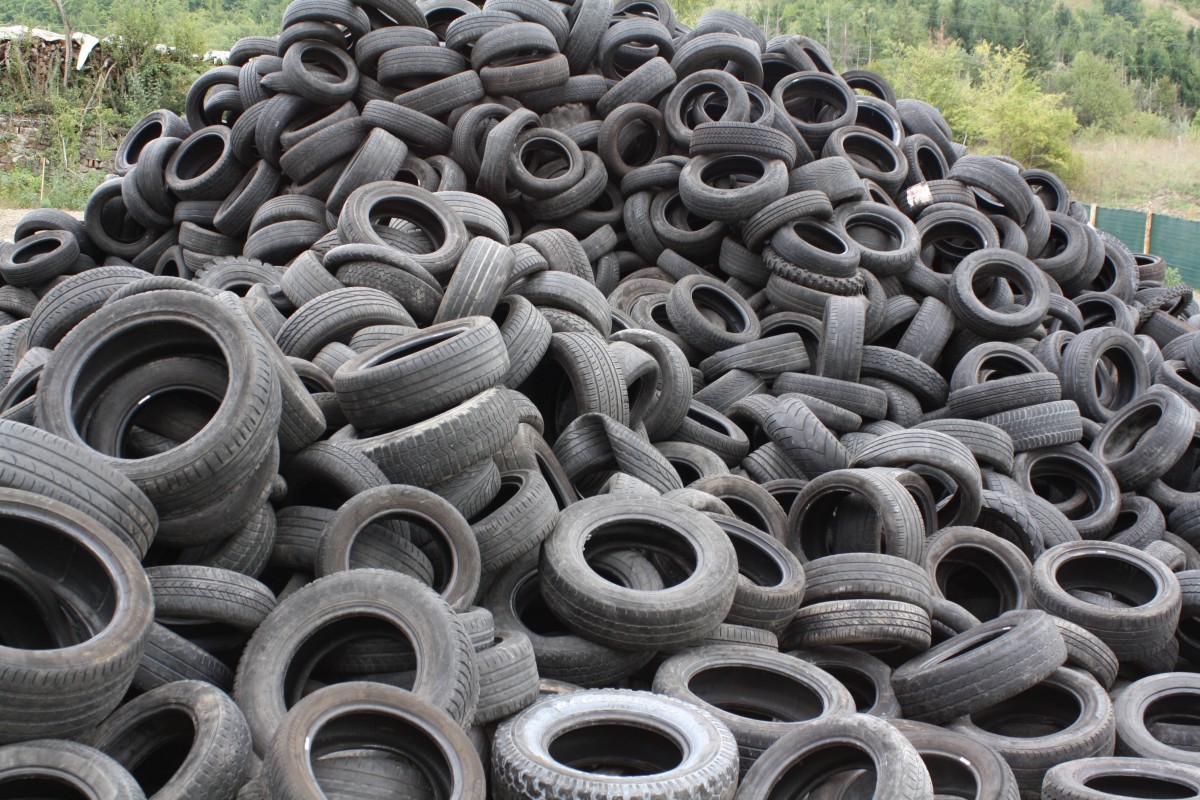
Tires. (CC0 Public Domain)
Every day at The Overhead Wire we sort through over 1,500 news items about cities and share the best ones with our email list. Each week, we take some of the most popular stories and share them with Urban Milwaukee readers. They are national (or international) links, sometimes entertaining and sometimes absurd, but hopefully useful.
Tires harm humans too: New research suggests that a mixture of chemicals found in car tires are dangerous to human health. Researchers found exposure to tire chemicals induced rapid cell death in human immune cells. Initial research targeted the chemical 6ppd which is used to prevent rubber cracking in tires and known to kill salmon after runoff events but it had less impact than other chemical mixes. The research suggests that airborne car tire particulates may be more harmful to humans than previously understood. (Yale e360)
Bogota’s soon to be metro: Bogota Colombia recently the location of testing for a new automated metro system. The first segment is expected to be completed in 2028 in a city with 35% modal share of public transit. The city is well known for its implementation of bus rapid transit, but many of the main lines have become crowded and the new metro will be part of a greater transit network that includes buses and trains. Paywall halfway down… (Darío Hidalgo | High Speed)
Waymo half empty: New research using data from the California Public Utilities Commission on robotaxis between August 2023 and December 2025 found that Waymo robotaxis were without passengers 46% of the time. Even considering rider growth due to increased awareness and service levels, deadhead (or zombie) miles remained consistently high. The author suggests that the findings show reticence among the public to accept robotaxis. (Awad Abdelhalim | Transport Findings)
Upzoning and housing supply: A growing body of evidence suggests that upzoning can result in more housing supply but depends on the local context of the regulations as to the full impact. This piece by the Urban Institute summarizes the latest research on the subject related to how much housing gets built, how quickly do policies create change, and the impacts on affordability. (Yipeng Su, Yonah Freemark, Will Curran-Groome | The Urban Institute)
Rise of the managed city: In the Greater Shinagawa Area which is billed as Tokyo’s next business center, JR East company has recently completed a massive development. The space has been designed with the future in mind, especially considering Japan’s aging population. But many newly designed spaces blur the boundary of what is public and private and create questions about a culture of consumption versus a messiness that makes cities great. (Elizabeth Beattie | Japan Times)
Quote of the Week
This fundamentally changes the recommendations that can be responsibly given to planners. Distances to city centres and working places are key. And urban densification cannot be viewed in isolation: one must understand how urban density relates to secondary factors such as connectivity, accessibility and the choice of residential location.
-Pottsdam Institute for Climate Impact Research PhD Felix Wagner discussing a new study discussing the importance of reducing emissions by reducing car commuting.
This week on the Talking Headways podcast, we’re joined by Dabney Sanders, Project Manager of the Greensboro Downtown Greenway. We chat about opening the final section of the Greenway after 25 years of work, the amazing art projects on the route, and lessons for other cities wanting to build greenways.
Want more links to read? Visit The Overhead Wire and signup.
If you think stories like this are important, become a member of Urban Milwaukee and help support real, independent journalism. Plus you get some cool added benefits.


Urban Reads
-
How to Reduce the Environmental Impact of Parking Lots
 May 30th, 2026 by Jeff Wood
-
We Could Fix Our Roads, Instead We Expand and Expand
 May 16th, 2026 by Jeff Wood
-
What Parts of the US Sprawl the Most?
![Sprawl. Photo by David Shankbone (David Shankbone) [GFDL (http://www.gnu.org/copyleft/fdl.html) or CC-BY-SA-3.0 (http://creativecommons.org/licenses/by-sa/3.0/)], via Wikimedia Commons [ https://commons.wikimedia.org/wiki/File%3ASuburbia_by_David_Shankbone.jpg ]](https://urbanmilwaukee.com/wp-content/uploads/2017/10/1024px-Suburbia_by_David_Shankbone-185x122.jpg) May 9th, 2026 by Jeff Wood
May 9th, 2026 by Jeff Wood