

Wisconsin Researchers Probe AI Data Centers’ Thirst For Water
UWM’s Center for Water Policy maps hidden water and energy costs as hyperscale projects spread.
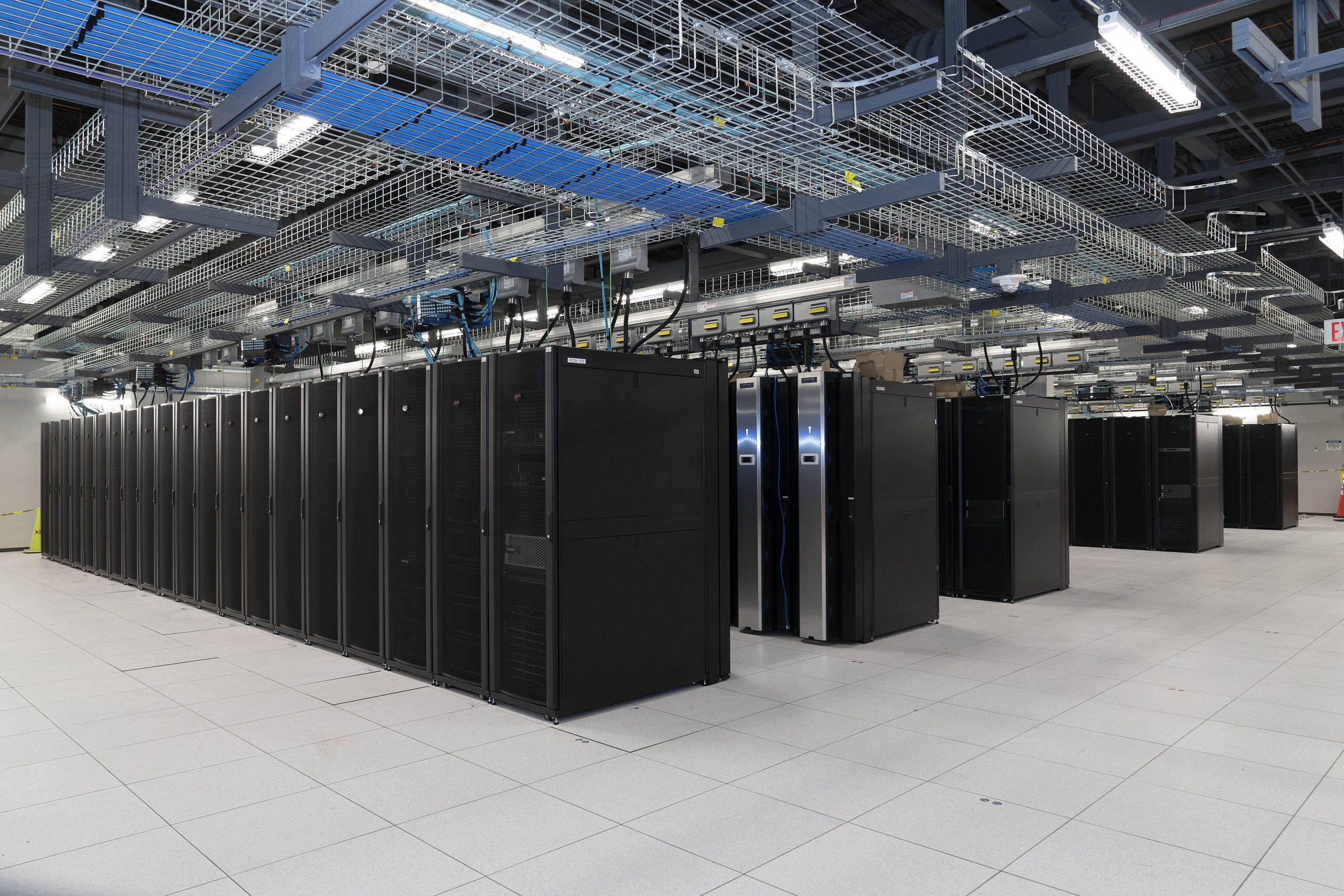
Data center. (CC0)
Data centers are a hot topic in communities all over the state as tech companies look to site these energy-intensive projects in places with abundant fresh water, like Wisconsin.
And data centers are literally hot, too. Many of the data centers being proposed now are “hyperscale,” meaning they are more than five times bigger than traditional data centers. These massive storage and data processing facilities require large amounts of water to cool them down.
A recent Marquette poll found that 70 percent of Wisconsinites across party lines believe the costs of large data centers outweigh the benefits — and “water impacts were cited most often as the reason,” said Tressie Kamp, assistant director of the Center for Water Policy at the University of Wisconsin-Milwaukee.
But how much water do data centers actually use? And what is their environmental impact?
Kamp and her fellow researchers at the center have been tackling these questions. They recently published their findings in a paper titled “The Hidden Environmental Costs of Data Centers and AI.” They also reviewed data center projects across the country and used their findings to create a legislative model with recommendations for policymakers.
“These large-scale facilities have the potential — if we don’t all act quickly and oversee water impacts, energy impacts — to put an unchecked strain on shared natural resources, even for water-abundant areas like the Great Lakes,” Kamp said.
Kamp joined WPR’s “Wisconsin Today” to discuss the water usage of AI data centers, why the numbers can be hard to come by, and what she and her fellow researchers are recommending for state and local governments to consider when a data center proposal comes to town.
The following interview has been edited for brevity and clarity.
Kate Archer Kent: Traditional data centers have been around since at least the 1990s, storing and processing the data that powers the internet. What is different about this new influx of proposed AI data centers, especially in their environmental impact?
Tressie Kamp: If you think of our smaller neighborhood data centers — that, as you said, have been around for some time now and we may not even have realized it — that could be akin to a laptop that you’ve left sitting on your desk. When we’re talking about “hyperscale” or, as we call it, “AI data centers,” it really is just that — it’s an issue of scale.
The scale and the type of equipment that’s in the building is really very reflective of the technology demands that are coming from outside the building, from all of us and technologies like AI and crypto that are really driving this much higher-scale infrastructure at these data center facilities.
It’s important not to forget the other aspects of resource use as well, including land. One reason that people are noticing things more is simply because the facilities are … bigger and simply more visible and noticeable, taking up more land than some of these smaller facilities that have been around for much longer.
KAK: In 2023, U.S. data centers consumed an estimated 17 billion gallons of water directly, according to the Lawrence Berkeley National Laboratory — and that’s not counting indirect consumption from electricity. Can you put that number into context for us?
TK: That estimate from 2023 represents the best numbers that we’re aware of, but it really is important to keep calling for increased research into this. Three years later, we know, especially based on the evolving nature of this industry and all of our AI use, that it’s important to keep asking for updated numbers.
The 17 billion, like you said, is direct, and that’s just for cooling. The indirect number … is 211 billion gallons. So, if you’re looking at a pie chart … that 211 billion gallons is by far the biggest piece of the pie.
KAK: What does that mean to “consume” that amount of water — does that mean the water goes away?
TK: A data center “consumes” water when it is not returned to the immediate area where it was taken from or withdrawn … because that water is either evaporated during the cooling of those hot, thirsty data centers, or in generating electricity for that facility, which we just discussed is the bigger part of that pie.
KAK: You and your colleagues at the Center for Water Policy have looked into what you call the “hidden costs” of AI data centers. What are these hidden costs?
TK: “Hidden” can mean simply not transparent or not fully transparent yet. It can mean that it’s really hard still to get numbers to understand concretely how much water, electricity and other resources these facilities are using.
“Hidden,” first, is a lack of transparency. And then, moving on from that, “hidden” can also mean other things, such as a debate that focuses, for example, just on direct water use versus really talking more transparently and holistically about the indirect and direct water that’s necessary to run these facilities.
KAK: Can you explain a little more about this lack of transparency?
TK: Like so many of the most pressing environmental issues that we’re all dealing with together, it’s really important not to point fingers but to say that the problem and the solution can come both from the industry and from all of us as consumers.
Because AI data centers are a relatively new industry in our country, their designs and the way that they operate can be considered or have been alleged to be more confidential, or sometimes even considered trade secrets.
Our research has focused on the reporting requirements and the permitting requirements, and … it is very difficult under the existing regulatory scheme to get numbers about the resource demands and resource use at any particular data center facility from one place in a way that’s effective and simple. It really requires outreach and digging in a multifaceted way that can be difficult even for an academic research center.
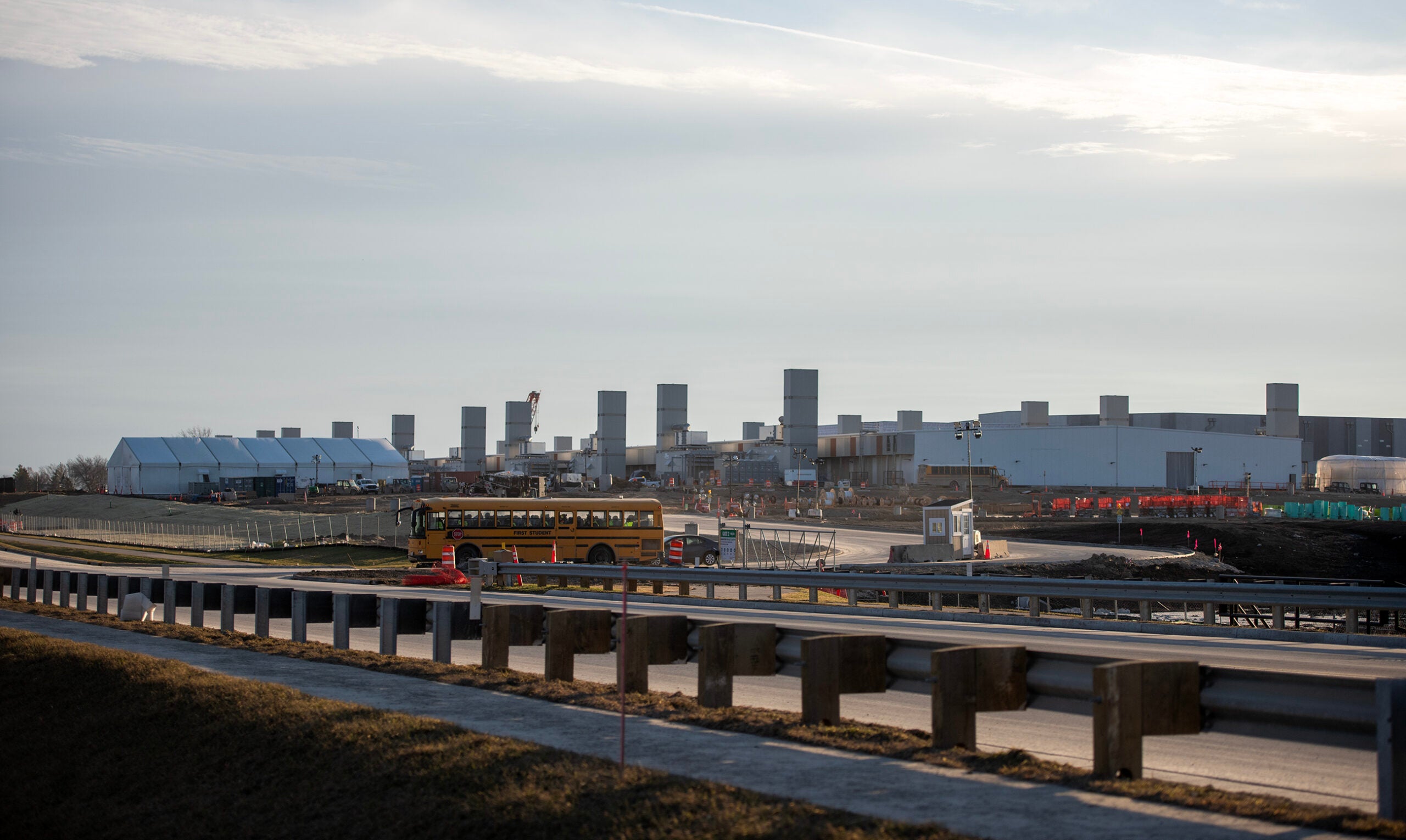
The data center in Mount Pleasant, Wis., on Thursday, Jan. 30, 2025. Angela Major/WPR
KAK: Let’s dig further into this legislative model you and your colleagues at the Center for Water Policy recently published. What are you recommending that lawmakers and local governments consider as more data centers are coming onto the map here in Wisconsin?
TK: We really boiled it down to five goals. … The first is improving comprehensive planning. The second is increased transparency and public disclosure. The third goal — and really a reason behind some of the polling that we’re seeing and the outcry that we’re seeing — is to protect ratepayers from bearing increased utility costs. The fourth goal is to establish energy and water efficiency prerequisites for AI data centers as conditions for permit approval, or for these tax exemptions that we’re hearing more about in the media. Last but not least is to increase funding for water management and conservation.
Within each of those, there’s a suite or a menu of different options that can reflect the different political realities, in not just Wisconsin communities but beyond. And I do think it’s telling that three of those goals relate to protecting the public and relate simply to public transparency. By the time we get to goal four and five, we are talking about environmental impacts, water use, energy use. But we’re starting with the base or the foundation of our conversation being around the public right to know and protecting all of us as taxpayers.
KAK: There are laws surrounding Great Lakes governance. How is the data center debate shaped by the Great Lakes Compact, a legally binding agreement between eight states that includes Wisconsin?
TK: The Great Lakes Compact is going to be a really important starting point for this discussion, and the compact was part of the center’s analysis and research.
Especially in Wisconsin and Virginia, where we did specific case studies, we are looking at data centers that are hooking into existing infrastructure. They’re getting their water from utilities. They’re getting their power from power plants that either exist or are going to be constructed. As a result, these facilities are not direct permit holders and they are not reporting directly under the compact.
Ultimately, at least as regulation stands today, it is very difficult to use the Great Lakes Compact to understand the resource needs of one particular data center or even data centers in one particular region or state. There’s just not data down to a minute enough detail for us to understand, based on Great Lakes Compact reporting requirements, how much water these facilities need.
KAK: Microsoft has talked about planning a pilot for a “closed-loop system” with “zero water evaporation” in its data center in Mount Pleasant. What do we know about how this works? And does it put less pressure on local water resources?
TK: In relative terms, this is a new technology. The facilities in Wisconsin that are going to use closed loop, these are really at the forefront of this industry in terms of using closed loop at such a high scale. So, the first answer is really that we won’t know how comprehensive of a solution closed loop can be until we start to get data from these facilities operating at the full scale that they plan to operate at.
It’s also really important to note that closed loop addresses those direct water numbers — so, the direct water that’s necessary for cooling. Even closed-loop facilities need power to run, and that power is the biggest part of the pie that we talked about that’s necessary for these facilities to run.
So, closed loop? Absolutely, let’s keep talking about that as part of the debate and see if these facilities can help us push technology to help us make AI more sustainable. But we have to be talking about the energy side of this as well. We have to be looking at the bigger numbers — the indirect water consumption, the electricity needed for these facilities — and figure out what the tool is going to be to make that energy part of the pie more sustainable.
KAK: Some lawmakers and business leaders in Wisconsin say that data centers will be a big economic boon and they want to offer tax incentives to tech companies to draw them here. In your legislative recommendations, how do you balance those economic considerations with the environmental ones?
TK: Part of the legislative model that the Center for Water Policy released did, in fact, focus on some of those economic considerations. If economic benefit to a community is the starting point of the discussion — protecting the community, benefiting the community where data centers locate — let’s follow through on that commitment.
It’s really important, too, to look at the analysis beyond one phase of these data centers. So, are we talking about jobs that are necessary to construct these facilities? That may happen over a time frame of months or years, depending on what part of the construction you’re talking about. How long-term are these facilities going to benefit communities from a job perspective and from a tax perspective?
We need more examples of communities entering into community benefit agreements with members of the data center industry and seeing the general public protected from rate increases, for example, before we can say that a productive and positive relationship can exist.
How much water do AI data centers really use? Wisconsin researchers look for answers. was originally published by Wisconsin Public Radio.
If you think stories like this are important, become a member of Urban Milwaukee and help support real, independent journalism. Plus you get some cool added benefits.






















Weird how our homes all have water meters on them and water usage is monitored and charged accordingly. Yet with data centers we have no idea how much water is being used. Obfuscation seems to be a central tenet in the current United States of Gaslighting.