USDA, Wisconsin Scale Back Avian Flu Testing On Dairy Herds
Officials cite lower risk, but lab leaders warn surveillance could be undermined by staffing and funding cuts.
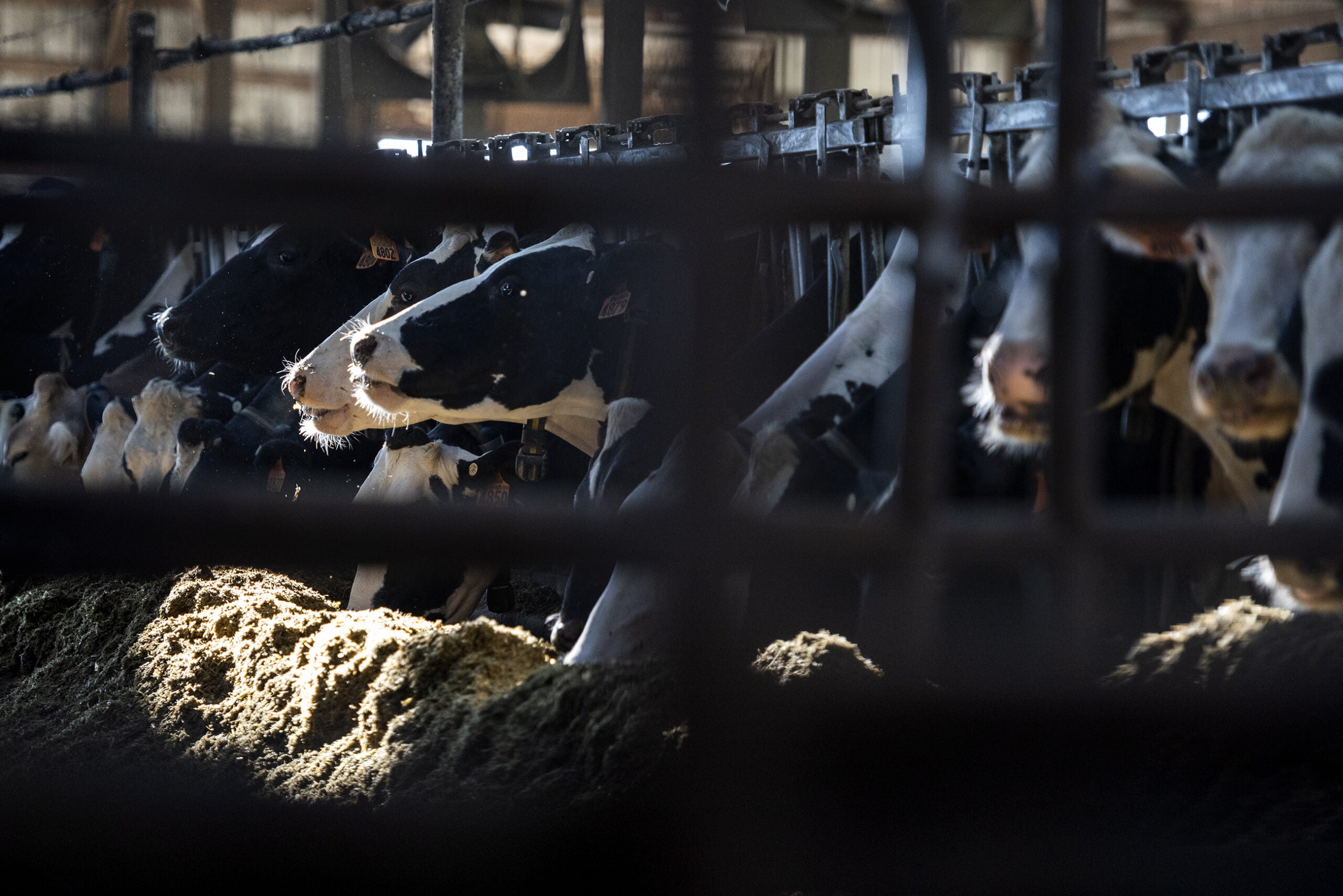
Dairy cows feed at Mitch Breunig’s farm near Sauk City on Friday, July 24, 2020. Angela Major/WPR
Testing for avian flu among Wisconsin dairy cows is being reduced, thanks to recent changes at both state and federal levels.
But one animal health expert worries that reduced support from the U.S. Department of Agriculture could leave continued surveillance of the highly-contagious virus on shaky ground.
Over the last two years, the USDA has required producers to test lactating cows for avian flu prior to moving them between states. But federal officials recently removed that requirement for farms in states considered “unaffected” under a federal avian flu surveillance program called the National Milk Testing Strategy.
That means that cows leaving Wisconsin or coming into the state from the other 41 other “unaffected” states will also not have to be tested for the virus.
Wisconsin State Veterinarian Dr. Darlene Konkle said a group of state veterinarians across the country, including herself, had asked the USDA to consider changing the federal testing requirement.
The USDA has picked up the tab for testing over the last two years, Konkle said, but the logistics of ensuring cattle meet the requirements can be a challenge for farms. She said the level of avian influenza activity on dairy farms has dropped significantly since the virus was first confirmed in March of 2024.
“It removes some financial burden from both USDA and producers for moving their cattle in what’s now a lower risk situation than we were in, say, a year ago,” Konkle said. “We’ve got lots of surveillance numbers and good amounts of testing and not a lot of additional cases over the past months.”
Konkle said the same reasons prompted the state Department of Agriculture, Trade and Consumer Protection to rescind its 2024 order requiring lactating cows be tested for the virus before moving to fairs and exhibitions within the state.
Wisconsin has been among the least-affected dairy producing states in the country. There has been only one confirmed infection on a dairy farm, compared to the rapid spread of cases seen in major dairy states like California and Idaho.
After ramping up testing in response to the case in December, Wisconsin again reached “unaffected status” in March. But the state had continued testing of all farms monthly for the virus, which Konkle said was influenced by the fact that the spring migration of wild birds increased avian flu activity in the state.
She said the state, in consultation with the USDA, felt now was the right time to scale back to testing farms every other month.
Testing cut backs come as USDA loses staff
Keith Poulsen is director of the Wisconsin Veterinary Diagnostic Laboratory, which runs all of the avian influenza tests in the state. He said the dairy industry has made progress in slowing the threat of the highly-contagious virus.
But Poulsen said he doesn’t see the threat of infections from wild migratory birds and from farms with persistent influenza infections going away any time soon.
“They’re hedging everything on the success of the National Milk Testing Strategy and the continued use,” he said. “The problem is that we don’t really know what the National Milk Testing Strategy looks like three months from now, six months from now, or a year from now.”
Poulsen said he and other laboratory leaders across the country are concerned about the future of disease surveillance because of the Trump administration’s efforts to cut back on staff and spending at the USDA.
More than 24,000 people left the federal agency since President Donald Trump took office, according to federal data. Poulsen worries the recent decisions to scale back milk sampling have more to do with limited staff than a lower risk.
“We just don’t have enough people to move even just dollars from column A to Column B to support some of these programs,” Poulsen said. “That’s really a big logistical concern, is how do you actually get these samples in? Because the way we’re doing it now works really well. Wisconsin has the best surveillance program in the country or the world, but it’s expensive.”
Wisconsin’s ability to receive federal funding for animal disease testing could also be jeopardized by its participation in a multistate lawsuit against the USDA.
Attorney General Josh Kaul and his counterparts in 20 other states are challenging new conditions being added to the USDA grants and cooperative agreements that require states to follow the agency’s “policies” related to immigration, gender identity and diversity.
Poulsen said the lawsuit could keep DATCP and other state departments from signing new cooperative agreements with the USDA. That could halt collecting samples, running tests and monitoring cases for avian flu and a whole host of other diseases.
Konkle said DATCP officials and attorneys are considering how the lawsuit could impact their agency.
“I don’t think we’re anticipating that kind of extreme event actually happening where we wouldn’t have funding at all,” she said. “Because I think for industry to continue moving, and for animal health to remain at a high level within the U.S., that partnership needs to continue.”
When asked whether staff cuts were driving testing reductions at the USDA, Konkle said she does not believe the agency is moving to federal surveillance of avian flu and said that the USDA is hiring staff related to animal health.
Federal, state officials relax testing for avian flu on dairy farms was originally published by Wisconsin Public Radio.
If you think stories like this are important, become a member of Urban Milwaukee and help support real, independent journalism. Plus you get some cool added benefits.