
See Inside New Juvenile Detention Facility
New 32-bed facility part of state plan to regionalize juvenile detention facilities
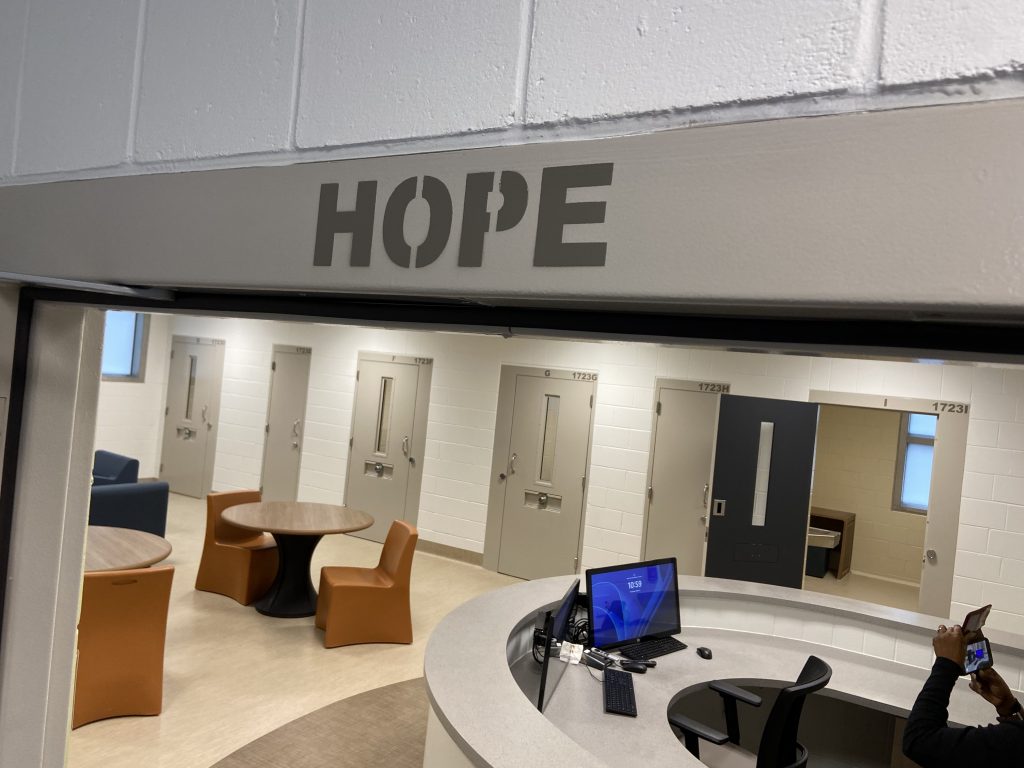
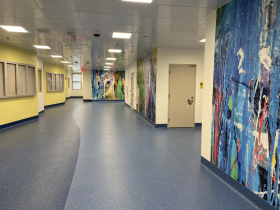
Doorway to a housing pod in the new Milwaukee County Center for Youth. Photo taken March 5, 2026 by Graham Kilmer.
Local officials gathered Thursday to celebrate the completion of a new youth detention facility that is part of a long-running statewide effort to overhaul the juvenile detention system.
The nearly $37 million Milwaukee County Center for Youth will open at the end of the month. The 32-bed facility allows Milwaukee County judges to sentence youth to a facility close to home.
The center will expand an existing county-run program that involves shorter periods of confinement, therapy and educational programming. The program is being renamed the Restorative Pathways Program (RPP).
“We are taking steps toward making Milwaukee County the healthiest county in the state, because reducing recidivism isn’t just about lowering a statistic, it’s about breaking cycles,” Milwaukee County Executive David Crowley said. “It’s about making sure that one mistake does not become a life sentence, whether you’re a young person or a young adult.”
The 26,264-square-foot facility is called a Secure Residential Care Center for Children and Youth (SRCCC), and it represents one piece of a state plan to reform the juvenile detention system and close down two youth prisons — Lincoln Hills School for Boys and Copper Hill School for Girls — with a history of abuse and unsafe conditions. Only recently did the two facilities achieve compliance with federal court-ordered reforms.
Milwaukee County Board Chairwoman Marcelia Nicholson Bovell was elected to the Milwaukee County Board in 2016 shortly after the body declared a “state of emergency” over the conditions at the state’s youth prisons. “We knew we had to choose a different path… Even before the state acted, we understood something simple but powerful, isolation does not rehabilitate. Disconnection does not create public safety.”
Before those prisons close, the state is building a new Type 1 facility in Milwaukee to replace them. The Type 1 facility will hold juveniles convicted of serious crimes.
All three elements — the new SRCCCY, the Type 1 facility and the eventual closure of the state’s two youth prisons — are a result of efforts to overhaul the system that led to the passage of 2018 Wisconsin Act 185. The bill called for decentralizing the detention system, building smaller, regional facilities. Crowley worked on the bill when he was a state representative.
“When we keep them close to home, when we keep them close to their families, their mentors, their community, we can dramatically increase their chances of success,” Crowley said.
The new facility “meets all the aspects and pillars” for a facility designed under the guidelines of Act 185, said Lance Horozewski, state Division of Juvenile Corrections administrator. SRCCCY’s like the county’s are “the centerpiece of what we want to do for youth and families in the state of Wisconsin, keeping kids closer to home, we know provides better outcomes.”
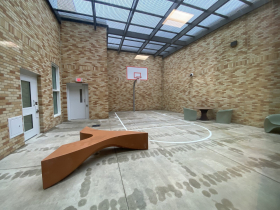
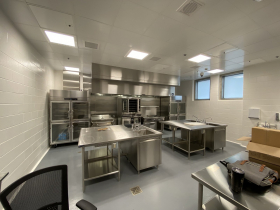
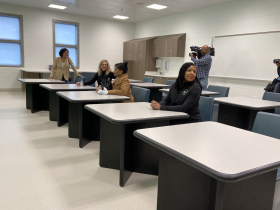
Milwaukee’s new SRCCCY, the Milwaukee County Center for Youth, includes two new housing pods, another renovated housing pod, a new dining area, an outdoor family and recreation area, a kitchen for culinary programming and classrooms. Every child in the facility will also receive dialectical behavioral therapy, and staff will also work with families to make sure they are learning the same skills and language their children are, said Kelly Pethke, administrator of the county’s Division of Children, Youth and Family Services.
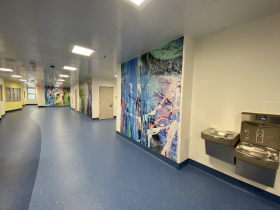
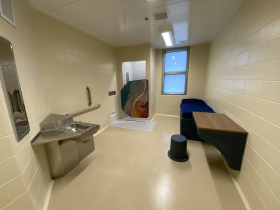
However, the facility is still a secure detention facility. The windows in the cells are fogged, not allowing children to see outside. The recreational area has a steel security fence over the top. Some walls in the housing pods are painted in bright colors, and there are abstract-impressionist murals in the hallways. Cells are austere and painted a muted beige, with steel lavatory finishes.
“It’s still a jail, but the goal is to eventually get to a place where we don’t need facilities like these,” Nicholson told Urban Milwaukee. “But considering that, I think they’ve done a great job in building out a space that I think is conducive to an environment that will help our children learn, feel safe. It feels secure. The rooms are clean.”
The county has wanted to bring children in the juvenile detention system closer to home for years, said Shakita LaGrant-McClain, director of the Department of Health and Human Services (DHHS). Many officials said Thursday that the new facility was a long time coming. LaGrant-McClain’s department has a service delivery model called “No Wrong Door,” designed to allow residents to access the DHHS services they need regardless of where they come in contact with the system. That same thinking applies to the new Milwaukee County Center for Youth, she said.
“So even though the door they’re walking into is not the right one we want them to come into, when they walk out their lives should be changed so they don’t have to come back into the deeper end of the system or into the adult system,” she said. “That is what we mean by No Wrong Door.”
Milwaukee County Circuit Court Chief Judge Carl Ashley called the new center “a great example of us trying to address some of the problems in our community.” He said youth in the justice system “need an opportunity to have better outcomes, and quite frankly, we haven’t been focusing on what they need, and that’s something we need to work on, and that’s what this facility is going to do for us.” The judge also said a greater effort needs to be made to reach children before they end up in a juvenile detention facility.
City of Milwaukee Ald. Sharlen P. Moore echoed the point, “It’s about what we’re doing outside. It’s about how we’re showing up for these young people that live in our community. It’s about where we’re putting our dollars, what we’re telling them that’s important.”
The first children held at the facility will start arriving later this month.
Photos

Existing members must be signed in to see the interactive map. Sign in.
If you think stories like this are important, become a member of Urban Milwaukee and help support real, independent journalism. Plus you get some cool added benefits.
More about the Lincoln Hills and Copper Lake Facilities
- MKE County: See Inside New Juvenile Detention Facility - Graham Kilmer - Mar 5th, 2026
- State Juvenile Prisons Finally Complete Court-Ordered Reforms - Graham Kilmer - Jan 28th, 2026
- Lincoln Hills and Copper Lake Youth Facilities Found in Compliance, Triggering End to Court-Ordered Monitoring Set in Place by 2017 Lawsuit - American Civil Liberties Union of Wisconsin - Jan 28th, 2026
- Gov. Evers, Doc Celebrate Completion Of Successful Reforms at Lincoln Hills and Copper Lake Schools - Gov. Tony Evers - Jan 28th, 2026
- Gov. Evers Announces State Building Commission Approves Approximately $185 Million in Projects Across Wisconsin - Gov. Tony Evers - Dec 17th, 2025
- Building Commission OKs Planning Funds to Reorganize Wisconsin Prisons - Sarah Lehr - Oct 29th, 2025
- State Building Commission Releases Funding Gov. Evers Requested to Revamp Corrections Facilities - Gov. Tony Evers - Oct 28th, 2025
- Gov. Evers Announces Evers Administration to Move Forward with Comprehensive Plans to Revamp Corrections Facilities - Gov. Tony Evers - Oct 14th, 2025
- For The First Time, Wisconsin’s Youth Prisons Are Fully Compliant With Required Reforms - Rich Kremer - Oct 3rd, 2025
- Inmate Sentenced For Role in Youth Counselor’s Death at Troubled Prison - Isiah Holmes - Aug 11th, 2025
Read more about Lincoln Hills and Copper Lake Facilities here
Political Contributions Tracker
Displaying political contributions between people mentioned in this story. Learn more.
- December 17, 2015 - David Crowley received $25 from Sharlen P. Moore
- September 11, 2015 - David Crowley received $25 from Sharlen P. Moore
- July 22, 2015 - David Crowley received $50 from Sharlen P. Moore


MKE County
-
Committee Approves Towing Reckless Drivers, With Objections
 Mar 12th, 2026 by Graham Kilmer
-
Domes Project on Track for 2027 Groundbreaking
 Mar 12th, 2026 by Graham Kilmer
-
Judges Won’t Extend Schimel’s U.S. Attorney Appointment
 Mar 10th, 2026 by Graham Kilmer