

Man’s Battle to Stay Out of Prison Raises Questions About Probation System
8,100 people in Wisconsin on probation or parole were sent back to prison in 2025.

Dennis Simmons (center) stands with attorney May Lee (right). (Photo courtesy of attorney May Lee)
Dennis Simmons didn’t expect that a regular visit to his probation officer would end in his arrest, and the prospect of being sent to prison. After a life spent in and out of the criminal justice system, Simmons was employed and trying to avoid trouble. “When I came in they arrested me and told me that I was being charged with robbery, battery, and carjacking,” the 28-year-old told Wisconsin Examiner, recalling that day in April 2025. “The detectives never came and questioned me to ask nothing, they just ended up charging me with it.”
Simmons learned that he was being accused of assaulting a man and stealing his car. But his attempts to explain that he had proof that the accusations were false fell on deaf ears, Simmons said. Instead, his probation agent planned on moving forward with revoking Simmons’ release anyway.Had that happened, Simmons would have been among the over 8,100 people sent back to prison in 2025, according to Wisconsin Department of Corrections (DOC) data. When you’re one of the over 64,000 Wisconsinites who are on probation or parole in Wisconsin, an unproven accusation is one of numerous things that can send you back to prison. Probation and parole agents wield immense power over their clients’ futures.
Simmons told his agent, Laquisha Booker, that his accuser was the subject of a no-contact order with his mother due to a domestic violence case. The accusation against Simmons was false, he told her, because there was video showing the man violating that no-contact order by arriving at his mother’s home in the very car Simmons’ had been accused of stealing, and attempting to break down the door. Simmons’ uncle, he said, fought the man off.
“It don’t show me on the camera at all,” Simmons told the Wisconsin Examiner. Booker told the family to send her the footage, but then “acted like she never got the video,” said Simmons. “Well, she kept pushing forward with revocation the whole time. My uncle came in and gave her a statement, let her know what happened, that he was the one that got into the fight with him. And mom sent the video. Mom gave a statement and let them know what happened. My grandma gave a statement. And she still pushed forward with revocation.”
Fighting against the stream of incarceration
Facing over five years imprisonment, Simmons was shocked and confused by Booker’s push to send him back. “How can you still go through with it?” He asked. “You got evidence showing that it ain’t true. And she, like, ‘Well, I’m pushing forward with revocation.” Simmons wanted to fight the revocation, but knew that it wouldn’t be easy to beat. For months he sat in the Milwaukee Secure Detention Facility, a facility which held 637 people while Simmons was there in April 2025 despite only being designed to hold 418.
Simmons found the Milwaukee Secure Detention Facility to be in a dire state. “They be short staff a lot, you know, so we be pretty much in the room all day,” Simmons told the Examiner. He recalled that people were let out of their rooms twice a day for a little over an hour.
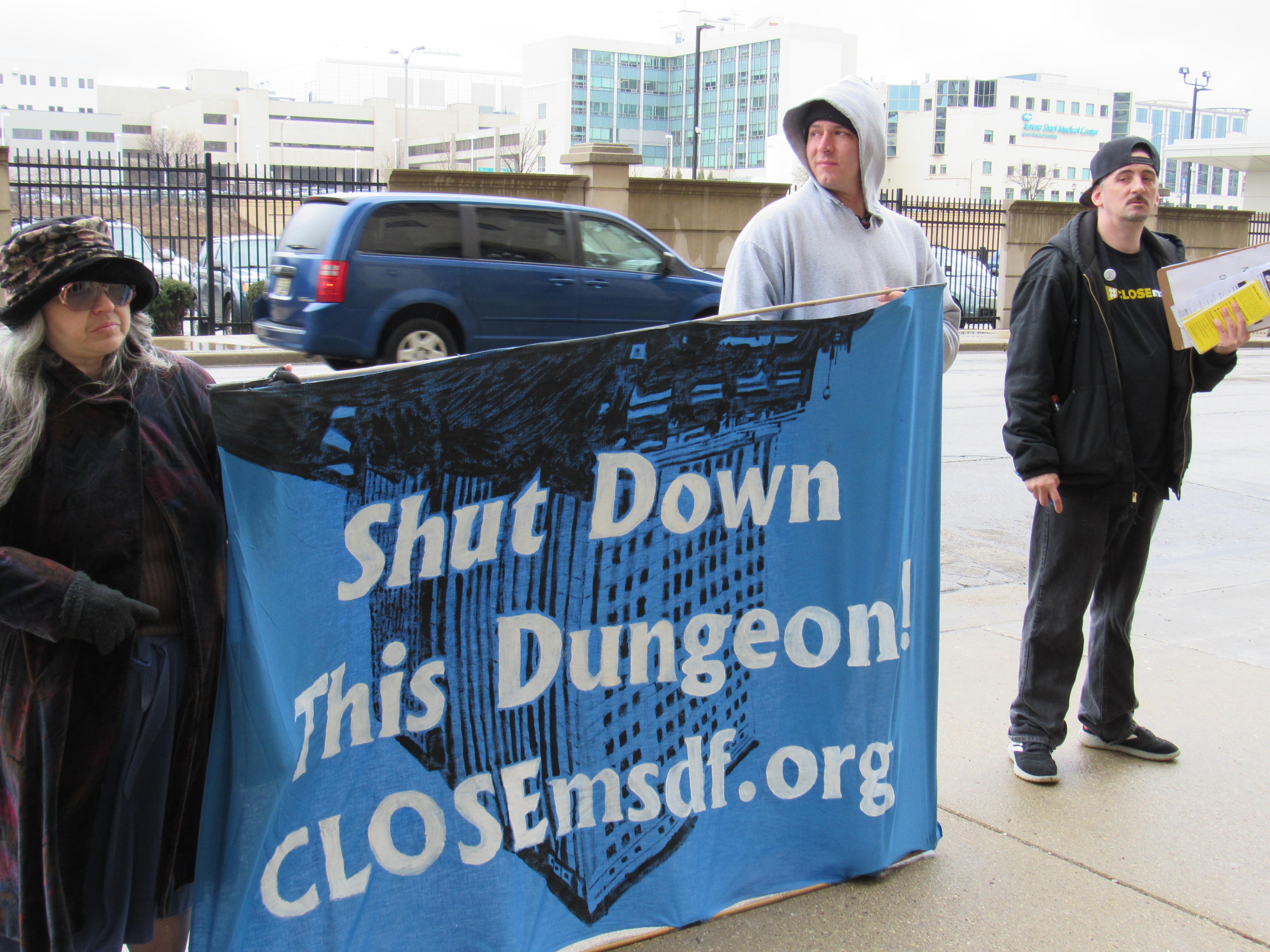
Activists call for the closure of the Milwaukee Secure Detention Facility (MSDF). (Photo by Isiah Holmes/Wisconsin Examiner)
“It’s kind of rough in there,” said Simmons. “So we pretty much in the room all day. Come out for a little bit. When you come out, you work out, get in the shower, and then try to make your phone calls, try to get everything did that you got to get did. Then you go back in the room. So it’s pretty much a stressful environment just being in there. Because you be in the room all day thinking, especially if you in there for something that you didn’t do and then you nervous. Like, I was actually kind of scared even though I didn’t do anything, like, they have my back against the wall so I’m like ‘five years, nine months, I got to fight it.’ But they like, ‘If you lose you could get the whole seven years. And 90% of the people lose here.’ So I’m like, should I take a deal for something that I didn’t do?”
The people Simmons was housed with thought that would be his only option. “Everybody that been there for a while said that’s how it works,” Simmons told the Examiner. “It was stressful.”Prior to his final revocation hearing in September 2025, attorney May Lee — of the Lee Law Firm — intervened on Simmons’ behalf. In emails Lee shared with the Examiner, Booker claimed that the videos sent by Simmons’ mother couldn’t be opened. “I emailed her back and told her to forward the videos to my supervisor,” Booker emailed Lee. “She never did. I won’t be using the videos in the rev hearing.”
Lee shot back that Dennis’ mother had sent the videos “to your agency a total of three times, including once to your supervisor. She was unaware that you or your supervisor were unable to open the files and she is now locked out of her iCloud account, requiring Apple’s assistance to access those videos again.” Lee continued preparing for the revocation hearing, asking Booker to share the videos with her so she could try to open them, and to provide a supervisor’s contact information.
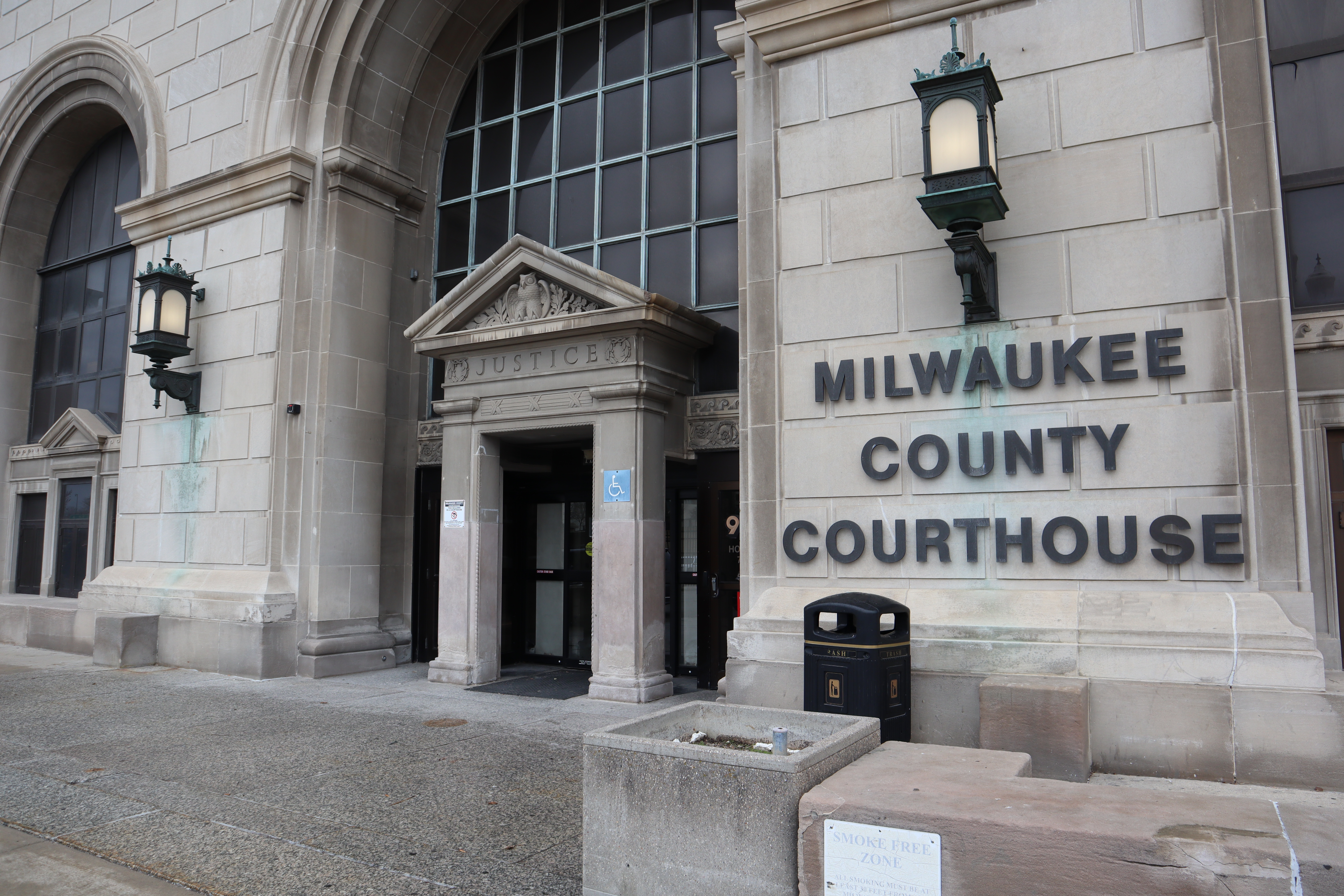
The Milwaukee County Courthouse (Photo by Isiah Holmes/Wisconsin Examiner)
During the revocation hearing, Simmons’ uncle testified that his nephew was innocent and it was he who had engaged in the fight leading to the accusation of assault. The uncle also testified to having already given Booker a statement that exonerated Simmons. Booker admitted during the hearing that she had lost the uncle’s statement, something which Lee said contradicted what the probation agent had told her in the days leading up to the hearing. According to a DOC human resources bureau review of Booker’s conduct, Lee had been told by Booker that the uncle never came to give a statement.
After the Sept. 10 hearing, Lee emailed Booker to demand that the allegations against Simmons be dismissed given what came out during the hearing. Lee also noted that Booker’s supervisor was able to access the videos which Booker claimed didn’t work. “The information you know to be true does not support the allegations against Dennis,” Lee emailed Booker. “I am hopeful you will consider doing the right thing here. I look forward to hearing from you.”The next day Booker responded that after talking with her supervisor, “the department is not going to withdraw the allegations against Mr. Simmons and will continue with the revocation hearing.” Emails obtained by Wisconsin Examiner show Booker’s supervisor asked her about the conflict over the uncle’s statement. Booker said that Lee was misunderstanding what she said, “I told her I reached out to [the uncle], we spoke but he never came in to give a statement. So I can see how she’s thinking I said he never gave a statement at all.”
Later that day, Lee again asked Booker for her supervisor’s contact information. Otherwise, she said, she’d have to go above their heads to a DOC regional chief “and outline the blatant misrepresentations” made about Simmons. “We are expected to uphold justice, and I provided an opportunity to rectify this situation,” Lee emailed Booker. “As you have chosen not to, I have no other option but to escalate this matter.” Lee then notified DOC Regional Chief Niel Thoreson about her concerns.
“While I am gravely concerned about Dennis’ situation, I am even more concerned about how many other people have been revoked and sent to prison because an agent knows they can lie and no one will do anything about it. The people being supervised are human beings; to imprison them for years on false statements knowingly made by an agent is not something that will be overlooked…Those under your care deserve to be treated fairly.”
– Attorney May Lee emailing DOC Regional Chief Niel Thoreson in September 2025
By Sept. 15, Thoreson and Lee were emailing about finally releasing Simmons. Although another agent was supposed to be assigned to Simmons, when he was released it was Booker he met with to review the rules of his conditional release. “It is unacceptable that she was allowed to meet with him after she attempted to use her own lie to strip away another five years of his life to lock him up as if his human life holds no value,” Lee emailed Thoreson on Sept. 22. “This was egregious due to the already six months he spent in custody because of those allegations.” Lee added, “what is going on over there??”
The tables turned
Simmons recalled his last interaction with Booker. “When I came to the office the day I was released, I was actually excited, at the very least I was happy, and then I seen her,” said Simmons, adding that Booker told him that this wouldn’t have happened if she’d received the videos and statement from his uncle, essentially reverting to her original claims. “I was like yeah, this is crazy,” said Simmons.
Booker was later interviewed by the DOC human resources department. She was new to her job, having started in January 2025. During her HR interview, Booker was asked whether she received a statement from Simmons’ uncle. “Yes sir,” she began. “Well let me rephrase that, I didn’t have to. [The uncle] reached out to me and said he wanted to make a statement.” Booker said that he came to the office and that she gave him paper to write the statement. “I did not sit there and take his statement personally, but I did get a statement from him that he turned in to the front desk.”
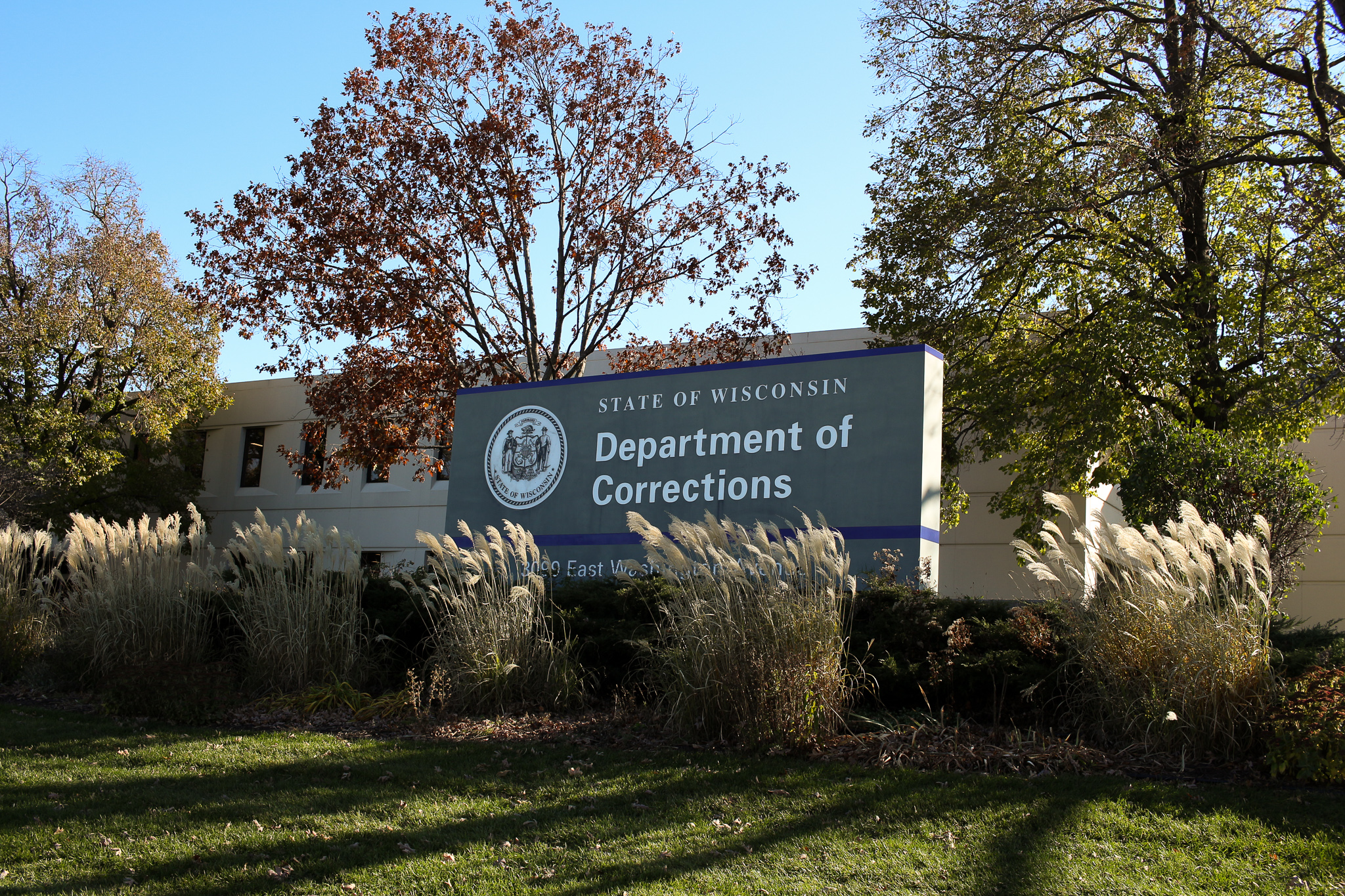
The Wisconsin Department of Corrections Madison offices. (Photo by Henry Redman/Wisconsin Examiner)
She went on to say, “I am being completely honest. From the time that reception told me that the statement is ready to pick up, I don’t remember if I went to get the statement from him or not or if I grabbed it and misplaced it sometime after that.” Booker said that she couldn’t recall whether she actually read the statement, or even if she’d picked the statement up from the desk. The statement wasn’t included in the packet prepared for Simmons’ revocation hearing because according to Booker, she didn’t have it.
Booker denied telling Lee that she never took a statement from the uncle, but said that she admitted in court to having lost his statement. Booker couldn’t remember at what point she first realized she’d lost it, however. When asked during the human resources interview whether she ever told attorney Lee about the uncle’s statement Booker said, “Yes…I can’t recall. I have had many conversations with her at that time.” Booker said that her supervisor had told her that “we are proceeding with rev no matter what.”
She added that, “I realize I made a mistake and that I tried to correct that violation and I understand that I messed up. No matter what my [supervisor] was proceeding with rev and I am a new agent and I talked to her to get alternatives because I knew mom and grandma were testifying and I tried to do other things. That was my first revocation hearing and I don’t even know how revocations go and I don’t have any rapport with the client because he was arrested before I even knew him…I am a new agent and I don’t have any information on that process or how it went.”The DOC found that Booker had potentially violated rules regarding falsifying records, insubordination, and negligence. The report asserts that Booker was aware of the statement clearing Simmons of wrongdoing, but that she didn’t tell her supervisor, and declined Lee’s attempts to provide her with another written statement. The HR report adds that Booker “knowingly provided false information” to Lee regarding her ability to access video footage sent by Simmons’ mother, and the uncle’s statement.
A DOC spokesperson said that Booker resigned in November during her disciplinary investigation. For the first seven weeks of her time at DOC, Booker would have participated in the DOC’s basic training for agents, which all agents must graduate before working with clients. The training is intended to provide agents with baseline and foundational skills to help agents navigate tasks, make decisions, and understand the DOC’s expectations.
Crushed hopes and an uncertain future
The entire ordeal was a major blow to Simmons’ ability to settle back into civilian life after serving a seven-year sentence. “You’re not even giving me a chance,” said Simmons, “and I’m showing you what’s going on.”
Simmons told the Examiner that he’s tired of the revolving door to prison in his life. “I had a mindset of I’m tired of going to jail, I don’t want to be in prison no more,” Simmons told the Examiner. “I’ve been doing this my whole life, I’m going to try something different. Because the way I’ve been doing it keep getting me in trouble, it’s not working. So I want to try a way to stay up out. So when I get out and I decide that I’m not doing nothing that can put me back in prison, and try to stay away from it, and then I get locked up for something I didn’t do, it just make me feel like, ‘Man like, it’s hopeless. Should I just be back in the streets?”
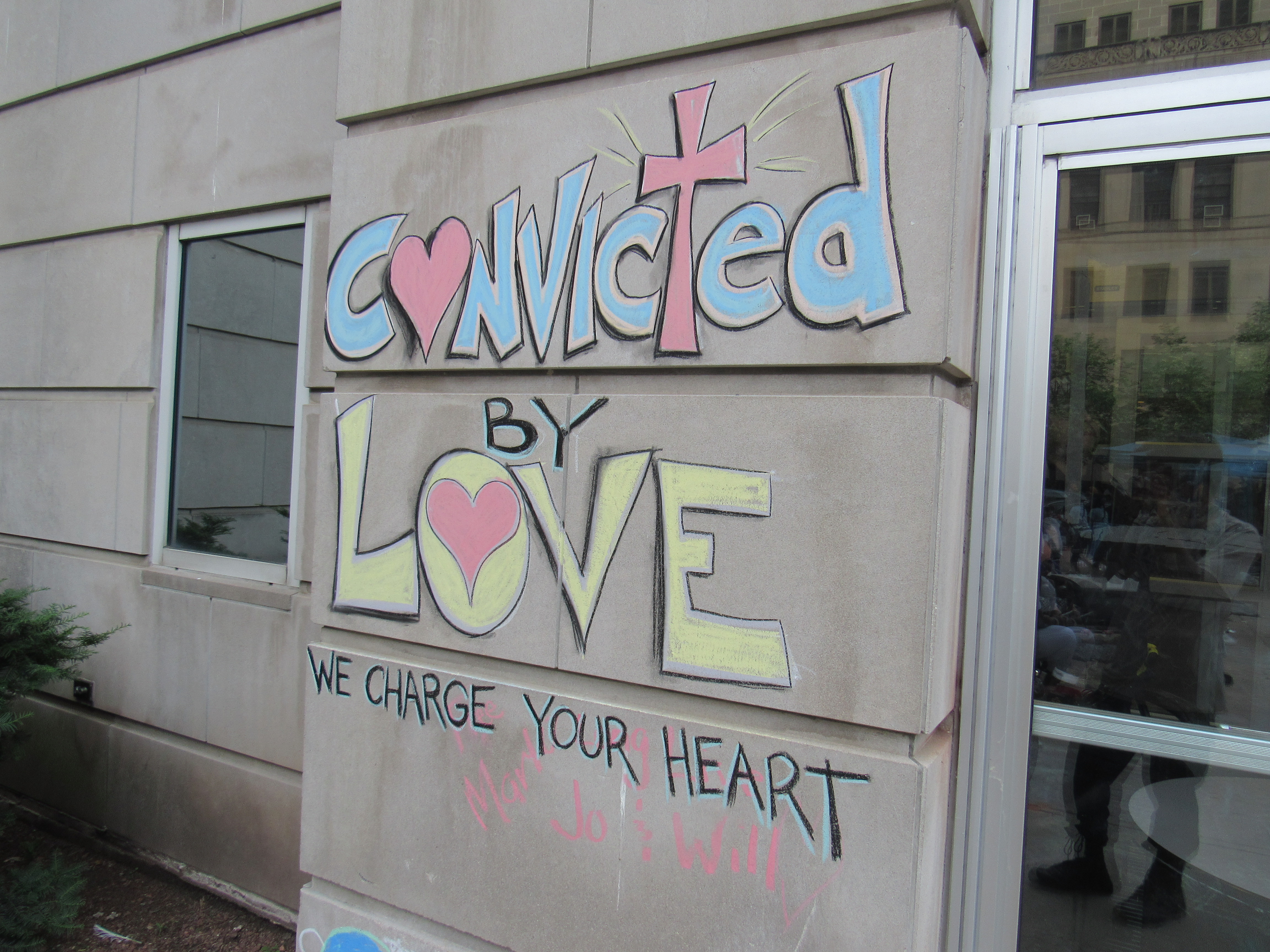
Protesters leave chalk messages outside the Milwaukee County Jail during the summer of protest in 2020. (Photo by Isiah Holmes)
Simmons said the experience “crushed all the hope I had for even trying to do something the right way. Like…I ain’t understand it.” He told the Examiner that it’s important not to judge people solely based on what they did in the past. “That’s not who they are, that’s who they was,” said Simmons, recalling that he started getting into trouble when he was 13 years old. “I’ve been in and out since I was a kid,” he said.
Growing up, Simmons said he didn’t have many positive role models around. “So basically if you grow up around people, if your whole family is involved in certain things and they teach you that the right thing to do is live the street life — be in the streets, sell drugs, do whatever in the streets — that’s what you’re going to grow up believing is the right thing to do,” he explained. “Now a lot of my family…They breaking the cycle of being in and out of prison. My dad started his own business. My auntie started her own business. Everybody is breaking the cycle from getting in trouble and going back to jail.”
It took Simmons until his last prison sentence to decide he had to break the cycle. Before the experience with Booker, Simmons was working with his uncle and staying away from old friends and bad influences. But when he spoke to the Examiner, Simmons was being held at Milwaukee’s Community Reintegration Center, after being charged with firearms-related offenses in December for which he has yet to be convicted, and remains presumed innocent until proven guilty. If he beats this new case, Simmons hopes to transfer his probation to Texas where he has family, and leave Milwaukee behind. The DOC has recommended that his supervision be revoked.
“I made some mistakes, I did some things in the past, made some bad decisions, and that made me who I am today,” said Simmons. “Everything I went through made me want to do better and be better.”
Man’s battle to stay out of prison raises questions about probation agent powers was originally published by Wisconsin Examiner.






















Heartbreaking situation and a perfect example of how probation and parole agents rather than helping can easily ruin someone’s life without accountability. Unfortunately this individual doesn’t have the resources to sue but you can be sure many others have had a similar experience. The public would like to see a plan as to how the DOC will prevent this from happening again.