Employees at Mental Health Clinics Want to Join Union
Employees at Rogers Behavioral Health in West Allis and Madison are unhappy.
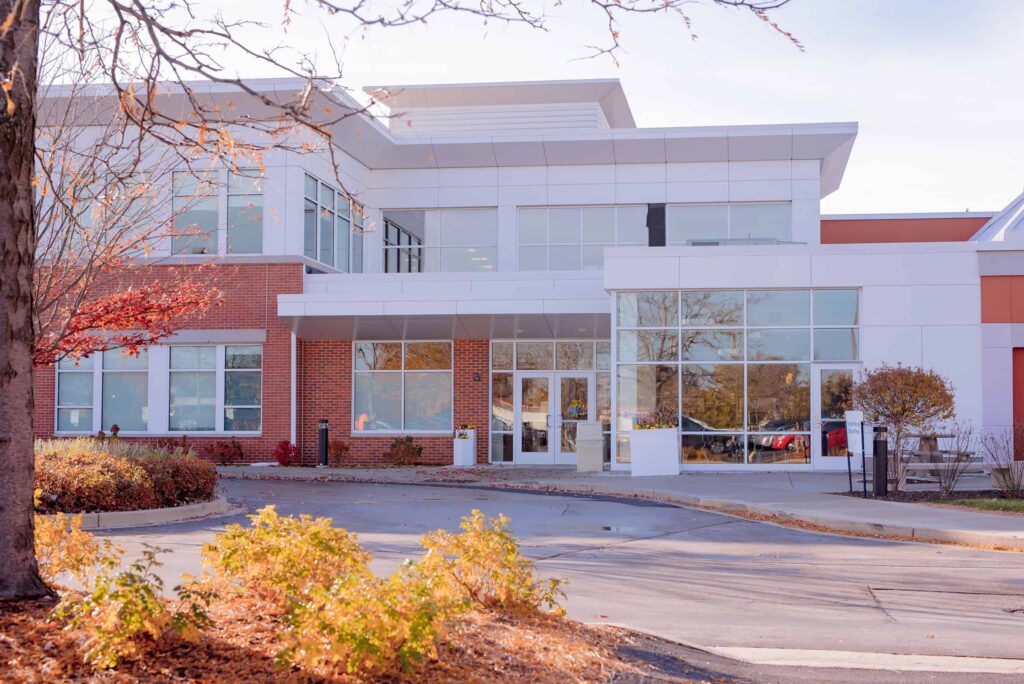
The West Allis clinic operated by Rogers Behavioral Health is one of two in Wisconsin where employees are seeking union representation. (Rogers Behavioral Health media photo)
Staff members at two Wisconsin mental health clinics are seeking union representation after what some employees describe as policy changes that have increased client caseloads and reduced one-on-one care for clients.
The clinics — one in Madison and one in West Allis — are owned by Wisconsin-based Rogers Behavioral Health. The Oconomowoc-based nonprofit organization operates a network of mental health hospitals, residential treatment clinics and outpatient clinics in 10 states.
Starting Monday, officials with the National Labor Relations Board will hold a hearing in Milwaukee to set union election dates for 63 employees in West Allis and 35 in Madison.
The hearing is expected to take up to three days, according to documents filed with the NLRB by a lawyer representing Rogers. The case will entail “extensive testimonial and documentary evidence” about which employees at each location should be included in the vote, the attorney stated in a motion to schedule the hearing and reserve the dates.
Workers at the West Allis and Madison locations want to join the National Union of Healthcare Workers. The California-based NUHW already represents Rogers employees at three locations in California as well as one in Pennsylvania.
Three employees at the West Allis clinic have been fired, according to the union, which has filed an unfair labor practice charge with the NLRB. The union is accusing Rogers of violating federal labor law by retaliating against the terminated health professionals for supporting the union.
The Wisconsin Examiner sent email messages to Rogers Friday morning, Feb. 20, seeking comment about the union drive, and at the invitation of the organization’s communications office sent five questions Friday afternoon. Rogers has not responded; this report will be updated with comments Rogers supplies.
Clinic employees cite increased caseloads
Employees involved in the union drive said in interviews that they and their colleagues enjoyed their jobs and caring for their patients. But recent changes, they said, have made their work more difficult and didn’t benefit patients.
“When I first started, people were pretty happy and satisfied with their roles,” said T’Anna Holst, a therapist who works at the West Allis clinic. “As time goes on, caseloads kept increasing for therapists.”
Other program changes reduced patients’ ability to have individual time with their clinicians, which “was really unfortunate for us, but also for the patients, who were expecting that when they come to our program,” Holst said.
“All of the changes were about increasing the number of patients that were coming into the building,” said Stephanie Lohman, a nurse practitioner. “It did not seem to have a cohesive plan and no plan would be communicated.”
Lohman said she is one of the three employees fired from the West Allis clinic, and that her termination came the Monday after she and nearly a dozen other coworkers had presented a petition seeking union recognition. When she directly asked the upper level executive who fired her, she said, she was explicitly told she was being dismissed “without cause.”
“Our local leaders, including my direct boss, were not aware this was happening,” Lohman said, adding that she was not given time to prepare notes in order to transfer coverage for the patients in her care.
Patient advocacy
At the Madison clinic, Erin Quinlan is a behavioral specialist whose job includes assisting therapists and helping to conduct group therapy sessions.
“The people that I work with are incredible,” Quinlan said. “They care very, very deeply about the work that they do and having a positive impact on the lives of patients.”
After she was hired in July 2024, “Caseloads increased and individual time with patients was decreasing,” Quinlan said. “I just became concerned about how that was impacting our being able to support those patients.”
Coworkers shared those concerns, she said.
Employees said they were left with the impression that the changes that concerned them were coming from higher up in the organization’s hierarchy, not their local managers.
Lohman said that in measuring staff productivity, the organization moved to relying on “metrics like visits per day.” That replaced a system that took into account that some patients needed more time than others, she said.
Increased caseloads were presented as ways to increase the number of patients being served, Lohman said, but instead, employees were working “to their maximum capacity, ignoring actual patient or worker needs.”
At the clinic level, “Rogers is run by caring professionals,” she said. “Despite the corporate push to do metric care, patient-centered care continues to be done.”
All three employees said they and their coworkers believed forming a union and being able to bargain collectively would give them a stronger voice as advocates for their patients.
“I take being an advocate and speaking up as a very important part of my job,” Quinlan said. She added that she routinely sought to raise concerns with “anyone who would listen, including management.”
She said she got no response, however. “It was because I didn’t really see any return communication, that was when I made the decision to go to the union,” Quinlan said.
Both the Madison and West Allis groups initially petitioned for Rogers to voluntarily recognize the union, citing large majorities of supporters. The organization rejected those requests, and union supporters then sent petitions for elections to the NLRB.
Union represents other Rogers workers
The NUHW grew out of a California health care union that was founded in the 1930s and subsequently joined what would later become the Service Employees International Union. After an acrimonious split from SEIU in 2009, the National Union of Healthcare Workers formed as an independent union.
An unsigned memo from the organization urging employees to vote against the union was briefly posted at the Madison clinic in the days after members petitioned for union representation Jan. 23. The Wisconsin Examiner obtained a photograph of the memo, which employees said was later taken down.
The memo describes the union as having “no experience or connection in Wisconsin.” It does not state that Rogers employees in four other U.S. clinics are now represented by the union.
Employees at a Rogers mental health and addiction services clinic in Walnut Creek, California, voted for the union to represent them in 2023 and settled a first contract in 2024.
“It’s an excellent contract,” said NUHW’s communications director, Matt Artz, and included “substantial salary increases and caseload limits,” according to the union’s website.
After employees at Rogers clinics in Los Angeles and San Diego petitioned for union representation, the union was recognized voluntarily at those locations, which then negotiated contracts similar to the agreement at Walnut Creek, Artz said. In December 2025, a Rogers clinic in Philadelphia also voluntarily recognized the union after being petitioned by employees there.

Employees at the Madison clinic operated by Rogers Behavioral Health are seeking union representation. (Rogers Behavioral Health media photo)
Employees at two Wisconsin mental health clinics seek union representation was originally published by Wisconsin Examiner.