
PFAS Levels in Great Lakes Fish Are Dropping
The declining levels were driven by an industry phase-out of legacy chemicals
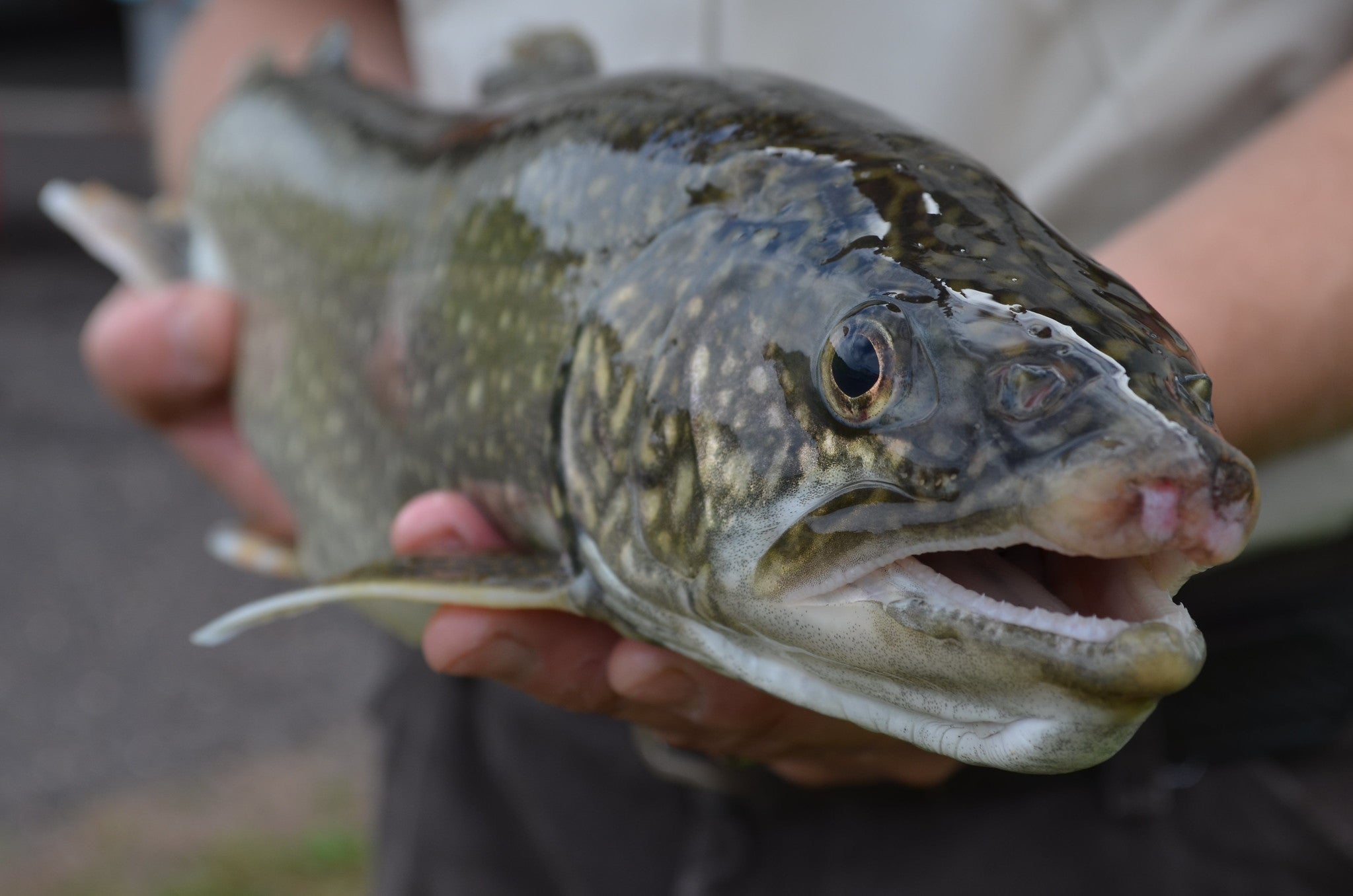
Adult lake trout reared at Iron River National Fish Hatchery in Wisconsin. Katie Steiger-Meister/USFWS Midwest Region (CC BY)
A new study published last month in the Journal of Great Lakes Research shows that PFAS levels in Great Lakes fish are on the decline as manufacturers have phased out some chemicals in recent decades.
Current and former researchers with the Environmental Protection Agency’s lab in Duluth analyzed PFAS levels in almost 1,000 samples taken from lake trout and walleye across all five Great Lakes from 1975 to 2020.
They tested for 45 chemicals and found PFAS levels peaked between 2007 and 2017 in all lakes. They’ve been dropping ever since, said Sarah Balgooyen, the study’s lead author.
“We do see the ecosystem responding to these changes in industrial practices, which is a great thing,” Balgooyen said. “We know that industry is in a very powerful position at this point because what they do changes what’s happening in our environment.”
Declining levels in almost all lakes came after manufacturers agreed in the early 2000s to phase out two of the most common PFAS chemicals, particularly PFOS. The chemical is known to build up in both fish and people, and it was detected in all samples.
Balgooyen, who now works for the Colorado School of Mines, is a former research chemist who worked at the EPA’s Office of Research and Development. Under President Donald Trump, the agency reorganized and eliminated the office tasked with researching environmental and health risks, including from toxic chemicals like PFAS.
PFAS, short for per-and polyfluoroalkyl substances, are a group of thousands of synthetic chemicals that have been linked to serious health risks that include kidney and testicular cancers. The so-called forever chemicals don’t break down easily in the environment.
The highest PFAS concentrations in fish were observed in Lake Erie at around 450 parts per billion (ppb) before declining to around 50 ppb in 2020. Lake Michigan peaked at around 150 ppb and later fell to around 80 ppb by 2020.
Lake Superior generally had the lowest levels of PFAS due to its large volume and fewer people and less industry along its shore. Levels peaked around 60 ppb and later fell to around 25 ppb in 2020.
Eric Haataja, a fishing charter captain in Milwaukee, said the findings are great news for anyone who enjoys eating fish.
“It’s healthier. It’s better for you if there’s less of the toxins,” Haataja said.
He added it would be nice to see federal funding for industry and wastewater treatment plants to help them filter out chemicals before discharging to the lakes.
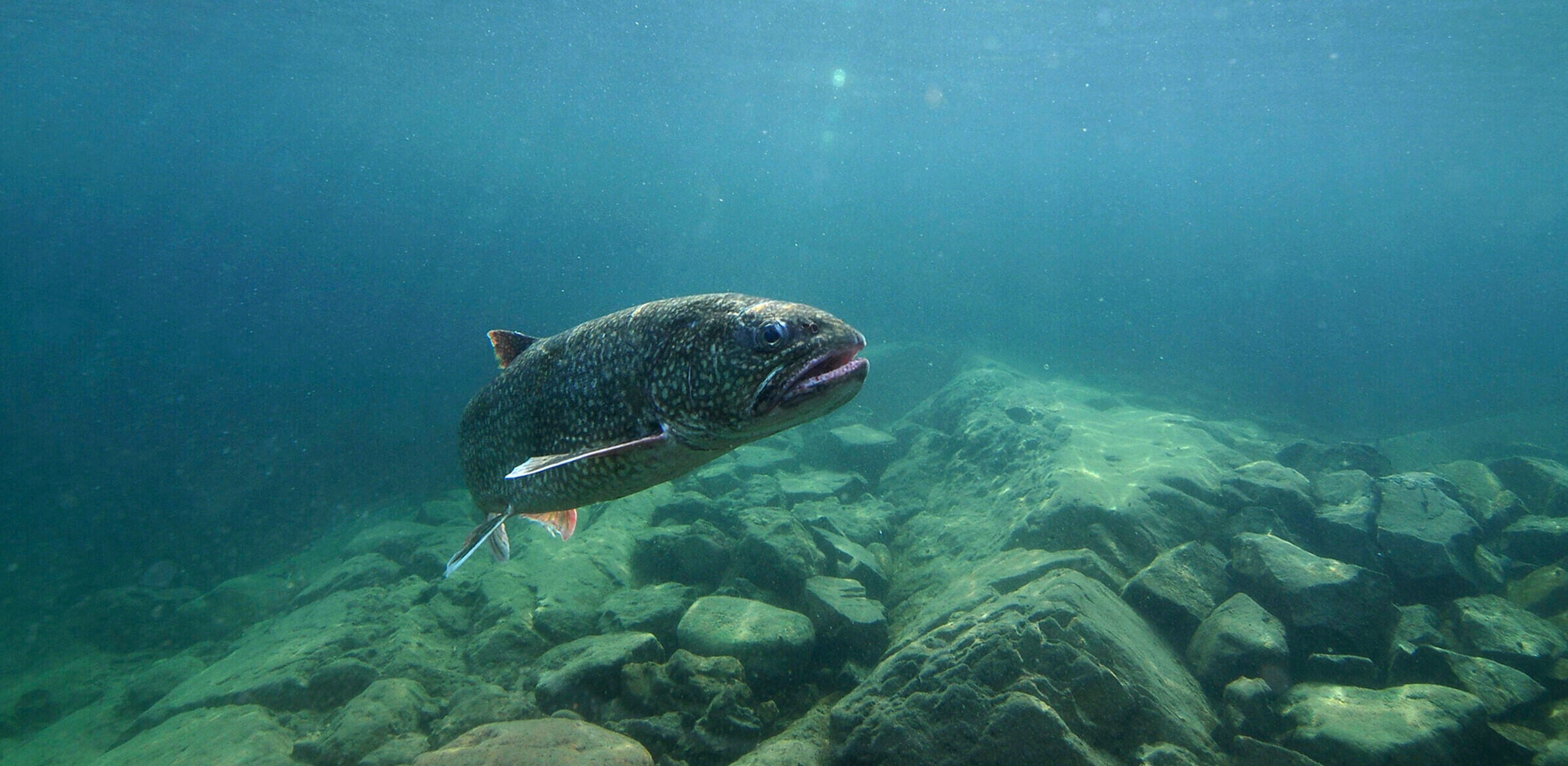
This September 12, 2018 photo provided by the Great Lakes Fishery Commission shows a lake trout swimming off Isle Royale, Mich., in Lake Superior. Andrew Muiri/Great Lakes Fishery Commission via AP
Lakes Erie and Ontario had consistently higher PFAS levels in fish, which is attributed to the two lakes having more people and industry discharging wastewater to treatment plants, which are often ill-equipped to remove the chemicals. PFAS have been used by paper mills, metal plating industries and manufacturers of firefighting foam. It’s also been used in household products, including cookware and stain-resistant carpets.
“It’s promising that levels have gone down on some of these ones that we know we’re concerned about. But we don’t know if they’re necessarily low enough,” said Gary Ankley, a former EPA research toxicologist and co-author of the study.
Ankley said guidelines on unsafe levels for eating fish have been changing in recent years as emerging science shows health risks at lower levels. The same information has prompted state and federal regulators to pursue lower limits for PFAS in drinking water.
In 2020, the Wisconsin Department of Natural Resources recommended people avoid eating fish with levels greater than 200 ppb. Last year, the state updated its guidelines based on best practices from the Great Lakes Consortium. The DNR now considers fish with PFOS levels greater than 40 ppb unsafe to eat, said Sean Strom, the DNR’s fish and wildlife toxicologist.
Anglers are currently advised to eat smelt only once a month in Lake Superior, and once a week for both smelt and yellow perch in Lake Michigan due to PFOS in fish. The DNR and state health officials are currently reviewing fish consumption guidelines, which they expect to release later this spring.
“The cutoff values have decreased, and it’s certainly plausible that because of that we may have to issue new or different advisories based on those new guidelines,” Strom said.
With much still unknown about the effects of PFAS on people’s health, Balgooyen said it’s good for anglers to follow the guidelines and be cautious about where they’re fishing.
While PFAS are unlikely to reach undetectable levels, Ankley said the findings highlight that progress can be made by analyzing the occurrence and effects of chemicals in the environment and working with industry and partners to reduce contamination.
“But to do that, you need to have a strong science and centralized regulatory agenda to make that happen,” he said.
PFAS levels in Great Lakes fish are dropping, study finds was originally published by Wisconsin Public Radio.
If you think stories like this are important, become a member of Urban Milwaukee and help support real, independent journalism. Plus you get some cool added benefits.
More about the PFAS Problem
- $80 Million In PFAS Grants Could Start Flowing This Fall - Danielle Kaeding - Mar 26th, 2026
- Wisconsin Conservation Voters Celebrates Historic $132 Million Pfas Victory - Wisconsin Conservation Voters - Mar 18th, 2026
- After Years of Delay, WI Legislature Passes Bills Addressing PFAS - Danielle Kaeding - Mar 17th, 2026
- Gov. Evers Celebrates Senate Approval of Bipartisan Pfas Compromise After Years of Urging Republicans to Release $125 Million to Fight Pfas Contamination Statewide - Gov. Tony Evers - Mar 17th, 2026
- Gov. Evers Signs New PFAS, Lead Regulations - Danielle Kaeding - Mar 2nd, 2026
- Gov. Evers Builds Upon Efforts to Clean Up Wisconsinites Water, Approves New Rule Changes Strengthening Pfas Drinking Water Standards - Gov. Tony Evers - Mar 2nd, 2026
- PFAS Levels in Great Lakes Fish Are Dropping - Danielle Kaeding - Feb 6th, 2026
- Gov. Evers and GOP Lawmakers Near a Deal on PFAS Pollution - Danielle Kaeding - Jan 22nd, 2026
- Gov. Evers Optimistic About Reaching Final Deal With Republican Lawmakers to Secure Release of $125 Million in Long-Awaited Pfas Investments - Gov. Tony Evers - Jan 21st, 2026
- Bipartisan Push to Tell Counties Faster When Water Tests Fail - Henry Redman - Dec 19th, 2025
Read more about PFAS Problem here