

Trump’s Trade War Slams Duluth-Superior Ports
Port last year had lowest tonnage shipped for all cargoes since 1938.
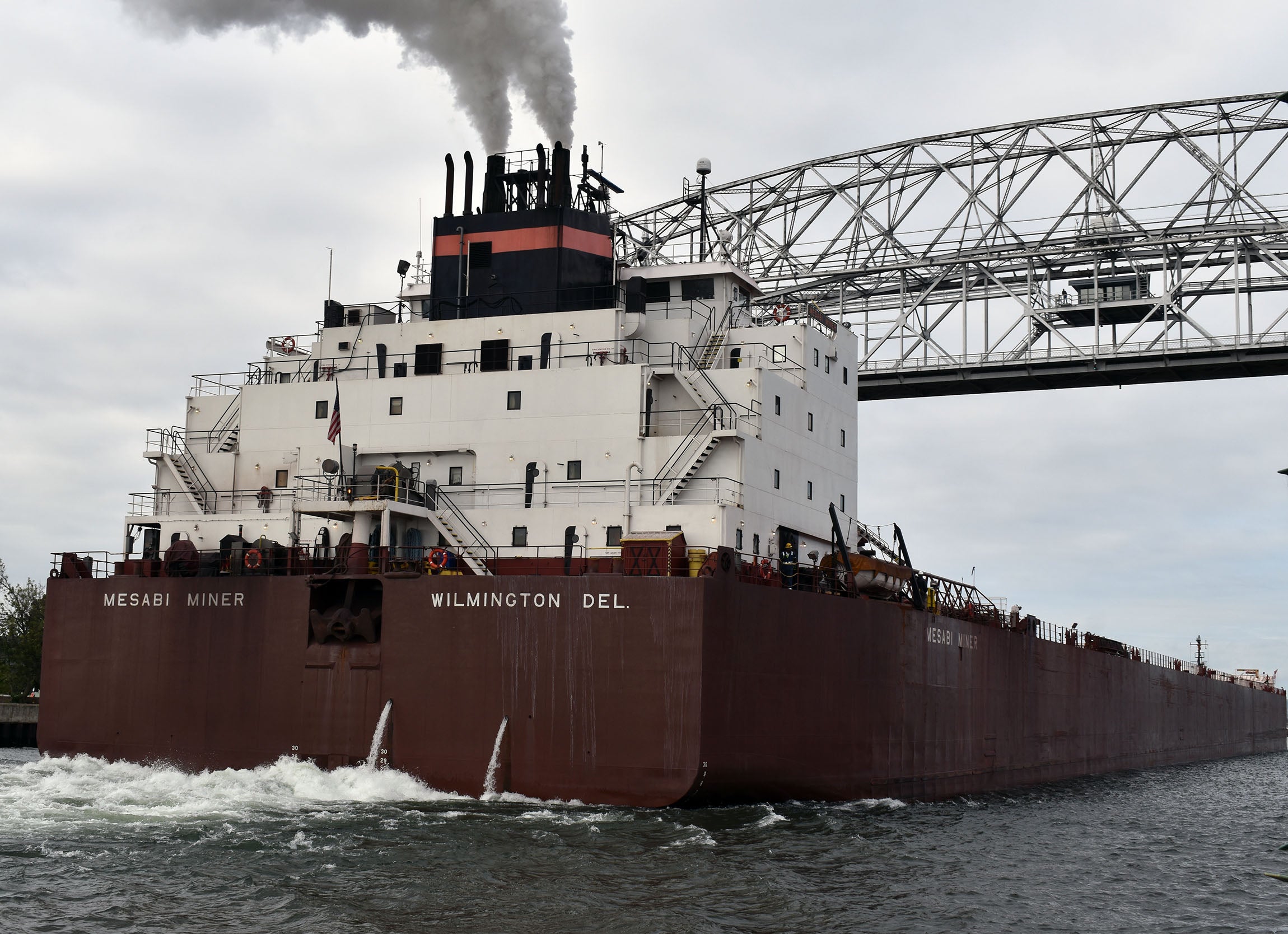
The Mesabi Miner comes into the Duluth-Superior harbor on Tuesday, Sept. 6, 2022. Danielle Kaeding/WPR
Cargo shipments at the Port of Duluth-Superior slumped last year due to headwinds driven by unfavorable market trends, shifting trade lanes and President Donald Trump’s trade war.
The amount of cargo moved through the port dropped to 25.3 million tons, declining 14.6 percent from 2024. That’s the lowest tonnage shipped through the port since 1938, according to season end figures released Friday by the Duluth Seaway Port Authority.
Canadian trade dropped 41 percent across all cargoes, and overseas trade fell 30 percent to its lowest level since the St. Lawrence Seaway opened in 1959. The amount of grain moving through the port also dropped to roughly 560,000 tons, the lowest level seen since 1890.
The drop in iron ore shipments played a significant role in the overall decline of cargo at the port.
Iron ore accounts for more than half the port’s cargo every year, with nearly 19.4 million tons transported in 2024. But shipments dropped 15 percent to 16.5 million tons last year. A 2.5 million-ton drop in iron ore exports to Canada made up most of the decline amid President Donald Trump’s tariff war.
The port faced challenges at the season’s outset, said Kevin Beardsley, executive director of the Duluth Seaway Port Authority.
“Mines were being idled in the spring before we even started,” Beardsley said. “The auto industry and steelmaking industry were already in a challenging position.”
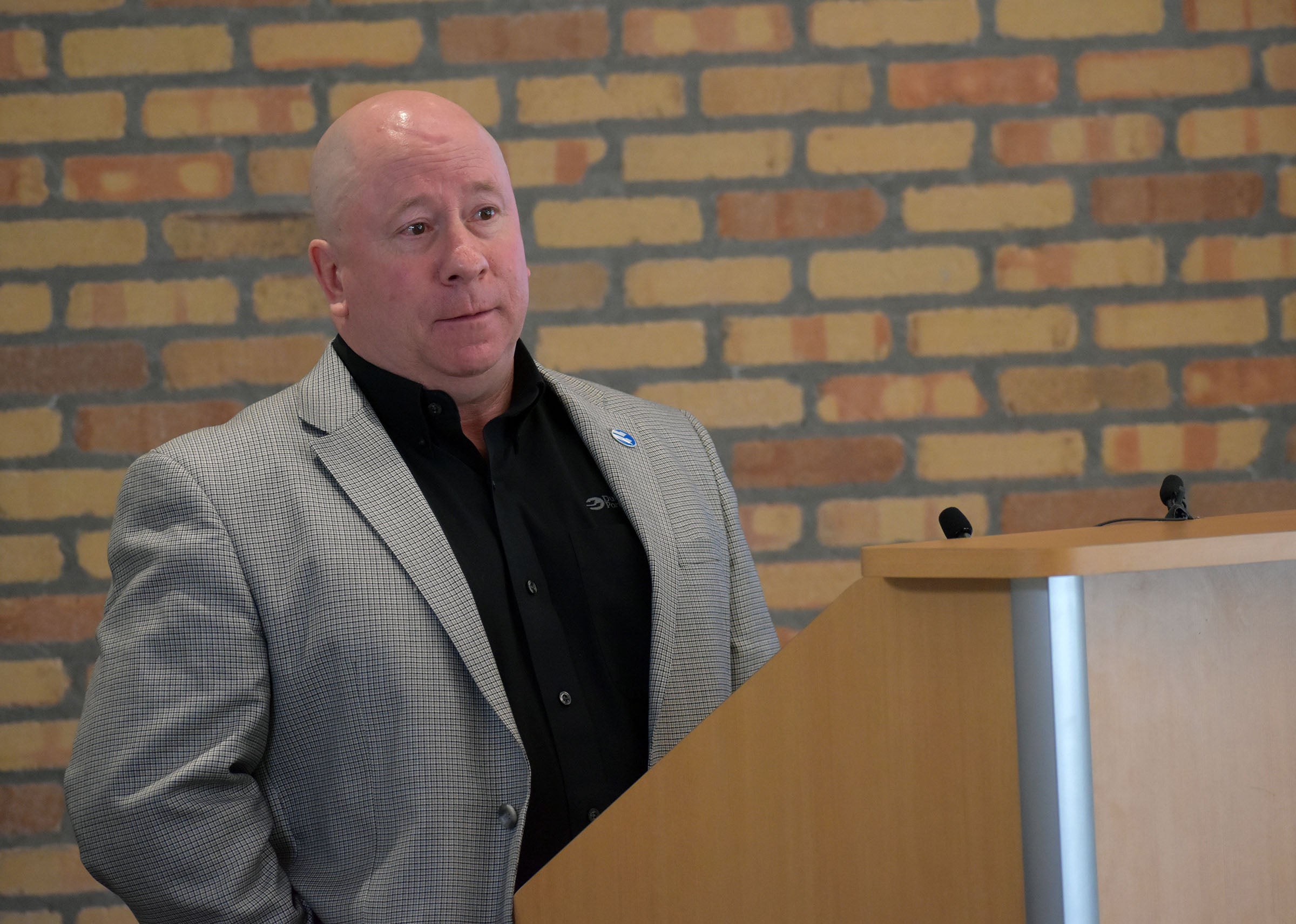
Kevin Beardsley, executive director of the Duluth Seaway Port Authority, said the Port of Duluth-Superior faced challenges at the outset of 2025 as the auto industry struggled and mines idled. A UW-Superior transportation and logistics professor says the decline in cargo shipments at the port last year is likely due to President Donald Trump’s trade war. Danielle Kaeding/WPR
The U.S. auto industry struggled with the onset of Trump’s tariffs on steel and aluminum, with billions of dollars in losses. The industry heavily relies on iron ore from mines on Minnesota’s Iron Range, and Cleveland-Cliffs idled two mines there early last year.
In December, Algoma Steel in Sault Ste. Marie, Ontario also announced it was shutting down its blast furnace and coke-making operations as Trump’s 50 percent tariff on steel imports limited the company’s access to the U.S. market.
Iron ore exports from the Port of Duluth-Superior went to the facility among others to be refined into steel, but port authority officials say they don’t know how much of the 2.5 million-ton drop would’ve gone there.
Canada gets a lot of its iron ore from the Twin Ports, the ore coming from Minnesota’s Iron Range, said Daniel Rust, professor of transportation and logistics management at the University of Wisconsin-Superior.
“When trade wars break out, I believe this is one of those casualties,” Rust said.
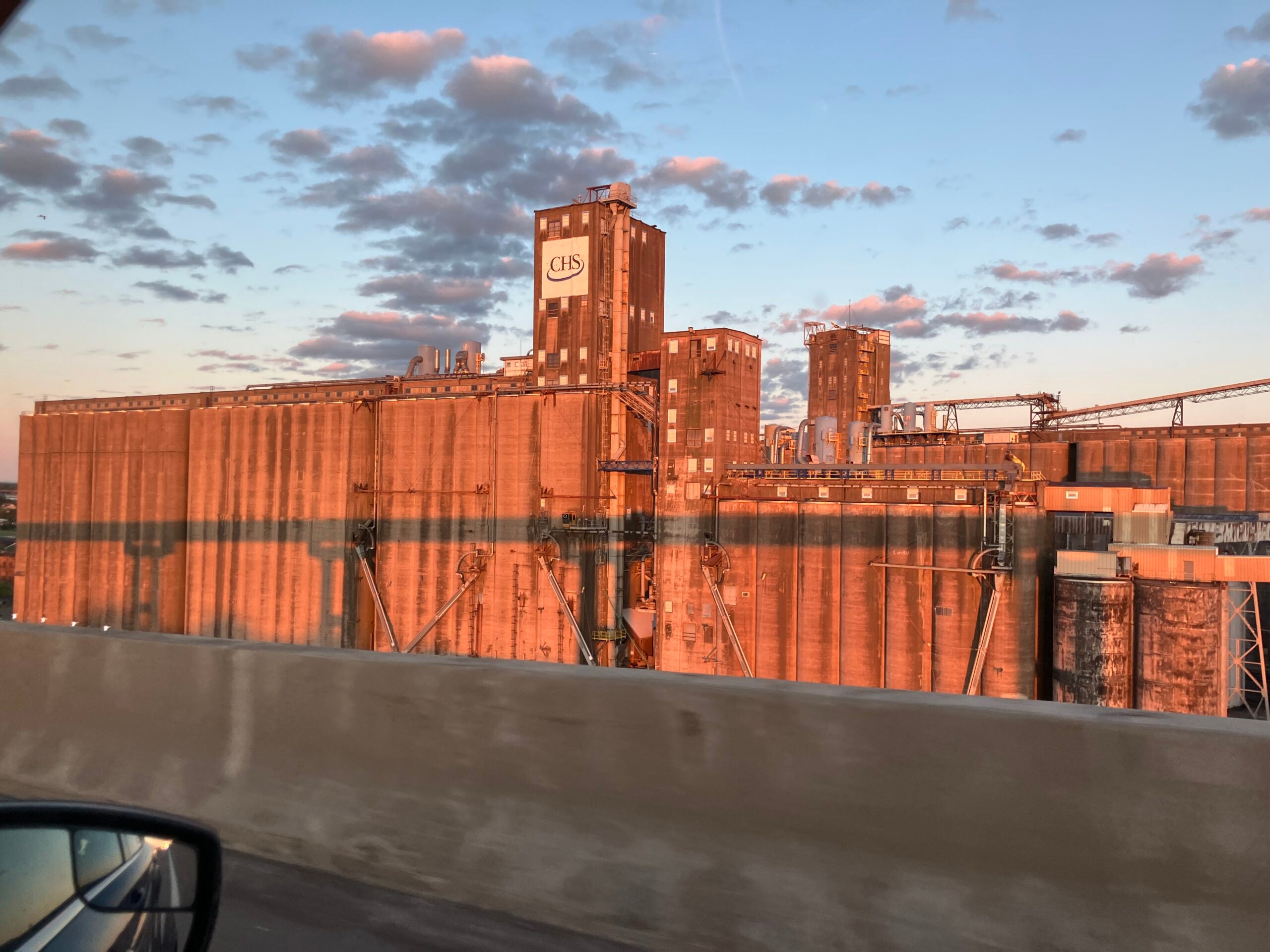
The CHS grain elevator in Superior will be shut down at the end of August. Grain shipments comprise the third largest commodity behind iron ore and coal at the Port of Duluth-Superior. Robin Washington/WPR
A decision by an agribusiness firm also led to shipping declines.
Earlier in the year, the global agribusiness firm CHS, Inc. announced it was closing the port’s largest grain terminal in Superior by the end of August after almost a century in operation. Rust said it was a major blow for grain exports, noting CHS handled most of the port’s grain volume.
Once they stopped, it’s no surprise that those numbers are much lower than they would have been if CHS had continued to operate that facility,” Rust said.
Port authority officials said former importers of grain like Russia are now competing with the Twin Ports. Rust added it makes more economic sense for CHS to move grain by rail for shipment on larger vessels at the Gulf Coast and Pacific Northwest.
As grain shipments fell, the amount of coal shipped also dropped to 4.7 million tons.
“It is all related to changing energy trends and policies,” Jayson Hron, the port authority’s spokesperson, said.
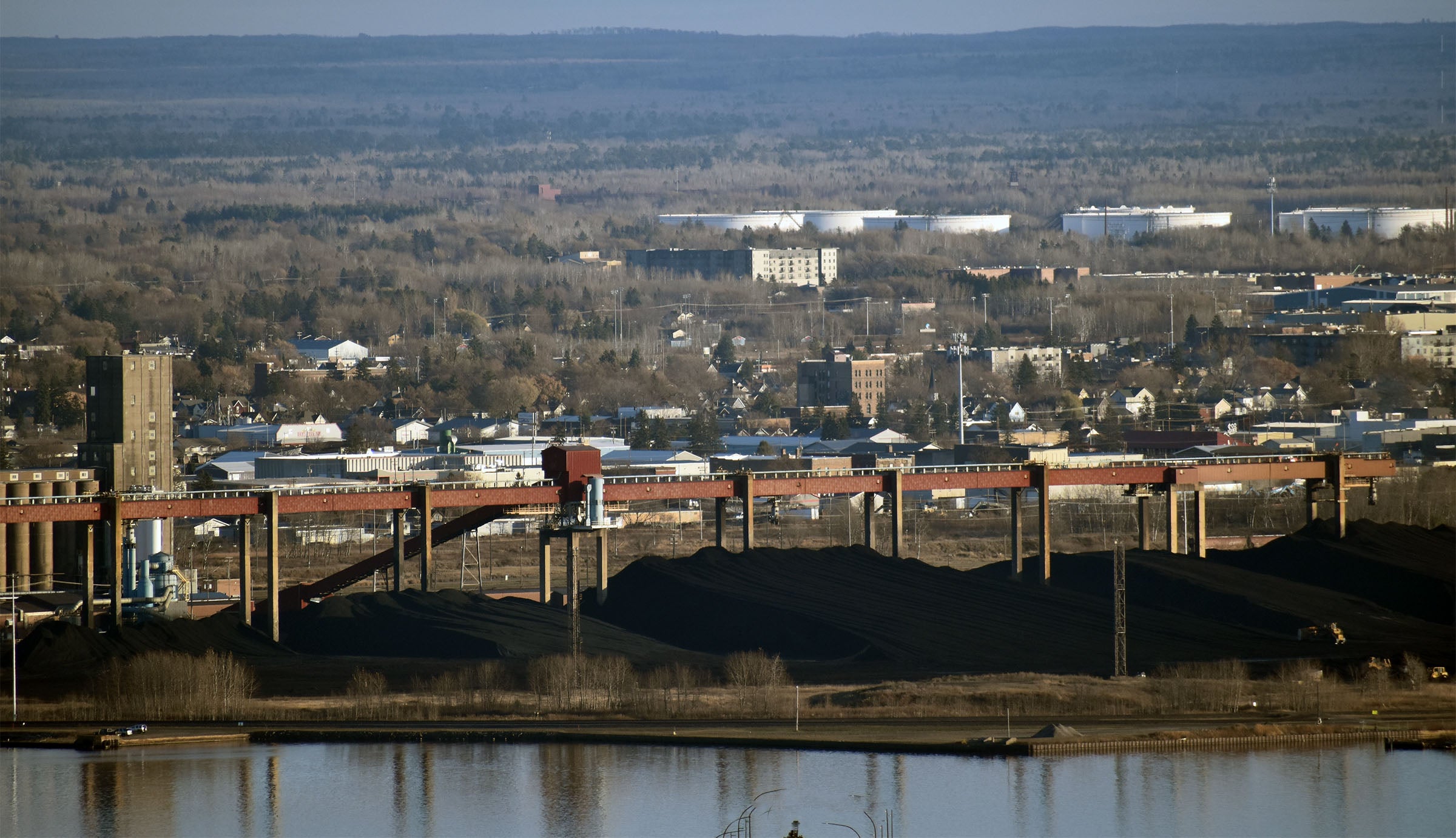
The Midwest Energy Resources Co. terminal in Superior is set to close when its lease ends next June. Danielle Kaeding/WPR
Late last fall, Midwest Energy Resources Company announced the closure of its coal terminal in Superior after nearly 50 years, saying it would not renew its 50-year lease at the end of June. The move comes as utilities have shifted away from coal-fired power plants toward natural gas, wind and solar.
Coal shipments reached a record 22 million short tons in 2008 or roughly half the port’s total tonnage. Since then, they’ve dropped 75 percent.
One bright spot for the port came from break bulk cargoes, which are usually heavy or oversized goods loaded individually on ships. The port saw a strong season for wind turbine components, and it’s moved 2.6 million freight tons since shipments first began in 2005. C. Reiss Company also opened a new bulk cargo terminal in Superior last year.
Also, Amsterdam-based Spliethoff, which has been offering monthly container shipping service, expanded its service between Duluth and the Mediterranean. Rust said he thinks there’s an opportunity to use that service for other cargoes in the future.
“I would anticipate in years to come that the port will lean into that even more,” Rust said. “Hopefully, we’ll see some growth.”
Trump’s trade war took a toll on shipments in the Twin Ports last year was originally published by Wisconsin Public Radio.





















Economists all over the country warned about the negative consequences of HWSNBN’s trade wars. Now every one of their predictions are coming to fruition. This administration’s economic policies hurt everyone except the uber rich and the oil producers. It’s time to vote these bozos and their sycophants out.
TACO tariff tantrums tank trade
Lizwah good one!