Fun With Baroque Music
Frankly Music features top performers playing Bach, Vivaldi and Scarlatti with style.
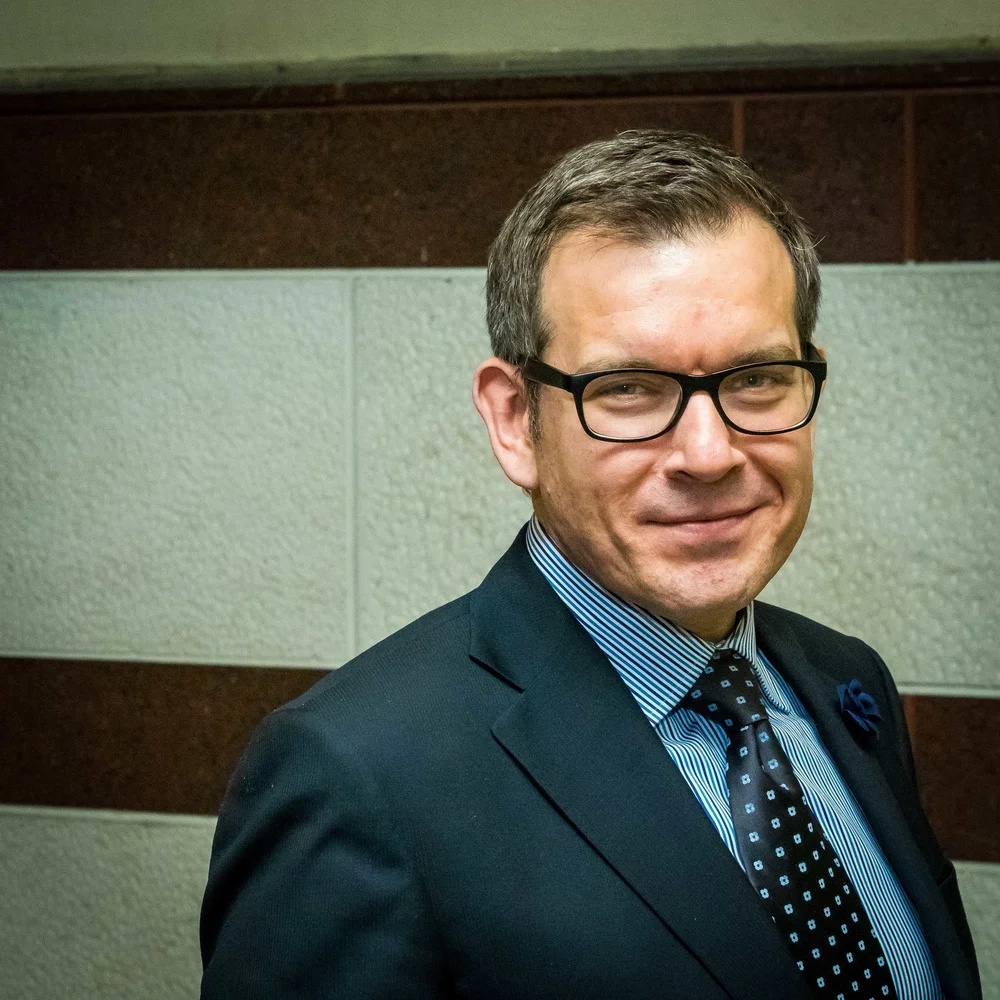
Paolo Bordignon. Photo credit: Matt Dine.
A Frankly Music concert on Monday, January 26, entitled Baroque Unbound, celebrates the special role of performance in the Baroque Era of western Classical music. The period will be represented by three late 17th-century composers: Scarlatti, Vivaldi, and J.S. Bach.
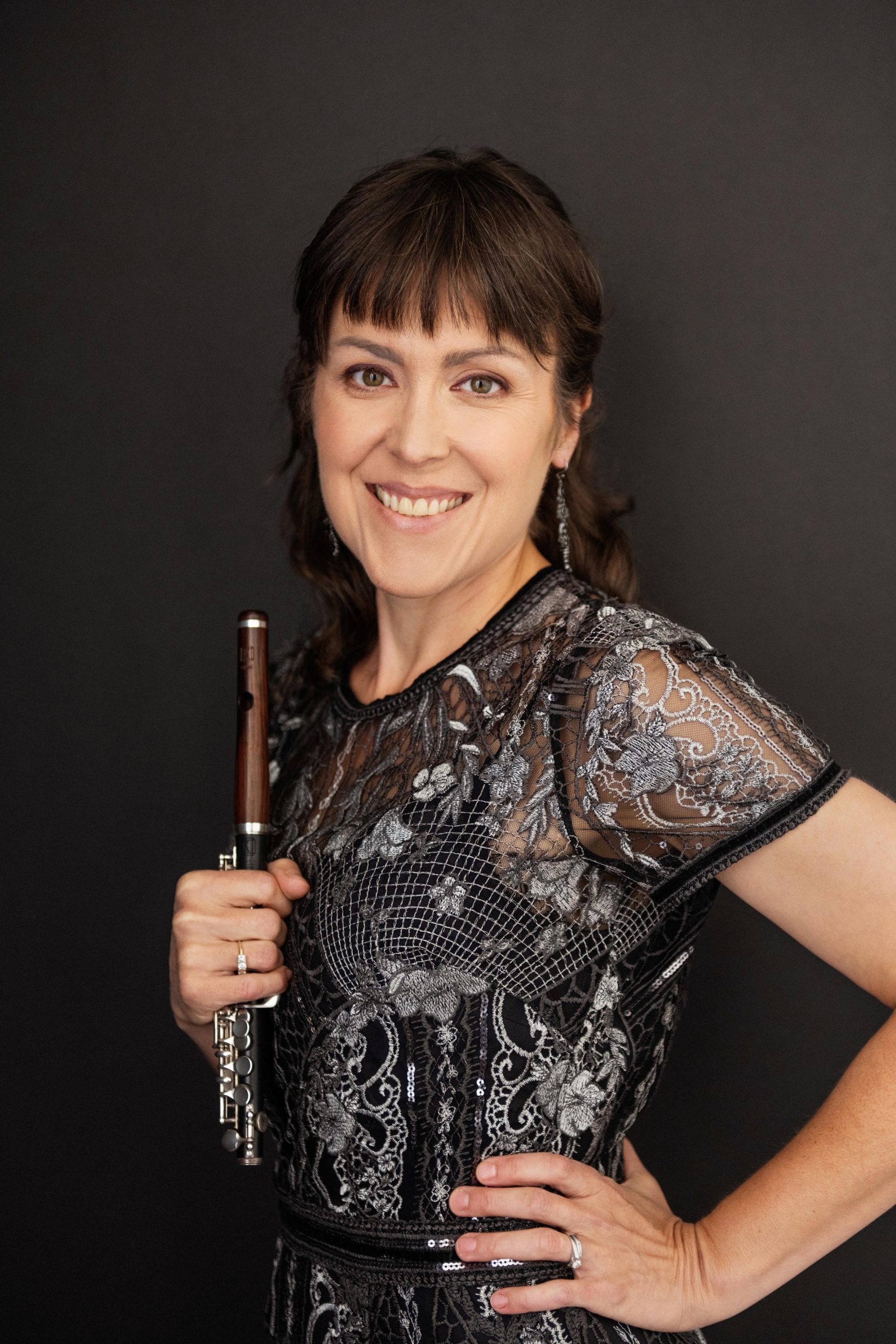
Jennifer Bouton. Photo courtesy of Frankly Music.
The Baroque era encouraged instrumentalists to display their virtuosity. Composers wrote virtuoso works for featured instruments. Baroque notation was intentionally sparse, leaving space for performers to elaborate the written music with ornamentation and personal interpretation — a practice understood as essential to the style rather than a deficiency of the score.
Frank Almond will present two artists who understand this well — harpsichordist Paolo Bordignon and piccolo player Jennifer Bouton.
A harpsichordist of the New York Philharmonic and organist and choirmaster of St. Bartholomew’s Church, Park Avenue, New York City, Bordignon performs widely on both instruments. His Bach scholarship led to his performing the 2025 premiere of newly discovered organ works by J.S. Bach.
The harpsichord often plays a supporting role, largely improvising a basso continuo foundation while other instruments draw the attention. Solo sonatas by Domenico Scarlatti (1685-1757), his K. 159, K. 241, and K 520, as well as a selection from a major groundbreaking work, the Well-Tempered Clavier, by Johann Sebastian Bach (1685-1750), will showcase the harpsichord as a solo instrument.
A review by the California publication Crescenta Valley Weekly praised a solo Bach harpsichord performance by Bordignon, calling it “a quiet marvel of concentration that allowed the listener to relish the details of each variation without sacrificing architectural control. The result was of a kaleidoscopic mosaic, with each variation a dazzling piece that tells on its own as well as part of a whole. Everything was carefully sculpted and considered, yet sounded utterly spontaneous.”
Bouton, a Milwaukee Symphony Orchestra member and piccolo professor at Roosevelt University and Carthage College, has made a comprehensive study of the Vivaldi scores.
Bouton will present two concertos by Antonio Vivaldi (1678-1741): his RV 444 and RV 445 for flautino. Period performances typically feature a pencil-sized wooden recorder. Bouton will play the contemporary piccolo.
Published Baroque scores often blend composers’ original notes with ornamentation added by earlier performers. Having recorded the set, Bouton is working to publish an “urtext” version of Vivaldi’s unadorned manuscripts of his three flautino concertos.
Bouton writes, “In my own process leading up to the recording, the simple shapes and harmonies which can seem like monotonous filler at first (arpeggios and triplets abound) began to feel like distinct color changes, each sixteenth note a door to be opened to a new harmonic frame. My concept of appropriate ornamentation dissolved into a sense that the concertos were a guide similar to a lead sheet used in jazz.”The Baroque “concerto grosso” format preceded the more familiar solo concerto. In this format, alternating sections, ripieno passages are played by a full ensemble, and concertino passages are played by a smaller group of soloists. Bach’s six Brandenburg Concertos, intended to demonstrate the range of instruments that could be featured as soloists, have become audience favorites.
Bach breaks the usual pattern in the Brandenburg Concerto No. 3, where nearly the entire ensemble is featured at one point or another. Twelve strings, three from each section, have their opportunity to briefly lead the music.
The ensemble for the Vivaldi concertos and the Brandenburg includes 13 additional string players, all from the Milwaukee Symphony Orchestra. Many of these players have also been featured in the Brandenburg Concerto No. 3 in recent MSO concerts.
YouTube recordings of the scheduled works may be previewed in an online playlist, including videos of Bouton’s recent recordings of the Vivaldi concertos.
Baroque music can challenge listeners unfamiliar with the style. With this concert, we have the opportunity to hear musicians who study and take ownership of their interpretation, understanding how to breathe life into what the composers had in mind.
The concert begins at 7 p.m., Monday, January 26. Frankly Music completes its season with a series of concerts at Schwan Hall on the Wisconsin Lutheran College campus at 8815 W. Wisconsin Ave., Wauwatosa. Tickets are available online.The series next presents 20th-century music on March 16, featuring selections by Leonard Bernstein, Henri Dutilleux, and Olivier Messiaen.
If you think stories like this are important, become a member of Urban Milwaukee and help support real, independent journalism. Plus you get some cool added benefits.


Preview
-
Present Music Celebrates Hindu Festival
 Mar 16th, 2026 by Michael Barndt
-
Frankly Music Showcases Virtuoso Players
 Mar 10th, 2026 by Michael Barndt
-
Six Centuries of Secular Song
 Mar 3rd, 2026 by Michael Barndt