AG Kaul Seeks Dismissal of Federal DOJ Voter Data Lawsuit
Wisconsin among 20 states where Trump administration demands sensitive voter data.
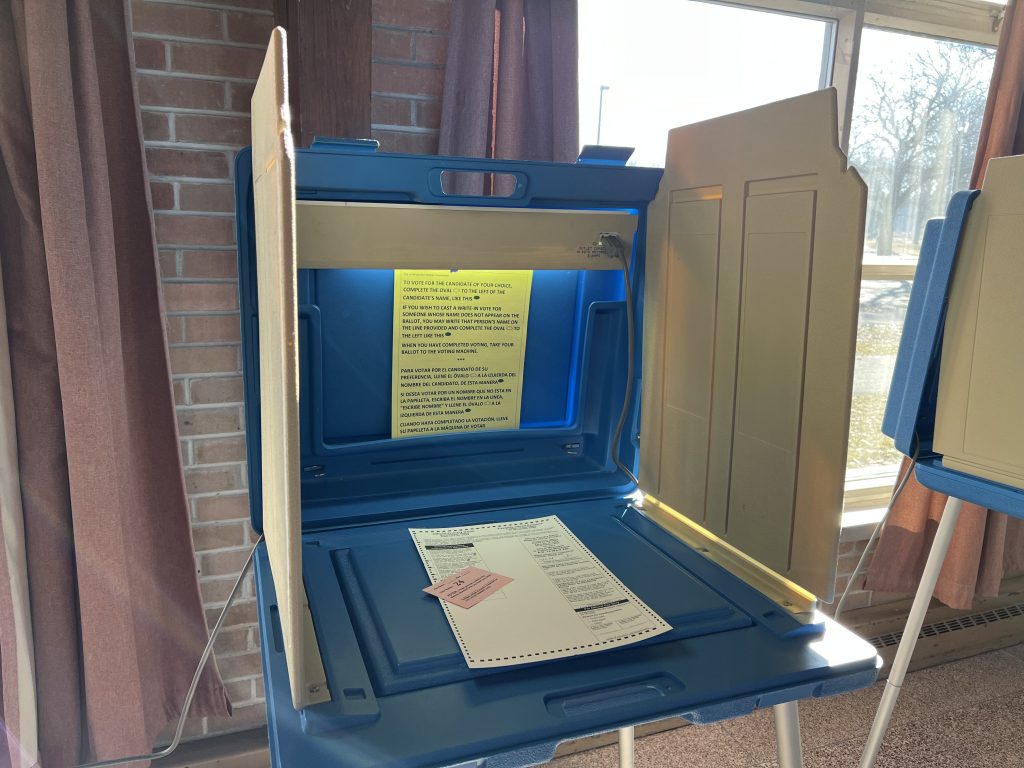
Voter booth. Photo by Jeramey Jannene.
Wisconsin Attorney General Josh Kaul and the Wisconsin Elections Commission (WEC) will battle the U.S. Department of Justice (DOJ) in federal court over a trove of sensitive Wisconsin voter data.
The DOJ filed a motion in federal court earlier this month asking a federal court to compel the WEC to release the state’s complete voter records, including sensitive voter data like Social Security numbers, driver’s license numbers and voters’ dates of birth. The DOJ is requesting the data from states across the country. It first requested the data from Wisconsin in June last year.
The WEC previously told DOJ that Wisconsin state statute expressly prohibits releasing this data. Kaul’s office responded to the lawsuit Thursday with a motion by Assistant Attorney General Samuel T. Packard-Ward arguing the DOJ’s motion is procedurally improper and announcing the state’s intention to seek dismissal of the lawsuit.
The legal action against the election commission was brought by the DOJ’s Civil Rights Division. Their motion was filed by Brittany Bennett, a DOJ trial attorney who represented Republicans in election related litigation before joining the DOJ under the Trump administration. In the lead up to the 2024 presidential election, Bennett brought a lawsuit against the State of Georgia on behalf of the state Republican Party arguing Georgia’s voting machines were not secure.
Both motions — to compel and dismiss — will be argued before the court simultaneously after an order issued Friday by U.S. District Judge James D. Peterson combining the briefing schedule.
As Urban Milwaukee previously reported, the case against the WEC has attracted heavyweight election attorneys in Madison and Washington D.C. with experience litigating election cases, including the 2020 Trump presidential campaign’s unsuccessful attempt to overturn the results of the election in Wisconsin.
Attorneys and advocacy organizations representing Latinos and retirees in Wisconsin expressed concern in legal filings that the data grab is part of an attempt by the DOJ to create a national voter database and substantiate President Donald Trump‘s unproven claims that millions of ballots are cast illegally by non-citizens in U.S. elections. These concerns were echoed by former DOJ attorneys.
The DOJ wants to use the data to remove voters from state voter rolls. There are already processes in place at the state level for maintaining voter rolls, including removing voters, which are created in line with federal election law. Nevertheless, the DOJ has proffered confidential legal agreements that would give the federal government access to sensitive voter data and the authority to identify voters for removal.
Assistant Attorney General for the Civil Rights Division Harmeet Dhillon has said, “You’re gonna see hundreds of thousands of people in some states being removed from the voter rolls, correctly. And by the way, why did [election officials] hesitate to do that in the past? Because the DOJ and some left-wing organizations would sue them when they did their jobs.”
The DOJ has brought voter data cases against more than 20 other states and the District of Columbia. So far, it has lost in two states, as federal judges dismissed cases in Oregon and California.
In California, U.S. District Judge David Carter, a Vietnam veteran and jurist appointed to the federal bench by former president Bill Clinton, concluded his order with a warning.
“The taking of democracy does not occur in one fell swoop; it is chipped away piece-by-piece until there is nothing left. The case before the Court is one of these cuts that imperils all Americans,” Carter wrote. “The erosion of privacy and rolling back of voting rights is a decision for open and public debate within the Legislative Branch, not the Executive. The Constitution demands such respect, and the Executive may not unilaterally usurp the authority over elections it seeks to do so here.”
If you think stories like this are important, become a member of Urban Milwaukee and help support real, independent journalism. Plus you get some cool added benefits.