
Wisconsin Reviewing EPA-Approved Pesticides For PFAS
Is EPA ignoring international standards supported by scientists or is it 'fake news'?
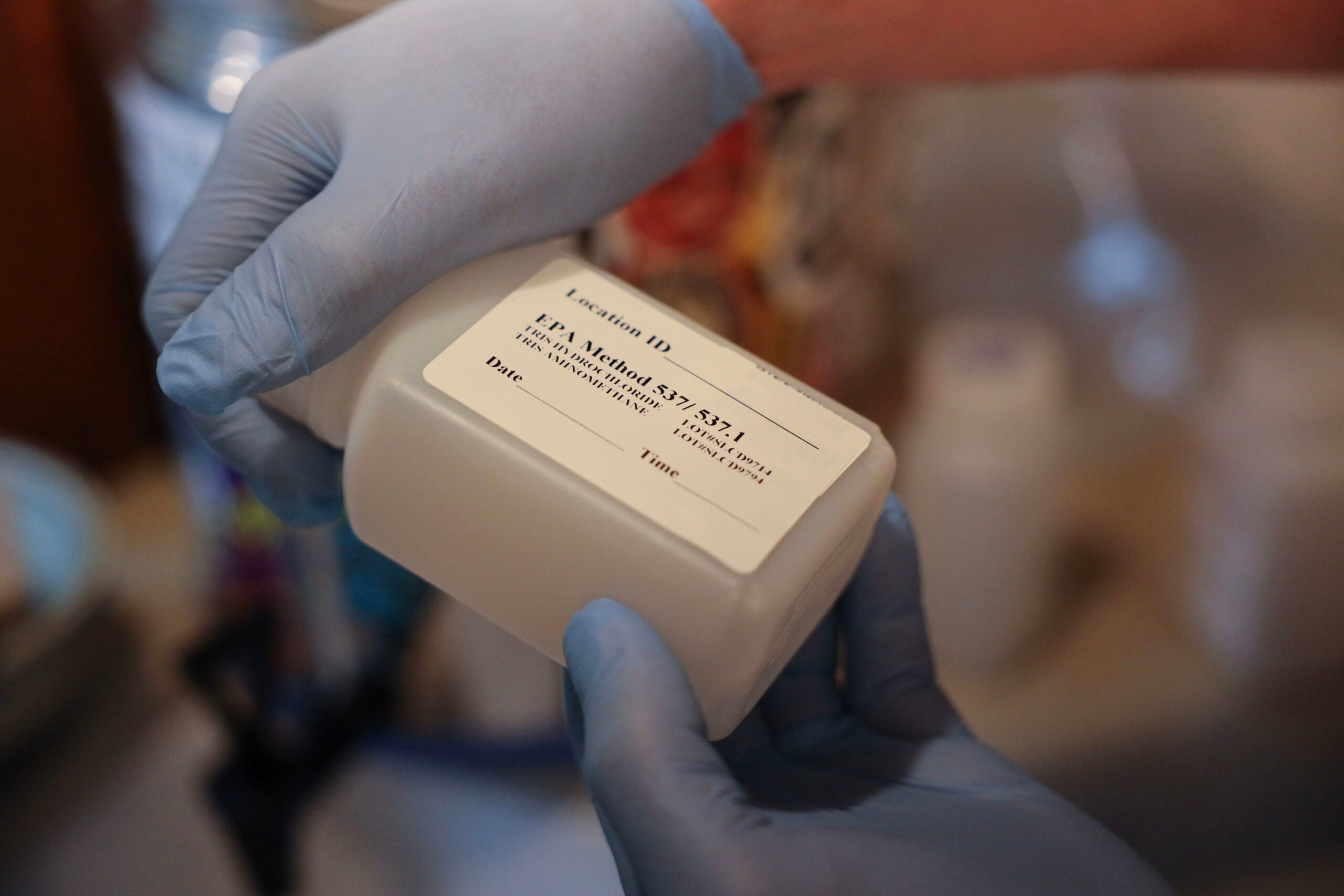
Madison resident Brad Horn collects a water sample to test for PFAS in Madison, Wis., on Aug. 8, 2022. Coburn Dukehart/Wisconsin Watch
Wisconsin is reviewing registration of pesticides that some Wisconsin farm groups say would help manage pests and disease, but some scientists and environmentalists argue they contain PFAS.
In November, the Environmental Protection Agency approved the use of two pesticides, isocycloseram and cyclobutrifluram. A spokesperson for the Wisconsin Department of Agriculture, Trade and Consumer Protection said Friday that the agency had received applications to register pesticide products containing those active ingredients in Wisconsin.
The EPA claims that the approved pesticides are not PFAS because they contain only a single flourinated compound, which the Biden administration in a rule last year determined are not PFAS. But activists say the agency is dismissing the internationally recognized definition for per- and polyfluoroalkyl substances developed by the Paris-based Organisation for Economic Cooperation and Development.Beth Neary, co-president of the Wisconsin Environmental Health Network, was among more than 150 scientists who signed a statement last year supporting the international definition. Neary said she doesn’t trust the EPA to protect human health and the environment.
“They want to add more fluorinated agrochemicals into the environment when I feel like, at this point, we should be stopping that flow into the environment because we know that (some of) these PFAS chemicals … are carcinogenic,” Neary said.
PFAS, short for per- and polyfluoroalkyl substances, are a group of thousands of synthetic chemicals that have been linked to serious health issues and don’t break down easily in the environment. Neary said there should be more study of chemicals used in products like pesticides before they’re approved for use.
More FAKE NEWS from the Democrats and their media allies!
First off, the EPA-approved single fluorinated compounds are NOT “forever chemicals”, NOT PFAS, and also NOT a new concept.
In fact, it was the BIDEN ADMIN in a public rulemaking that defined PFAS in 2023, and guess… pic.twitter.com/408giw1NWd
— Lee Zeldin (@epaleezeldin) November 25, 2025
In a social media post, EPA Administrator Lee Zeldin said the approved pesticides underwent extensive studies that showed no human health risks, calling reports they contain PFAS “fake news.”
Agribusiness firm Syngenta developed both pesticides. Cyclobutrifluram, or Tymirium technology, is a seed-applied fungicide that’s touted for protection of cotton and soybean seeds against microscopic worms and fungal diseases. Isocycloseram is an insecticide that targets pests known to damage corn, vegetables and potatoes.
Doug Rebout, president of the Wisconsin Soybean Association, supported Tymirium technology as “a convenient and effective seed-applied management tool for Wisconsin’s nearly 17,000 soybean farmers.” He told the EPA it would help manage a microscopic roundworm that attacks soybean roots and reduces yields by up to 30 percent in Wisconsin, costing farmers nationwide roughly $2 billion each year.
Meanwhile, supporters of isocycloseram said it could help with a pest that’s long shown resistance to insecticides. Russ Groves, an entomology professor and Extension specialist at the University of Wisconsin-Madison, said the insecticide has been evaluated in Wisconsin to gauge its effectiveness at controlling the Colorado potato beetle. The pest eats the leaves off potato plants, resulting in serious yield losses.“We’ve evaluated this tool alongside others, and we see that it’s a very good fit,” Groves said. “It performs well in controlling the insect.”
The insect is a major pest for commercial potato production, and Wisconsin ranks among the top potato-producing states in the country with yields valued at more than $400 million last year. As for environmental and health concerns, Groves said he must have confidence in the EPA’s evaluation of pesticides.
Under the Biden administration’s rule, the EPA said its definition of PFAS focused on substances most likely to persist in the environment. The agency said “lightly” fluorinated substances are expected to degrade into the chemical trifluoroacetic acid or TFA, which it says is unlikely to build up in food chains and doesn’t pose the same risks as long-chain PFAS.
Even so, concerns exist about their long-term effects in the environment. Research shows there’s been an increase in the approval of pesticides with fluorinated compounds over the last decade. Minnesota and Maine are banning intentionally added PFAS in pesticides by 2032.
Cyclobutrifluram and isocycloseram are among five pesticides with fluorinated compounds that the Trump administration has been seeking to approve. Sara Walling, water and agriculture program director at Clean Wisconsin, said the EPA should pump the brakes on approval of such pesticides. Both she and DATCP said the agency relies on EPA’s science for determining risks to human health and the environment.“It would be extremely challenging for DATCP to be able to say no to these chemicals being approved in the state” under its review process and regulatory authority, Walling said.
She added that the EPA reviews the effects of pesticides individually rather than in combination, saying people are being “bombarded” by a number of chemicals at once.
A DATCP spokesperson said it would not prohibit use of federally approved pesticides unless it was found that accumulated levels were higher than water and food safety standards set by EPA and other agencies. The agency has up to 20 business days to review applications for a state pesticide license.
Wisconsin reviews registration of EPA-approved pesticides that are said to contain PFAS was originally published by Wisconsin Public Radio.
If you think stories like this are important, become a member of Urban Milwaukee and help support real, independent journalism. Plus you get some cool added benefits.
More about the PFAS Problem
- Wisconsin Conservation Voters Celebrates Double Win - Wisconsin Conservation Voters - Apr 8th, 2026
- Gov. Evers Signs Bills Releasing Funds to Combat PFAS Pollution - Baylor Spears - Apr 7th, 2026
- Wisconsin Conservation Voters Applauds Gov. Evers for Signing Historic PFAS Funding Bill - Wisconsin Conservation Voters - Apr 6th, 2026
- $80 Million In PFAS Grants Could Start Flowing This Fall - Danielle Kaeding - Mar 26th, 2026
- Wisconsin Conservation Voters Celebrates Historic $132 Million Pfas Victory - Wisconsin Conservation Voters - Mar 18th, 2026
- After Years of Delay, WI Legislature Passes Bills Addressing PFAS - Danielle Kaeding - Mar 17th, 2026
- Gov. Evers Celebrates Senate Approval of Bipartisan Pfas Compromise After Years of Urging Republicans to Release $125 Million to Fight Pfas Contamination Statewide - Gov. Tony Evers - Mar 17th, 2026
- Gov. Evers Signs New PFAS, Lead Regulations - Danielle Kaeding - Mar 2nd, 2026
- Gov. Evers Builds Upon Efforts to Clean Up Wisconsinites Water, Approves New Rule Changes Strengthening Pfas Drinking Water Standards - Gov. Tony Evers - Mar 2nd, 2026
- PFAS Levels in Great Lakes Fish Are Dropping - Danielle Kaeding - Feb 6th, 2026
Read more about PFAS Problem here