

Conservation Projects Face 2026 Cutoff of State Stewardship Fund
'So many beautiful, wonderful places kind of on the chopping block.'
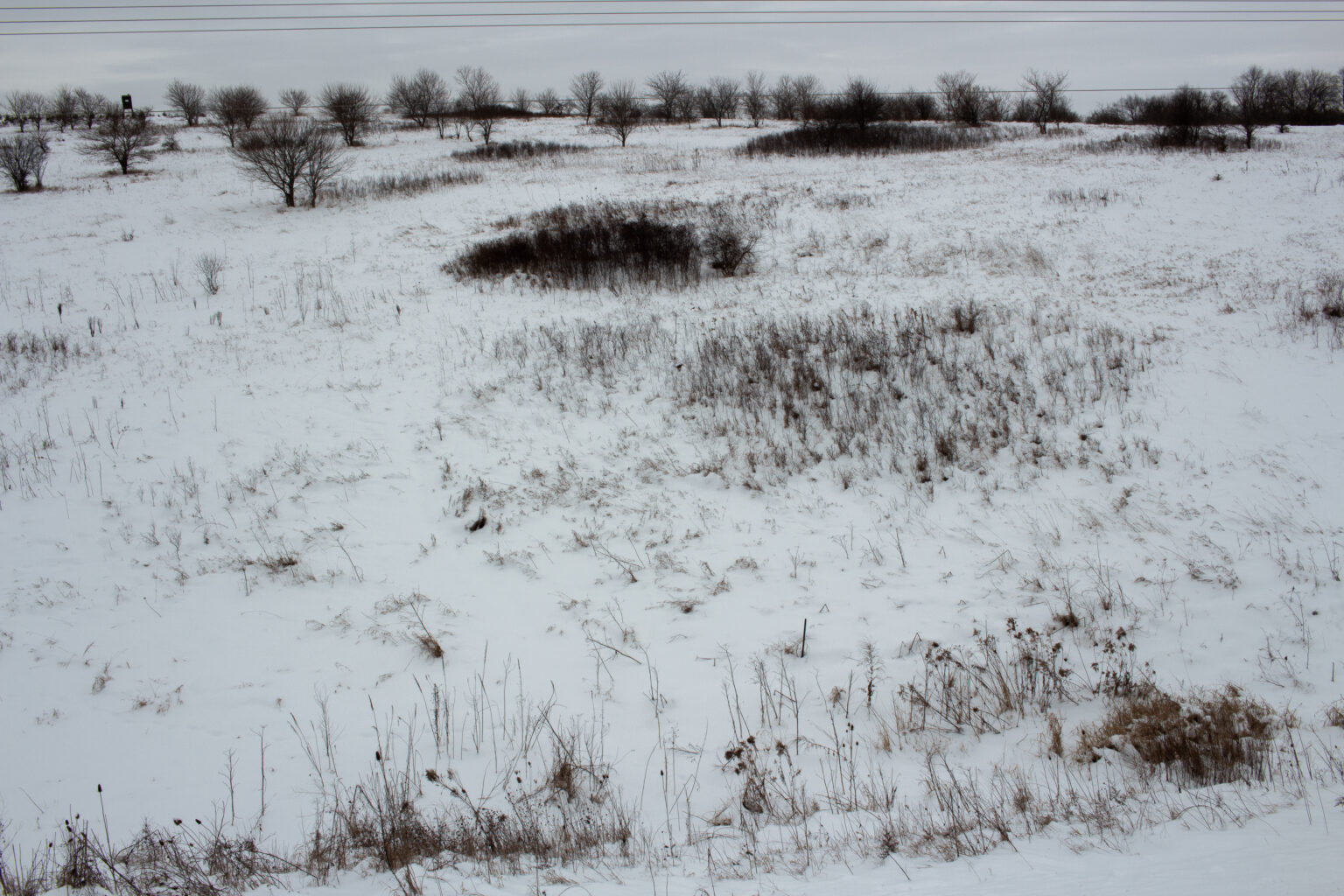
An oak savannah in southern Dane County that the Badgerland Foundation is working to conserve using Knowles-Nelson Stewardship funds (Photo by Henry Redman/Wisconsin Examiner)
The looming shutdown of Wisconsin’s decades old Knowles-Nelson Stewardship Grant program has put conservation projects across Wisconsin at risk as land trusts attempt to muddle on without the program that has protected more than 700,000 acres of land in the state.
Without the stewardship fund, projects to conserve 1,300 acres of Northwoods forest near the headwaters of the Wisconsin River in Vilas County, hundreds of acres of “ecologically significant” wetlands in Door County and dozens of acres of prairie and grassland in Dane County could go unfinished.
“It’s a bit bleak and it’s so disheartening to know that there’s so many beautiful, wonderful places kind of on the chopping block right now all across the state,” says Emily Wood, executive director of the Door County Land Trust. “It’s not just us. We hear from our partners that there are hundreds and thousands of acres that are just not going to be protected if [the program] goes away, and that’s going to have such an impact, domino effect, on future generations.”
The Knowles-Nelson Stewardship fund was created in 1989 to fund land conservation in Wisconsin. The program provides grants to local governments and non-profits to cover some of the costs for purchasing and conserving land that can be used for recreation, preserving animal habitats and supporting local industries such as forestry.
The program enjoys massive bipartisan support, yet in recent years, some Republicans in the state Legislature — largely from communities in the northern part of the state — have grown hostile to it, claiming that the program has too often been used to fund the purchase of land up north, depleting local tax bases.
Republican legislators have also complained that they no longer have oversight over the Department of Natural Resource’s management of the program after a Wisconsin Supreme Court decision last year found that the Legislature had given itself an unconstitutional veto authority over the DNR’s grant decisions.
Several attempts have been made to save the program from expiring next summer. In his initial state budget proposal, Gov. Tony Evers asked to extend the program for ten years with $100 million in annual funding. Republicans stripped that provision from the budget immediately.
Rep. Tony Kurtz (R-Wonewoc) and Sen. Patrick Testin (R-Stevens Point) have authored a bill that would extend the program for four years at $28 million per year. The bill also includes a provision that would require the full Legislature to approve any land purchases that cost more than $1 million — a proposal that critics say would be far too slow for the speed at which real estate transactions need to move.
A separate proposal from Sen. Jodi Habush Sinykin (D-Whitefish Bay) would re-authorize the program for six years at $72 million per year and create an independent board made up of members appointed by the Legislature to approve large land purchases through the program.
But there has been little progress made on advancing either proposal and now conservation groups are trying to plan for the next year without the support that Knowles-Nelson has traditionally provided.
Wood says that her organization is trying to protect the landscape in one of the most ecologically significant parts of the state. The challenge for her group is that Door County’s natural beauty draws tourists and increased development, yet too much development would damage the natural beauty.
The Door County Land Trust has protected more than 5,000 acres of land in the county and Knowles-Nelson has covered half the cost in nearly every transaction, according to Wood. With the program shuttering next year, three projects totaling about $1 million — all of which scored highly on the DNR criteria — are at risk.
“The county as a whole receives a ton of money from the Knowles-Nelson stewardship fund, because we are so geared towards tourism and access to natural resources,” she says. The stewardship fund is critical for Door County to continue “to be the county that you know, everyone expects us to be when they get in the car and come up here.”
Near the southern border of Dane County, Filip Sanna and the BadgerLand Foundation are working with the Driftless Area Land Conservancy and The Prairie Enthusiasts to protect and restore vital oak savannah and prairie in southern Wisconsin.
Hundreds of years of agriculture have all but destroyed the native prairies in what was once one of the most ecologically diverse regions in the world.
The foundation has already conserved and gifted to the Driftless Area Land Conservancy hundreds of acres between Belleville and New Glarus that will soon be open to the public for hiking and hunting and used for sustainable practices such as regenerative agriculture. But future plans are threatened by the looming loss of stewardship funds.
Recently, a tract of about 30 acres became available on the market within an area environmental groups have targeted as important for protecting grassland bird habitat. The Prairie Enthusiasts wanted to conserve the land but funds through the stewardship program wouldn’t be available fast enough. So the BadgerLand Foundation and the Prairie Enthusiasts reached an agreement in which the foundation would purchase the land and then sell it to the Prairie Enthusiasts once the stewardship grant comes through.
Now those funds are uncertain and Sanna says it could sidetrack future plans.
One of the arguments Republican legislators have often made against the Knowles-Nelson program is that more populated areas in the southern part of the state should bear more of the land conservation burden.
But the program dying off could jeopardize land conservation in the population centers because land is more expensive there. Dane County’s recently enacted 2026 budget doubled the size of the county’s conservation fund from $5 million to $10 million. That, Sanna says, can be a Band-aid for now. But county and local governments are facing their own budget challenges and smaller counties won’t be able to step into the DNR’s conservation shoes. In many places, the local governments are also dependent on stewardship program funds to conserve and maintain public land.
“One of the responses we have to the uncertainty about Knowles-Nelson is to try to look to the county level and then some combination of county funding and private donations,” Sanna says. “That might work in Dane County, where we have a relatively strong tax base. But if you go to the neighboring counties around, Green and Iowa and Lafayette and all of those counties, that’s probably not an option.”
“if [Knowles-Nelson] dies, the next step is going to be, now you’re going to have nice parks around all the wealthy people, but all the rest of Wisconsin that is smaller population centers that’ll just be like towns, rural housing, farmland, private land,” he continues. “There won’t be public land.”
Way up in Vilas County, in the part of the state where the fight over land conservation has been most heated, a handful of administrative delays might end up killing a 1,300 acre conservation project because stewardship funds will no longer be available.
The Northwoods Alliance and Partners in Forestry are working together to use federal and Knowles-Nelson funds to preserve two tracts of land west of the town of Land O’ Lakes. Joe Hovel, director of Partners in Forestry, says the project would include trails as part of the extensive Wilderness Lakes bike path system.
Because the real estate deal on the project got delayed, and the slow speed at which the state and federal government have moved, it’s likely that the chance to use Knowles-Nelson dollars has already passed.
Hovel says the complaints about land conservation up north discount the economic value of protecting the land for recreational uses.
“It’s really short sighted in a sense that there isn’t enough respect for the recreational value of this land conservation stuff,” Hovel says. “The value of public access conservation land dwarfs, I mean it literally dwarfs, the value that timber revenue brings in.”
A report from the Outdoor Recreation Roundtable found that recreation on federal public lands generates $128.5 billion in economic activity every year. All the logging on federal land generates $200-300 million per year.
The Legislature has just over six months to extend the program. Wood says it would be a self-inflicted wound if elected officials allow a program that other states look to as a model to expire.
“It’s so disheartening to hear that the fund that has had so much success over the years, that other states look to how to fund conservation, they look to Wisconsin’s model on how to do it, and that we as a state, that same model is going to go down just because of partisan gridlock,” she says. “We really just need to keep it alive because funding it in a later year, or coming back and making changes to make it better are way more possible if it’s an existing program.”
“But coming up with another one from scratch, it just seems like it would be an impossibility. So right now, it does feel like we are just screaming to keep it, just keep it alive. Just don’t kill it.”
‘Just don’t kill it’: Wisconsin land trusts face 2026 expiration of Knowles-Nelson stewardship fund was originally published by the Wisconsin Examiner.
If you think stories like this are important, become a member of Urban Milwaukee and help support real, independent journalism. Plus you get some cool added benefits.



















Yet another case of republican myopia. It begins to look like they won’t be satisfied until the entire state is paved over by
corporate interests. I can’t help being amused by the irony they exhibit in calling themselves conservatives. Conserving what? Teddy Roosevelt would Blanche at their ignorance.
Worth noting: The Oneida county leaders are basing their “coordination” theory of opposition from the American Stewards of Liberty, an “non-profit” organization with funding tied to Koch Network donors.
The irony of these so-called “libertarians” supporting positions that literally are the opposite of property rights – telling me I can’t grant my land to a conservation trust if some local municipality doesn’t like it because they want more development – is just another example of their hypocrisy.
Tom Tiffany is just awful.