Bill Would Allow Wisconsin Youth Offenders To Appeal Life Sentences
More than 100 people would be eligible.
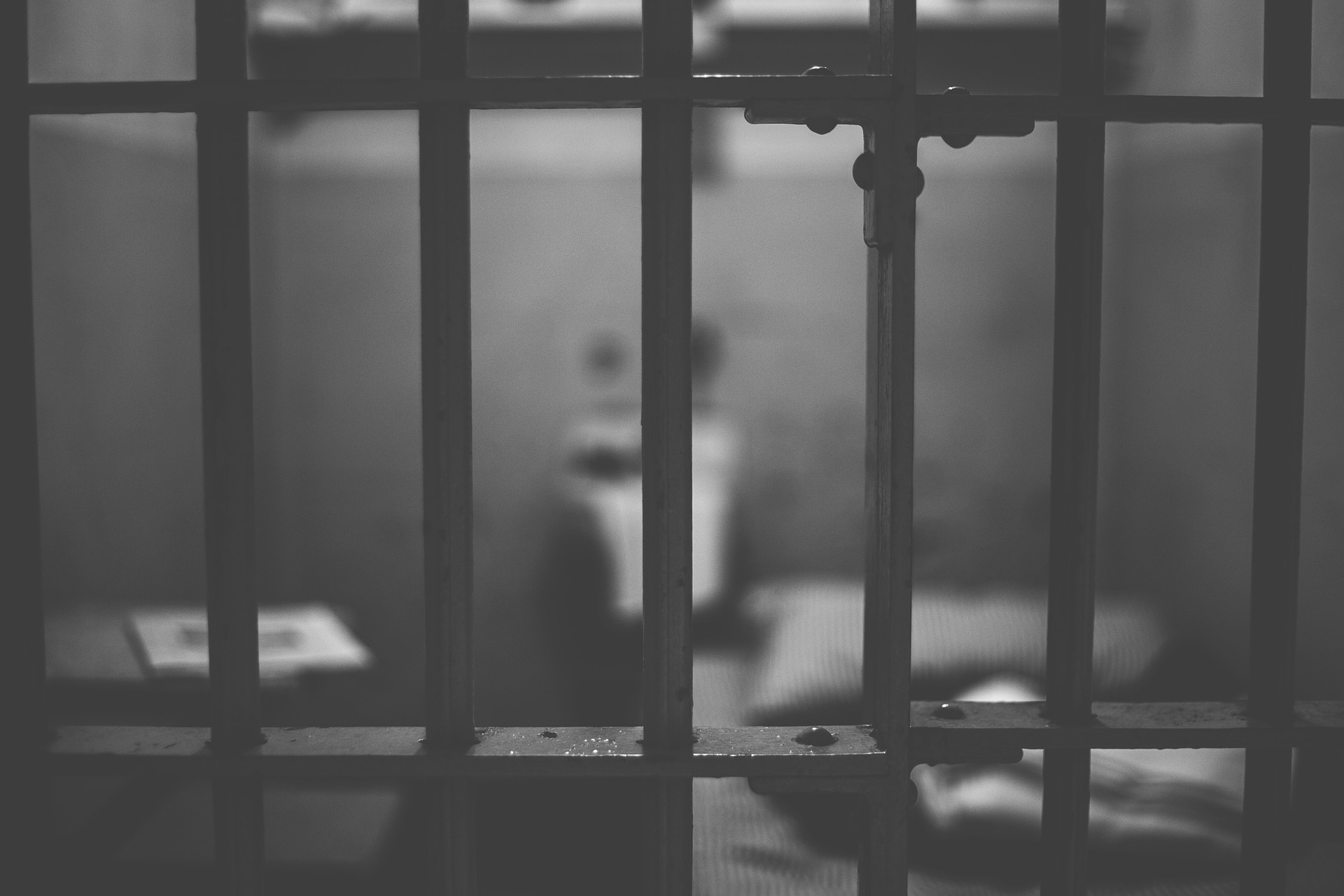
Jail (Pixabay License)
Since the 2022-23 session of the Wisconsin Legislature, a bill (SB-801/AB-845) has been discussed that would eliminate the court-imposed sentence of life without parole for a juvenile (under 18 years of age) and require the court to consider specific factors when sentencing youth, namely their level of maturity.
The bill would also allow those already sentenced to life as a juvenile the opportunity to appeal and adjust their sentences after serving 15 years for crimes that didn’t involve murder and at 20 years for those who were convicted of homicide.
Two U.S. Supreme Court rulings (Miller v. Alabama, 2012, and Montgomery versus Louisiana, 2016) have held that life without parole for a juvenile comes under the category of cruel and unusual punishment. The Court has found that youth shouldn’t be held to the same level of accountability as adults because they are not psychologically or emotionally as mature and their brains are not fully developed.
According to an April 2024 report by the Campaign for the Fair Sentencing of Youth, “Unusual & Unequal: The unfinished business of ending life without parole for children in the United States,” 28 states have banned juvenile sentences of life without parole (JLWOP):
“The scientific understanding that young people have limited decision-making abilities and impulse control informed widespread, rapid rejection of JLWOP in state legislatures, the Supreme Court, state courts, and the court of public opinion. Declaring that youth is ‘a mitigating factor’ that must be considered by sentencing judges in Miller v. Alabama (2012), the U.S. Supreme Court held that life without parole is disproportionate for the vast majority of youth.”
Nikki Olson, founder and executive director of Wisconsin Alliance for Youth Justice, is one of the advocates pursuing the legislation in Wisconsin.
“Their liberty was taken away before they even had full rights because they were kids,” she said of juveniles sentenced to life. “We are talking about people who weren’t even 18, who couldn’t legally smoke cigarettes, drink alcohol or couldn’t even drive without their parents’ permission. They couldn’t sign contracts or be on a jury or vote in society. We understand that kids are fundamentally different. The science says kids are fundamentally different. The Supreme Court says they are fundamentally different. We would like Wisconsin law to reflect that as well.”
Two past Republican sponsors of the proposed Wisconsin legislation are Rep. Todd Novak and Sen. Jesse James.
“Ending juvenile life without parole in Wisconsin is not just about reforming our justice system; it’s about restoring hope, potential and the promise of a future for our youth,” Novak has said. “This would also ensure that Wisconsin remains in compliance with the United States Supreme Court precedent.”
Sen. James has also gone on the record endorsing the bill. “The science is clear: brains are still developing. They cannot fully comprehend the extent of their actions,” James said. “For example, how is a 15-year-old supposed to understand life without parole when that sentence is literally quadruple the entire time they’ve been alive. People can grow; people can change, especially when their brains are still forming. Juveniles deserve a second chance.”
According to Sen. James’ office, the bill will be reintroduced as soon as the Department of Corrections (DOC) provides data on how many people currently incarcerated in Wisconsin would be eligible to apply for a sentence adjustment if the bill is passed. The advocacy group Kids Forward puts the number somewhere north of 100.
Sen. James was asked whether his Republican colleagues, known for supporting tough-on-crime legislation, would also back the bill.
“As legislators, we introduce legislation with the hope that it’ll pass,” he said. “It is a part of our job to advocate for our bills and highlight the potential benefits and positive impact of the legislation with supportive research. Last session was my first time authoring this bill, and I’m still learning new information about this issue myself. We unfortunately didn’t get the opportunity to have a public hearing on this bill in the Senate last year, so myself and other advocates have not had the chance to testify in support and provide that background and context to members of the Senate.”
Convicted as a juvenile, serving life as an adult
Zachary Reid, 33, incarcerated at the New Lisbon Correctional Institution, has been in prison for 17 years. He is serving a life sentence, but he can apply for extended supervision after serving 40 years. If there isn’t a change in the law or Gov. Tony Evers doesn’t offer him a commutation or pardon, Reid is looking at another 23 years of incarceration.
If the bill does become law, Reid said he would apply at his 20-year mark, and he would be granted a hearing for a sentence adjustment.
The current language of the bill says the hearing should consider “relevant information” including “expert testimony and other information about the youthful offender’s participation in any available educational, vocational, community service, or other programs, the youthful offender’s work reports and psychological evaluations, evidence of the youthful offender’s remorse and the youthful offender’s major violation of institutional rules, if any.”
In 2008, when Reid was 16, he was charged with killing his father. Then, in 2009, a Winnebago County trial jury convicted him of first degree intentional homicide, and he was given a life sentence which he began to serve in Waupun Correctional Institution when he turned 17.
Reid continues to contend that the death of his father was not intentional but an accident and that Reid was defending himself from his alcoholic, abusive father, who was wielding a knife and making threatening gestures. Reid claims he choked his father with the intention that his father would pass out, not die.
But Reid also admits he did some things after his father’s death that he shouldn’t have, such as placing the body in the trunk of his father’s car instead of reporting the death immediately to the police.
At 16, Reid said, he was a very immature young person, often in trouble, using drugs, not attending school, and stealing, making many poor decisions.
“At that age, you think you’re an adult; you think you know everything,” he said. “Those things adults tell you to do, some certain things, and you think you know better. And I was guilty of all the same types of thoughts like that, of just thinking that I really knew what was best for my life.”
When Reid was arrested in October of his junior year of high school, he had not attended very many days of class, a trend of skipping school he had started as a sophomore.
“And I just thought I didn’t have to prove anything to anybody, like, I know this stuff,” he said. “Why do I have to prove to a teacher that I know? Just an ignorant way of thinking and really low maturity level compared to how I am now. I look back, and I just kind of shake my head a lot of the time. There’s just a lot of the stuff that I did, and on top of it, I was doing drugs and drinking. At the time, I was already binge drinking. I started drinking really bad when I was 15, and it really picked up even more when I was 16, because my grandmother passed, and I used it as basically a reason to implode. And so the combination of being immature and the drugs and drinking, I was making a lot of really poor decisions.”
At Waupun, Reid could have been a prison statistic with an attitude and gotten into drugs and gangs and trouble, but instead he decided to take a different path by learning to weld and machining and later to crochet and donate items to charities. He was transferred to New Lisbon, where he continued to work as a welder and machinist, and then five years ago, he began training dogs that assist the blind.
“We do basically high-level obedience training, preparing the dogs to be able to go to harness school, where they learn the actual skills of working with a blind person or visually impaired person, to basically give them back their life, to be able to get them out of their house and be able not to be stuck there,” he said.
In prison, Reid said, he’s applied himself to learn new skills and gain an education.
“I have valuable skills that Wisconsin needs right now, you know, like welding and fabricating is a really in-demand training, even the machining,” he said. “Like I can run a mill, a lathe, you know, that type of stuff. I’ve gotten two vocational certificates since I’ve been here. I got an electromechanical service technician certificate. It’s also part of a pre-apprenticeship program through the Department of Workforce Development. I’m actually a certified professional dog trainer, like I got that through Chippewa Valley Technical College. I just finished my associate’s degree earlier this year, so I have an Associate of Science through Milwaukee Area Technical College.”
Reid also intends to pursue a bachelor’s degree from Marquette University in peace studies.
“I contribute to society right now in the environment I’m in, so I have no doubt that I can contribute in a meaningful way out there,” said Reid.
Since he has been in prison, Reid claims he has only received two conduct reports or complaints, one in 2010, his first year in prison, and another in 2016 for a tattoo.
Not many 33-year-old men have to wake up every day and live with the consequences of an action they took as a 16-year-old.
“Most of the time I try to just, kind of like, live in the right now,” he said. “I know it’s kind of like, you hear that phrase a lot, like live in the now type of stuff. I try to do that to the best of my ability as a coping mechanism, because, dwelling, obviously, on what happened and everything like that, like it was my dad, you know, so to me, I think it’s even a little bit more burdensome than for most of these people in that, I mean, my intent wasn’t to kill him. I was trying to just get him to stop attacking me in the situation we were in, and he passed away. So it’s like it’s not only just the guilt of taking a life, but it’s like I was so drug-addled or whatever it was, but it’s like I failed in that moment, like that was my failure.”
In-prison testimonies
At a future hearing to have his sentence adjusted, Reid would likely hear from others who would offer endorsements.
Patricia Muraczewski provided the dog training for the residents in New Lisbon and worked with Reid for two years. She was impressed by his work ethic and character and believes Reid should be considered for an early release.
“He was a member of the Paw Forward team of inmates who train dogs for the visually impaired,” she said. “Mr. Reid was extremely diligent in class attendance and was very serious in acquiring and understanding the methods needed to train each dog that he was partnered with. He had a very relaxed demeanor and got along with all of the other teams. Even though there were frustrations at times with new instructors and conflicting material, he never expressed any anger.”
She added, “Over the course of my time in New Lisbon, never was Mr. Reid disrespectful and he never broke any rules or overstepped his position.”
“Of all of the inmates I had worked with during that time, in my opinion, he was the inmate most likely to be successful when released and least likely to reoffend,” she said, adding, “During the four years this program has been in existence at New Lisbon none of the men that have been released have reoffended.”
Brandon Horak knew Reid as a fellow resident at Waupun and later at New Lisbon. Horak had been sentenced to 10 years of incarceration for felony murder in the commission of an armed robbery after he set up a drug dealer for a robbery that resulted in the murder of the dealer.
“I wasn’t in a good state of mind,” he said when he first entered Waupun and met Reid. “I had just been sentenced to 10 years in prison, so I met him in Waupun and he ended up encouraging me to get a job, so we worked in the laundry room together for a year and a half or two years. He encouraged me to get into school, and I didn’t want to do any of this stuff, so he was a really big influence on my life.”
Both Reid and Horak left Waupun and then later met up again in New Lisbon, where Reid had begun training dogs, and Horak said he noticed that Reid had lost a defensive, protective shield that many residents carry in a maximum security prisons like Waupun.
“I asked him why he didn’t care if someone stole something from him, which is obviously a big no-no in prison, and he said the dog program had changed his life and he had something to live for,” said Horak.
Even though Horak wasn’t officially in the dog program, Reid taught Horak what he had learned, and after he left prison, Horak set up his own dog training business based on Reid’s mentoring, a business called EDU Training.
“We train dogs in people’s homes, and to be honest, it was all thanks to Zach,” he said.
Out of prison, Horak often reaches back to Reid and his cellmate for advice on working with client pets.
“I’ve never been back to jail,” Horak said “I have a full-time job. I own a business. I do all this stuff, and I honestly do not believe I would have been able to do it without his (Reid’s) help. I just talked to him last week and he always tells me, ‘You better be doing good out there.’”
In prison, Horak said, he saw many people released and then come right back. Because of that, he doesn’t automatically believe everyone deserves leniency. Still, he says, Reid isn’t one of those who should be in prison and he believes he could do more good on the outside.
Engaged to be married
Reid and his fiancée Samantha, got to know each other as pen pals in 2013, and that developed into a relationship in 2018. In 2019, they became engaged. In 2024, she moved from Florida to Wisconsin to be closer to Reid.
“The only reason we’re not married right now is that we’re hoping to get him out one day,” said Samantha, “so we can have just a normal marriage out here, versus having a marriage done or a wedding ceremony done inside the prison.”
Samantha said she has been communicating with Reid since they were both in their early 20s, and she’s seen him mature over the years.
“But just even in the last maybe five years, it’s just blown up like he has just matured and wants to do so much good,” she said. “ … He loves that he can actually make a difference, and he’s done other charity programs that even the prison doesn’t offer. He crochets hearts for suicide prevention.”
She said it recently occurred to her how much Reid is trying to do good for others and also maintain a relationship with her from prison.
“That is work, too, to just step up and almost religiously call somebody regularly, and never let me down, and to take care of me with all this distance,” she said.
If the legislation is passed, Samantha says that Reid would be the “poster child for this bill.”
“It’s like he went out of his way to get welding experience,” she said. “He went out of his way to do charity work. He went out of his way to do all these wonderful things over the years. And I mean, just since I’ve known him, he’s grown and matured. He’s checking off every box he can possibly check off, and could prove that over the course of 17 years, like he is not that person [that he was at 16], and look at all these good things he is doing and all the things he could contribute to society, and right now we’re just warehousing him. We’re wasting all these taxpayer dollars housing somebody that is very clearly not a threat.”
A Wisconsin bill would allow one youth offender — and about 100 others — to appeal a life sentence was originally published by the Wisconsin Examiner.