
Gov. Evers Demands Accountability for Sweeping Child Labor Violations Affecting Over 600 Kids
Evers Administration finds largest determination of child labor and wage payment violations in modern Wisconsin history
MADISON — Gov. Tony Evers today demanded accountability for sweeping child labor violations affecting over 600 Wisconsin kids after the Evers Administration’s Department of Workforce Development (DWD) uncovered more than 1,656 violations of Wisconsin’s child labor and wage payment laws by Cave Enterprises Operations LLC, which operates 105 Burger King franchises in Wisconsin. The violations, which occurred during a two-year span ending in January 2025, is the largest determination of child labor and wage payment violations in modern Wisconsin history. According to DWD, Cave Enterprises must pay unpaid regular wages, overtime wages, and penalty wages to impacted workers, and also must immediately come into compliance with Wisconsin’s Employment of Minors laws and related regulations, which were found to be violated.
“Here in Wisconsin, we have proud history of making sure workers are treated with dignity and respect, and that’s especially true when it comes to our kids. We have a responsibility to make sure kids who are working are protected from exploitation, predatory employer practices, and being subjected to hazardous or illegal working conditions, and that’s a responsibility we must take seriously. After years of Republican lawmakers working to get rid of Wisconsin’s basic child labor law protections, I’m proud my administration is working to do the opposite by making sure bad actors are held accountable for taking advantage of kids in the workplace,” said Gov. Evers. “I want to thank the folks at the DWD for their hard work to investigate and bring these individuals to justice so these kids receive the compensation they deserve and we can prevent this from happening to our kids in the future. My administration and I are committed to cracking down on fraud and abuse impacting Wisconsin workers, most especially our kids, and we will continue this good work to ensure our laws are working for the folks and families we serve.”Gov. Evers has been a steadfast advocate for the rights of workers and protecting kids from labor exploitation in Wisconsin. In 2024, Gov. Evers vetoed a bill that would have eliminated the requirement that employers obtain a work permit in order to employ 14- or 15-year-olds. The governor’s veto came amid a rise in teenagers working in hazardous or illegal jobs for their age in recent years. According to the U.S. Department of Labor, from 2021 to 2023, the number of minors employed in violation of child labor laws increased by 105 percent, the highest year on record since 2013.
“Enforcing Wisconsin’s labor laws and protecting workers’ rights is core to the mission of DWD, and today’s determination helps us to advance in that mission to better serve the people of Wisconsin,” said DWD Secretary Amy Pechacek. “For kids who choose to work, child labor laws provide essential protection to ensure that they can continue to do well in school and enjoy the best parts about growing up in Wisconsin while staying safe in the workplace. DWD has a dedicated team of investigators who work every day to uncover and put an end to abuse of Wisconsin’s labor laws and protect workers. It’s a testament to their extraordinary work that Cave Enterprises will be held to account for these violations.”
DWD’s Equal Rights Division opened an investigation into Cave Enterprises after a review of department records revealed 33 separate child labor and wage payment complaints against individual franchises from 2020 to 2023. DWD reviewed records related to the employment of minors from Jan. 1, 2023, through Jan. 25, 2025, and determined that Cave Enterprises violated Wisconsin child labor laws at least 1,656 times during the investigative period.
Overall, 593 employees aged 14 and 15 were allowed to begin work without a child labor permit, violating Wisconsin’s Employment of Minor Laws, 627 minor employees worked shifts of six hours or more without the meal break mandated under Wisconsin law, and hundreds of minor employees under age 16 worked before or after allowed hours or worked more hours than permitted for school-age workers.
More information about how to file a claim with the Equal Rights Division can be found at https://dwd.wisconsin.gov/er/complaints/
ADDITONAL INFORMATION ON DWD ENFORCEMENT ACTION
DWD has issued a determination letter to Cave Enterprises with details regarding the violations for each of the employer’s locations and a summary sheet of findings of the unpaid regular wages, overtime wages, and penalty wages for each affected employee. The employer must pay the wages to the respective employees within 20 days of receiving the determination letter. The affected employees will receive all lost wages, which includes up to 200 percent of liquidated damages for wages during the period in which the employer was violating the law. The summary is below:
Further, the employer must immediately come into compliance with all laws and regulations that were found to be violated and can be held accountable for any subsequent violations.
In addition to payment of unpaid, overtime, and penalty wages, DWD has offered to resolve this matter against Cave Enterprises without court action if Cave Enterprises also pays a penalty, allowed by statute, within 20 days. Under Wis. Stat. § 103.82(1)(a), an employer who permits any minor to work in violation of child labor laws may be subject to a forfeiture of $25-$1,000 for each violation. Because of the pervasive nature of these violations across multiple Cave Enterprises franchises in Wisconsin, the number of violations and affected minors, the violation of multiple distinct statutory and regulatory provisions, and DWD’s prior enforcement activity against the employer, which included a failure to pay wages or child labor violations at over a dozen locations, DWD has determined that a penalty is warranted in the amount of up to $500 per violation.DWD is seeking to resolve this labor standards case without further enforcement action in court but will pursue enforcement in court through the Wisconsin Department of Justice if the employer fails to submit timely payment of wages owed totaling $237,437.29 (payable to the employees) and penalty of up to $828,000 ($500 per violation for 1,656 violations).
The penalty determination letter (of $828,000) will be issued separately from the determination letter detailing unpaid wages and violations. DWD determined the forfeiture amount due to the reasons provided above, but the amount per violation is ultimately a question for the court if Cave does not agree to resolve the matter without judicial intervention.
ADDITIONAL EVERS ADMINISTRATION EFFORTS TO BOLSTER WISCONSIN’S WORKFORCE AND LABOR RIGHTS
Gov. Evers has made protecting the rights of workers and bolstering the state’s homegrown talent a top priority of his administration. In 2019, Gov. Evers created the Joint Enforcement Task Force on Payroll Fraud and Worker Misclassification, and members of the task force worked diligently to identify solutions that prevent payroll fraud and worker misclassification, culminating in the release of the task force’s final report in 2022. Gov. Evers has continued to apply the task force’s recommendations to date, as evident in DWD’s 2024 Annual Report, which documents the Year of the Worker and highlights efforts of the Evers Administration to protect the rights of Wisconsin’s workforce by investigating discrimination, enforcing workplace protections, and ensuring fair compliance with Wisconsin’s workers’ rights. At the time of the release of this report, these efforts had resulted in $998,394 in recovered wages and penalties owed to workers. In addition, the Uninsured Employers Fund, collected from illegally uninsured employers, reached $111 million, and 1,477 misclassified workers were identified, leading to assessments of over $400,500 in unemployment insurance taxes and interest. The department’s 2025 Annual Report is forthcoming.
Wisconsin’s Registered Apprenticeship program began in 1911 and has served as a national model for its innovation. In addition, Wisconsin was the first state in the nation to offer a Youth Apprenticeship program in 1991, and thanks to efforts by the Evers Administration to expand pathways for youth apprenticeship, students across the state can explore an array of pathways in some of Wisconsin’s most in-demand fields. These programs are vital to the maintenance and success of Wisconsin’s workforce, enabling employers to recruit, develop, and train the future workforce while offering career seekers the opportunity to earn while they learn. Wisconsin’s Youth Apprenticeship program last year celebrated four consecutive years of record-high enrollment, setting a new record high of 11,344 youth apprentices enrolled during the 2024-2025 school year, a 14 percent increase from the prior year.
Gov. Evers and the Evers Administration’s work to bolster Wisconsin’s workforce continued beyond 2024 the Year of the Worker, and in February 2025, the governor introduced his 2025-27 Executive Budget, which included critical investments to bolster the state’s workforce. This included:
- Efforts to reduce barriers to work and expand job training opportunities by reestablishing the successful Workforce Innovation Grant Program;
- Grants to local organizations to address local workforce needs and barriers to work;
- Investments in the state’s Registered Apprenticeship Program and Fast Forward workforce training opportunities for in-demand fields, including artificial intelligence, teacher apprenticeships, and green jobs training; and
- Supports to connect workers to jobs, including the highly successful Worker Connection Pilot Program and Youth-to-Registered Apprenticeship supports; and
- Proposals to restore collective bargaining rights and prevailing wage protections, repeal right to work, and bolster protections relating to wage theft, worker misclassification, and project labor agreements; and
- Providing most private sector workers in Wisconsin with paid family and medical leave.
Unfortunately, the state’s Republican-controlled budget committee voted to gut more than 600 proposals, including several of the governor’s workforce-related proposals, from the final budget. But despite this setback, the Evers Administration championed several wins for Wisconsin’s workforce in 2025.
This included in June, the governor and DWD announced nearly $10.3 million in grants to go to regional workforce development organizations across the state through the Worker Advancement Initiative’s (WAI) second round of funding. The WAI was first launched in 2021 as part of the governor’s groundbreaking Workforce Solutions Initiative and funded by the state’s allocation of federal relief funds. In total, projects receiving funding through the second round of the WAI are projected to help more than 1,400 Wisconsinites find or improve their employment through paid work-based learning and classroom training. Included in Gov. Evers’ Workforce Solutions Initiative were three innovative programs: the Workforce Innovation Grant Program, the Workforce Advancement Initiative, and the Worker Connection Program. The first round of grants awarded through the WAI were targeted to serve more than 2,300 Wisconsinites, and to date, programs included in the governor’s Workforce Solutions Initiative have collectively served more than 33,000 Wisconsinites across the state.
Additional information on efforts to protect kids and workers’ rights, crack down on fraud and abuse, ensure state government works harder and smarter for every Wisconsinite, and bolster support for Wisconsin’s best-in-class workforce in 2025 is available here.NOTE: This press release was submitted to Urban Milwaukee and was not written by an Urban Milwaukee writer. While it is believed to be reliable, Urban Milwaukee does not guarantee its accuracy or completeness.
Mentioned in This Press Release


Recent Press Releases by Gov. Tony Evers
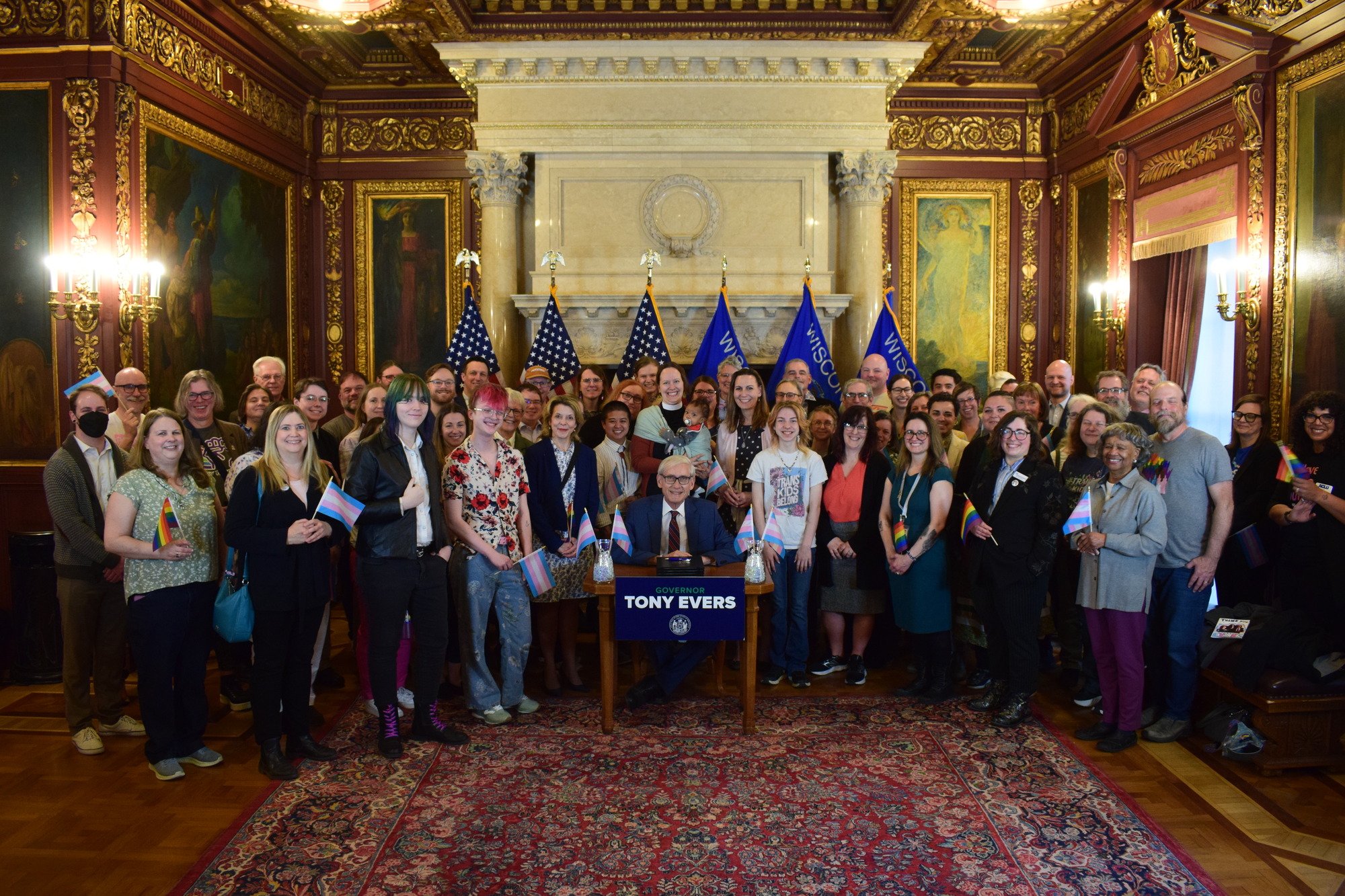
Gov. Evers Keeps Promise to Protect LGBTQ Youth, Again Vetoes Several Anti-LGBTQ BillsTargetingTransand Gender Nonconforming Kids
Mar 31st, 2026 by Gov. Tony EversOn International Transgender Day of Visibility, governor vetoes anti-trans bills surrounded by members of the LGBTQ community

Gov. Evers, DWD Announce Over $1.5 Million in Fast Forward Grants to Help Train Over 700 Wisconsinites for in-Demand Jobs
Mar 31st, 2026 by Gov. Tony EversGrants will go to 19 employers across the state to support job training in construction, child care healthcare, manufacturing, transportation, and more
Gov. Evers Approves Bipartisan Bills Supporting Wisconsin Workers
Mar 30th, 2026 by Gov. Tony EversGovernor approves bills strengthening worker’s compensation benefits for workers injured on the job and safeguarding state’s unemployment insurance system