Black-Necked Stilt Numbers Soar in Wisconsin
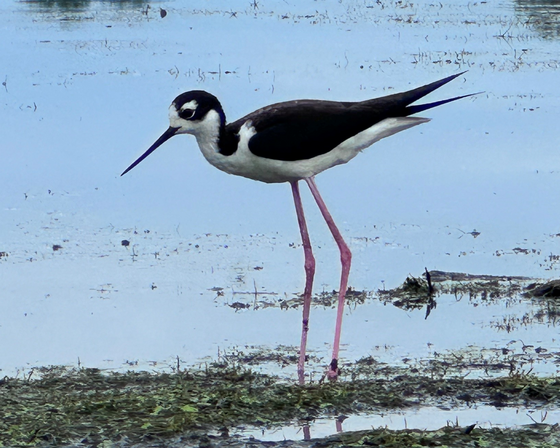
A black-necked stilt at Horicon National Wildlife Refuge. / Photo Credit: Wisconsin DNR
MADISON, Wis. – The Wisconsin Department of Natural Resources (DNR) and the U.S. Fish and Wildlife Service have coordinated efforts since 2019 to survey black-necked stilts, a migratory shorebird that has established a breeding population at Horicon Marsh National Wildlife Refuge (NWR) and Horicon Marsh State Wildlife Area, and the most recent survey shows numbers are growing.
Biologists Sumner Matteson, Daryl Christensen, Jon Krapfl and Sadie Odell documented 81 nests, including 78 on the federal refuge; this is nearly double the high number of nesting stilts from a 2022 Horicon Marsh survey when all nests occurred on the refuge.
“Horicon Marsh, principally the refuge, likely now contains the largest breeding population of black-necked stilts anywhere east of the Mississippi not associated with coastal wetlands,” said Matteson, DNR avian ecologist. “This is a remarkable happening.”
These elegant shorebirds with long, rose-colored legs and black-and-white feathers are typically found along the southern, eastern and western coasts of the United States and at a few large inland sites in the west. During the first decades of this century, however, stilts began to nest along the Mississippi Valley into the Upper Midwest. They typically build their nests on mudflats near or within cattail stands, and Horicon Marsh has provided just the right conditions for these birds to breed in a location far outside of their historic coastal range. They first started nesting at Horicon Marsh NWR in 1999 – the state’s first breeding record for the species.
Evidence suggests there may be two possible factors contributing to population growth in Wisconsin. The first may be the effects of climate change – severe drought, or, conversely, flooding, that is leading to stilts expanding their range northward from the Gulf Coast. The second factor is that these birds usually do not stay with a breeding partner long-term. After breeding, they often pair with a new mate. This behavior may create an opportunity for a former breeding pair to bring along new mates, thereby increasing breeding numbers substantially.
Horicon Marsh, a Wetland of International Importance and a Globally Important Bird Area, is co-managed by the U.S. Fish and Wildlife Service and the Wisconsin DNR. Management of the wetland is principally directed toward enhancing habitat for migratory waterfowl and waterbirds.
NOTE: This press release was submitted to Urban Milwaukee and was not written by an Urban Milwaukee writer. While it is believed to be reliable, Urban Milwaukee does not guarantee its accuracy or completeness.
Mentioned in This Press Release


Recent Press Releases by Wisconsin Department of Natural Resources