
City, We Energies Finish New ‘Utility-Scale’ Solar Array
City triples size of solar array near Milwaukee Mitchell International Airport.
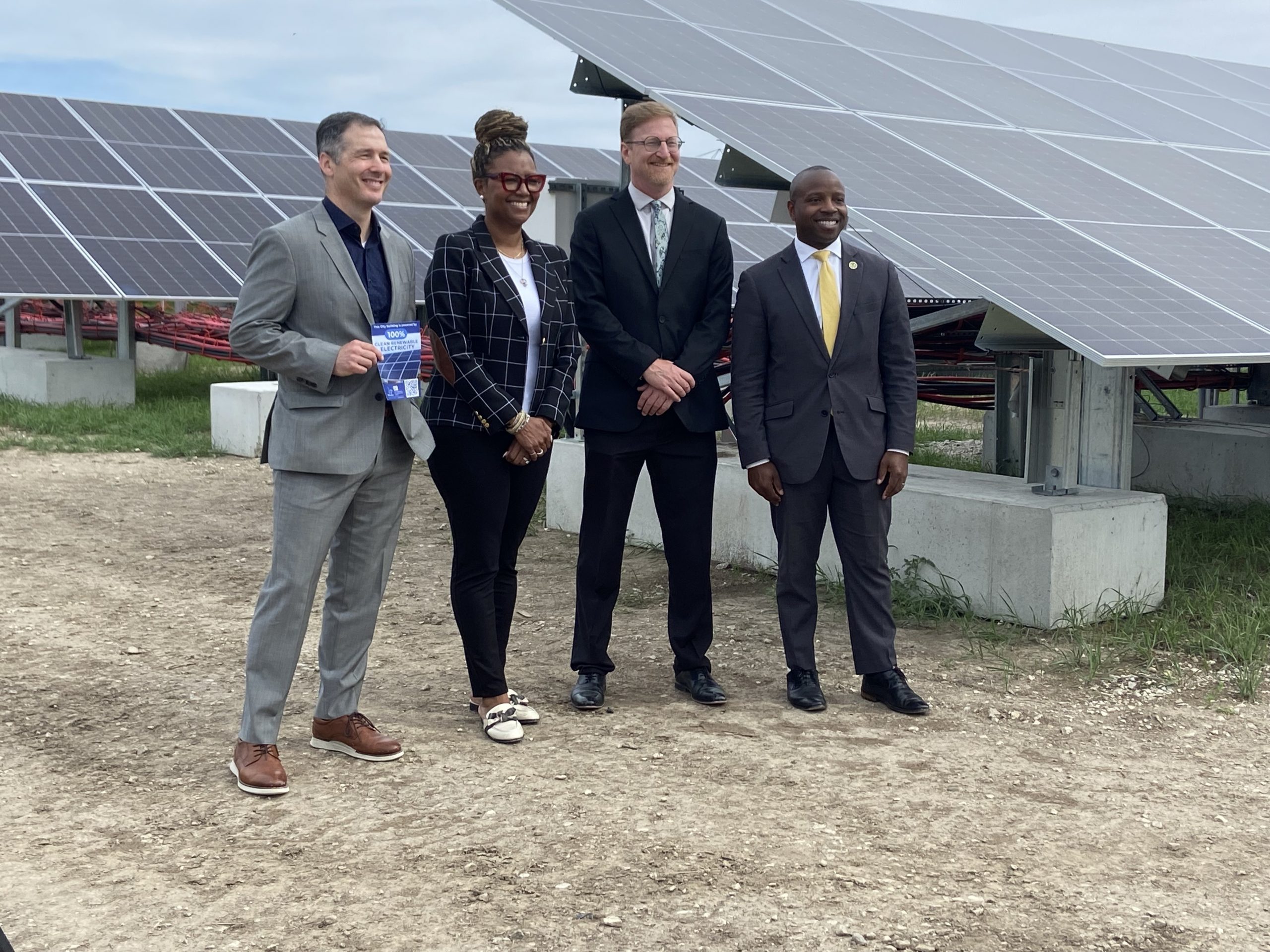
(Left to right) Erick Shambarger, Danielle Bly, Ald. Scott Spiker and Mayor Cavalier Johnson. Photo by Graham Kilmer.
Mayor Cavalier Johnson held a ribbon cutting Thursday to celebrate a new solar array near Milwaukee Mitchell International Airport that triples the city’s solar power generation.
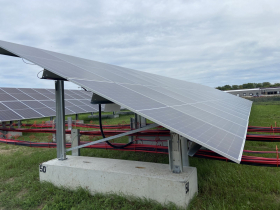
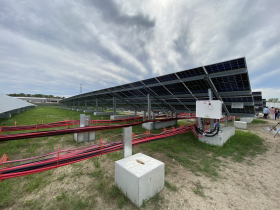
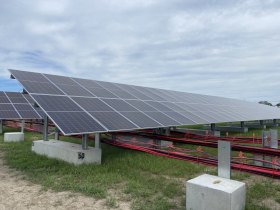
The 4.6-megawatt solar array, which is substantially complete, was built on a former city landfill at 1600 E. College Ave. in partnership with We Energies. It expands a previous 2.25-megawatt array finished in 2021.
The 6.8-megawatt system is the largest solar array in the history of the city of Milwaukee. It is capable of powering 80 city buildings with 100% renewable energy.
“Supporting clean renewable energy is really important to me. It’s really important to the community overall in Milwaukee as well, because we all need reliable energy sources to power our buildings, to have our lights on, support our transit systems, and so much more now,” the mayor said at a ribbon cutting event Thursday.
The new system complements another “utility-scale” array built by the city and We Energies in Caledonia. Together, they now supply the city with 9.6 megawatts of renewable energy.
The projects were developed through the Renewable Pathways pilot program, which allows We Energies to finance the development of solar power by charging the city a higher rate for electricity. The city is also leasing the landfill to We Energies for approximately $800 an acre.
As part of the layered agreement, the city also secured workforce requirements from We Energies. Contractors Westphal & Co. and SunVest Solar were required to hire unemployed or underemployed city residents to work at least 20% of the total hours on the project.
After the lease payments, the new solar array will cost taxpayers about $84,000 a year in additional energy costs. According to a 2020 report, the city spends about $4 million on electricity and natural gas for buildings, $3.5 million on street lights and $6 million on power for the Milwaukee Water Works.
“This community solar project will help the city meet its environmental goals and provide our customers affordable, reliable and clean energy,” said Danielle Bly, vice president of supplier diversity with We Energies. “The hundreds of panels on this site are capable of powering about 2,000 homes.”
The solar arrays help the city achieve climate goals laid out in the Milwaukee Climate & Equity Plan. They are, however, just one of 10 big ideas in the plan the city is working on, said Erick Shambarger, director of environmental sustainability for the city. “We’re also working to get electric vehicles and help homeowners save on their energy bills through both efficiency and solar,” he said.
City buildings, including firehouses, libraries and police stations, will soon have signs indicating they are 100% powered by renewable energy, said Shambarger.
The new array near the airport took substantially longer to develop than the system in Caledonia, despite being approved at the same time. Shambarger said the site’s history as a landfill was to blame. We Energies didn’t want to build there, but the city wanted to have a project within the boundaries of Milwaukee, he previously said. The site is capped with clay, and the racks supporting the solar panels could not be drilled into the ground. There were also a number of approvals needed from local entities, including the airport, before construction could move forward, Shambarger said.
The Caledonia array opened in September 2025.
More recently, the completed smaller arrays on the roofs of the Department of Public Works field headquarters, 3850 N. 35th St. and the Milwaukee Police Department‘s District 3 station, 2333 N. 49th St. Another 210 kilowatts of solar arrays were also installed on three city libraries.
Gallery

Existing members must be signed in to see the interactive map. Sign in.
If you think stories like this are important, become a member of Urban Milwaukee and help support real, independent journalism. Plus you get some cool added benefits.


City Hall
-
Abandoned Motorcycles Get Second Life With Youth Program
 Aug 20th, 2026 by Graham Kilmer
-
Milwaukee Will Become ‘Sensory-Inclusive City,’ Mayor Declares
 Apr 21st, 2026 by Sophie Bolich
-
Menomonee Falls Could Get More Milwaukee Water
 Mar 11th, 2026 by Jeramey Jannene