
Lake Sturgeon Can Live Hundreds of Years, Surprised Researchers Find
'Some have been swimming around the Great Lakes since before the U.S. was a country.'
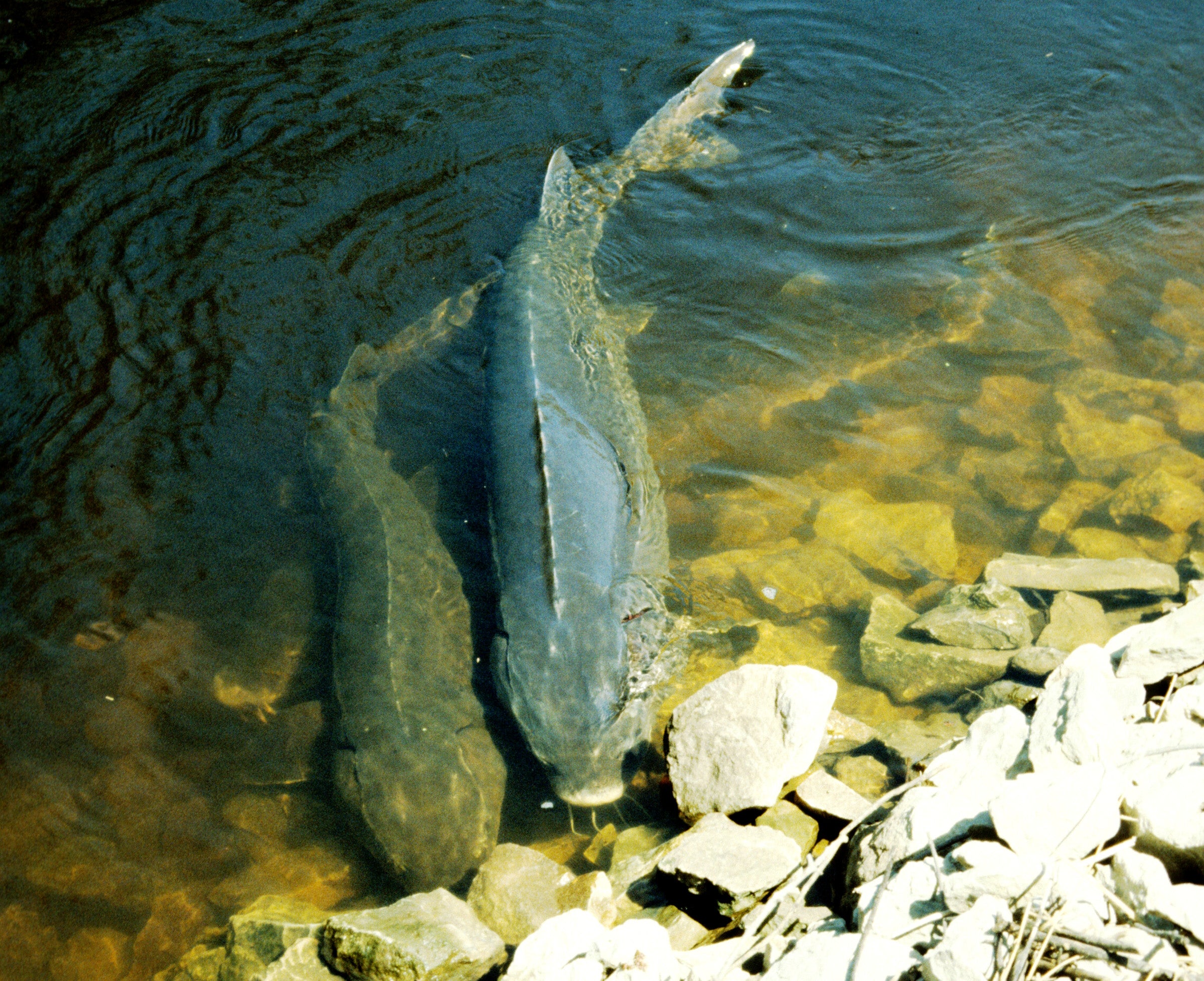
Wisconsin Department of Natural Resources (CC-BY-ND)
An ancient freshwater fish that’s been around since dinosaurs roamed the Earth has now been found to live longer than researchers previously thought, according to a new study.
Researchers have found that lake sturgeon swimming in the Great Lakes region may live longer than 400 years — far beyond previous estimates of 150 years.
The findings are based on a study of five populations conducted by the Michigan and Wisconsin Departments of Natural Resources, Michigan State University and Michigan Technological University. Researchers published their results in the Journal of Fish Biology in April.
The study’s lead author, Ed Baker, said they found male lake sturgeon could live as long as 279 years and their female counterparts may live even longer, to 427 years old.
Baker always thought lake sturgeon lived longer than previous reports, but even he was surprised by the findings.
“I had no expectation that we would get ages in the 2- to 3- to 400-year range for sturgeon from a couple of the populations,” Baker said. “It’s quite evident to us at this point that lake sturgeon live very long lives. Some of them have been swimming around in the Great Lakes since before the U.S. was a country.”
The longevity of the fish places it close to the Greenland shark, which can live to anywhere from 272 to 512 years old.
The study examined lake sturgeon populations across Blake Lake, St. Clair River and Sturgeon River in Michigan along with fish in the Menominee River on the border and Lake Winnebago in Wisconsin. Baker said populations living the longest were observed in Sturgeon River and Black Lake, whereas fish in the St. Clair River had the lowest longevity.
Lake sturgeon in Lake Winnebago and the Menominee River ranged in the middle of the pack. Margaret Stadig, Wisconsin DNR lake sturgeon biologist for Lake Winnebago, said the average age of lake sturgeon in Lake Winnebago is about 100 years old.
“But there are exceptions out there that are hitting these long-term extremes. So it wouldn’t surprise me if we’re seeing fish in the Lake Winnebago system that are getting to 150, 200 years old,” Stadig said.
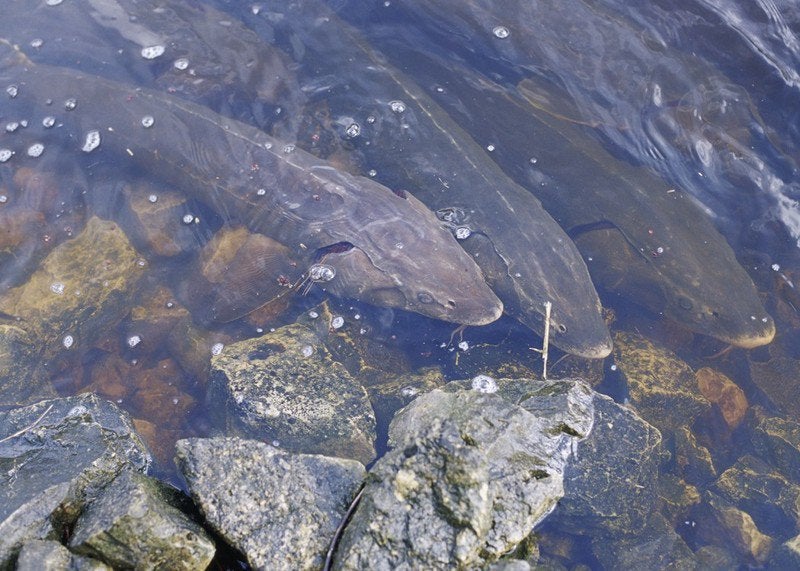
Photo by U.S. Fish and Wildlife Service, courtesy of the Center for Biological Diversity
Previously, researchers estimated the age of fish by counting growth rings in ear bones or fin rays similar to rings on a tree, said Scott Colborne, an assistant professor at Michigan State University in the Department of Fisheries and Wildlife.
“But sturgeon really slow down their growth as they age, and so those rings blend together,” Colborne said. “The past studies would use those and make a best guess at age.”
For this study, researchers used data on lake sturgeon that had been caught, measured, tagged and recaptured over up to 44 years in the case of Lake Winnebago. They used that data to determine annual growth rates and estimate how long they live.
They worked backward to calculate longevity for males that were 160 centimeters, or about 63 inches, in length and females that were 180 centimeters, or about 71 inches, long. Males typically reach breeding age at 15 years old and females reach maturity at about 24 years of age.
The findings will guide future management of lake sturgeon. The Center for Biological Diversity previously estimated more than 15 million lake sturgeon once thrived in the Great Lakes, but overharvest and other factors reduced its population to less than 1 percent of its historical range.
Two years ago, the U.S. Fish and Wildlife Service decided not to list the fish as an endangered species, saying lake sturgeon face no danger of extinction throughout its entire range. Even so, lake sturgeon are listed as threatened in Michigan and as a species of special concern in Wisconsin.
“We need to keep those harvest rates very, very conservative to ensure that we don’t overharvest sturgeon and send them right back to where they were around 1900,” Baker said.
Lake Winnebago is home to one of North America’s largest populations of lake sturgeon, and a sturgeon spearing season is held each winter. More than 1,500 were harvested this past winter.
Stadig said the findings underscore the resilience and evolution of lake sturgeon.
“It is just a testament to the management that has been going on, not just in the Winnebago ecosystem, but across the United States and particularly in the Great Lakes area,” Stadig said. “We are continuing to maintain this population, and in some areas, continue to enhance these populations, allowing these fish the chance to grow and reach these ages once again.”
Lake sturgeon may live hundreds of years longer than previously thought, study finds was originally published by Wisconsin Public Radio.
If you think stories like this are important, become a member of Urban Milwaukee and help support real, independent journalism. Plus you get some cool added benefits.