

MPS May Send More Students on County Buses
One-fifth of students now get to school on MCTS buses. Officials weigh more use of that option.
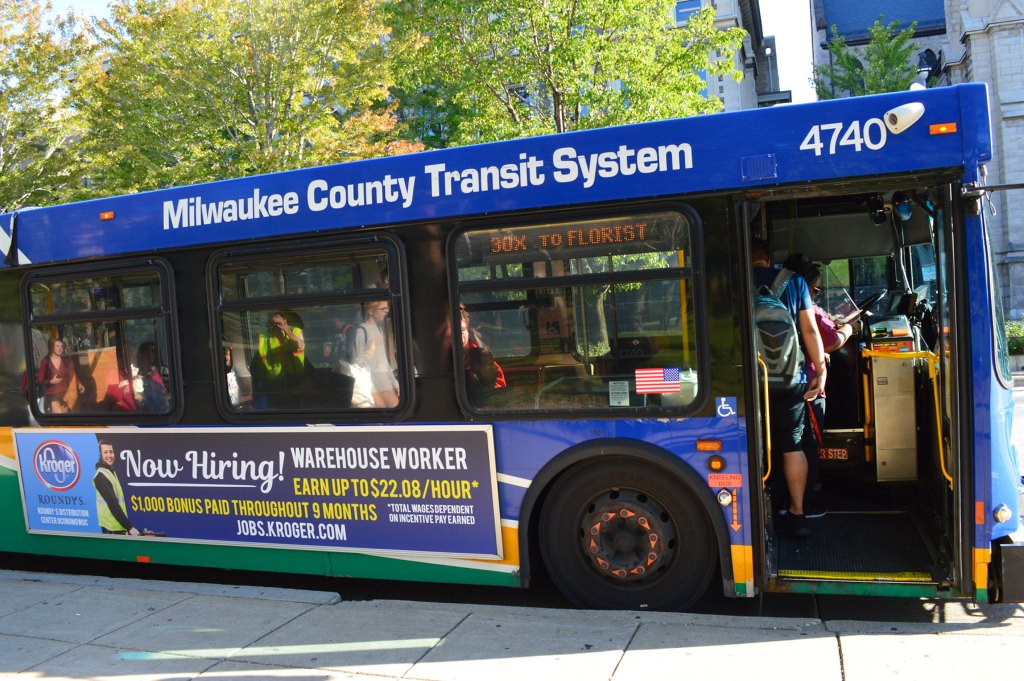
More MPS students may have to ride county buses to school in 2027. (NNS file photo)
Every morning, rising senior Chris Hutcherson takes two Milwaukee County Transit System buses to get to Audubon Technology and Communication Center on the South Side.
Hutcherson said he doesn’t mind his daily commute on MCTS, except when the buses are delayed. If his bus hits traffic, he sometimes misses his transfer.
“Then the 57 don’t come for like a good, good 20 minutes,” Hutcherson said.
Hutcherson is one of about a fifth of Milwaukee Public Schools high schoolers who district officials say ride MCTS buses to school. The district is now deciding on whether to send more students on county buses as part of a transportation system overhaul.
To hit its transportation budget for the year that began in July 2026, MPS needs to cut roughly $3.5 million, according to figures the administration presented to the school board in June.
MPS Senior Director of Transportation Services David Fifarek said the district will not implement most changes until the 2027-28 school year, to allow for community engagement and to determine which recommendations are most practical.
Betting on the bus
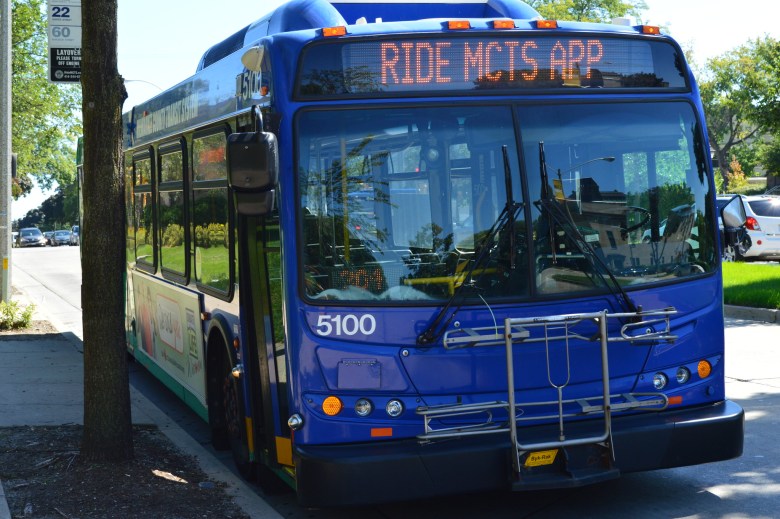
MPS officials say their future plans for students will depend on how MCTS will change its coverage and ride frequency. (NNS file photo)
Hutcherson tracks county buses on Google Maps, which he said is the most reliable of the apps he’s tried, though it isn’t foolproof.
“I was actively watching that app on my phone, and I remember getting on the bus, and it’s saying that it didn’t leave,” Hutcherson said.
MCTS buses are on time 80% of the time, which, by its definition, is within one minute before or five minutes after the scheduled departure time, according to transit officials.
Fifarek said students who live more than seven miles from their high school are assigned to MCTS, while those within seven miles typically ride a yellow bus.
“You can’t have a yellow bus running effectively more than seven miles from starting point to destination without having to run at least an hour long to do it,” Fifarek said.
MCTS buses will likely be most effective for students in high-density areas who can take a bus to school with no transfers, Fifarek said. It also alleviates some safety concerns because students are quickly on and off the bus without having to get off the bus and wait for another one to connect them to school.
He said things get tricky when students live on the opposite side of town and children have to transfer buses in an area that is unfamiliar to them.
Fifarek described a “tug of war” between MCTS covering more of the city with county buses and running them often enough so riders aren’t stranded waiting for a transfer.
MCTS is weighing that very dilemma as the agency begins its own overhaul of the county bus system to provide efficient service amid a looming budget deficit.
For the next 12 to 15 months, a spokesperson said MCTS will engage with stakeholders including MPS as part of their MCTS Forward system redesign.
MCTS has already made tough decisions to recover from a $14 million deficit, reducing frequency on routes like Hutcherson’s 57, and running the 55, the main line for commuting Reagan High School students, during peak hours. Mid-day service has since returned for the 55.
Fifarek said the district’s future plans will largely depend on how MCTS will change its coverage and ride frequency in the next year.
“If that coverage model changes, then we’re going to have to pivot and then reinstate some yellow buses or some other form of transportation to replace the void that might be created by the county transit system,” Fifarek said.
On July 15, MCTS proposed cutting bus service by 25% in 2027 to address the deficit.
Chronically late
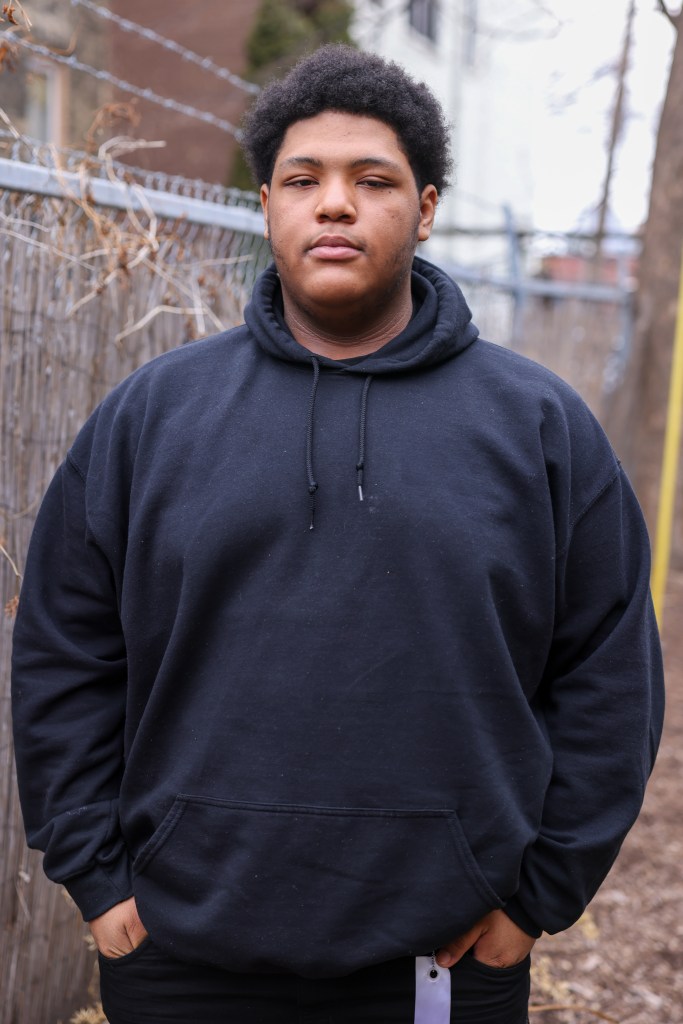
Perry Perkins, a student at Lynde and Harry Bradley Technology and Trade School, was one of five students who said buses to Milwaukee Public Schools are routinely late in the morning. (Photo by Jonathan Aguilar / Milwaukee Neighborhood News Service / CatchLight Local)
McQuinn Coleman said his yellow bus is late multiple times each school year. When he has too much trouble with the bus, he stays home.
Four other students at Barack Obama School of Career and Technical Education, Lynde and Harry Bradley Technology and Trade School and Milwaukee High School of the Arts said their buses are routinely late in the morning. They sometimes take MCTS buses as a result.
A district-commissioned analysis by 4MATIV presented in the June board meeting found that 73% of trackable bus trips to MPS are on time. But, looking at all trips, including about a third that have no GPS data, less than half of MPS bus trips could be confirmed as arriving on schedule.
Coleman said he dealt with so many transportation issues that he lost a credit and had to take summer school.
‘On point ever since’
One day, Coleman said he got robbed as he left summer school.
He said he doesn’t feel safe waiting at stops anymore and stays vigilant on his walks to and from the bus.
“I’ve been on point ever since,” Coleman said.
Hutcherson said he generally feels safe taking MCTS buses, but he also makes sure to stay aware of his surroundings.
Other male high school students who spoke to NNS said they feel safe walking to and from their stop and waiting for the bus.
Students like Coleman are the ones that School Board Director Darryl Jackson thinks the district should consider when forming a transportation plan.
He said cost saving measures are important, but safety shouldn’t be overlooked in favor of cost.
“Currently, a lot of adults don’t want to walk through certain neighborhoods,” Jackson said. “We got to keep that in mind with having our students walk through certain areas.”
Fifarek said safety is one of the biggest concerns as MPS reviews the recommendations and overhauls the district transportation system.
The report presented to the school board in June estimates $11 million in savings if the district consolidated stops, for example. But Fifarek said implementing such a step by only considering distance could potentially send young children crossing busy streets like Capitol Drive or Fond du Lac Avenue.
“Eleven million dollars of savings in stop consolidation would have to completely wipe out this concept of no cross streets,” Fifarek said. “You might create some safety issues and risks in the process.”
Alex Klaus is the education solutions reporter for the Milwaukee Neighborhood News Service and a corps member of Report for America, a national service program that places journalists in local newsrooms to report on under-covered issues and communities. Report for America plays no role in editorial decisions in the NNS newsroom.
Jonathan Aguilar is a visual journalist at Milwaukee Neighborhood News Service who is supported through a partnership between CatchLight Local and Report for America.
This article first appeared on Milwaukee Neighborhood News Service and is republished here under a Creative Commons Attribution-NoDerivatives 4.0 International License.


Transportation
-
How Paris Grew Cycling by 240% in 5 Years
 Jul 18th, 2026 by Jeff Wood
-
Four Pedestrians Killed In One Week As Milwaukee Traffic Deaths Climb Again
 Jul 17th, 2026 by Jake Dale
-
Southwest Adding Nonstop Service To New City
 Jul 16th, 2026 by Graham Kilmer


















If more students will take MCTS to school, I doubt they will be on time. The northbound 92 was once again 14 minutes late yesterday. I blame the entitled culture that until recently ran MCTS. Hope the new management can reinforce to the operators it is important folks get to their destinations on time. That is one of many improvements needed to give MCTS a passable rating.