
Data Centers Could Hike Wisconsin Energy Demand by 40% by 2032
Draft report: 72% of peak electricity load associated with 3 data center developments.
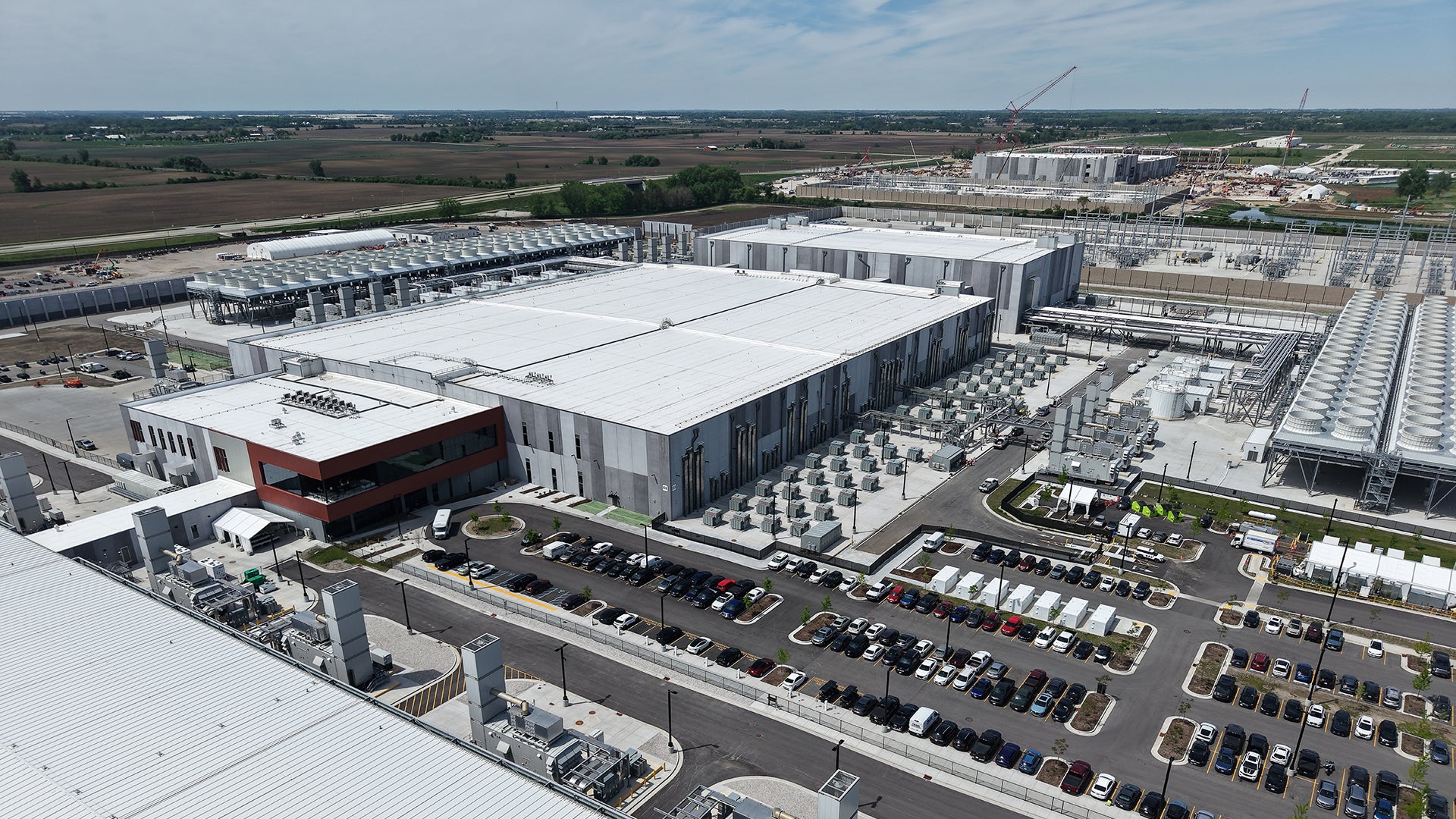
A Microsoft data center in Mount Pleasant, Wisconsin appears in a June 2026 photo. Photo courtesy of Microsoft
Driven by hyperscale data centers, electricity demand in Wisconsin could increase by more than 40 percent by 2032.
The finding, part of a new draft report by state utility regulators, means the state will need to build significant infrastructure to meet rising energy needs.
Utilities say they’ll be able to meet the spike with an “all of the above” approach to energy generation. But consumer advocates and environmental groups are concerned Wisconsin utilities will do so at the cost of ratepayers, while worsening the effects of climate change.
The Public Service Commission of Wisconsin last week released a draft of its strategic energy assessment. The report includes projections that predict the state’s energy needs over the next five to 10 years.
The report estimates that peak electricity demand in Wisconsin is expected to grow from 14.2 gigawatts to more than 20 gigawatts by 2032. That’s an increase of more than 40 percent over a six-year period, the report says.
According to the draft report, more than 72 percent of that peak electricity load is “associated with three active data center developments in the service territories of two Wisconsin utilities.”
Those projects are Microsoft’s massive data center campus in Mount Pleasant, Oracle’s campus in Port Washington and Meta’s data center in Beaver Dam. We Energies will serve the Microsoft and Oracle projects, while Alliant Energy will serve Meta’s data center.
“These load forecasts illustrate the outsized impact data center development is anticipated to have on the energy landscape in Wisconsin in the coming years,” the report reads.
The state Public Service Commission declined to comment or provide an interview on the report. A spokesperson for the agency said changes may be made before the final version is released this fall.
Amy Barrilleaux, a spokesperson for the nonprofit Clean Wisconsin, called it “shocking” that three data center projects are responsible for most of the electricity demand growth, calling it “uncharted territory.” She said Wisconsin is especially vulnerable because there’s no uniform statewide plan to meet that demand.
“That’s why we’re seeing this rush to build gas, these coal plant retirements delayed,” Barrilleaux said. “We’re seeing this dirty energy either staying on the grid or being added to Wisconsin’s grid, and that’s going to harm communities all across the state.”
In a statement, We Energies spokesperson Brendan Conway said the assessment “underscores” concerns around growing demand for electricity in Wisconsin. He said the company is investing in new generation resources — like natural gas and renewables — and in grid modernization to better prepare for extreme weather.
“Over the coming years, we plan to invest more than $12.5 billion in solar, wind and battery storage, backed up by state-of-the-art natural gas generation to keep the lights on when the sun is not shining and the wind is not blowing,” Conway stated.
Likewise, an Alliant Energy spokesperson said in a statement that the company was investing in an “all-of-the-above” strategy for energy generation. That means the company plans to invest in natural gas, renewables and battery storage.
“We are prepared to meet rising demand reliably and cost-effectively and our resource planning reflects a forward-looking, customer-centric strategy,” the statement read.
But Tom Content, executive director of the Citizens Utility Board of Wisconsin, said he had concerns around a handful of customers consuming as much electricity as hundreds of thousands of homes.
He also said the report highlights the need for more state oversight.
“There’s so much so many projects being proposed that we think it does make sense for the agency that has the expertise to actually not be flying blind when it comes to planning the state’s energy future,” he said.
Utilities plan to add 14.2 gigawatts of energy generation capacity to the grid. The biggest share of that, 5.4 gigawatts, will be new natural gas plants or upgrades to existing gas plants.
Solar accounted for 5.2 gigawatts, while wind and storage accounted for 1.3 and 2.25 gigawatts, respectively, the report notes.
Barrilleaux with Clean Wisconsin called natural gas, a fossil fuel, “incredibly damaging for our climate.”
By 2032, the PSC projects coal will account for 3 percent of the state’s energy generation; natural gas will account for 50 percent; wind will account for 17 percent; and solar will account for 16 percent.
Wisconsin energy demand to rise 40 percent by 2032, driven by data centers, draft report finds was originally published by Wisconsin Public Radio.
If you think stories like this are important, become a member of Urban Milwaukee and help support real, independent journalism. Plus you get some cool added benefits.