

Hunger Task Force Warns Pantries Are “Not Equipped” For Coming Wave
Milwaukee’s largest food bank has already seen traffic climb 35% and expects more after July 1 FoodShare cuts hit immigrants.
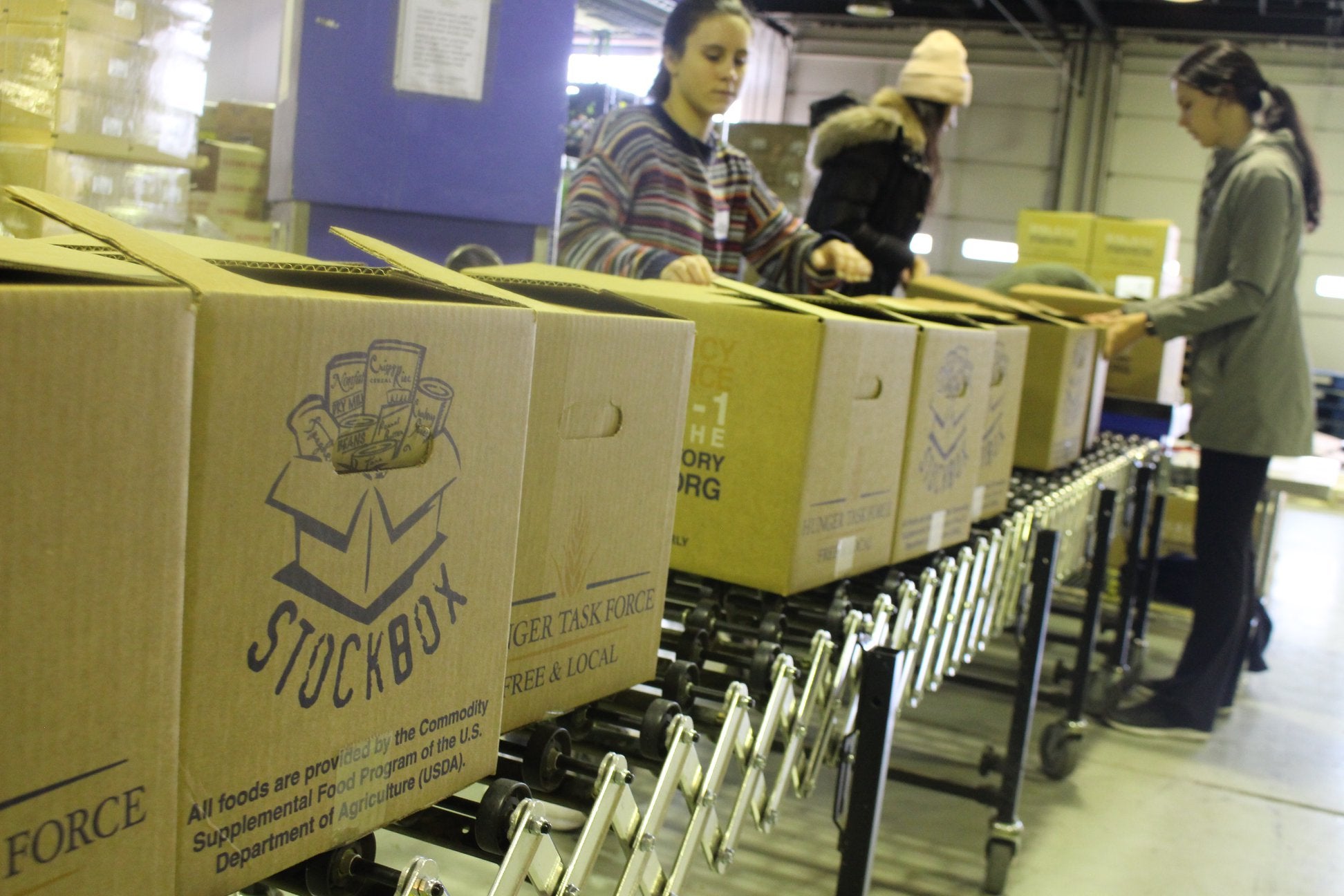
Volunteers with Hunger Task Force in Milwaukee load boxes with food to be distributed to senior citizens. Courtesy of Hunger Task Force
Wisconsin food banks are expected to see increased demand this summer when refugees and other immigrants with humanitarian status will lose food assistance under a federal change.
Last year’s federal reconciliation bill limited eligibility for the Supplemental Nutrition Assistance Program, called FoodShare in Wisconsin, to green card holders with limited exceptions.
U.S. Agriculture Secretary Brooke Rollins praised the “One Big Beautiful Bill” in July for tackling “fraud and waste” within the federal program.
The change ended eligibility for noncitizen groups like refugees, people granted asylum and survivors of human trafficking or domestic violence.
Around 7,200 people in Wisconsin are expected to lose FoodShare benefits starting July 1, according to Reno Wright with Milwaukee-based food bank Hunger Task Force. That’s when Wisconsin will put in place the requirements that have already been rolled out in other states.
Wright, Hunger Task Force public policy and advocacy director, said people affected by the change will no longer be able to apply for new benefits starting July 1, and current recipients will lose their benefits at their next renewal date.
“We do anticipate that as these people lose access to this very vital food benefit, that they will have to turn to pantries that are supposed to be supplemental and really, are not equipped to absorb the increased traffic,” said Wright. He said an estimated 63 percent of people affected by the FoodShare change live in the Milwaukee area.
Wright said food pantries in Wisconsin and across the country have already seen increased traffic in the last two years, including a 35 percent increase in traffic at locations in his organization’s network.
Those working in hunger relief nationwide say federal cuts to SNAP, health insurance subsidies and other safety net programs have led to increasing need for assistance.
For families newly arrived in Wisconsin, FoodShare is a critical supplement while they get established in new jobs, according to Gail Cornelius, regional director for World Relief in Wisconsin. Her organization helps resettle refugees and other immigrants across the state, who Cornelius pointed out are legally eligible for work.
“While most are employed fairly quickly, often it is in entry-level positions where you know they may be making just above minimum wage,” she said. “They may have large families that they’re caring for, and so in that instance, just like anybody else here in our state, it’s really difficult to make ends meet.”
She said food assistance is usually temporary support until individuals can increase their wages, often through English-language learning, job training or applying to have professional credentials from other countries recognized in the U.S.
Of the population her organization serves, Cornelius estimates that 70 percent of the individuals losing FoodShare this year are children.
“That’s really just heartbreaking, that as a country we’re not providing that basic nutritional support, that’s really key for survival,” she said.
Cornelius said her organization is hoping to supplement the loss of FoodShare with donations of grocery gift cards or local food banks. She said part of that work means helping new residents understand how to access food pantries and other community support.
In Milwaukee, Wright said Hunger Task Force is also putting out the call for increased donations and volunteers to prepare for the coming demand. He said people who are concerned they may lose FoodShare can also contact Hunger Task Force’s outreach centers for help understanding their eligibility, especially if their legal status changes.
“We don’t want people to assume that just because they are an immigrant in this country, that they no longer have benefits,” he said.
Relief groups brace for end of food assistance for Wisconsin refugees was originally published by Wisconsin Public Radio.
If you think stories like this are important, become a member of Urban Milwaukee and help support real, independent journalism. Plus you get some cool added benefits.






















They can expect no donation from me. I help folks who I know are struggling.
I have learned my lesson the hard way. So many folks who can afford their own food if they chose the correct priorities, choose to go to food banks so they can have more money for “fun” things as they put it–casino trips, drugs and alcohol. I will no longer enable those folks with their IMO warped priorities.
I also think food pantries should start asking for proof of need. Volunteers for several food banks said none do, even though they suspect several of the recipients are not truly needy.
Narrow-minded stereotyping aside, (do you REALLY know about “pantry fraud?) one day of Agent Orange’s illegal war would pay for healthy food for hundreds of thousands of hungry people. Feed the people!
jmpehoski, so you are the adjudicator of whether or not a family deserves assistance. What qualifications do you have to make such a judgment? What do you mean by “deserving.” Do you realize the subconscious prejudices play a significant role in identifying who is “deserving.” The laws that ultra-conservative legislated in recent years, have codified institutional racism into deciding who are eligible for assistant. Who are hurt most by these racist laws? Children.
Under the Biden administration childhood poverty was cut by 25% because it did not place onerous and racist conditions for asking for assistance. What was the result? A stronger economy able to weather the inevitable inflation caused by COVID pandemic. An economy cannot lose a million workers without it generating an inflationary tidal wave. The Biden administration’s investment in working Americans kept this country from the type of out-of-control inflation seen in Germany after WWI.
My point is, when a society does not impose sanctions on who deserves aid, it sees a decrease in poverty rates including childhood poverty. More individuals get the boost they need to become an active participant in the economy, generating increased revenues. Programs like SNAP are investments. The return on investment is a net positive. That means for every dollar spent on poverty reduction generates on average is around $2. A much better return than cutting taxes for the wealthy.
I will step up and contribute what I can. I do not care if some of the recipients are receiving aid they do not deserve, only that those who need it are served. We must stop worrying that someone is getting something undeserved and start worrying that we serve all the people who need food.