UW Board of Regents Leader Defends Rothman Firing
And talks about what the regents are looking for in a new UW system president.
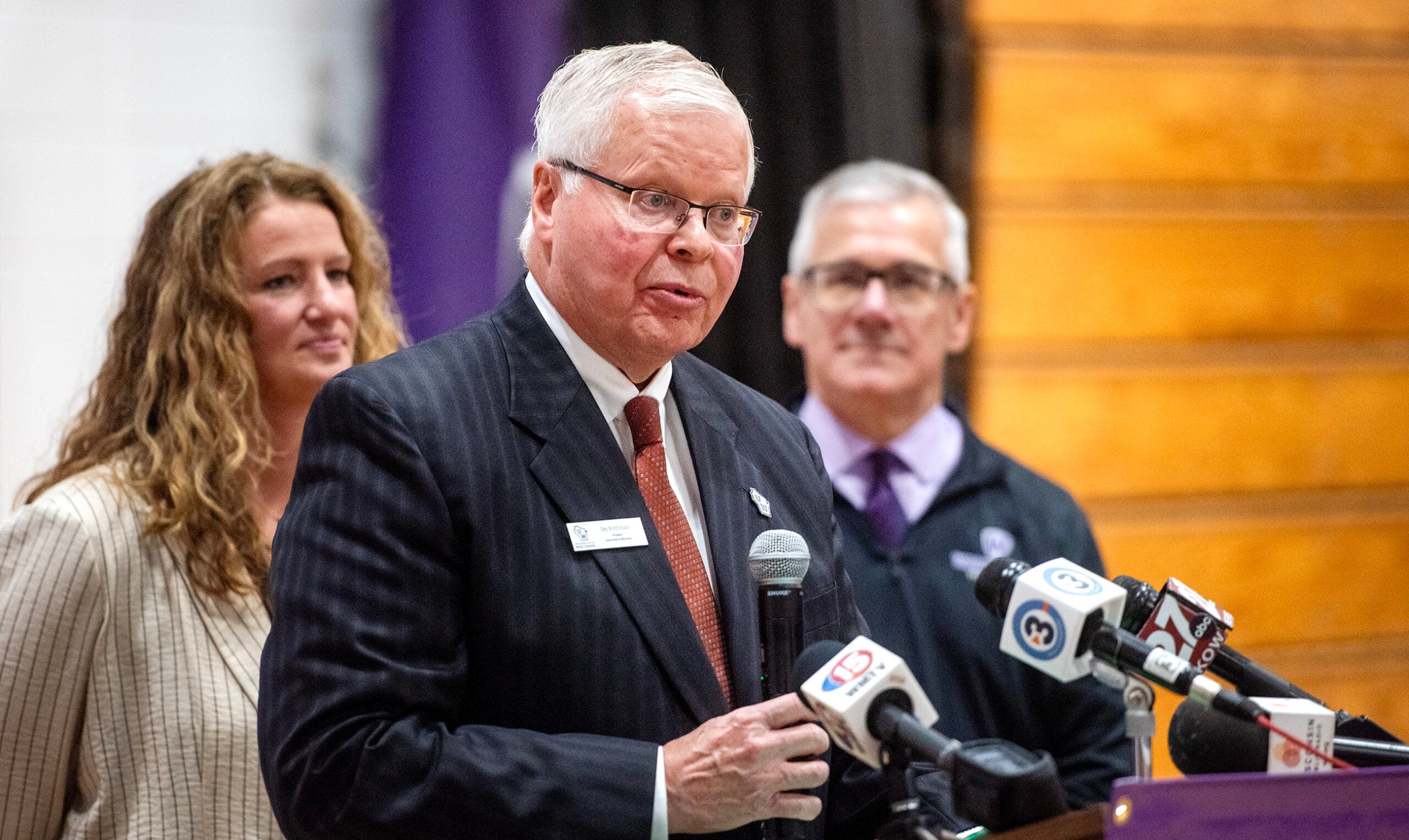
Universities of Wisconsin President Jay Rothman speaks during a press conference Wednesday, Oct. 1, 2025, at Waunakee Community High School in Waunakee, Wis. Angela Major/WPR
The search for the next president of the Universities of Wisconsin is underway — and the head of the group that governs the system told WPR that the state’s demographic changes and the rise of artificial intelligence are top issues.
Earlier this month, Board of Regents President Amy Bogost appointed a 25-person search committee to find the next president of the UW system. She expects the board to select a new president later this year.
The board also named UW-Superior Chancellor Renée Wachter as interim president of the Universities of Wisconsin.
This comes after former president Jay Rothman was fired by unanimous vote in early April. Rothman stated that he was given no reason for his termination. Regents disputed that claim, with two regents telling the legislature that there were “substantial” reasons for his firing and that Rothman was aware ahead of time.
Two regents were compelled to testify in front of legislators in the state Senate several days after the firing amidst backlash from Republican lawmakers over transparency concerns.
Bogost defended how the board communicated to the public in an interview with WPR’s “Wisconsin Today.”
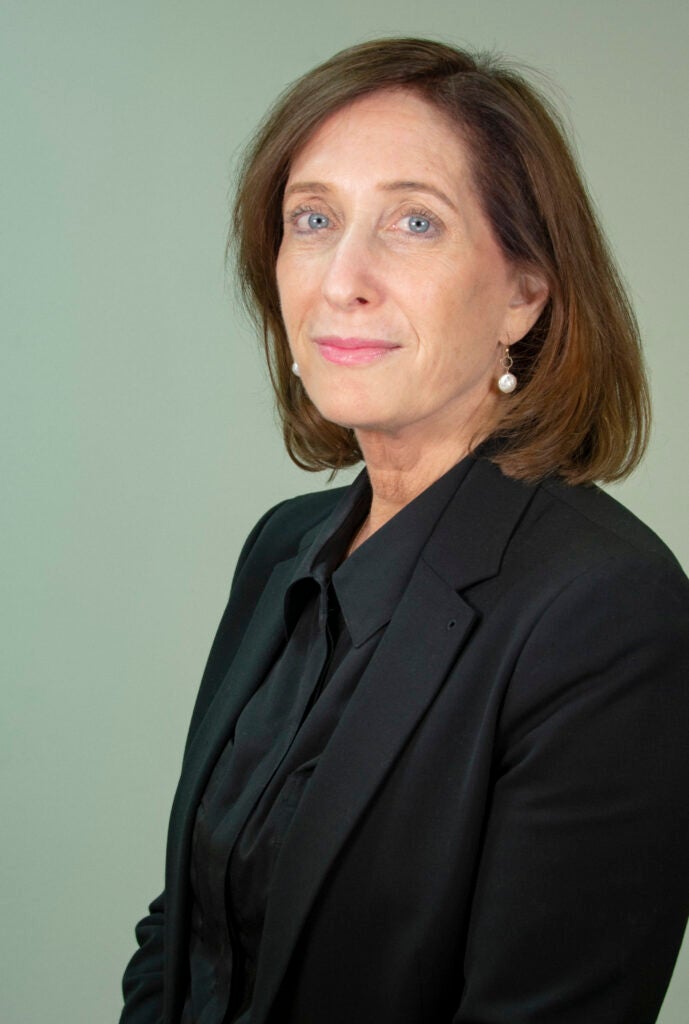
Universities of Wisconsin Regent President Amy Bogost appears in a headshot. Courtesy of the Universities of Wisconsin
“This is a highly sensitive issue, and the message was sent out that it was a unanimous decision of the board, and we are looking forward to moving forward,” Bogost said.
The next president will have to coordinate with the state’s political and business leaders on behalf of the state’s 13 university campuses.
“They are extremely important to the state. They are the economic engine of the state. They bring in billions of dollars,” Bogost told WPR. “The president oversees the 13 universities and works with the board to make sure that we have the highest quality product out there.”
Bogost told WPR about what issues are top of mind for board members.
The following interview was edited for clarity and brevity.
Rob Ferrett: Your board named UW Superior Chancellor Renée Wachter as interim president of the Universities of Wisconsin. Why hire her for the position?
Amy Bogost: It was very, very important to the board to place someone in that role that understands the universities and understands people of the universities — the students, the staff and faculty and everyone, including our stakeholders.
She is the longest serving chancellor in the system. She is extremely knowledgeable about the institutions. She is very well respected among her colleagues, as well as the people in the state, legislators and people here at the system. And we’re really excited. We’re really focused on the future, and really looking forward to her stepping into the role.
RF: People might look at that and say, “UW Superior is an important institution here, but it’s a campus of less than 3,000 students. The system serves 165,000 students. This is just a very different scale of a job.”
AB: That’s right, her campus is small but very mighty, but her knowledge of this system and the universities and the campus — and how well respected she is — is going to bring so much focus and depth for transforming the future of the system … as I said, she’s extremely well respected by every constituency that I’ve spoken to. So, we’re excited for her to start.
RF: Former President Rothman wrote in an opinion piece from the Milwaukee Journal Sentinel that he thought there needed to be some changes to the Board of Regents. One concern he wrote was that he felt the Board of Regents and the President weren’t always speaking with one voice. Is there something to that? Is there a need for more message discipline from the Board of Regents?
AB: I think there is a difference of opinions, and I think that’s healthy as we move forward. We are a board of 18 people … we have all sorts of different backgrounds, but in the end we understand our fiduciary duty to the universities and the people of the state. We work very well together.
RF: The president of the Universities of Wisconsin has to have a good working relationship with both the state legislature and the governor, in large part because these are the agencies that control the university budget. But listeners may worry that a leader of the university might roll over and be bullied by the legislature for differences of opinion. What are you looking for in that relationship?
AB: It’s important for the new leader to understand the politics of the state, no matter what those politics are. It is also important to understand higher education and what is necessary for our campuses and the people on those campuses. I think it’s imperative that we know that we have to be transparent with the state and the people of the state. So it’s a balance, right? It’s a balance that our mission is to higher education, but it’s also we have a duty to be transparent and collaborative with the state and the state budget, the governor and the legislature. And whoever the new leader is has to understand that balance and serve the mission and make sure that’s at the forefront of every dialogue they have with the legislature going forward.
RF: A challenge facing higher education all over the country — demographic changes. Fewer people are being born, fewer are going to college. How do you see the system navigating that — particularly smaller campuses?
AB: I think that we have a real opportunity here. It’s been said that over 800,000 people … do not have a degree. There are veterans, there are people who are older that want to have finished their degree. We would love to take this opportunity to get even more people into our universities.
It is an opportunity to really give these people a boost up, whether they have a job now and they want to improve their status, the universities welcome them. We’re trying to become more nimble to bring more people in. We’re excited for the opportunity, because I think we can grow the universities.
RF: Fellow Regent Tim Nixon told lawmakers that artificial intelligence is an issue they want to see the Universities of Wisconsin president set guidelines on. What do you see as the role of the system president in helping the individual campuses navigate this changing AI landscape?
AB: AI, right now, is critical. It’s a pretty important time for us in education. Now more than ever, the president can assist in bringing in more students, because what’s needed is more critical thinkers for AI. We must be graduating people that have critical thinking skills to understand what AI is and how to bring the best out everywhere in the state with AI.
So as far as guidelines, I think it’s important that we understand it is changing rapidly. For us to have a set policy in AI right now, it wouldn’t work. It would be irresponsible because things are changing so quickly. Of course, there are guardrails that the state has instituted and is instituting. We are looking at this constantly to look at the change and what we can do to best support our universities. That’s what the new president will have to do as well.
Head of Universities of Wisconsin Board of Regents defends Rothman firing, talks next system president was originally published by Wisconsin Public Radio.
If you think stories like this are important, become a member of Urban Milwaukee and help support real, independent journalism. Plus you get some cool added benefits.