
Advocates Weigh In on Planned Update of Wisconsin Prison Code
Its rules directly 'shape daily life for incarcerated people.'
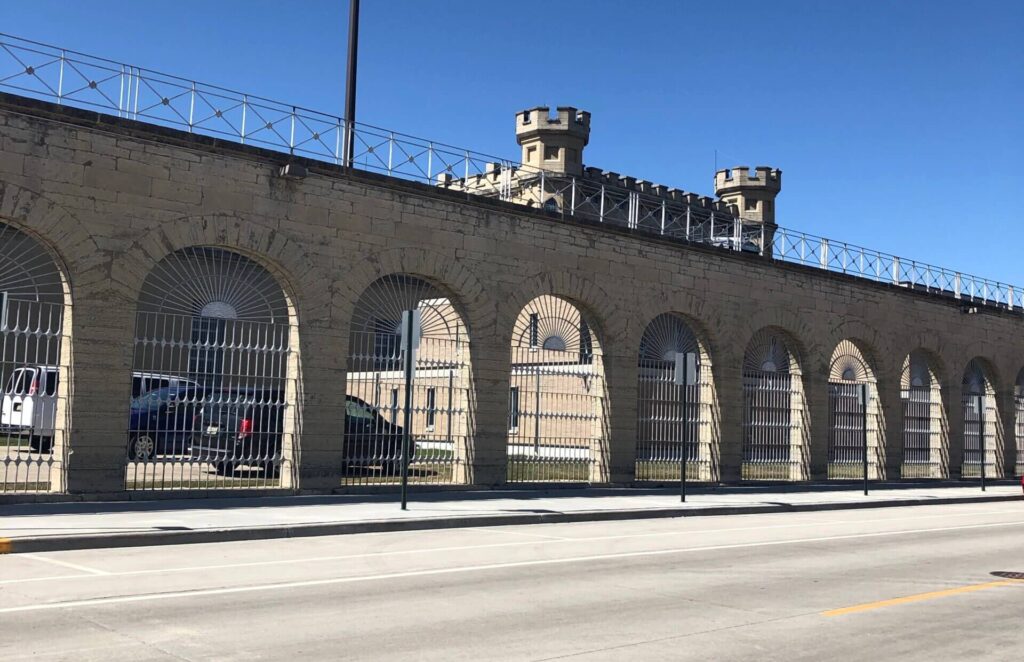
The Waupun Correctional Institution, the oldest prison in Wisconsin built in the 1850s, sits in the middle of a residential neighborhood (Photo/Wisconsin Examiner)
Advocates for people incarcerated in Wisconsin prisons gave input for a planned update of the state prison code in a virtual hearing Monday afternoon.
The hearing gave members of the public a chance to comment on the statement of scope for the upcoming review, which broadly outlines the Wisconsin Department of Corrections plans to update rules regarding resources available in state prisons.
The advocacy group Ex-Incarcerated People Organizing (EXPO) said in a Facebook post on Sunday that the policies in Chapter 309 of Wisconsin’s administrative code “directly shape daily life for incarcerated people,” including food, visits, hygiene and religious practices.
“Whether you’ve been incarcerated, have a loved one inside, or simply believe in dignity and fairness your voice belongs here,” the group said.
Questions at the hearing included whether the department would be speaking with incarcerated people about the upcoming rule update; a DOC employee said there are no specific plans at this point.
The last time the section of the state’s prison code relating to resources for people in prison was significantly revised was more than a decade ago, with the revision completed in 2013, according to the scope statement. The agency would update the entire section to reflect changes in the law and changes in DOC operations and practices. The scope statement cites a 2018 law as an example of a change that needs to be addressed.
The alternative to the update is to keep “outdated policies which do not adequately reflect the current state of the law and a rule which needs clarification and reform,” the scope statement said. The updates, it added, will likely not have an economic impact on the agency.
Susan Franzen of the advocacy group Ladies of SCI brought up a section of the code regarding leisure time for incarcerated people. It states that the DOC “shall provide as much leisure time activity as possible for inmates, consistent with available resources and scheduled programs and work.” Incarcerated people are to be allowed to participate in leisure time activities for at least four hours per week, and institutions that have the facilities to allow more “should do so.”
The code states that leisure time activity is “free time outside the cell or room during which the inmate may be involved in activities such as recreational reading, sports, film and television viewing, and handicrafts.”
Franzen asked whether there is monitoring to make sure incarcerated people are getting as much time as they can outside or in a dayroom. She said she’s heard some facilities structure meals and standard counts in a way that leads to people spending up to an hour in their cells after a meal, and asked if there is a way to improve efficiency and allow people to spend more time outside of their cells.
Another section of the code mentioned by Franzen says that a warden will allow an incarcerated person to have 12 adult visitors on the visiting list. A warden can approve more than 12 visitors on the list if the first 12 are close family members.
A DOC visitation policy for adult prisons that was updated earlier this year generally allows for this to occur. It also says that any additions or deletions for an individual visitor on the list are allowed once every six months. Franzen questioned why incarcerated people can’t be allowed more visitors on the list.
Since the last revision, the state has seen court decisions addressing correctional issues including religious practices, mail and personal property, which the proposed rule will take into consideration, the scope statement says. The agency would also make clarifications to the rules and cut outdated parts when necessary.
The chapter addresses resources for incarcerated people in state prisons, including mail, news media, publications, visitation, special events, access to the courts, personal property, food, personal hygiene, leisure time activities, telephone calls, clothing, canteen, inmate account funds, inmate compensation and religious practice, the scope statement says.
According to the Department of Corrections, members of the public who weighed in must also submit their comments in writing, and written comments submitted by May 1 will receive the same consideration as comments made during the hearing.
Comments can be mailed, emailed or submitted on the Wisconsin State Legislature website.
Caitlin Washburn, administrative rules coordinator for the DOC, said there will be opportunity for additional feedback once the proposed rule and changes have been drafted. She said there will be at least one additional public hearing and a public comment period during which people can submit written comments.
The Wisconsin State Legislature’s website allows interested people to receive personalized e-mail notifications, including administrative rules notices.
Advocates weigh in on upcoming review of prison code was originally published by Wisconsin Examiner.