

Wisconsin Getting Warmer, Wetter, More Extreme Weather
New report finds 2010s had 20 daily rainfalls that qualified as a 100-year storms.
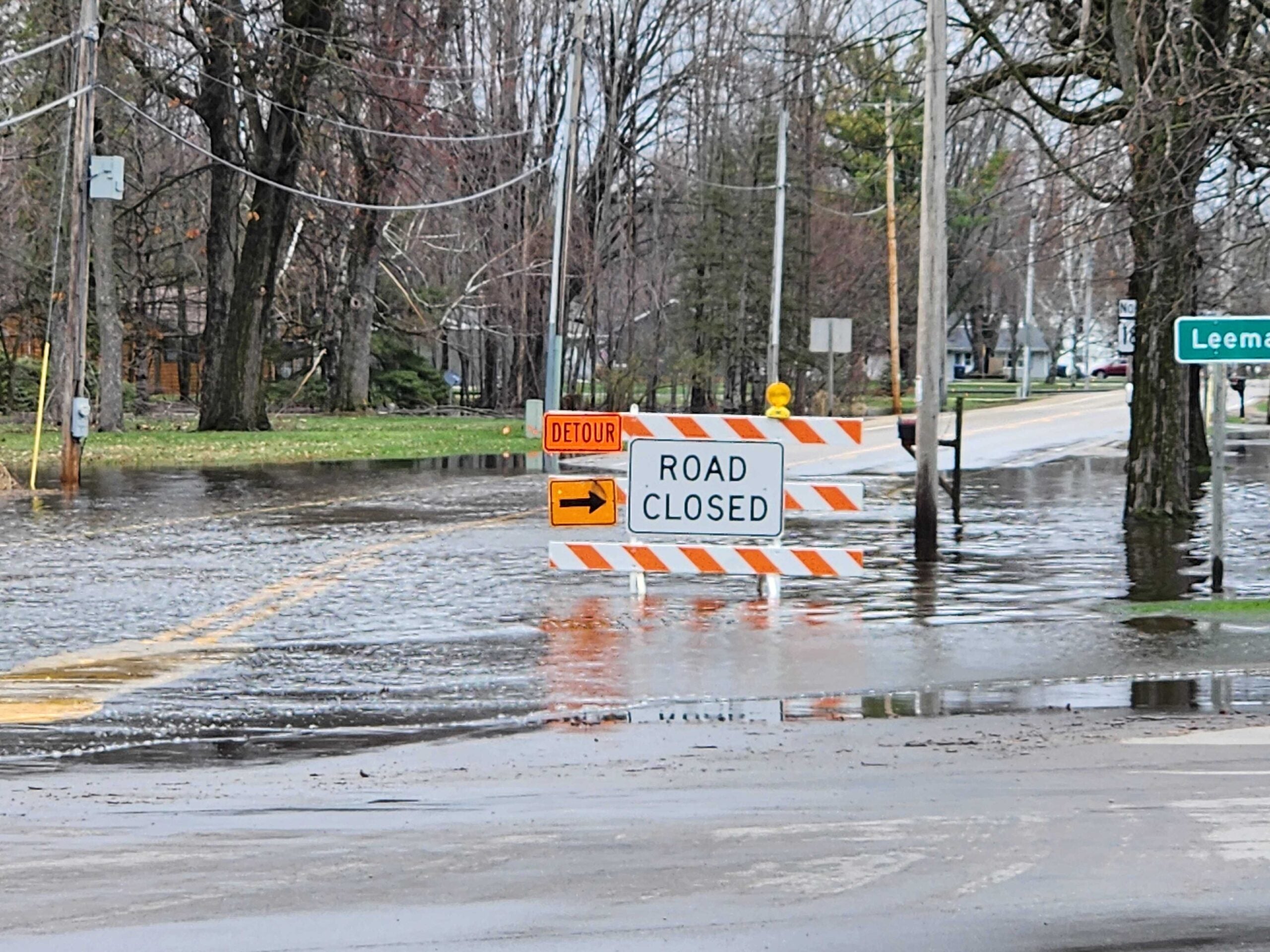
A road closed sign is seen on a flooded street in Shiocton, Wis. on April 15, 2026. Joe Schulz/WPR
On the same day some Wisconsin residents were evacuating their homes due to flooding and others were cleaning up from widespread storms and tornadoes, researchers predicted the state’s climate will continue to grow warmer and wetter with more frequent and intense storms.
Those are among findings of the 2026 report from the Wisconsin Initiative on Climate Change Impacts, or WICCI. The initiative’s co-directors provided an overview of the latest assessment to the Natural Resources Board on Wednesday.
State Climatologist Steve Vavrus, co-director of WICCI, noted average temperatures in Wisconsin have risen about 3 degrees Fahrenheit since the 1950s. The report found the last two decades were the warmest on record, and the state has also seen a 17 percent increase in annual precipitation.
Vavrus said the 2010s were the wettest decade on record with the most extreme weather in the state’s history. During that period, more than 20 daily rainfalls qualified as a 100-year storm, or a storm that has a 1 percent chance of occurring in any given year.
“Thus far, six years through the 2020s, we’re on pace to have the warmest decade on record. And we already know that 2024 was the warmest year in Wisconsin’s history,” Vavrus said, noting it was also the hottest year recorded in the nation and worldwide.
The report found a warmer climate has led to “unusually pronounced” extreme weather in recent years. And that’s resulted in rising costs. Between 1980 and 2024, Wisconsin has been affected by 63 weather and climate disasters that each exceeded $1 billion in losses.
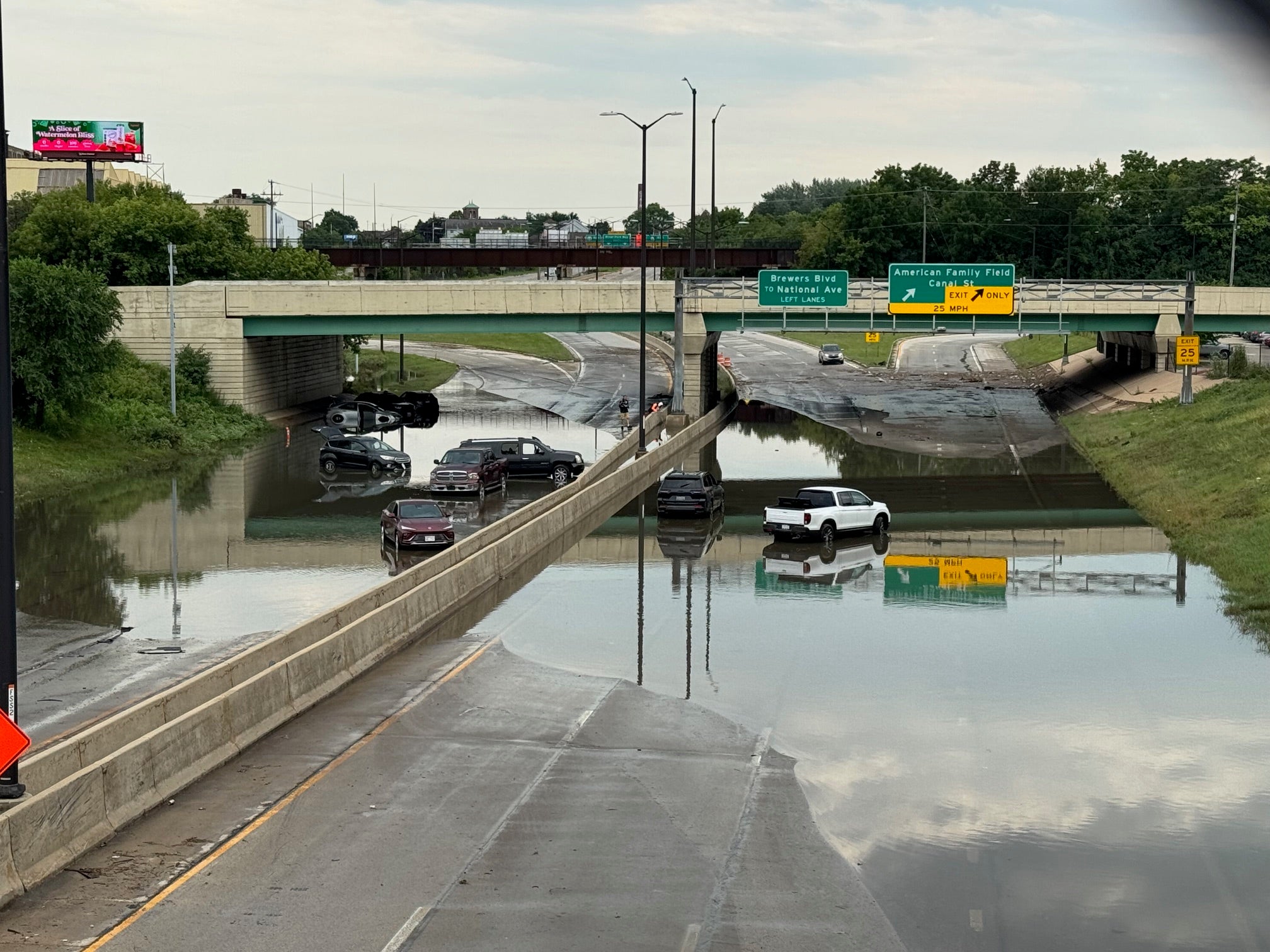
Vehicles are stuck on a flooded roadway at the exit to American Family Field in Milwaukee, Sunday Aug. 10, 2025. Evan Casey/WPR
Wisconsin is seeing an increased likelihood of daily rainfalls of 2 inches or more. Last year, Milwaukee set a new 24-hour record for rainfall when storms dumped more than 14 inches of rain last August, causing widespread flooding that prompted nearly $207 million in federal aid to individuals and households.
The extreme rains served as a stark reminder of the need to build climate and flood resilience now, said Sean Kennedy, WICCI co-director and the DNR’s climate and resilience policy advisor.
“Decades of proactive flood and storm water management efforts by the Milwaukee Metropolitan Sewerage District and partners helped to prevent an even worse outcome, but the event underscored the urgency of getting ahead of these threats,” Kennedy said.
Wisconsin is expected to see wetter winters and springs by mid-century. Vavrus noted the month of March has effectively shifted from winter to spring. Extremes like the record-warm winter of 2023-24 are increasing as winters warm faster than other seasons.
During the summer, Vavrus said the state is projected to see warmer nights and triple the number of extremely hot days by mid-century, rising from an average of about 10 to roughly 30 days. He added that residents can expect more rapid shifts between very wet and very dry conditions, which he called “precipitation ping-pong.”

Milwaukee residents throw away items ruined by flooding at a drop off center in the city on Monday, Aug 11, 2025. Evan Casey/WPR
WICCI leaders say state can build community and economic resilience
As the state sees more extremes, Vavrus and Kennedy highlighted potential approaches that communities may adopt to strengthen resilience to climate impacts. Kennedy said WICCI’s working groups have developed resources that range from helping landowners prepare for climate stress on forests to coastal flooding from fluctuating water levels.
Vavrus pointed to nature-based solutions like a living shoreline in Superior that involved placing rocks offshore to reduce wave energy and planting native grasses to reduce erosion.
Kennedy drew attention to the state’s first grassland climate adaptation project at Rush Creek along the Mississippi River. The DNR worked with the Natural Resources Foundation of Wisconsin and others to restore more than 1,100 acres in an area that is home to nearly 50 species of greatest conservation need.
The report also points to resources to help communities design infrastructure at stream crossings to reduce flood damage costs and strategies to address climate-related health threats. The report also includes strategies to help the state’s fisheries, forests, wildlife and $25.8 billion tourism industry adapt to the effects of climate change.
Wisconsin’s $116.3 billion agriculture industry could face up to $385 million in annual climate-related losses based on the effect of projected heat on crop growth, but diversifying crops and other water management strategies could help.
The initiative also recommends communities reduce their greenhouse gas emissions by adopting renewable energy and using low-carbon concrete or other construction materials.
DNR Secretary Karen Hyun said the agency has been devoted to climate resilience for decades through conservation work and nature-based solutions that protect people from the risks of climate change.
“It’s really important that we continue that and support that where we can,” Hyun said.
Wisconsin will see warmer, wetter weather — and more extremes, report finds was originally published by Wisconsin Public Radio.
If you think stories like this are important, become a member of Urban Milwaukee and help support real, independent journalism. Plus you get some cool added benefits.





















This should be required reading for students of all ages.
This should be required reading for all people of voting age who supports Republicans. In 2006 Al Gore warned us about this very thing in the movie “An Inconvenient Truth”, since then he has been ridiculed. Today we see how true the truth was.
Well, I do not doubt that climate change is really affecting our environment, perhaps, the definition of a 100 year storm needs to be modified..