Prometheus Trio Performs Music By Milwaukee Native Daron Hagen
One of top American composers of last 40 years, was trained at Wisconsin Conservatory.
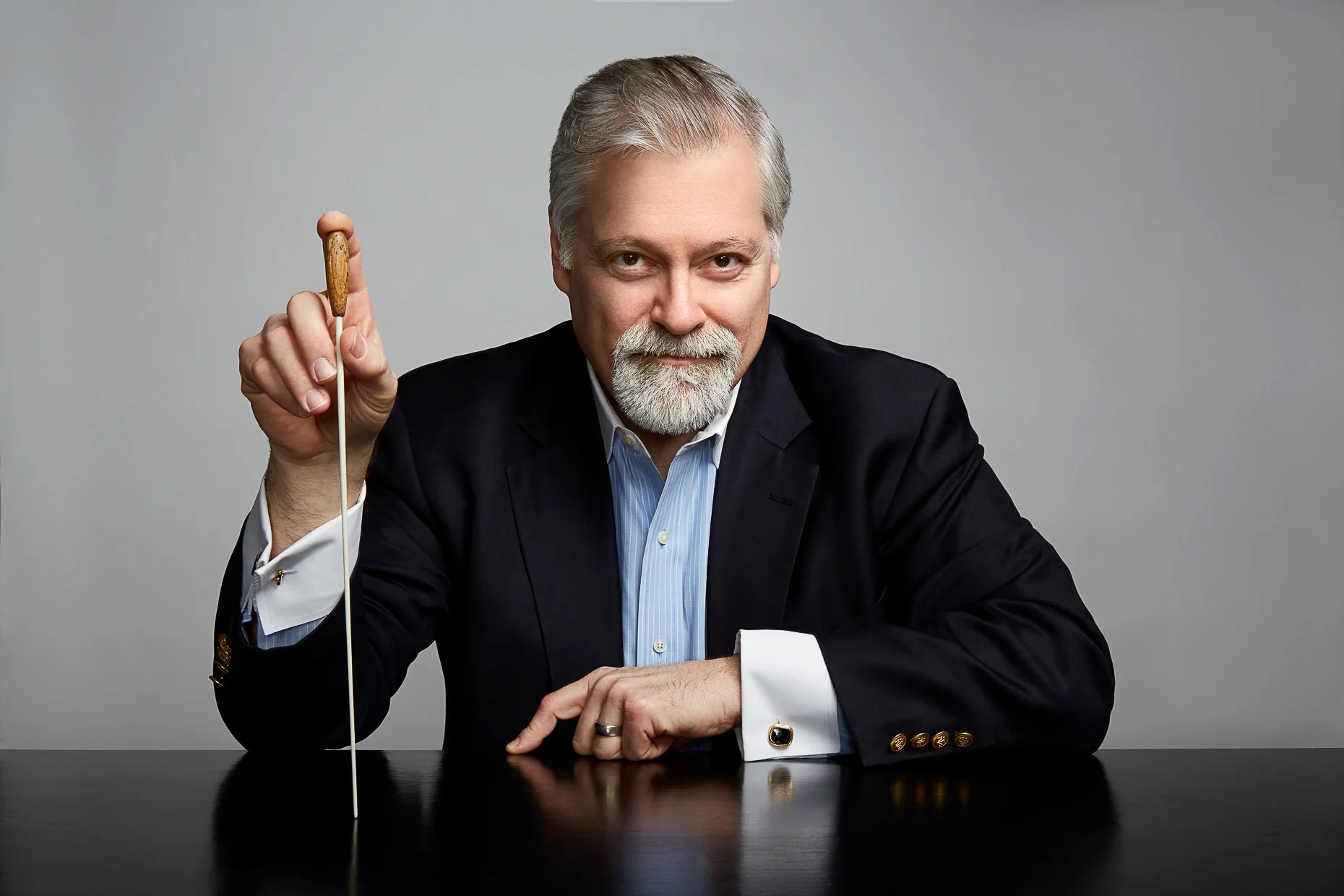
Daron Hagen. Photo credit: Karen Pearson.
The Prometheus Trio continues its season at the Wisconsin Conservatory of Music on Feb. 16. The program features one of the masterworks of the piano trio repertoire: Beethoven‘s “Archduke” trio. Two lesser-known works by Daron Hagen and Vítězslav Novák round out the evening.

Vítězslav Novák. (Public Domain).
Prometheus Trio founders Stefanie Jacob and Scott Tisdel welcome Yuka Kadota, returning as a guest violinist. A graduate of Indiana University and the Royal College of Music in Stockholm, Sweden, Kadota served as associate concertmaster with the Fort Wayne Philharmonic and frequently performed with the Chicago Symphony Orchestra before joining the Milwaukee Symphony Orchestra. She was a member of the Freimann Quartet while in Fort Wayne.
Hagen, born in 1961 and a Milwaukee native now living in New York state, has, over some five decades, composed 13 operas, five symphonies, 12 concertos and more than 250 art songs. He is a major figure in contemporary classical music, with opera as his most serious focus. The NATS Journal of Singing has described Hagen as “the finest American composer of vocal music in his generation.” While in high school, Hagen studied composition, piano and conducting at the Wisconsin Conservatory of Music, where this concert will be performed.
Hagen has written more than 50 works for chamber ensembles, including nine piano trios. His Piano Trio No. 3, “Wayfaring Stranger” (2006) is built around a hymn of that name with personal ties to Hagen — it was a favorite of his late brother. This work is not just a chamber treatment of a pleasant hymn. Hagen deconstructs the melody and explores variations incorporating complex rhythms inspired by mazurka and fandango influences.
A popular Czech composer, Novák (1870-1949) was a leading proponent of Czech nationalism in music in the generation after Dvořák and Smetana. His firsthand studies of Moravian and Slovakian folk music inspired much of his composition. He is best known for symphonic poems celebrating Eastern European folk legends and landscape.
Novák’s Trio quasi una Ballata, Op. 27 (1902) fits a rare niche for piano trios as program music — music that tells a story. Novák called it a ballade, as Chopin did for some of his works, even though there is no explicit narrative. The structure creates dramatic episodes, akin to a film score or incidental music for theater.
A reviewer for the publisher Silvertrust summarizes the work:
It begins with an introductory Andante tragico, full of pessimism and though tonally advanced for the time, there are still traces, mostly rhythmical, of Moravian folk songs. This is followed by an Allegro which has a heroic theme for its main subject but it too is tinged with a sense of the tragic. Next comes a sarcastic scherzo, Allegro burlesco. In the fourth section, the Andante tragico is reprised, this time followed by a very dramatic Allegro which leads to a somber and funereal coda.
Beethoven’s Trio in B-flat major, Op. 97 (1811), is a substantial work, with extensive development across its four movements and transitions that continually introduce memorable melodies and fragments whose recurrence draws the listener through this 40-minute work.
Musicologist Melvin Berger cited a new “gemütlichkeit” in this work by Beethoven, a “warm, emotional style with broadly sung, moderately paced melodies and appealing dance rhythms” in the Archduke trio. Critic Kai Christensen observes, “There are no epic fugues, no jarring disruptions, no transcendent tangents and no relentless dismantling of music to its fundamental core. Instead, there is bountiful beauty, genial vitality and humor.”The evening’s concert presents piano trios in three very different forms: a quite contemporary vision exploring a simple hymn tune in myriad ways; a dramatic construction that presents an Eastern European drama real only in the minds of the listener; and a classic masterwork showing Beethoven at his best, exploring melodies and contemplative moods.
The concert starts at 7 p.m. on Monday, Feb. 16, in the ballroom of the Wisconsin Conservatory’s McIntosh Goodrich Mansion at 1584 N. Prospect Ave. Tickets can be purchased online or at the door. For evening concerts at the Conservatory, complimentary parking is available at Milwaukee Eye Care, 1684 N. Prospect Ave., one block north of the Conservatory.
Prometheus will return for a concert on April 20, featuring Emmy Tisdel Lohr, the accomplished daughter of Prometheus Trio founders Jacob and Tisdel, now teaching and performing in Tucson, Arizona. That concert will include works by Beethoven, Martinů, Kodály and Schoenfeld.
If you think stories like this are important, become a member of Urban Milwaukee and help support real, independent journalism. Plus you get some cool added benefits.


Preview
-
Renaissance Theaterworks Presents Showcase of Global Women Playwrights
 Oct 21st, 2026 by Lauren Hafeman
-
Bach Chamber Choir Travels World in Song
 Oct 21st, 2026 by Martha Brown
-
The Relic Ensemble Will Play Peruvian Period Music
 Oct 20th, 2026 by Michael Barndt