We Won’t Act Like Republicans, Wisconsin Democrats Say
Democrats hope to gain legislative majority in 2026 election.
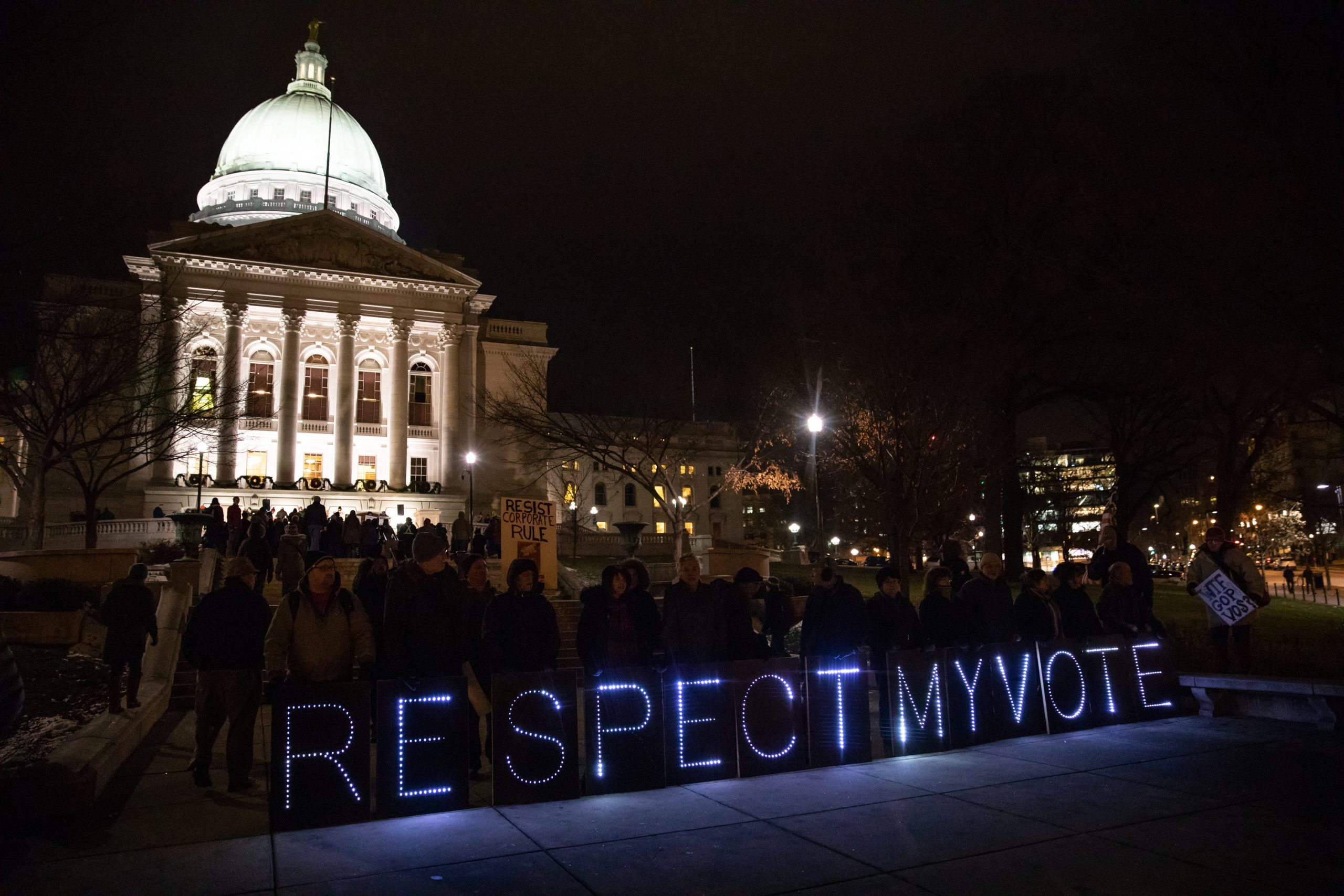
Protesters gather on the Capitol steps to oppose lame-duck bills that would restrict early voting and limit the powers of Attorney General-elect Josh Kaul and Governor-elect Tony Evers. During the Dec. 3, 2018, protest, the Joint Committee on Finance heard public testimony against the bills in a hearing inside the Capitol. (Emily Hamer / Wisconsin Watch)
If Democrats win a majority in one or both chambers of the Legislature in 2026, the party will have more power to govern than any time in more than 15 years.
Senate Minority Leader Dianne Hesselbein, D-Middleton, said she saw a sign of what that future could look like during the state budget-writing process earlier this year. With just a three-seat advantage in the Senate, Republicans needed to work across the aisle to advance the budget, and Senate Democrats had a seat at the negotiating table, Hesselbein said.
For the past 15 years of Republican majorities in the Senate and the Assembly, GOP lawmakers have been able to operate largely without input from legislative Democrats. In 2011, following the Republican midterm surge during President Barack Obama’s presidency, a GOP trifecta in the Legislature and the governor’s office advanced legislation aimed at cementing a permanent majority.They passed laws such as Act 10, which dismantled Democratic-supporting public sector unions; strict voter ID, which made it harder for students and low-income people to vote; and partisan redistricting, which kept legislative Republicans in power with near super-majorities even after Democrats won all statewide offices in 2018.
After years of being shut out of the legislative process, Senate Democrats won’t operate that way if the party wins control of the chamber next year, Hesselbein said.
“We have an open door policy as Democrats in the state Senate. We will work with anybody with a good idea,” she said. “So we will try to continue to work with Republicans when we can and seek common values to really help people in the state of Wisconsin.”
Newly redrawn legislative maps put into play during last year’s elections, when President Donald Trump won Wisconsin, resulted in 14 flipped legislative seats in favor of Democrats. Following those gains in 2024, Senate Democrats need to flip two seats and hold onto Senate District 31, held by Sen. Jeff Smith, D-Brunswick, to win a majority next year.
The party’s campaign committee is eyeing flip opportunities in seats occupied by Republican Sens. Howard Marklein, R-Spring Green; Rob Hutton, R-Brookfield; and Van Wanggaard, R-Racine, which are all districts that former Vice President Kamala Harris won in 2024, according to an analysis last year by John Johnson, a Lubar Center Research fellow at Marquette University.
Senate Majority Leader Devin LeMahieu, R-Oostburg, in an email to Wisconsin Watch said a Democratic majority in the chamber “won’t happen.”With political winds during a midterm year typically favoring the party not in control of the White House, Democrats could see gains in the Assembly as well, although there are more challenges than in the Senate. All of the Assembly seats were tested under the new maps last year, but Democrats still made gains during an election year when Trump’s name on ballots boosted Republicans. Minority Leader Greta Neubauer, D-Racine, told the Milwaukee Journal Sentinel earlier this month that she is “optimistic” about chances to flip the Assembly, where five seats would give Democrats control of the chamber for the first time since 2010.
Assembly Speaker Robin Vos did not respond to questions from Wisconsin Watch about how Republicans might work with Democrats if the party wins a majority next year.
If there is a power shift in the Capitol in 2026, few lawmakers have experienced anything but Republican control of the Legislature. Just 11 of the 132 members across both political parties previously held office at a time when Democrats controlled both legislative chambers.
Some of the longest-serving Democrats said they agree with restoring more bipartisanship in the legislative process if the party gains power in 2026.
“I don’t want to repeat the same mistakes as the Republicans did,” said Sen. Tim Carpenter, D-Milwaukee, who was elected to the Assembly in 1984 and the Senate in 2002. “We have to give them an opportunity to work on things.”
Carpenter and Rep. Christine Sinicki, D-Milwaukee, who was elected to the Assembly in 1998, said if the party wins one or both majorities they want to make sure members are prepared for governing responsibilities they’ve never experienced, like leading a committee.
“It’s a lot more work,” Sinicki said of being in the majority. “But it’s very fulfilling work to actually be able to go home at night and say, ‘I did this today.’”
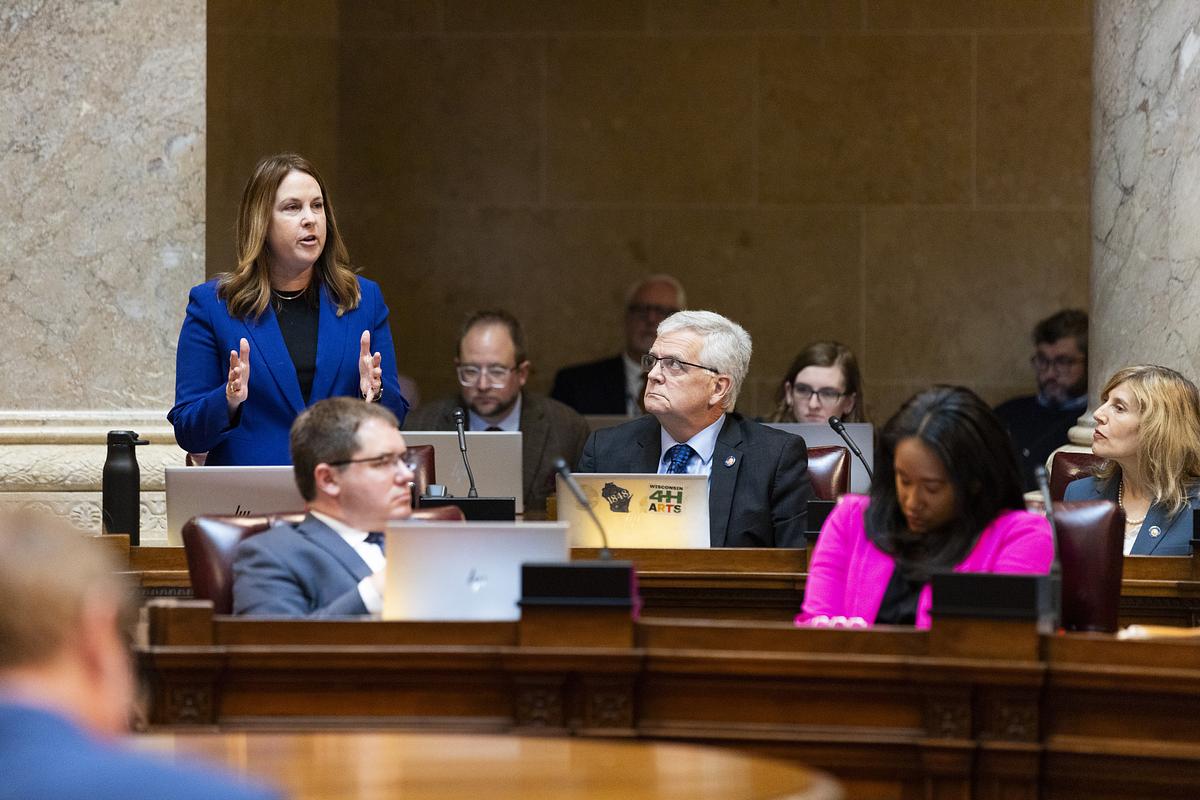
Senate Minority Leader Dianne Hesselbein, D-Middleton, speaks during a Senate floor session Oct. 14, 2025, at the State Capitol in Madison, Wis. (Joe Timmerman / Wisconsin Watch)
Hesselbein said if Senate Democrats secure power in their chamber next year, members will continue to focus on affordability issues that they’ve proposed during the current session. Some of those bills included providing free meals at breakfast and lunch to students in Wisconsin schools, lowering the cost of prescription drugs and expanding access to the homestead tax credit.
LeMahieu, though, said Democrats have “no credibility” on affordability issues.
“Senate Republicans delivered the second largest income tax cut in state history to put more money in Wisconsin families’ pockets for gas and groceries while Senate Democrats propose sales and income tax hikes to pay for a radical agenda nobody can afford,” he said.Senate Democrats in the meantime are holding listening sessions across the state and working on a list of future bills to be ready to lead “on day one,” Hesselbein said. “If we are fortunate enough.”
This article first appeared on Wisconsin Watch and is republished here under a Creative Commons Attribution-NoDerivatives 4.0 International License.