
First Youths Arrive at Milwaukee’s New Juvenile Prison
A new era: $65.6 million facility on Milwaukee’s Northwest Side can house up to 32 boys.
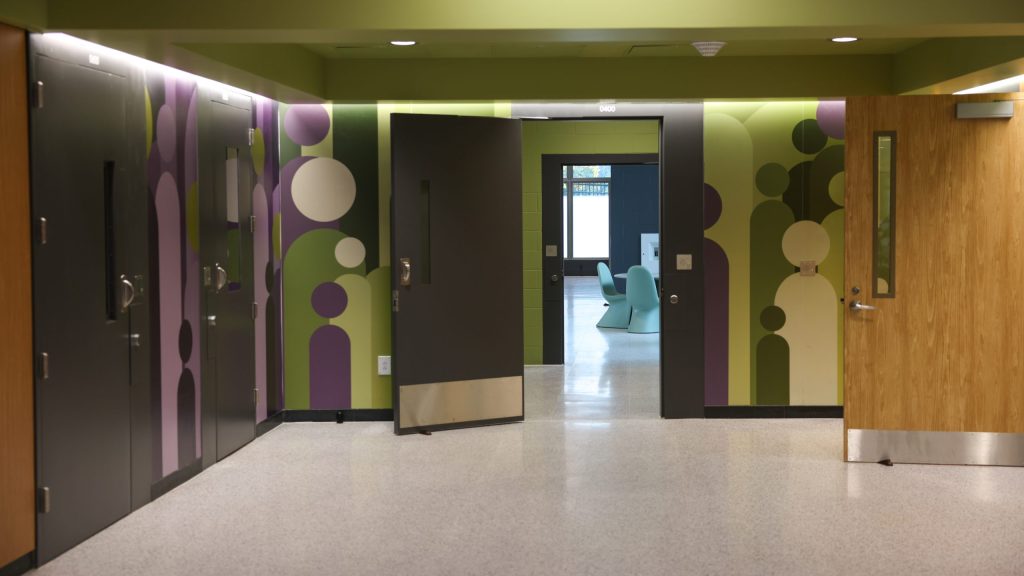
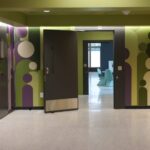
A hallway leading to one of the housing units inside of the newly built Southeast Regional Care Center for Youth on Oct. 14, 2026, in Milwaukee. (Jonathan Aguilar / Milwaukee Neighborhood News Service / CatchLight Local)
Four boys became the first residents of Milwaukee’s new juvenile prison as of Nov. 10, according to Kevin Hoffman, deputy director of communications for the Wisconsin Department of Corrections.
More youths will arrive as staff members are hired and trained, with most or all beds expected to be occupied by early 2027, Hoffman said.
The Southeast Regional Care Center for Youth, a $65.6 million facility on Milwaukee’s Northwest Side, can house up to 32 boys.
The intent is for the facility to house primarily youths from Milwaukee County, said Lance Horozewski, assistant administrator of DOC’s Division of Juvenile Corrections.
The facility is part of Wisconsin’s shift toward smaller, regional youth prisons designed to keep incarcerated youths closer to their families and communities.
“It represents a decade of work to transform the failed juvenile correction system into a system that truly puts kids, families and communities first,” Gov. Tony Evers said during a press conference in October after a tour of the facility.
Closer to home
For years, Milwaukee-area youths sentenced to Type 1 juvenile correctional facilities – the most secure type – have been sent to Lincoln Hills School and Copper Lake School in the unincorporated community of Irma in Lincoln County, more than 200 miles north of Milwaukee.
“This is the first facility designed specifically to keep youth closer to home and their families, and near the community resources that will help them thrive,” Evers said.
Closeness will make it easier to connect youths with services they can continue using after their release, Horozewski said.
“That’s one of the major issues of having kids be three and a half hours away,” he said. “The things they are getting up there aren’t transferable down here.”
Family participation in treatment
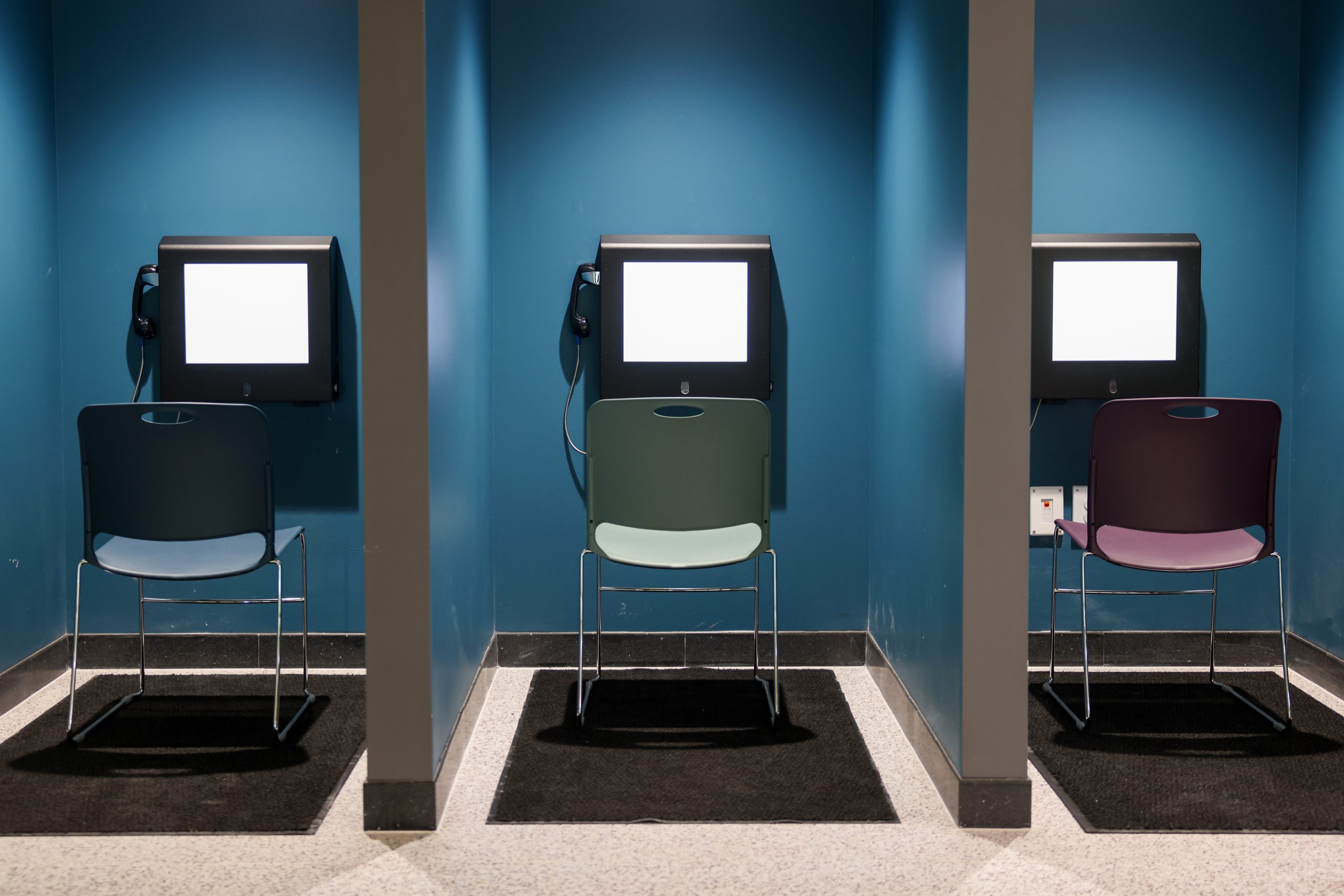
Three video call stations inside the visiting room of the newly built Southeast Regional Care Center for Youth. (Jonathan Aguilar / Milwaukee Neighborhood News Service / CatchLight Local)
Officials plan to allow in-person visits seven days a week and provide three stations for video visits.
Families also will be encouraged to participate in their children’s therapy and treatment planning.
“Family interaction, family contacts – that is such a critical component of being able to successfully go back in the community and engage in school and jobs,” Horozewski said.
Keana Burkhalter, a psychological associate at the facility, said family participation is generally expected, although it is not always appropriate or possible.
Staff members from Milwaukee also hope to connect youths with community resources.
Kashunda Brown, a youth counselor supervisor, said staff members familiar with Milwaukee can help connect incarcerated youths with community resources.
Education, treatment and rehabilitation
The facility includes classrooms, vocational training areas, mental health treatment services and spaces for creative activities.
Youths will attend traditional classes, including math, English and social studies, and receive special education services when appropriate.
Vocational training includes welding, woodworking and food service, with opportunities to earn high school credits and industry certifications.
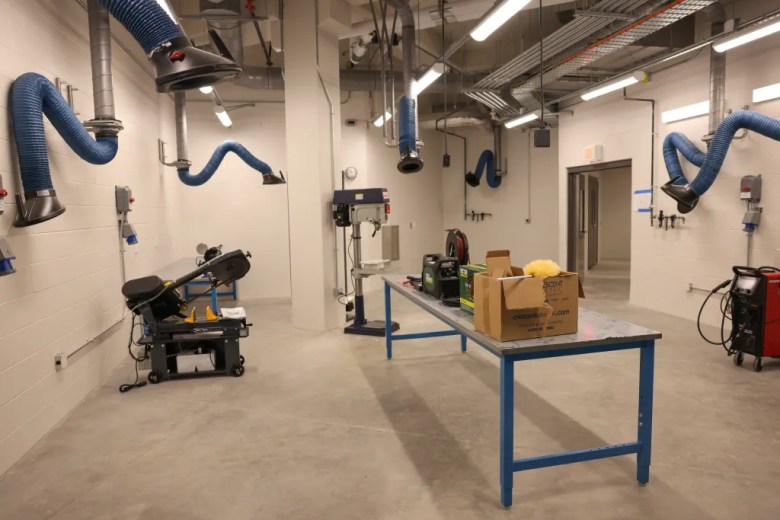
A welding workshop inside the newly built Southeast Regional Care Center for Youth. (Jonathan Aguilar / Milwaukee Neighborhood News Service / CatchLight Local)
The facility also has recording equipment that officials hope to use for music, podcasting and other creative projects.
DOC plans to partner with Milwaukee-area businesses, technical colleges and recording studios to help youths develop skills they can use after release, Horozewski said.
Education concerns
Despite the new setting, responsibility for the academic curriculum has not changed — which concerns some advocates.
Rose Scott, co-founder and former president of Prison Action Milwaukee, has long advocated for changes to education in Wisconsin’s juvenile correctional system.
She said that she would like to see the Department of Public Instruction, which oversees public education in Wisconsin, be responsible for schooling at the youth prison.
“All kids … whether they are incarcerated or not are supposed to be able to get the same education,” Scott said.
The DOC’s education department develops and implements the curriculum at the new Milwaukee facility, just as it does at Lincoln Hills and Copper Lake.
“The DOC is recognized by the Department of Public Instruction as an independent school district. As such, (Department of Public Instruction’s) role in educational programming at Division of Juvenile Corrections facilities is the same as its role in other public schools.”
Scott, who attended an open house at the Milwaukee facility, said she was not impressed by its vocational training areas and questioned whether these opportunities would fully address the educational needs of incarcerated youths and help prevent their return to prison.
“Is it going to be business as usual? What’s the purpose?” she asked.
Mental health treatment
Mental health treatment is another major component.
The facility has five full-time therapists and a therapy supervisor, making its clinical mental health team fully staffed, he said.
Staff members have received training in dialectical behavior therapy, an approach intended to help youths manage emotions and develop coping skills.
Burkhalter described the goal as moving away from punishment and toward rehabilitation.
“My hope is that when they come here, they feel inspired, they feel motivated to change,” she said.
A step toward closing Lincoln Hills

Lincoln Hills School and Copper Lake School are shown on Nov. 1, 2024, in Irma, Wis. A proposal by Gov. Tony Evers would close the beleaguered juvenile justice complex and fund construction of a youth facility in Dane County. (Drake White-Bergey for Wisconsin Watch)
The Milwaukee facility is part of Wisconsin’s broader effort to close Lincoln Hills and Copper Lake, which faced years of allegations of abuse and unsafe conditions.
A federal court ended a consent decree overseeing reforms at Lincoln Hills and Copper Lake in January after DOC met its requirements.
But Milwaukee’s 32-bed facility alone cannot accommodate all the youths currently held at Lincoln Hills and Copper Lake.
The state also has begun construction of a juvenile correctional facility in Dane County, and officials also have advocated for a third facility in northern Wisconsin.
Under Act 185, the Lincoln Hills and Copper Lake campus is ultimately intended to be converted for adult corrections use.
Jonathan Aguilar is a visual journalist at Milwaukee Neighborhood News Service who is supported through a partnership between CatchLight Local and Report for America.
This article first appeared on Wisconsin Watch and is republished here under a Creative Commons Attribution-NoDerivatives 4.0 International License.
More about the Lincoln Hills and Copper Lake Facilities
- First Youths Arrive at Milwaukee’s New Juvenile Prison - Devin Blake - Nov 22nd, 2026
- Gov. Evers, Doc Celebrate Opening of New Juvenile Corrections Facility in Milwaukee, Marking Significant Milestone in Efforts to Close Lincoln Hills and Copper Lake Schools for Good - Gov. Tony Evers - Oct 14th, 2026
- MKE County: See Inside New Juvenile Detention Facility - Graham Kilmer - Mar 5th, 2026
- State Juvenile Prisons Finally Complete Court-Ordered Reforms - Graham Kilmer - Jan 28th, 2026
- Lincoln Hills and Copper Lake Youth Facilities Found in Compliance, Triggering End to Court-Ordered Monitoring Set in Place by 2017 Lawsuit - American Civil Liberties Union of Wisconsin - Jan 28th, 2026
- Gov. Evers, Doc Celebrate Completion Of Successful Reforms at Lincoln Hills and Copper Lake Schools - Gov. Tony Evers - Jan 28th, 2026
- Gov. Evers Announces State Building Commission Approves Approximately $185 Million in Projects Across Wisconsin - Gov. Tony Evers - Dec 17th, 2025
- Building Commission OKs Planning Funds to Reorganize Wisconsin Prisons - Sarah Lehr - Oct 29th, 2025
- State Building Commission Releases Funding Gov. Evers Requested to Revamp Corrections Facilities - Gov. Tony Evers - Oct 28th, 2025
- Gov. Evers Announces Evers Administration to Move Forward with Comprehensive Plans to Revamp Corrections Facilities - Gov. Tony Evers - Oct 14th, 2025
Read more about Lincoln Hills and Copper Lake Facilities here