
Milwaukee Clock Tower Farm Grows Hydroponic Produce for Food Pantries
Rockwell Automation partnership with Feeding America serves 600 food pantries.
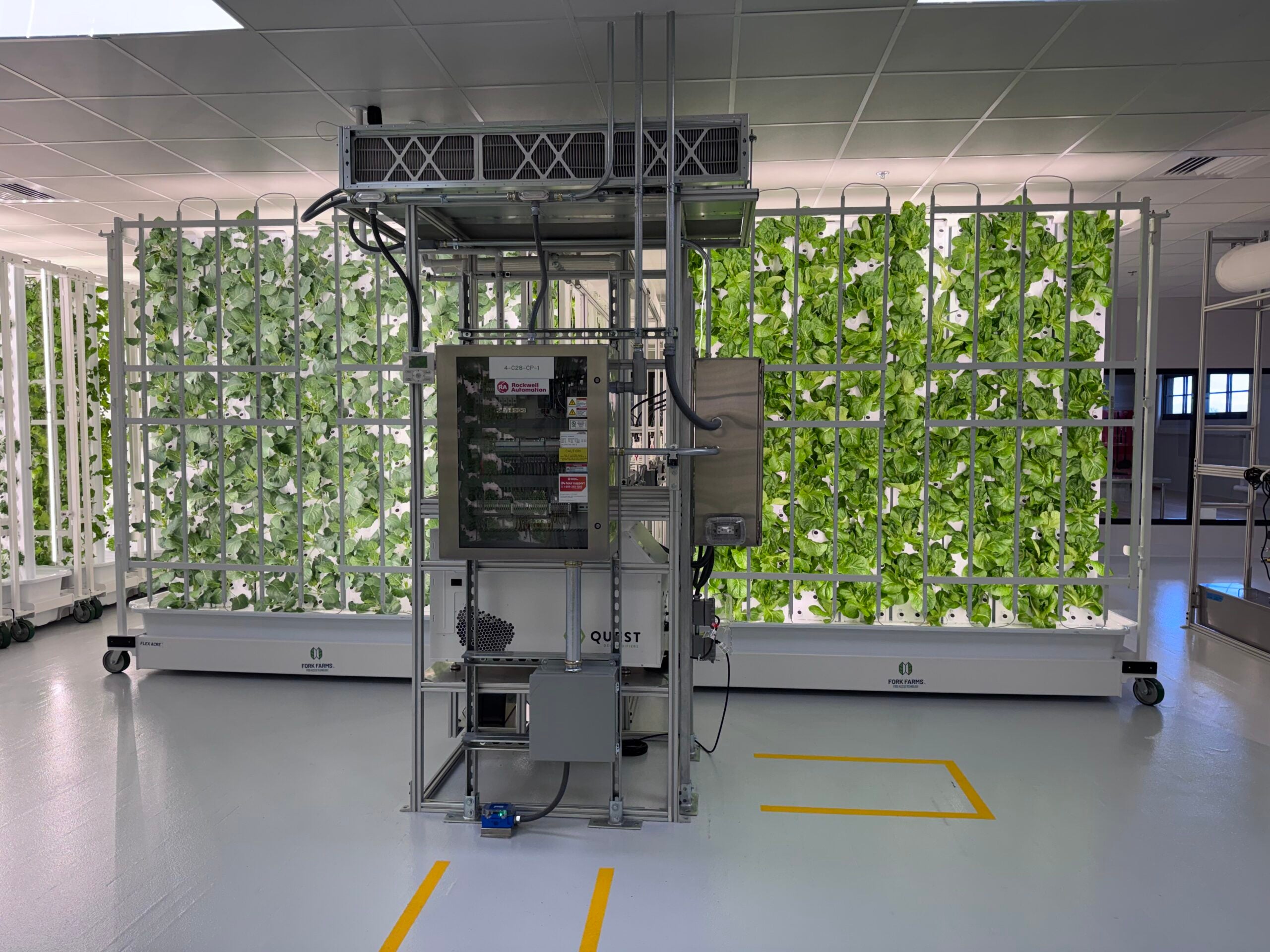
A hydroponic system growing leafy greens In Milwaukee’s Clock Tower. The system uses automation technology from Rockwell automation to control nutrient, pH and water levels. Photo courtesy of Feeding America at Eastern Wisconsin
What’s growing inside the Allen-Bradley Clock Tower, one of the main characters of Milwaukee’s skyline, may surprise some people.
The local landmark is now home to an indoor farm capable of producing approximately 200,000 pounds of leafy greens a year. The project is a partnership between Rockwell Automation — the company’s Milwaukee headquarters includes the clock tower — Fork Farms and Feeding America Eastern Wisconsin.
The Clock Tower Farm will use 72 hydroponic systems provided by Fork Farms. Hydroponic systems can grow plants with nutrient infused water and LED lights instead of soil and sunlight.
Greens produced at the farm will be distributed to 600 food pantries in 35 counties throughout Wisconsin.
Rockwell has the role of adjusting the nutrient, pH and water levels with its Plant PAx software. The company is also providing the space in the Clock Tower for the hydroponic systems.
“Combining Rockwell’s automation expertise with Fork Farms’ growing technology and Feeding America Eastern Wisconsin’s distribution network, we’re creating a scalable model that delivers fresh food where it’s needed most and makes our community stronger,” Rockwell Automation CEO Blake Moret said in statement.
The farm opened at a time of high demand for food pantries across Wisconsin.
Cameron Wengrzyn is the director of marketing and communications at Feeding America Eastern Wisconsin. He said food pantries see an increase in visitors during the holidays and winter months and can often only afford nonperishable items, like canned goods.
“Food pantries are already dealing with quite a few people who need additional assistance, and to be able to provide them with produce … is a huge benefit,” Wengrzyn said. “The cost of healthy items, especially produce, dairy, meats, a lot of food pantries can’t afford to to purchase them or have to purchase them on a very small level.”
He said the farm gives Wisconsin food pantries the option of having fresh produce.
“They’re not sitting in a warehouse and they’re not being transported to multiple holding facilities,” Wengrzyn said. “They’re being cut and then immediately driven to a food pantry to be handed out to different visitors that are utilizing those food pantries.”
Plants grown in hydroponic systems can be more nutritious than traditionally grown plants. Michael Hostad is the executive vice president of impact partnerships at Fork Farms. He said the systems create an optimal environment for growing plants — meaning they don’t have to worry about weather conditions.
Hostad said the hydroponic plants were compared to those grown in soil at a lab in Chicago.
“The plants tested off the charts. (They have) significantly higher levels of calcium and magnesium as well as no detectable traces of heavy metals,” he said. “The plants are getting exactly what they need when they need it … so all they do all day long is focus on growing and creating nutrients.”
The Clock Tower Farm is the first to use Rockwell Automation technology and have the primary purpose of addressing food insecurity. Hostad said mayors in other cities are interested in following suit.
“For food nutrition insecure populations, they’re getting this incredibly high quality food served to them instead of food that may have been donated or towards the end of its edible life,” Hostad said. “Our hope is that we’ll see these farms popping up in cities all over the U.S.”
Milwaukee Clock Tower farm to provide hydroponic produce to food pantries was originally published by Wisconsin Public Radio.
If you think stories like this are important, become a member of Urban Milwaukee and help support real, independent journalism. Plus you get some cool added benefits.