

Judge Dismisses Suit Opposing Port Washington Residents New Power
Angry over data center, voters passed ordinance requiring their approval of TID deals over $10 million.
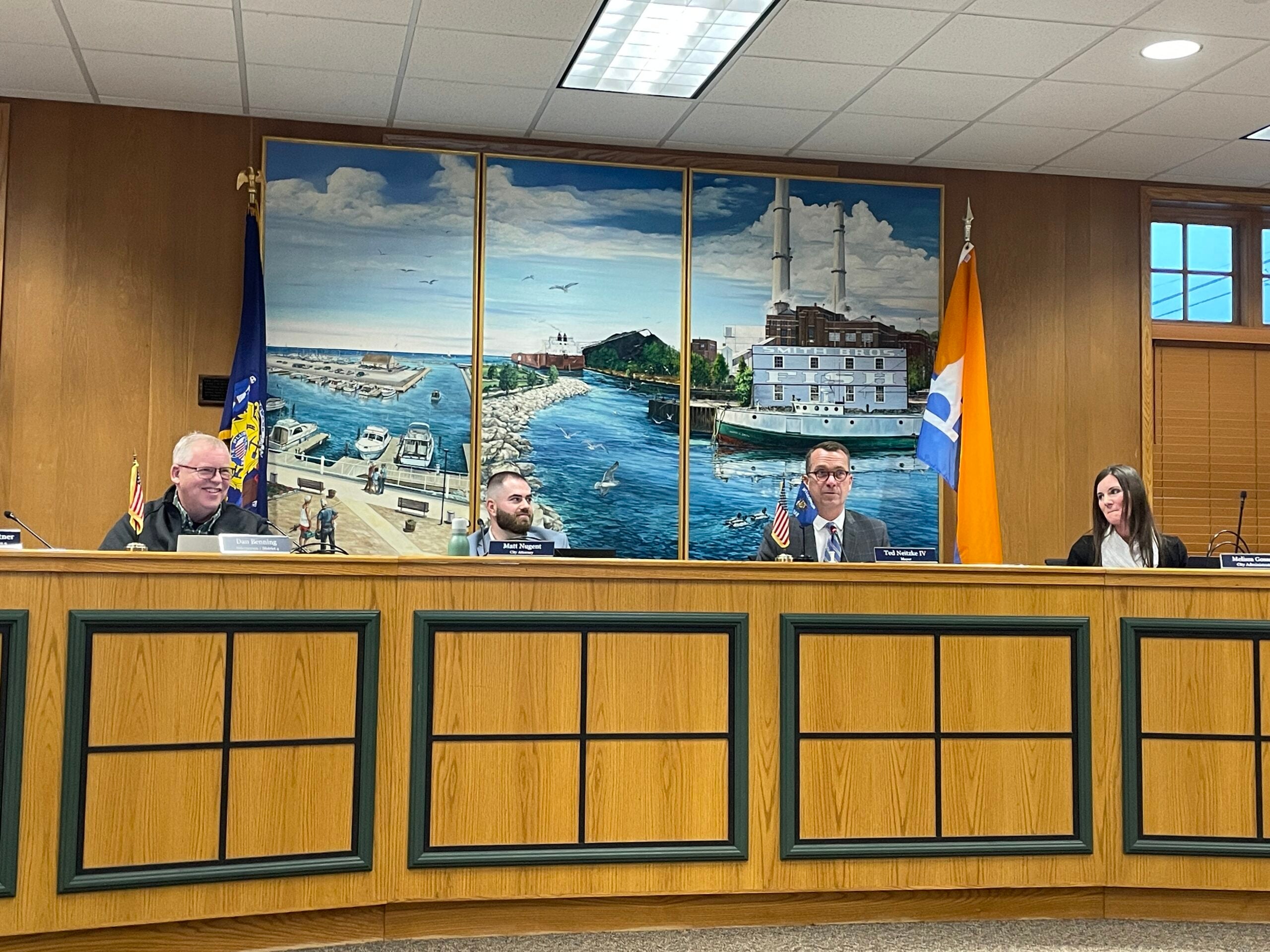
Port Washington alder Dan Benning, city attorney Matt Nugent, mayor Ted Neitzke IV and city administrator Melissa Gossett during the Port Washington Common Council’s May 20, 2025 meeting. Nick Rommel/WPR
Going forward, voters in the city of Port Washington will have to approve local development incentives over a certain threshold through a public referendum.
That’s after an Ozaukee County judge ruled on a lawsuit challenging the legality of the ordinance giving residents that power.
Judge Adam Gerol’s oral ruling on Monday ordered the case dismissed. But the ordinance could still be challenged in a higher court.
The ordinance’s supporters say the ruling is a win for Port Washington voters, while its opponents argue it will make it harder to bring development to the community, from housing to new businesses.
The measure requires voters to approve any new tax increment district, or TID, with a project cost or projected base value of more than $10 million through a referendum.
A TID is a geographic area within a municipality that is being targeted for development, where local governments divert increased property tax revenue generated from the district’s growth to finance development infrastructure or incentives.
The ordinance was passed by 66 percent of Port Washington voters in April through a referendum. The issue was put on the ballot through a process called “direct legislation.”
It came in response to the city approving a TID for a massive $15 billion data center campus that has drawn strong pushback from local residents.
The Metropolitan Milwaukee Association of Commerce, along with several other groups, filed a lawsuit against the city of Port Washington in January trying to block the ordinance from appearing on the April ballot and to block it from taking effect.
The suit argued the ordinance would “irreparably harm employers, taxpayers, and economic development interests in the City of Port Washington and throughout the region.”
The city also expressed “concerns related to the legality of the proposed ordinance” through court filings.
In February, Gerol denied a request from the business groups for a temporary injunction, which would’ve prevented the ordinance from appearing on the ballot.
Local nonprofit Great Lakes Neighbors United intervened in the court proceeding.
Christine Le Jeune, spokesperson for Great Lakes Neighbors United, said in a statement that the judge dismissing the lawsuit was “a win for every voter in Port Washington and elsewhere in the state.”
“Residents asked for a say before large amounts of public money are committed. They gathered signatures. They voted,” she said. “The court respected that. While we welcome this decision, it is unfortunate that citizens had to raise thousands of dollars to go to court and ensure that their voting rights were respected.”
But a spokesperson for the Metro Milwaukee Association of Commerce says business groups remain “deeply concerned about the impact the ordinance will have.”
In a statement, the spokesperson said tax increment financing is governed by a “well-established state process” that includes public notices and hearings, as well as a review by a municipality’s Joint Review Board.
“Adding another layer of uncertainty to that process sends the wrong signal to businesses and developers choosing where to invest,” the statement read. “Quite simply, those opportunities will go elsewhere.”
The business groups say their concerns extend well beyond Port Washington.
“If measures like this become a precedent across Wisconsin, they risk making our state less competitive for the housing, jobs and investment our communities need,” the statement from MMAC added. “We’re disappointed with the judge’s interpretation of the law on multiple fronts and feel confident further examination in higher courts is warranted.”
Voters in Janesville will face a similar ballot initiative on Nov. 3. If approved by voters, the referendum would require voters approve development plans for the city’s former General Motors plant site through a referendum if a project’s costs exceed $450 million.
Judge dismisses lawsuit challenging Port Washington ordinance giving residents more power over development was originally published by Wisconsin Public Radio.
If you think stories like this are important, become a member of Urban Milwaukee and help support real, independent journalism. Plus you get some cool added benefits.