Elections Commission Says Federal Agents Should Not Be at Polling Places
Commission adopts guidance for local clerks: call lawyers if federal agents show up on election day.
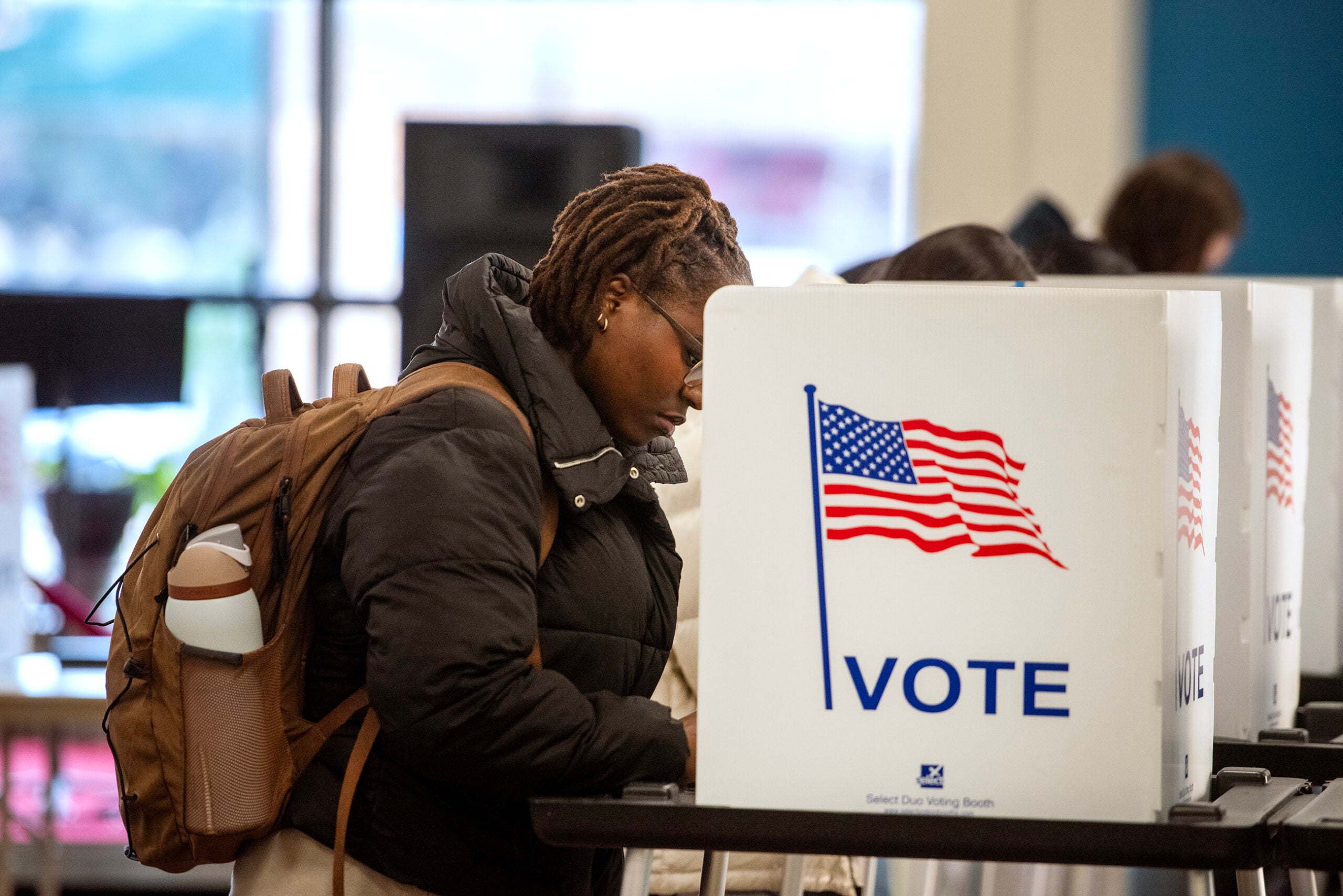
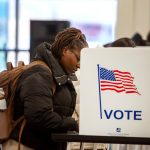
Madison residents fill out ballots Tuesday, April 1, 2025, at the Madison Senior Center in Madison, Wis. Angela Major/WPR
If federal law enforcement shows up at polling sites this November, the head of the polls should alert their local clerk, who will in turn involve lawyers and election officials, according to new guidance adopted by the Wisconsin Elections Commission Thursday.
In a special meeting Thursday morning, five of the six commissioners — three Democrats and two Republicans — voted to advise clerks that law enforcement, in most cases, “should not be present at polling places unless they themselves are voting” or responding to election officials’ requests for help.
The guidance memo says that, if law enforcement does arrive, the polling place leader — referred to as a Chief Inspector — should alert their local clerk. The local clerk should then contact “their local counsel, their county clerk, and Commission staff.”
Election officials should also ask to review their warrants and badges, request that their actions take place outside of the voting area and document the interaction, per the memo. It also encourages clerks to involve local law enforcement if outside agents are present nearby.
Bob Spindell, a Republican commissioner who is often at odds with the other members of the elections commission, voted against adopting the guidance, arguing that it is unnecessary.
“I think this guidance is only going to scare away some people from the polls … when this law enforcement guidance hits the news,” Spindell said. “I personally think this guidance is unnecessary, as we have not seemed to have needed this for the last 201 years.”
The measure comes as voting rights group have expressed concern that federal law enforcement, such as Immigration and Customs Enforcement or Department of Homeland Security agents, will be present at the polls during next month’s midterm elections.
Wisconsin elections are administered locally by some 1,800 local clerks, reporting to 72 county clerks. Commissioner Don Millis, a Republican, said that he and Wisconsin’s elections administrator, Meagan Wolfe, have met with many of the county clerks, “and I don’t think there’s alarm about this, but I do think they’re getting lots of questions from (local) clerks.”
“I don’t think that this is going to raise the (concern) level any more than you’re already seeing,” he said. “I think the message should be … we’ve had observers before. We’re going to continue to have observers, and if you have a problem, these are the things to do.”
While armed federal agents are not allowed at polling sites, unless there is an armed attack by foreign agents, President Donald Trump has demurred when asked whether he’d send ICE agents to polling sites. And DHS has launched investigations into voter fraud, ostensibly tied to voters’ immigration statuses.
Several civil rights groups and unions have filed lawsuits aimed at preventing that possibility. They’ve argued that the presence of law enforcement can intimidate legal voters.
On Thursday, Wisconsin’s election officials said they’d prefer any law enforcement at the sites wear plain clothes to avoid that possibility.
A spokesperson for DHS previously told NPR that ICE “is not planning operations targeting polling locations,” but added that, “if an active public safety threat endangered a polling location, they may be arrested as a result of that targeted enforcement action.”
Wolfe said she did not anticipate “anything unusual” on Nov. 3.
“By no means are we looking to make anybody feel panicked or anything about this,” she said. “I see this just like any other contingency planning that we do to assist our clerks, which is to provide some framework for them to have conversations and build relationships with their local law enforcement, so that they’re able to tackle any sort of uncertainty that comes their way.”
Elections Commission: Clerks should call lawyers if federal law enforcement shows up at polls was originally published by Wisconsin Public Radio.
If you think stories like this are important, become a member of Urban Milwaukee and help support real, independent journalism. Plus you get some cool added benefits.