

Can Wisconsin Recoup Billions In Data Center Tax Breaks?
New analysis says income, utility and property taxes could offset lost sales tax revenue from big projects.
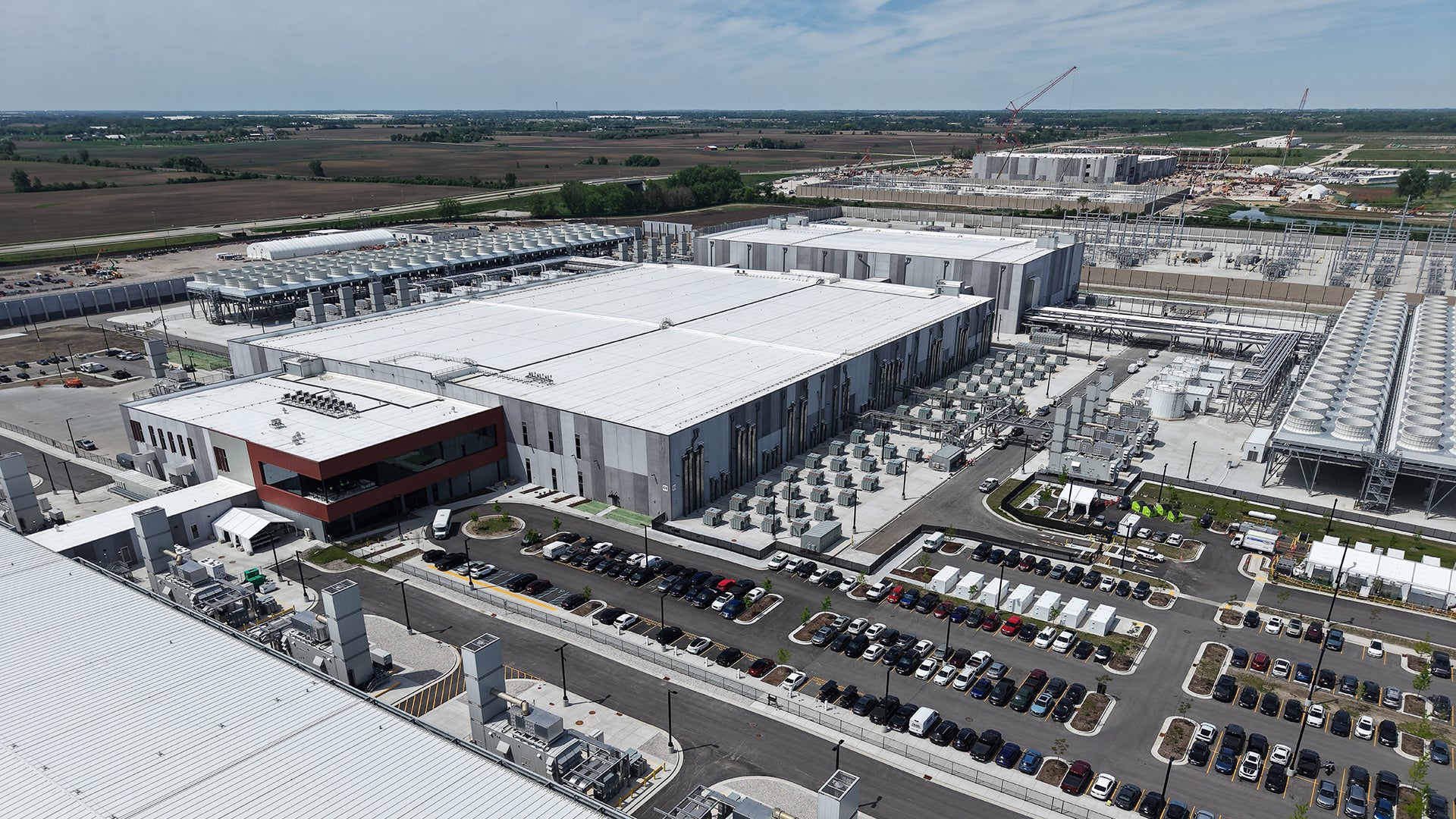
A Microsoft data center in Mount Pleasant, Wisconsin appears in a June 2026 photo. Photo courtesy of Microsoft
Data centers may provide a major economic development opportunity for local communities in Wisconsin, but concerns around water and energy use and potential costs to residents have made them increasingly controversial.
A new report from the Wisconsin Policy Forum aims to put those issues — and Wisconsin’s data center debate — into context. Researchers examined tax incentives supporting those projects as well as their energy and water use.
Three major data center projects are in varying stages of development in Mount Pleasant, Port Washington and Beaver Dam. Others have been proposed but canceled in DeForest, Greenleaf and Janesville as polling has shown the issue to be unpopular with the public.
Communities have ‘significant protections’ under data center incentive deals
State law allows qualified developers to avoid paying sales and use tax on most purchases supporting the construction and operation of a data center.
The Legislative Fiscal Bureau estimates Wisconsin will lose out on $1.5 billion in sales tax revenues related to data center construction between 2024 and 2028, as well as forgo $369 million annually in sales tax revenue related to data center operations.
Wisconsin is one of 38 states that offer tax incentives to data centers. Jason Stein, one of the report’s authors, said without its sales tax exemption, Wisconsin might not have attracted the prominent developments.
“I think it’s reasonable to think that a lot of this investment — maybe most of this investment — would not have occurred without the incentive,” he said.
The report says the state could “recoup a significant portion of the forgone sales tax revenues” if the sales tax exemption helped attract a significant share of data center investment to Wisconsin.
That’s through income and sales taxes paid by construction workers and corporate income taxes paid by construction companies, as well as additional taxes paid by utilities serving data centers.
Data centers are also expected to generate increased property tax revenues in the communities hosting them.
Researchers reviewed local development agreements in Mount Pleasant, Port Washington and Beaver Dam, as well as proposed deals in communities where developments fell through. They found that, in general, local communities were striking “reasonable deals” that included financial safeguards.
Those safeguards often included limits on municipal borrowing, guaranteed property values and incentives tied to project performance, the report said.
“If the developer and the community follow through on their agreement and it moves forward as laid out, then those agreements offer substantial protections for the communities,” Stein said. “There are significant protections in each of these deals.”
Data centers use water, but Wisconsin water use has declined
While much of the public debate around data centers in Wisconsin has centered around water use, policy forum researchers found the bigger challenge is meeting the large electricity demands of those projects while protecting existing ratepayers.
That’s because water use in Wisconsin has declined over the past generation as some heavy industry left the state, industrial and residential users became more efficient and electric utilities shifted some energy generation from “water-intensive” coal plants to natural gas and renewable energy, the report said.
From 2011 to 2024, water withdrawals in the state fell by more than 500 billion gallons, or almost 24 percent, according to the report.
The three main data center projects in Wisconsin are projected to use less water than the decline in water withdrawals over that period, the report states.
“We were on this track to use less and less water because of changes in our society, and maybe this will slow that down somewhat,” Stein said. “But that is a different thing than saying, ‘Oh my gosh, we’re using more water than ever before.’”
For example, Racine Water Works, the utility providing water for Microsoft’s data center campus in Mount Pleasant, saw its annual water sales decline by 2.3 billion gallons from 2000 to 2025, according to the report.
That’s “more than 250 times” as much water as the 8.4 million gallons annually Microsoft’s data center will use when fully operational, the report states.
Electricity demand expected to rise significantly
While long-term declines in water use are expected to help offset demand from data centers, Wisconsin’s electricity demand is expected to grow, in large part driven by demand from data centers.
Peak demand from all customers on the grid is expected to rise from 14.6 gigawatts in 2024 to 19.9 gigawatts by 2030, the report states.
A recent report from state utility regulators found data centers were driving that projected peak demand growth.
The report found that the state Public Service Commission modified proposals from We Energies and Alliant Energy establishing rates for data center-scale customers to shield existing residential customers from costs associated with data centers.
But it remains to be seen how data centers will affect transmission rates, which are set at the federal level, said Tyler Byrnes, one of the report’s authors.
“It’s a little bit easier to do the math on one power plant for one data center, whereas you’re starting to divide up electrons moving across power lines (and) across state lines, so it’s more complicated,” he said.
He also said there is not currently an approved data center rate framework for developments of that scale outside the service territories of Alliant Energy and We Energies. He said policymakers may want to consider adopting a statewide framework for electric rates tied to data centers.
The report also notes that there are unresolved questions about whether utilities will be able to bring new energy generation and transmission lines online quickly enough to meet the growing demand.
Report: Wisconsin could make up taxes lost to data center incentives was originally published by Wisconsin Public Radio.
If you think stories like this are important, become a member of Urban Milwaukee and help support real, independent journalism. Plus you get some cool added benefits.