
Wisconsin Voters Hate Data Centers, But May Not Affect Election
Strong bipartisan opposition across state though only 5% in polls say it's a top issue.
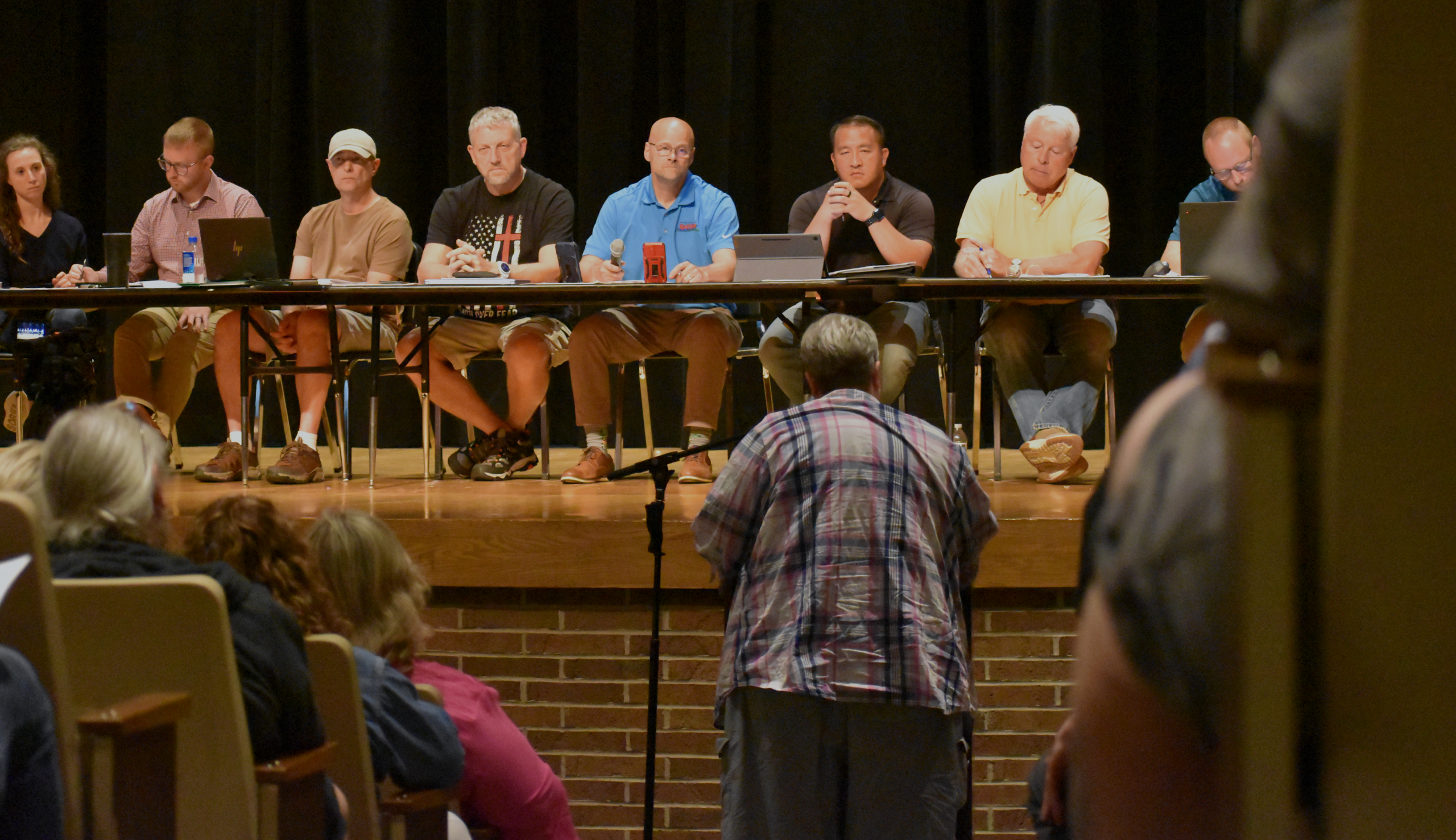
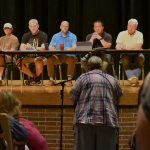
Members of the Wisconsin Rapids Planning Commission look out at the crowd, as local after local stood up to speak firmly against the data center proposal for the small community. Not a single person spoke in support. Avery Martinez/WPR
In a packed auditorium in Wisconsin Rapids, speaker after speaker berated the local elected officials over their actions — or lack of actions — on the latest community issue: data centers.
“Now it is time to write the strongest ordinance that Wisconsin has seen on the data center, and you go into the moratorium to do that,” Kaitlyn Federwitz said at the podium of the Aug. 10 meeting, almost drowned out by applause from the crowd.
She’s a co-founder of the South Wood County Neighbors for Responsible Development organization, leading the charge against data center proposals in Wisconsin Rapids.
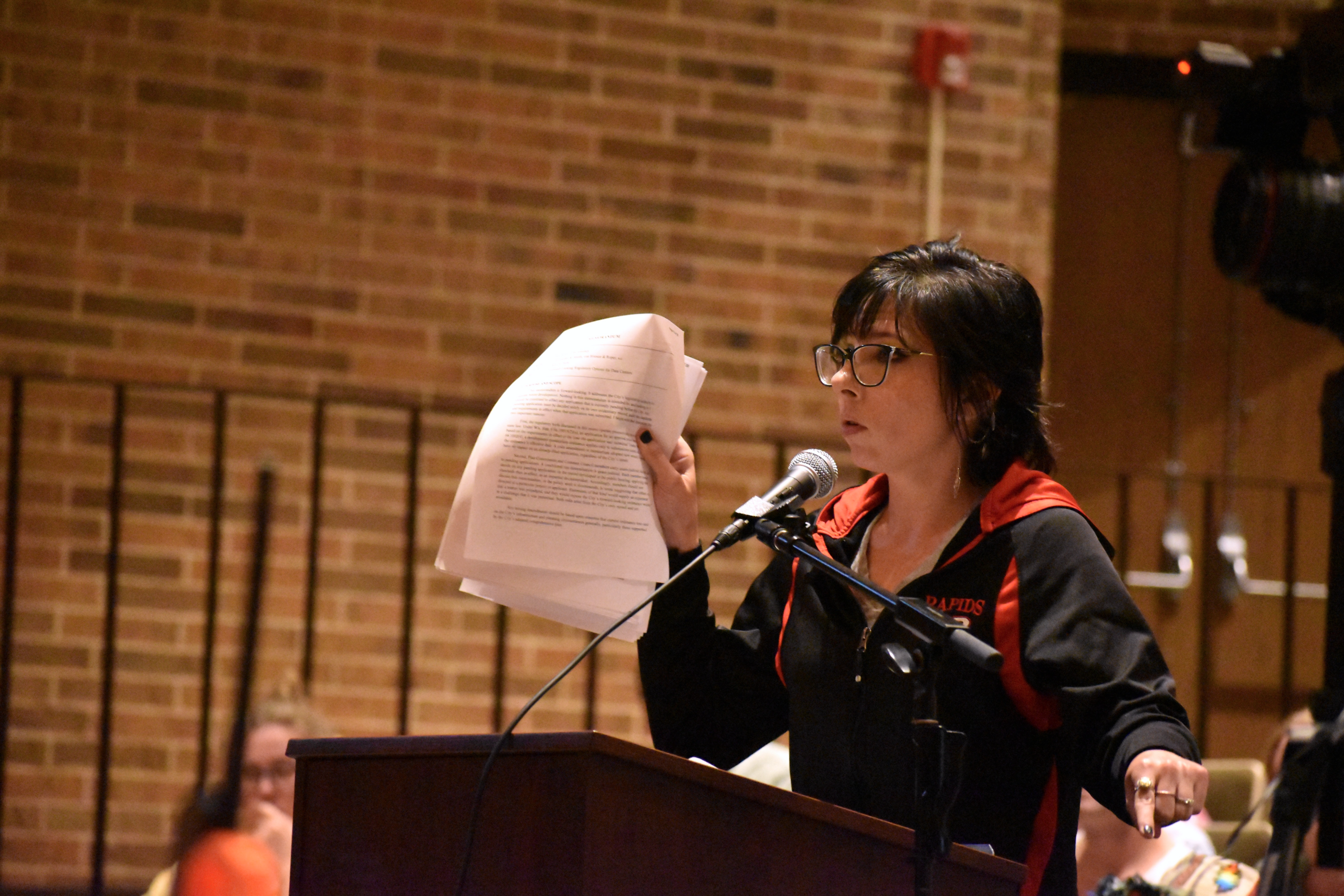
Kaitlyn Federwitz, a Wisconsin Rapids resident, speaks about her strong opposition to a data center proposal in the small community. Her demand for a moratorium was met with thunderous applause. Avery Martinez/ WPR
“A lot of people are very blanketly saying, ‘no data centers,’” Federwitz told WPR after the meeting.
There were MAGA shirts, rainbow pins, young fathers, retired scientists and dairy farmers sitting in the gallery. They took turns shouting opposition to comments from city staff, and the eight elected members of the Wisconsin Rapids Planning Commission sat stone-faced against the onslaught of opposition to the data center plan.
Opposition to data centers is widespread and bipartisan. In the most recent Marquette Law School Poll, 74 percent of Wisconsin voters said they believe the costs outweigh the benefits of building data centers — 57 percent of Republicans, 83 percent of independents and 90 percent of Democrats.
Nationally, some observers have asked whether the backlash against data centers could turn voters away from conservative candidates, given President Donald Trump’s strong advocacy for them.
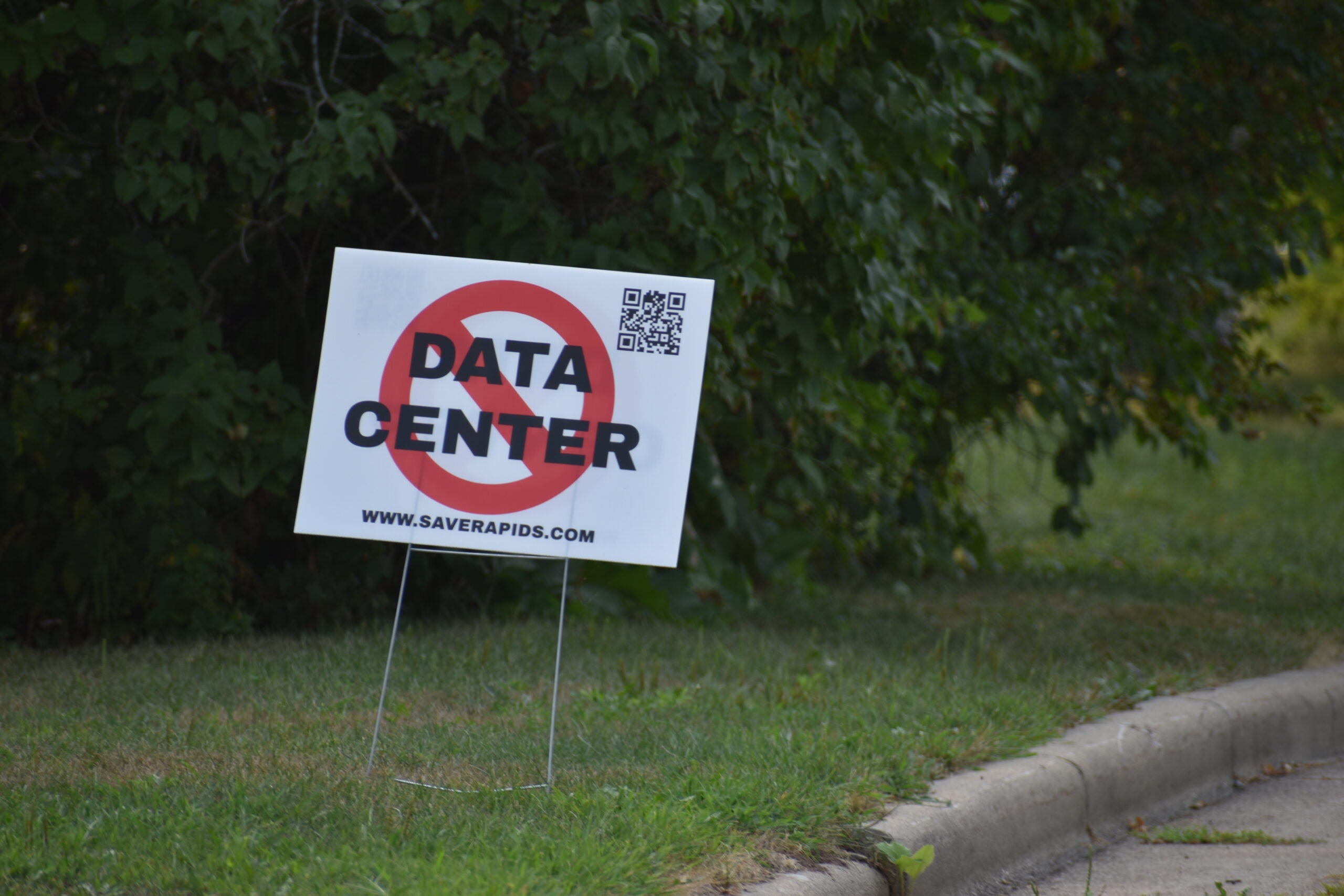
An anti-data center sign in the yard of a home in Wisconsin Rapids, WI. Avery Martinez/WPR
But even as Wisconsin candidates are speaking out on data centers, polling shows it may not be a major issue for most voters in races for Congress or the race for governor.
Charles Franklin, director of the Marquette Law School Poll, called it a “real paradox” that many people are against them, yet few consider it their primary — or even secondary — issue this election. Only about 5 percent of people said data centers were their top election issue.
Among a list of 10 key issues this election, data centers consistently fell behind affordability, the cost of living and immigration and economics in the poll results, Franklin said.
“Campaigns have put some bet on this being an important issue, but I remain skeptical that it’s the pivotal issue this year,” Franklin said.
As local debates rage, state races focus on other issues
Shortly after Milwaukee County Executive David Crowley’s come-from-behind victory in the Democratic primary for governor, his GOP opponent, U.S. Rep. Tom Tiffany of Minocqua, launched a series of attacks on Crowley, claiming he was too supportive of the data centers.
In response, the Crowley campaign pointed to Tiffany’s record of pro-data center votes as a Congressional representative, including a provision of Trump’s 2025 spending bill that gave tax breaks to companies building data centers.
But as the campaigns near November, the importance of data centers has fallen behind other concerns, according to the Marquette poll results. Voters listed their top issues as cost of living, immigration and border security, the economy and jobs.
Even so, communities across Wisconsin are seeing strong grassroots movements to try and stop data centers from setting up shop.
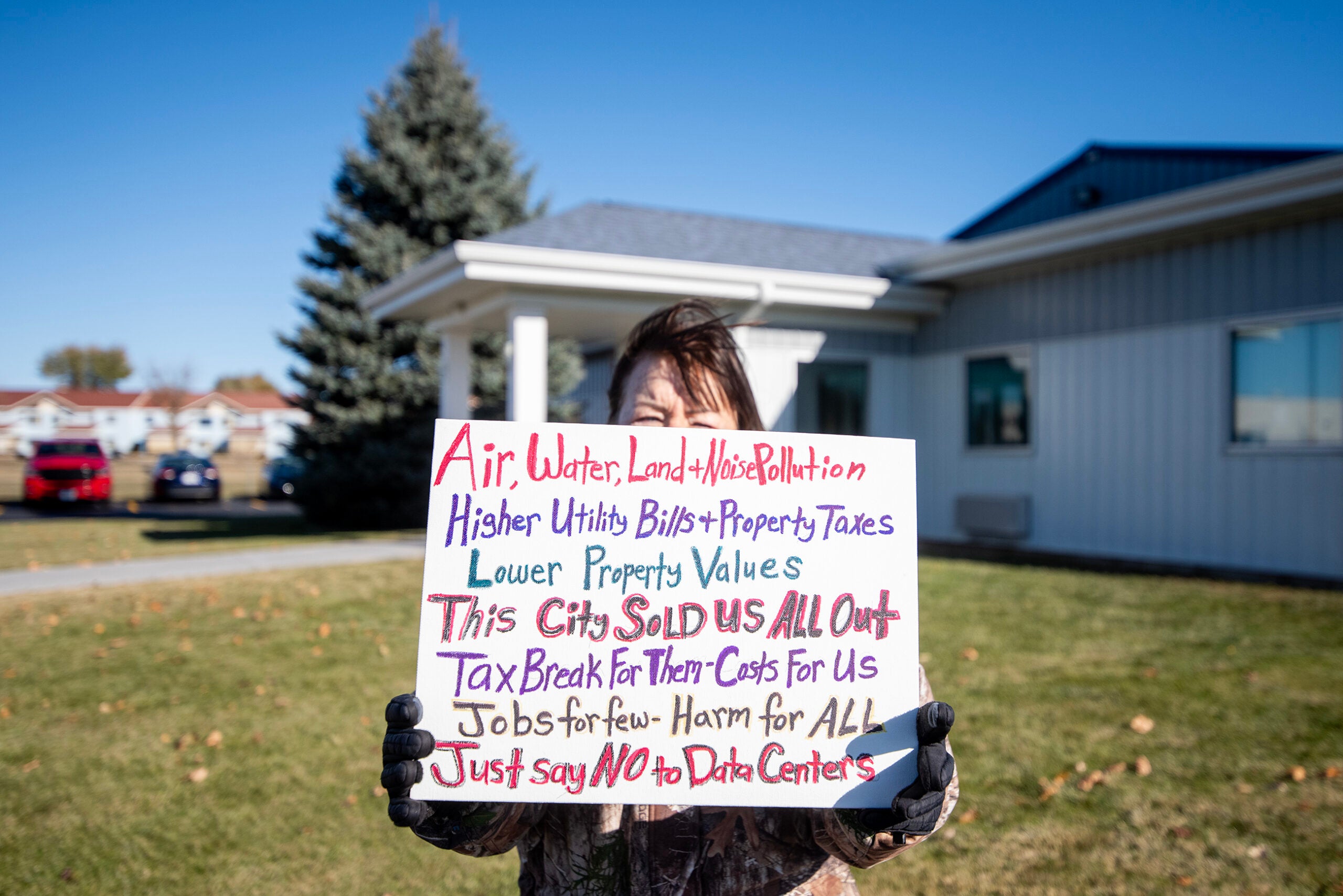
A protester holds a sign outside of a Meta data center announcement Wednesday, Nov. 12, 2025, in Beaver Dam, Wis. Angela Major/WPR
In Wisconsin Rapids, Federwitz proudly said the entire community is united in their opposition to a proposed data center on the site of a historic paper mill, built in 1894. It closed in 2020 and was demolished in 2025.
“I didn’t have a say in the (closure of the) original mill, and I had family members work there their entire lives,” Dani McDonald told the Planning Commission. “What legacy do you want to leave Wisconsin Rapids?”
For over a century, the mill, which sat on the banks of the Wisconsin river, churned out the paper — most recently, specializing in slick magazine paper.

Wisconsin Rapids residents Tanya Plantico, right, and Andy Martinez, left, fish near the Verso paper mill Monday, Sept. 21, 2020. Plantico was surprised when she learned the mill was closing. “It was a huge part of the community,” she said. Angela Major/WPR
It was Wisconsin Rapids’ largest employer and a major part of local identity — until it closed in the early part of the COVID-19 pandemic. When the mill shut its doors, 1,000 people were left without jobs.
“It’s a prime spot,” Federwitz said. “We’re not surprised that they want to come here.”
Data center developers are particularly interested in the old paper mill because of the site’s existing electrical and manufacturing infrastructure. But she said locals want a development on the site that will create more community jobs and raise fewer questions about future impacts to local economics, electricity, water and the environment.
The resulting debate has caused neighborhood arguments, tense public meetings and hours of public testimony over the data center proposal.
“It really has the chance to tear apart the community,” Wisconsin Rapids Mayor Matt Zacher told WPR.

Wisconsin Rapids Mayor Matt Zacher speaks to residents of the city, as they discuss the future of a proposed data center at a meeting in August 2026. Avery Martinez/WPR
In some ways, it already has. Since the proposal, Federwitz’s group has organized a strong push to show opposition, offering anti-data center signs, rallies and large turnouts at local meetings.
At the podium, Patrick Durkin urged city leaders to slow down development.
“Six months ago, I probably would have thought this was a great idea,” he said. “With each day, there’s a new revelation, and none of it’s good.”
Developers see opportunities, locals stand in opposition
Dozens of Wisconsin communities have faced a similar situation. From Milwaukee to Superior, local leaders have considered moratoriums on development proposals, while communities like Menominee and Wisconsin Rapids fight to halt projects already underway.
“Data center development is accelerating nationwide, (and) that is why a moratorium matters,” resident Karen Wolf told Wisconsin Rapids leaders. “Not because we’re against progress, but because the ground that we are on is shifting.”

A Wisconsin Rapids woman records a video of multiple locals speaking out against the data center proposal at a city meeting. Avery Martinez/WPR
After the developer PNK submitted paperwork and the city of Wisconsin Rapids created a conditional use permit for their data center proposal, the company hosted a number of public sessions to try and address resident concerns.
One August forum was led by former New York City Mayor Eric Adams, and residents didn’t like it.
“I think PNK deciding to bring on Eric Adams and have him come to town, was a poor decision,” local Emily Oetzman said. She noted he was booed from the moment he started talking.
Oetzman was against the project from the first moment she heard about it.
“If we like it or not, folks, data centers are gonna be here,” Adams said, and shortly after, the meeting devolved into heckling and jeering.
After the meeting, opposition only seemed to grow in the city. Anti-data center signs popped up across the yards of citizens. Over 250 people signed a petition to recall a city leader over his comments on anti-data center signs, and a local man with no political experience stepped up to run as a potential replacement, Federwitz said.
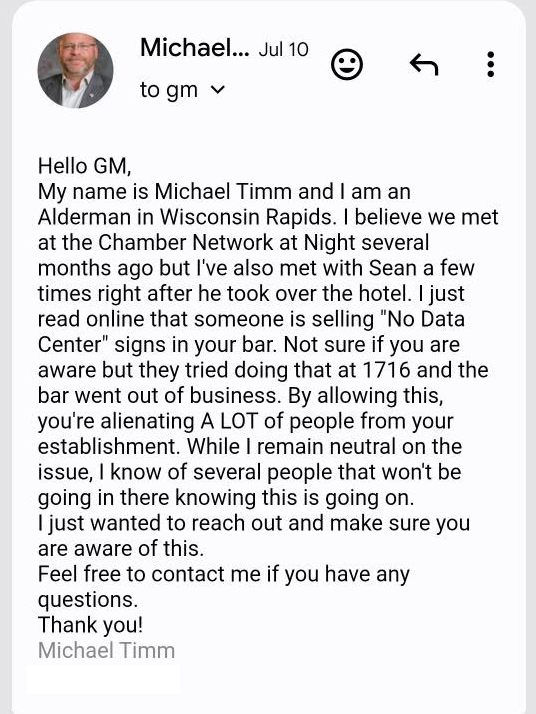
This email was sent by sitting Alderman Michael Timm to a Wisconsin Rapids business. He publicly shared the email.
“We are doing a lot of work,” Federwitz said. “We feel like we are moving forward in the right direction to keep our city safe.”
At the end of that meeting, city leaders voted to have staff draft a 12-month moratorium for data center operations — though it would not affect the current project by PNK, only future developments.
The applause from their actions were deafening, but many residents were still critical about the situation involving the active data center proposal.

Citizens of Wisconsin Rapids stand up to give a standing ovation for speakers against the data center proposed for the small community in August of 2026. Avery Martinez/WPR
“I think what happened tonight was important,” said Zacher, the city’s mayor. “Everybody needs to get this stuff out.”
Oetzman said she felt the only reason data centers were an issue was because state leaders offered developers tax breaks.
“But Wisconsin doesn’t need them. The U.S. doesn’t need them,” Oetzman said. She thinks the AI bubble is “on its way to bursting,” and little towns with data centers will be left picking up the pieces.
‘Most bipartisan’ issue isn’t top of voters’ mind
Earlier this year, data centers seemed to be front and center of Wisconsin’s elections, especially after Port Washington’s voters approved a first-of-its-kind referendum giving citizens more input over data center development, which made national headlines.
“Rarely has an issue rocketed up out of obscurity and captured the mind of the public with the speed and intensity of data center development,” the Wisconsin Policy Forum stated in the summary of their Data Center research paper.
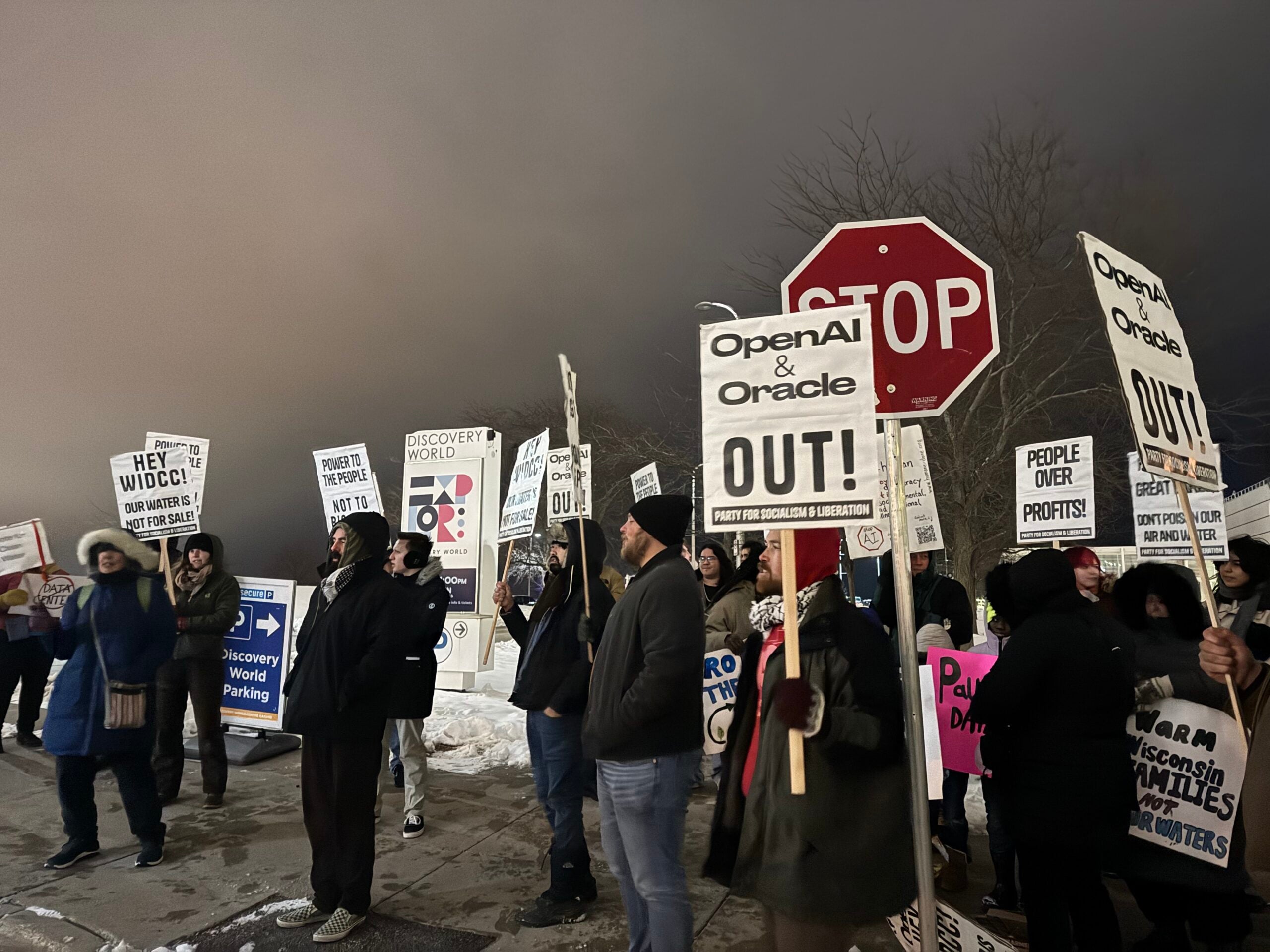
Protesters against planned data center projects in Wisconsin gather in Milwaukee on Dec. 2, 2025. Evan Casey/WPR
The industry website Data Center Map lists a total of 53 data centers across Wisconsin. The majority are in southern Wisconsin, and the highest number — 19 — are in Milwaukee. There are two operations in Green Bay, one in Wausau, two in Eau Claire and at least 10 in Madison.
The far north of the state, however, is empty.
Opposition to data centers is the most bipartisan issue Franklin’s seen in 15 years of polling, he said.
“I think this is the biggest change in the shortest amount of time,” he said.
Marquette’s poll first asked about data centers in 2025, and at the time opinion was divided 50/50 over whether community costs were worth the benefits.
“But when we interviewed again in February, that had jumped up to 70 percent saying costs outweigh the benefits,” Franklin said. “It’s remained at about 70 or above ever since.”
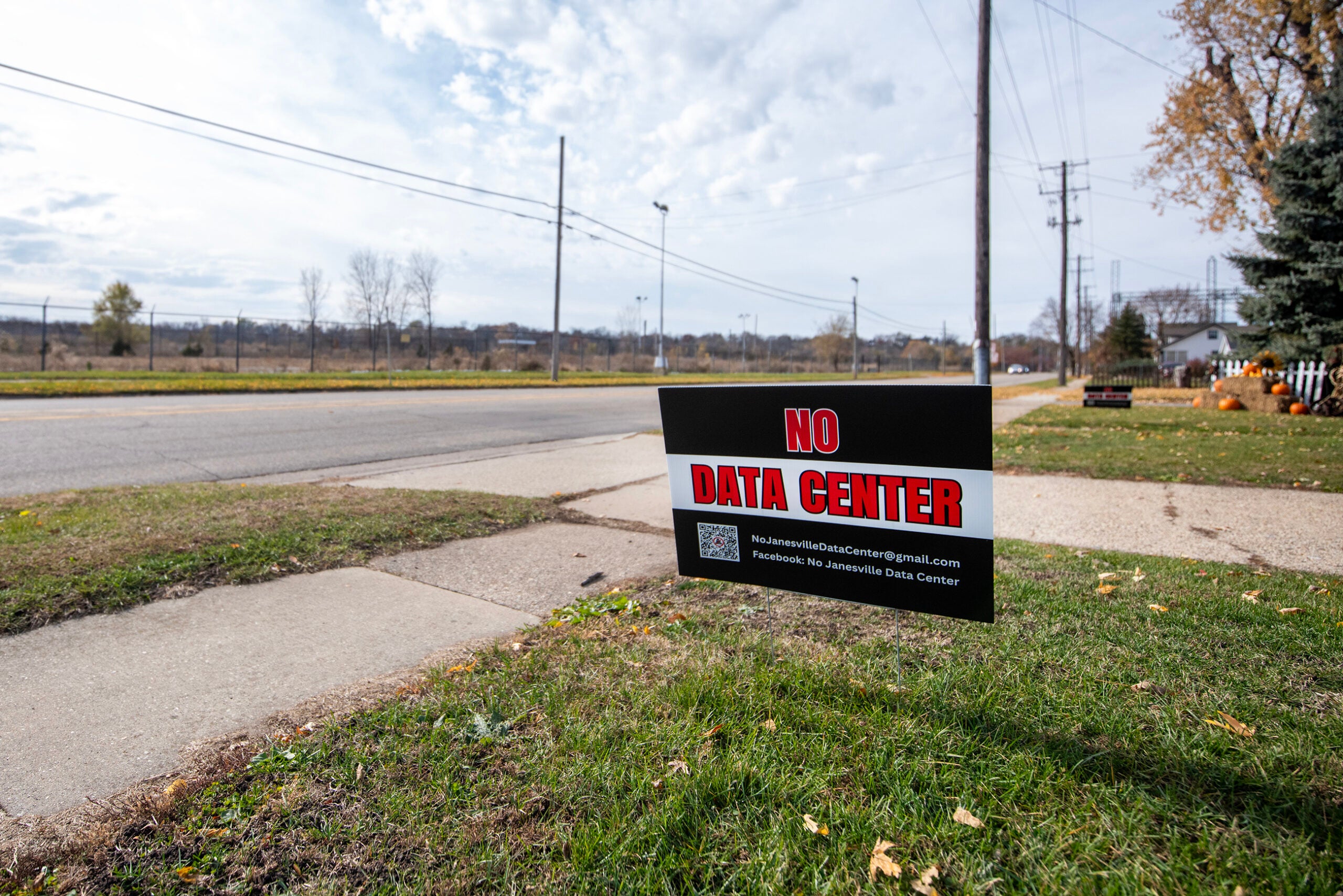
A sign advocating against a proposed data center is displayed in the lawn of a home located across the street from the former Janesville GM Assembly Plant on Tuesday, Nov. 11, 2025, in Janesville, Wis. Angela Major/WPR
Despite the widespread opposition, Franklin said only a small portion of voters feel like they’ve actually heard a lot of information about data centers.
Only 36 percent, according to poll results.
Still, the opponents of data centers make up the largest percent, Franklin said. Roughly 25 percent do not see anything good in data centers.
“And that’s a little surprising to me,” Franklin said.
Opposition to data centers mainly comes from people’s distrust of tech companies and fears about the impacts of artificial intelligence, according to Franklin.
At the packed meeting in Wisconsin Rapids, Oetzman noted that not one person in the audience stood up to speak in support of the data center.
“That is something I really hope that the planning commission took away from tonight: There was not a soul offering public comment in support of the project,” she said.
Wisconsin Rapids locals have criticized the lack of transparency from developers, the city’s actions surrounding the project, and questions about mysterious agreements behind closed doors — and local leaders’ attitudes over the development proposal.
It’s a common criticism, echoed across Wisconsin communities of every size. Despite that consistent opposition, each community has picked their own path on data center development.
Some have opened up, with data centers working in the community, like Beaver Dam. But even there, criticism surrounds how the project may affect energy prices.
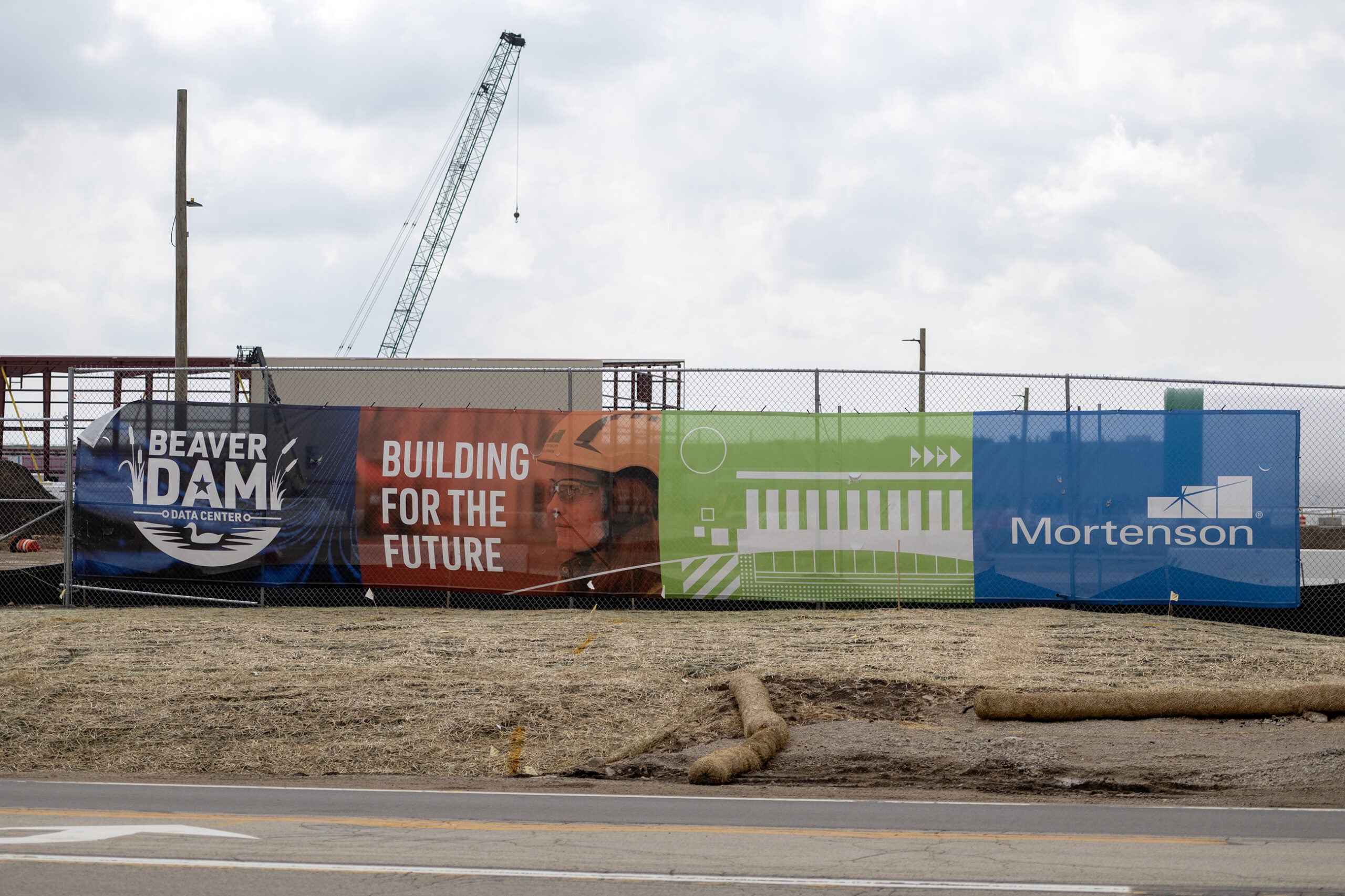
Construction is underway at the site of Meta’s future data center Tuesday, April 14, 2026, in Beaver Dam, Wis. Angela Major/WPR
But, overwhelmingly, the people of Wisconsin’s villages, towns and cities have stood against data center development in their communities.
Residents in Wrightstown have been vocal about their anti-data center stance and potential community impacts. Menominee locals successfully pushed the local leaders to release hidden guidelines on a 320-acre project.
Milwaukee crafted a proposal to prohibit large data centers, and regulations on smaller operations earlier this year. Kenosha residents have pushed local leaders to pause a Microsoft data center project.
But, overwhelmingly, Wisconsinites want a moratorium.
“A possible one-year moratorium on data center construction is favored by 68 percent,” the Marquette poll results state, noting numbers had barely changed since August.
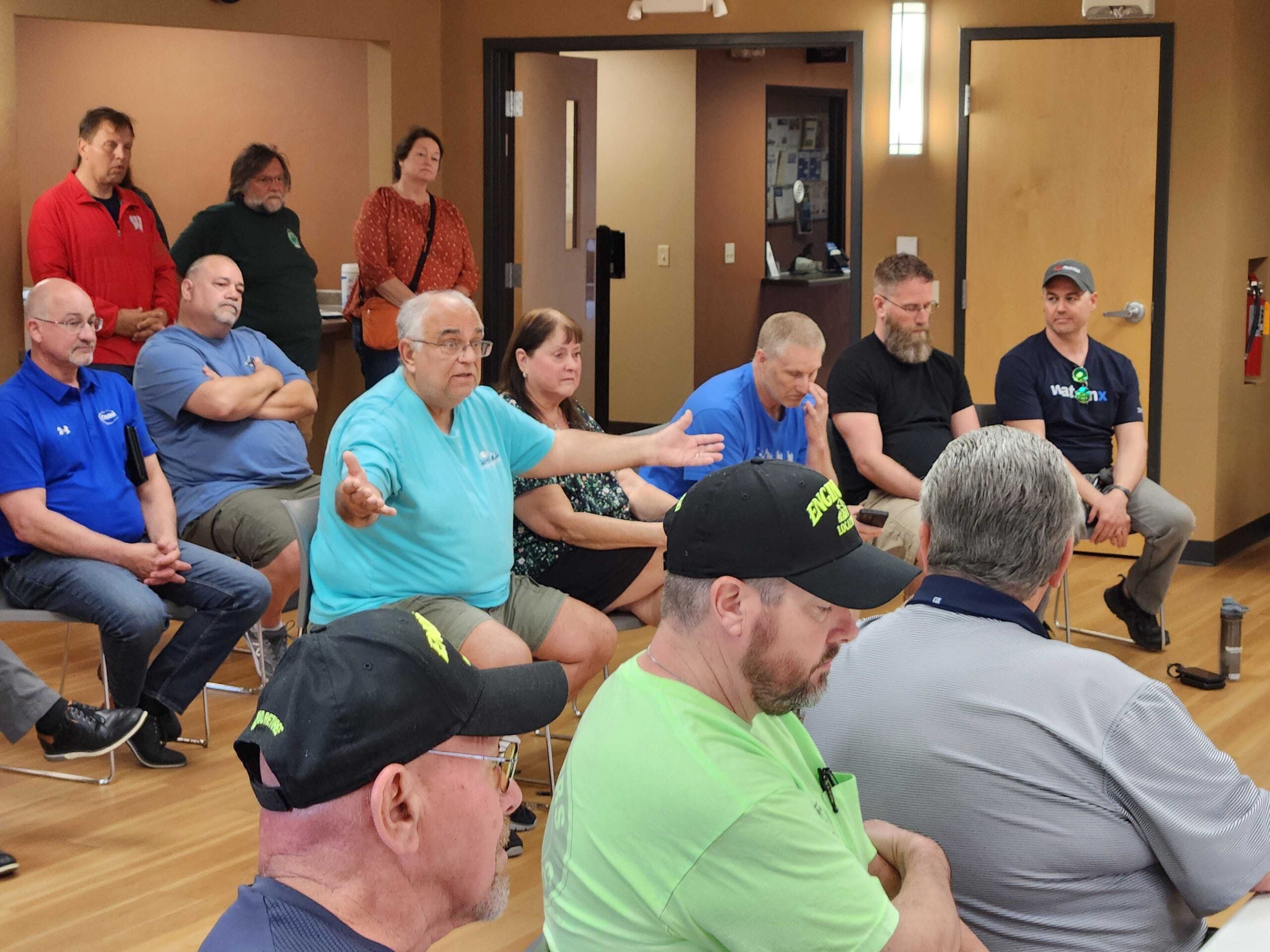
A village of Wrightstown resident speaks out at a listening session the village hosted on May 19 about data centers. Joe Schulz/WPR
Both Democratic and Republican lawmakers earlier this year introduced bills that would have regulated data centers in Wisconsin. One, focused on power grids and data centers, was the first bill in Wisconsin to attempt regulation on data centers. It died in the state Senate, but some politicians have considered reintroducing legislation in 2027.
Franklin said the September Marquette poll found that no matter where people were in Wisconsin, they were equally opposed to data centers.
Superior passed a moratorium this summer, without having any active data center proposals at the time. In April, Manitowoc County approved their own moratorium, and Bayfield County recently passed an 18-month pause.
Wisconsin voters hate data centers, but they may not be an election priority was originally published by Wisconsin Public Radio.
If you think stories like this are important, become a member of Urban Milwaukee and help support real, independent journalism. Plus you get some cool added benefits.
Political Contributions Tracker
Displaying political contributions between people mentioned in this story. Learn more.