

Blue-Green Algae on the Rise in Wisconsin’s Lakes
State regulators cite more reports of algae and associated illnesses.
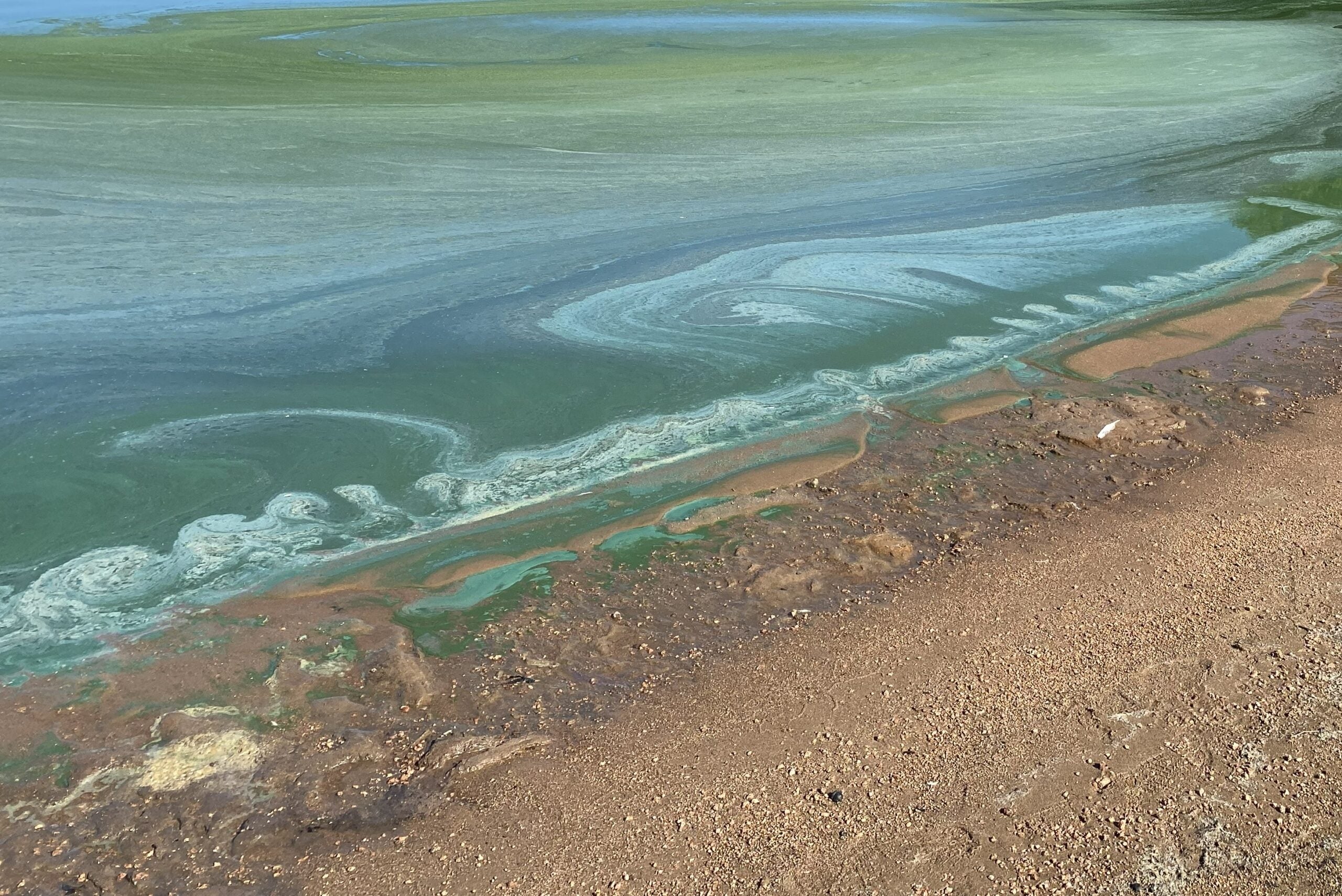
Marathon and Portage counties issued a blue-green algae advisory for Lake Du Bay on Aug. 13 after people reported related illnesses. Testing confirmed toxins in blue-green algae there in late July. Photo courtesy of Dale Grosskurth/Marathon County Health Department
Wisconsin environmental and health regulators are seeing more reports of blue-green algae blooms and more illnesses that may be related to them this year.
As of Aug. 19, the Wisconsin Department of Natural Resources had received 217 reports of algal blooms so far this year. Gina LaLiberte, the agency’s statewide harmful algal bloom coordinator, said that’s 60 more cases than they saw at the same time last year. The DNR confirmed around 70 percent, or 153 reports, were for cyanobacteria or blue-green algae.
LaLiberte said the state is reaching its peak season for blue-green algae in Wisconsin lakes, rivers and reservoirs. She tends to see the most reports around mid-July to mid-September when those waters are at their warmest.
“The hot weather definitely helps to really heat up the upper levels of water in lakes. So, those are conditions that blue-green algae prefer and kind of deter the growth of other types of algae,” LaLiberte said.
Blue-green algae blooms often look like pea soup or green and blue paint, but they can also appear reddish purple or brown. They typically occur in lakes and waterways with high levels of nutrients, including nitrogen and phosphorus, that run off lawns, farms and streets. Warm, calm conditions combined with storms and nutrient runoff can create ideal conditions for blooms to form.
Toxins in blue-green algae can make people and animals sick. Some of the most common symptoms reported include stomach cramps, diarrhea, vomiting, cough, sore throat, headaches and a rash. Children tend to be most affected, and signs of illness can show up within minutes to hours after exposure.
So far, state health officials have investigated 30 illnesses that have been reported, according to the Wisconsin Department of Health Services. Half of those cases involved children under 18 years old. Two dozen were likely tied to blue-green algae, including two dogs that died. Last year, the state had 19 reports of illnesses and one dog death during the entire season.
Most illnesses stem from a cluster of cases on Lake Du Bay in Marathon and Portage counties and Booth Lake in Walworth County. The state investigated 11 reports of illnesses from Lake Du Bay and nine from Booth Lake, said Ashley Vickers, DHS epidemiologist for the Harmful Algal Blooms Program.
Vickers said testing of samples collected from the two lakes confirmed microcystin, a toxin found in blue-green algae.
“We anticipate that those microcystin levels are going to stay elevated,” Vickers said. “We’ve made recommendations to both local health departments that there should be an advisory out basically for the rest of the swimming season because those levels aren’t going to go away. They’re going to remain and people could still get sick.”
On Aug. 13, health officials with Marathon and Portage counties issued a blue-green algae advisory for Lake Du Bay.
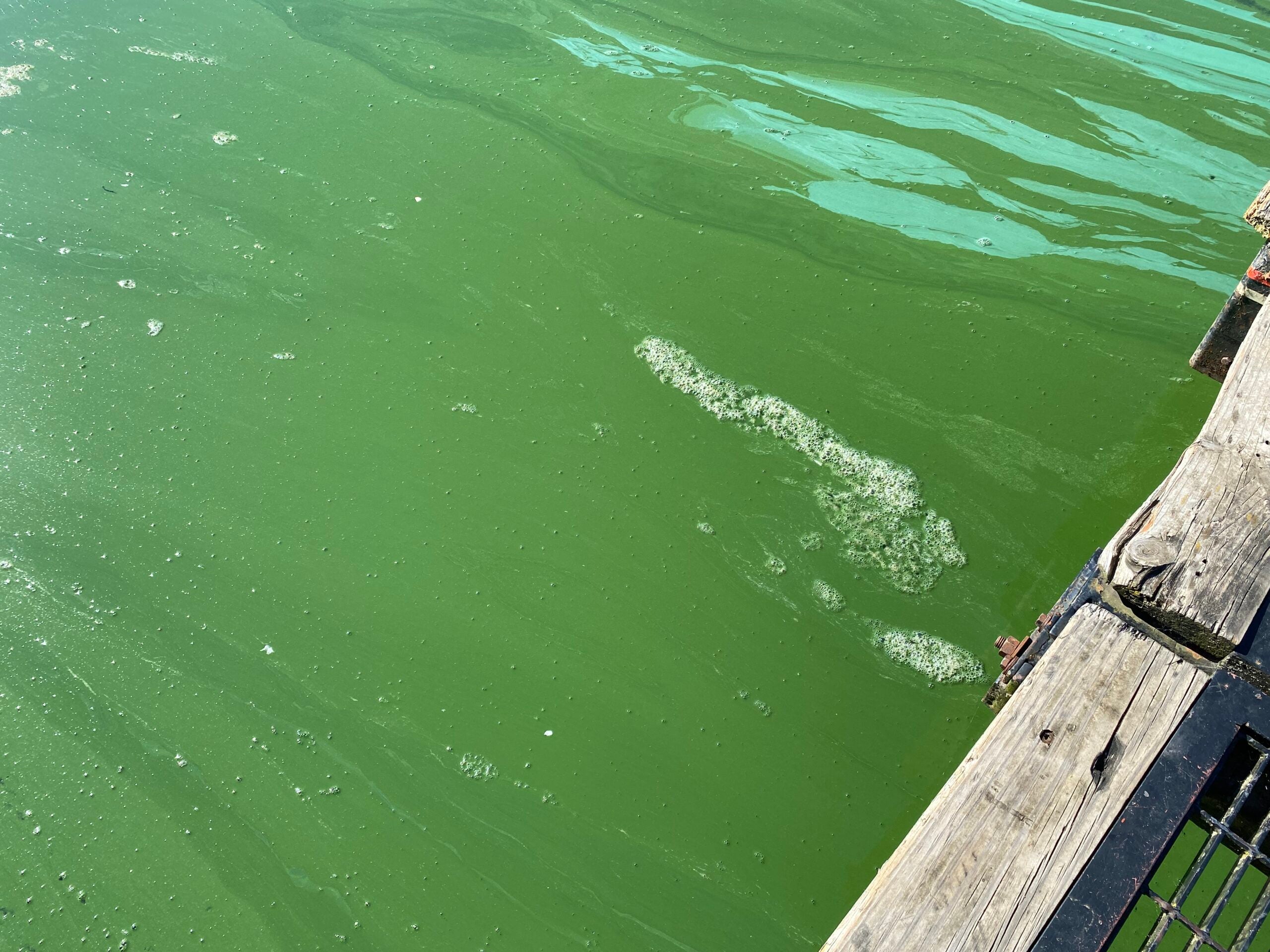
Marathon and Portage counties issued a blue-green algae advisory for Lake Du Bay on Aug. 13 after people reported related illnesses. Testing confirmed toxins in blue-green algae there in late July. Photo courtesy of Dale Grosskurth/Marathon County Health Departmant
Dale Grosskurth, environmental health resource coordinator with the Marathon County Health Department, said they’re urging people to take precautions as blue-green algae persists on the lake.
“We’re telling them don’t swim in the water. If you see blue-green algae, stay out of the water. Keep children and pets away from it,” Grosskurth said. “Don’t boat or jet ski or water ski through blue-green algae. Aerosols that can be generated by the propellers or water skiing behind the boat can cause an inhalation exposure.”
People should shower with soap and water after swimming or wash their pets with clean water right away if they wade into a blue-green algae bloom. People or pets showing symptoms of exposure to toxins in blue-green algae are urged to contact their medical provider or veterinarian, as well as report illnesses to the state.
LaLiberte said blooms that are not blue-green algae, known as Cladophora, have also been reported on the northern half of the Lake Michigan shoreline. A handful of blue-green algae blooms have also been spotted in the inner harbor of Lake Superior and St. Louis Estuary in Superior similar to recent years.
The state has also seen 34 reports of blue-green algae on the bottom of northern Wisconsin lakes, which is up from 21 last year.
“There are some blue-green algae that don’t require really high nutrient levels in order to live, and they actually prefer lower levels,” LaLiberte said. “You normally don’t see them, but, this time of year, you might see them floating to the surface in mats. That’s because they require clear water on lake bottoms in order to get enough sunlight.”
LaLiberte said it’s possible that drought conditions and changing water levels may be driving more reports this year.
The state typically receives blooms during the summer, but LaLiberte said more than a quarter of reports last year occurred during September.
A report from the Wisconsin Initiative on Climate Change Impacts found the state has seen warmer and wetter conditions, longer growing seasons and less ice cover. State health officials say the state’s warmer and wetter weather can fuel more harmful algal blooms.
The DNR urges people to report any blooms through its online form.
Wisconsin regulators receive more reports of blue-green algae and illnesses this year was originally published by Wisconsin Public Radio.
If you think stories like this are important, become a member of Urban Milwaukee and help support real, independent journalism. Plus you get some cool added benefits.





















How effective would it be for home owners to aerate the lakes adjacent to their piers? Or for the DNR to orchestrate such a program?
I worked, many years ago in New Jersey, for Dr.Andrew Eldib, who had come up with what he called a “non-Tergitol surfactant” in detergent. He knew better than most that much of the runoff into lakes comes from homes and businesses, and laundry detergents and other household cleaners are a big culprit in feeding algae. We put in what we get out, and we need to get out of wasteful household products and learn the effects of our naive habits.