$11.2 Million In State Loans Fuel Six Milwaukee Housing Projects
WHEDA awards will help create about 300 apartments, from City Campus to Mitchell Street.
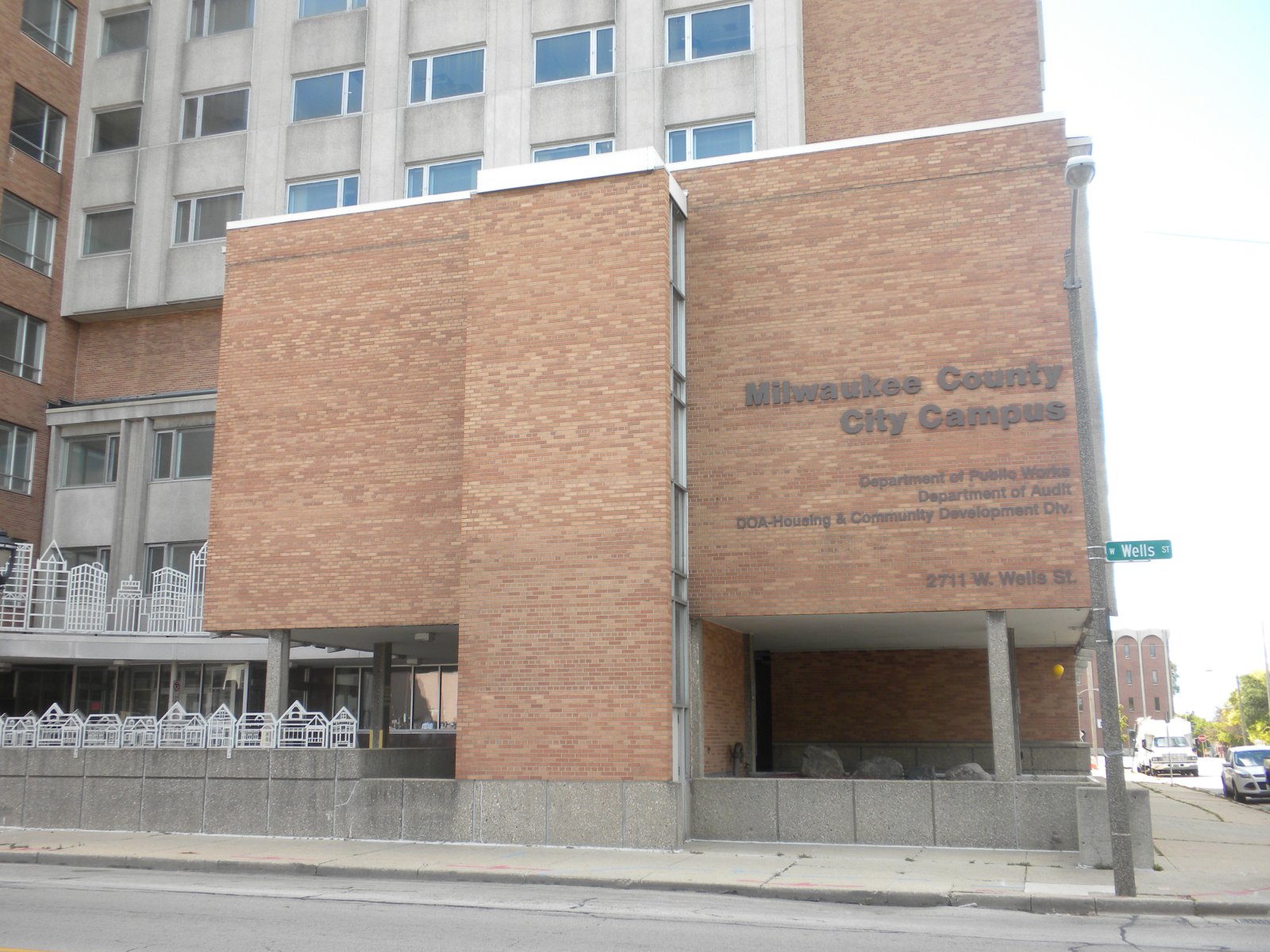
City Campus Complex. Photo by Michael Holloway.
Six Milwaukee housing developments will receive more than $11.2 million in state financing as part of a new $50 million funding round aimed at creating workforce and affordable housing across Wisconsin.
The funding will support approximately 300 apartments, including conversion of the former Milwaukee County City Campus, two Historic Mitchell Street redevelopments and the conversion of the former Marcia P. Coggs Human Services Center.
Gov. Tony Evers and the Wisconsin Housing and Economic Development Authority (WHEDA) announced the awards Wednesday. Statewide, 22 developments across 10 counties are expected to create 1,862 housing units.
The financing comes through three loan programs (Vacancy-to-Vitality, Infrastructure Access and Restore Main Street) created in 2023 as part of a $525 million state investment in workforce housing.
“Affordable housing is challenging to fund and build,” said WHEDA Executive Director and CEO Elmer Moore Jr. in a statement. “These loans make a difference in getting needed projects to the finish line.”
Milwaukee projects received approximately 22% of the $50 million awarded in the latest round.
The largest Mmilwaukee award, and one of the largest statewide, is a $7.52 million Vacancy-to-Vitality loan for the redevelopment of the former City Campus, 2711 W. Wells St.
Milwaukee Development Corporation, a nonprofit affiliate of the Metropolitan Milwaukee Association of Commerce, is pursuing a $50 million-plus redevelopment of the long-vacant former hospital complex into 124 income-restricted apartments.
The property was historically known as Doctors Hospital before Milwaukee County acquired it and converted it to office space.
The redevelopment is intended primarily as senior housing, with units reserved for households earning between 30% and 80% of the Milwaukee area median income.
The project has already accumulated several layers of public financing.
It received low-income housing tax credits from WHEDA in 2025. The Common Council approved a developer-financed tax incremental financing district for the project in May, and in June approved another $1.1 million in federal HOME funding in exchange for reserving 11 apartments as permanent supportive housing for individuals making less than 30% of the area median income.
The new WHEDA loan is intended to help finance the conversion of the vacant institutional building into housing.
Mitchell Street Projects Win Entire Main Street Round
All three projects receiving money through WHEDA’s Restore Main Street program are in Milwaukee.
The program finances housing created above ground-floor commercial spaces. WHEDA awarded approximately $2.27 million through the program in the latest round.
Developer Zuwena Cotton’s Historic Mitchell Street Residences project, 1101-1113 W. Historic Mitchell St., received the program’s largest award: $1.25 million.
Cotton, president of BBE Investments and Development, is pursuing a $9.5 million redevelopment of the historic two-story commercial building that would add 25 studio and one-bedroom apartments to the second floor.
The ground floor would continue to house commercial and community-serving tenants, including Cesame Street Child Development Center and IMAN Community Health Center.
Cotton previously pursued larger redevelopment concepts involving low-income housing tax credits, but returned a tax credit award in 2025 after being unable to close a financing gap amid rising construction costs.
Her revised proposal instead targets households earning approximately 75% of the area median income and relies on a mix of conventional financing, historic preservation tax credits, a $480,000 city TIF subsidy and WHEDA financing.
The development team had anticipated seeking $1.25 million each from the Restore Main Street and Vacancy-to-Vitality programs. Wednesday’s announcement includes the Restore Main Street award, but not a Vacancy-to-Vitality award for the project.
Construction is expected to begin this fall and be completed in late 2027.
Just west of Cotton’s project, Amit Ray’s Rucham LLC received a $622,545 Restore Main Street loan to convert the upper floors of the former JCPenney building at 1125 W. Historic Mitchell St. into 16 apartments.
The three-story building was constructed in 1927 and was occupied by JCPenney from 1937 until 1979. More recently, its first floor was occupied by Foot Locker.
Rucham intends to retain commercial space on the first floor while converting the second and third floors to housing. The Historic Preservation Commission approved exterior alterations for the project earlier this year.
Blue Clover Partners received the third Restore Main Street award, $400,000, for Maier Flats, an eight-unit conversion of the vacant building at 820-826 N. 27th St.
Coggs Center, Forma Also Funded
Gorman & Company received a $1.23 million Vacancy-to-Vitality loan for Vliet Street Lofts, its conversion of the former Marcia P. Coggs Human Services Center, 1220 W. Vliet St.
The approximately $32 million project would convert the former government building into 62 apartments.
The three-story structure was originally built as a Schuster’s department store in 1910 and was later converted into the county human services center. Milwaukee County vacated the building after opening a new Coggs Center nearby in 2025.
New Land Enterprises received a substantially smaller award for one of its planned Walker’s Point developments.
Its 65-unit Forma development received a $186,608 Infrastructure Access loan.
Forma, planned for 412-418 S. 4th St., is a $17.9 million workforce housing development that is also receiving a $2.9 million city TIF subsidy.
New Land and the city reached an agreement earlier this year to subsidize both Forma and the nearby 82-unit Via development. In exchange, 150 apartments across the two projects are to be leased at workforce housing rates affordable to households making between 80% and 100% of the area median income.
The Common Council subsequently approved the subsidies.
The latest awards are part of a much larger state housing initiative launched in 2023.
The Vacancy-to-Vitality program accounted for $41.3 million of Wednesday’s announcement and is expected to support 682 units. Another $6.5 million from the Infrastructure Access program will support developments totaling 1,185 units, while Restore Main Street will support 49 units — all of them in Milwaukee.
Evers said the programs build on state efforts that have supported more than 35,000 housing units since he took office in 2019.
“Expanding access to safe, stable, and affordable housing is a key part of our work to support kids and families, strengthen our communities, and grow our state’s workforce,” said Evers.
Existing members must be signed in to see the interactive map. Sign in.
If you think stories like this are important, become a member of Urban Milwaukee and help support real, independent journalism. Plus you get some cool added benefits.