Wisconsin Matches Second-Highest Tornado Total, With Season Still Ongoing
State has logged 46 tornadoes so far in 2026, far above average, and could see more before fall cools things down.
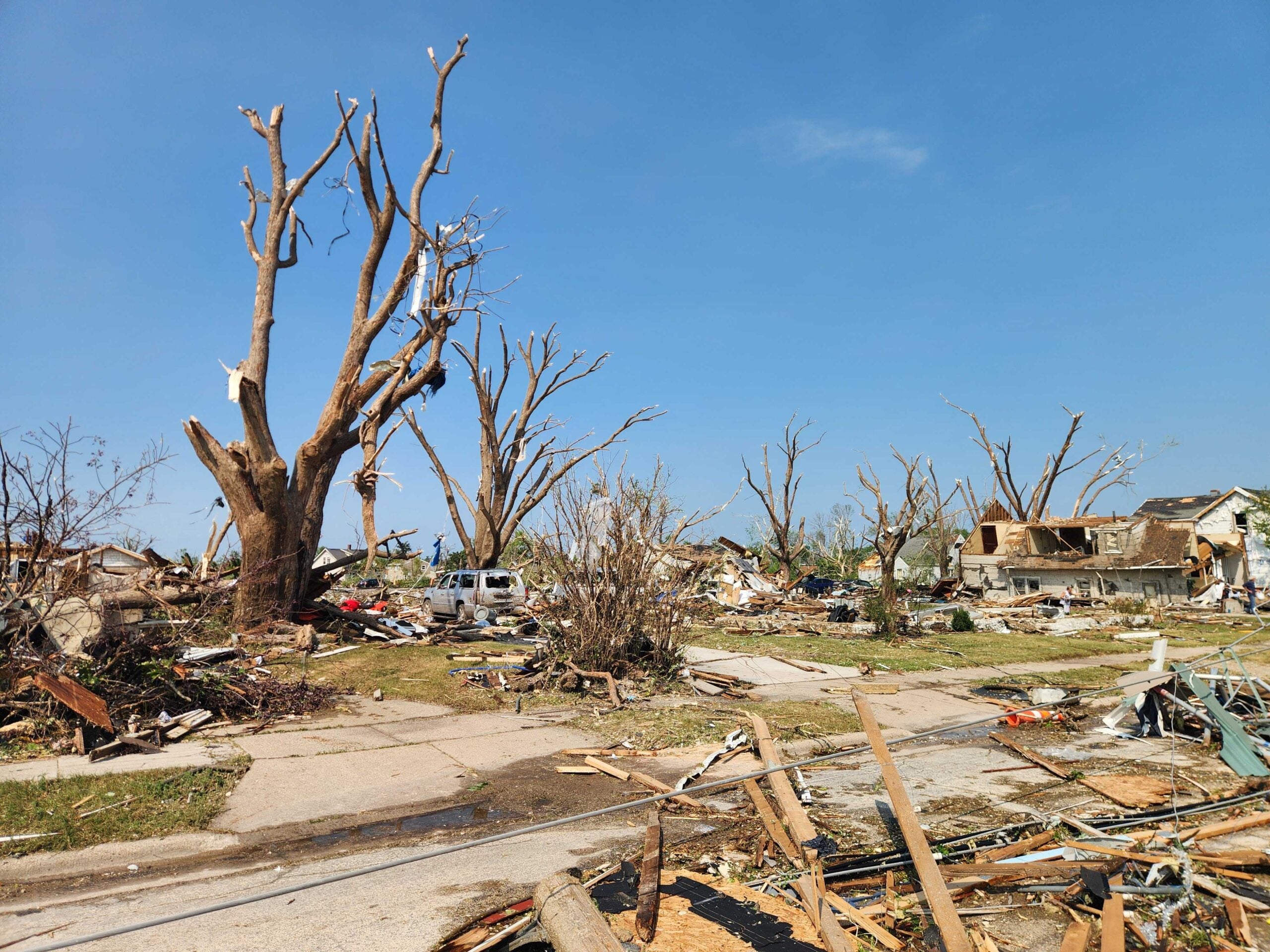
Trees are left bare and homes show severe damage in Menasha, Wis. after the area was hit with a tornado on Monday July 27, 2026. Joe Schulz/WPR
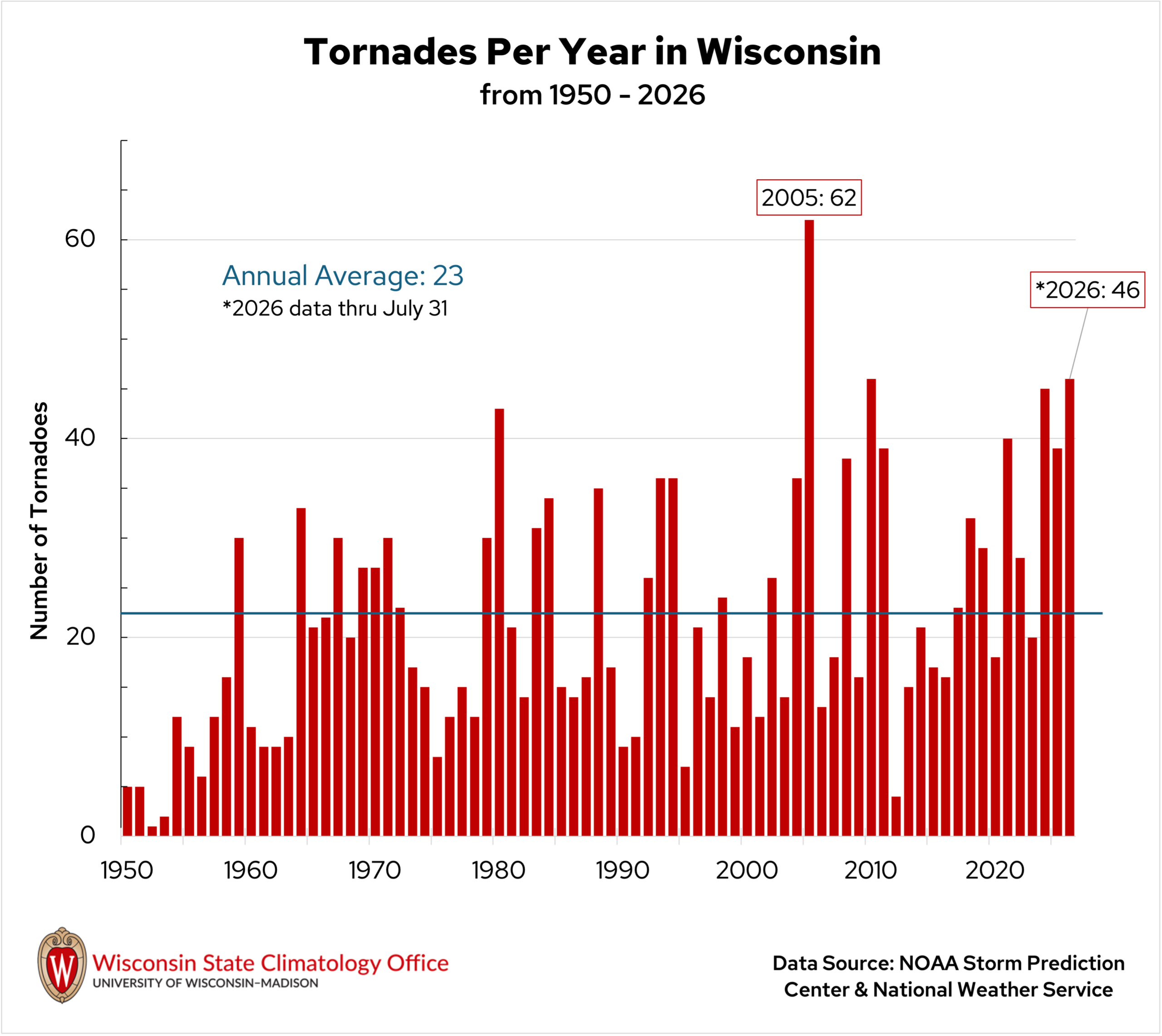
Wisconsin has seen the second-most tornadoes on record this year — the unusually active season already hitting double the annual average.
Wisconsin has tied 2010 with 46 tornadoes so far this year, still short of the record 62 observed in 2005.
But unlike those years, Wisconsin has seen more events that have brought severe damage with four EF-3 tornadoes. Amanda Latham, climate outreach specialist with the Wisconsin State Climatology Office, said that’s the most for that category of tornadoes in about 40 years.
“So even though the number of tornadoes this year isn’t greater than what we saw in 2005, the strength of tornadoes has been greater,” Latham said.
In April, the state kicked off the season with 27 tornadoes. Wisconsin also saw its wettest April on record, which played a role in more severe weather.
“We had tons of storm systems coming through … to create severe weather, and we also had a lot of periods of warmth in April,” Latham said. “In the middle part of the month, a lot of places reached (80 degrees Fahrenheit). Most places in the state don’t reach the 80s until late April or even early May, so a surge of warmth early in the month really helped to fuel some of those storms.”
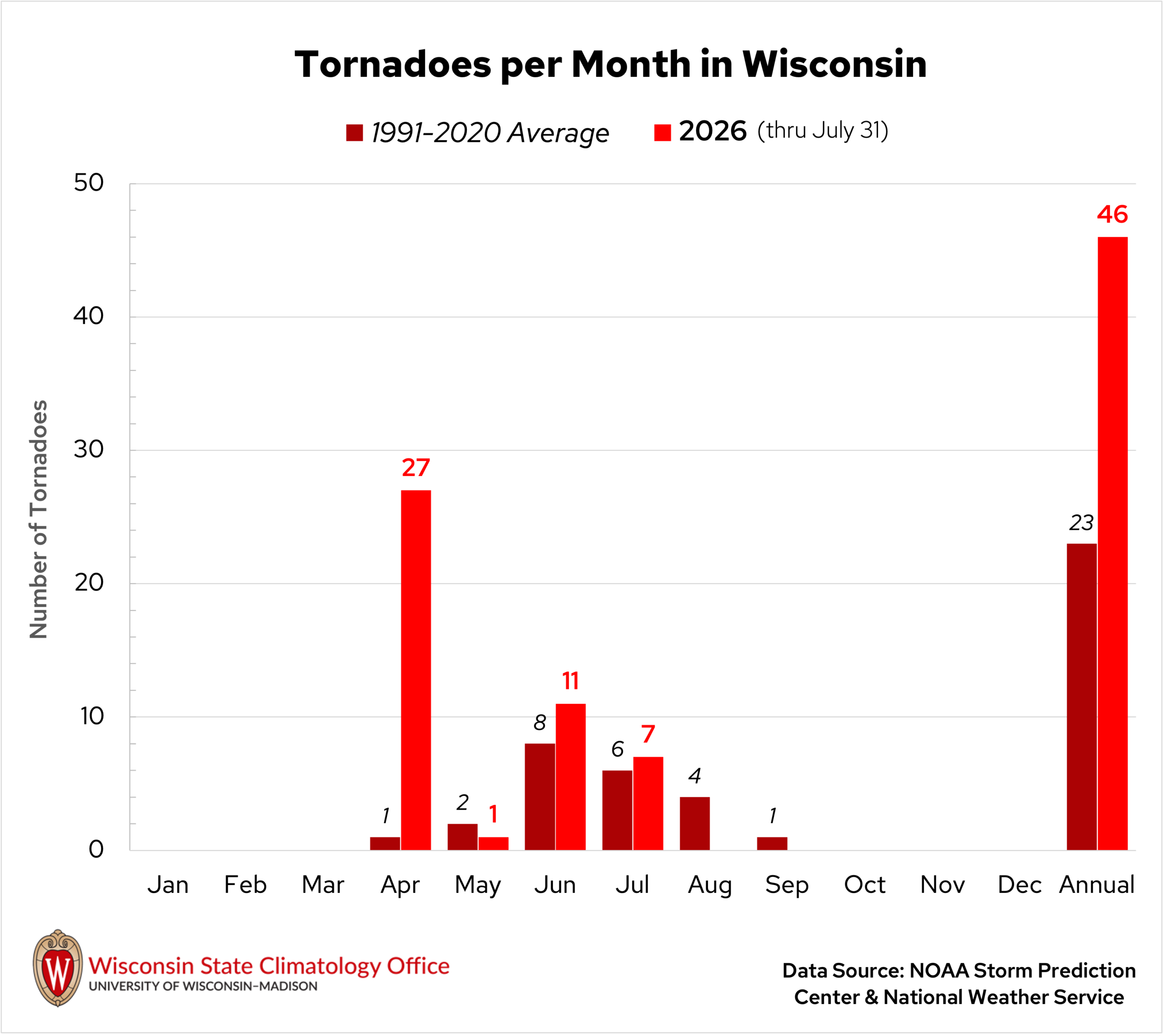
Graphic courtesy of the Wisconsin State Climatology Office
Stronger tornadoes almost always occur near the center of low pressure systems where a cold front meets warm air, said Michaela Heeren, National Weather Service meteorologist for the Milwaukee/Sullivan office.
“We’ve seen multiple low pressure systems moving through the Upper Midwest, which has brought exactly the right conditions that we would need for tornadic activity, especially across the I-94 corridor southward,” Heeren said.
The strongest storms include a tornado that caused widespread damage to the Menasha area in the Fox Valley last month, prompting Gov. Tony Evers to seek federal assistance.
Typically, the season begins when the weather starts to warm in March or April and lasts through September, peaking in June.
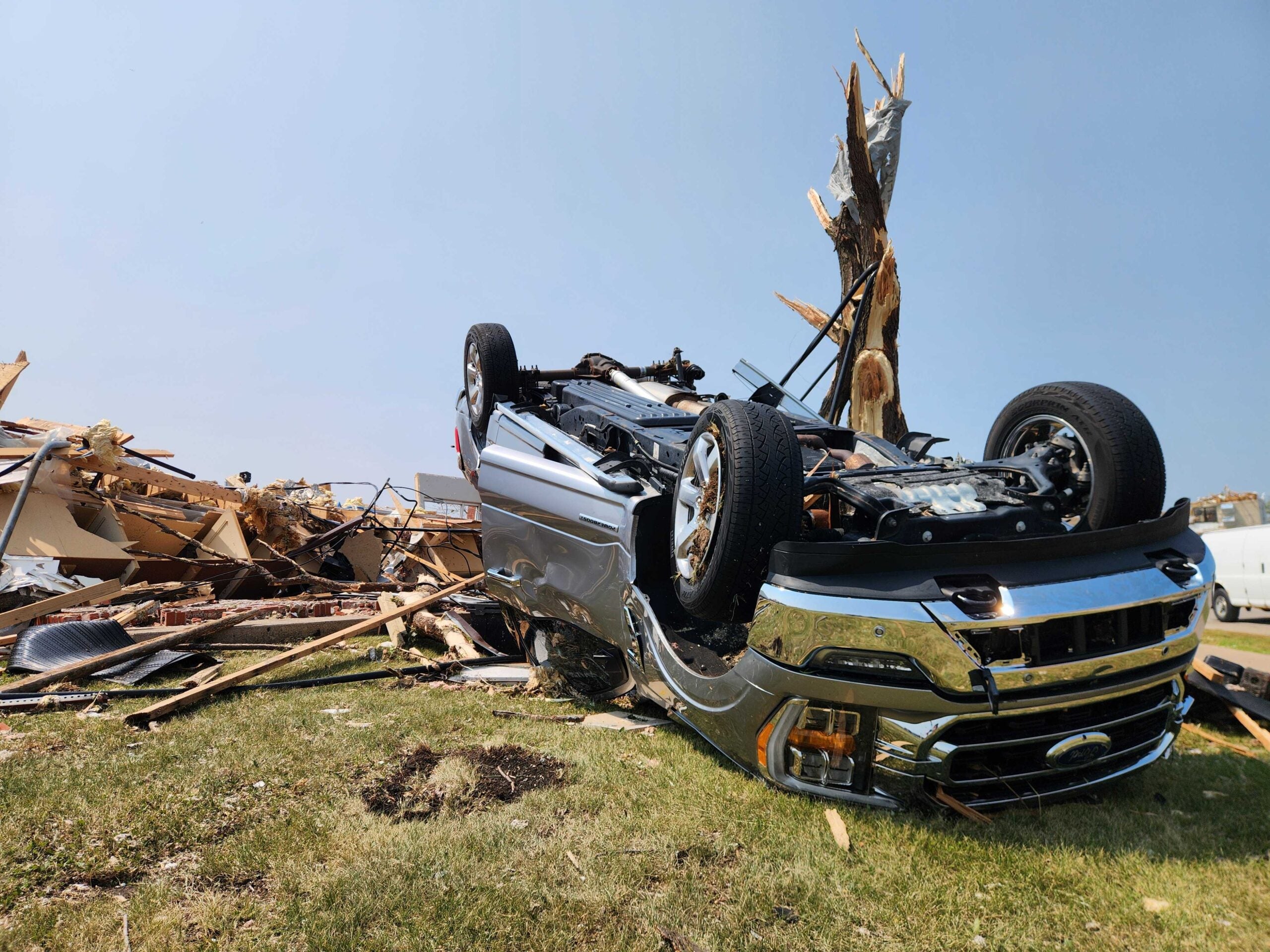
A car is flipped over among damage and debris in Menasha, Wis. on July 28, 2026 after a tornado tore through the area on Monday July 27, 2026. Joe Schulz/WPR
Most storms typically occur in the afternoon to early evening hours, and southern Wisconsin has historically been more vulnerable due to warmer weather.
As climate changes drives warmer weather, Latham said the state may see more surges in warmth earlier in March and April, setting the stage for severe spring weather.
“That typical severe weather season that we think of is spreading more into the spring, and it’s even spreading a little bit more into the fall as our falls also get warmer,” Latham said. “As both of those seasons warm, we’re increasing the chances for severe weather to develop.”
In 2024, Wisconsin saw its warmest winter on record, as well as the first tornadoes ever recorded in February. The record warmth was driven in part by El Niño, and the state is facing another strong El Niño this winter. But Latham said it’s uncertain whether that would lead to similar severe weather this winter.
Graphic courtesy of the Wisconsin State Climatology Office
In 2005, Latham noted, Wisconsin also saw its third-warmest June on record. The same year, the state also witnessed a record outbreak of 27 tornadoes on a single day in August similar to the rash of tornadoes in April this year.
Wisconsin has seen an upward trend in the number of tornadoes since 1950, which is partially tied to increased reporting. Now, Heeren said the National Weather Service is able to survey more areas with drone and satellite images.
“Things that we usually wouldn’t have found back in the day, just by driving around trying to find where those tornadoes initiated and ended, those are able to be actually seen now,” Heeren said.
Tornado activity typically starts to taper off as the weather grows cooler with the state averaging four tornadoes in August and one in September. It’s unlikely Wisconsin would set a new record this year, but Heeren said the state could still see another tornado or two through the rest of the season.
Wisconsin is tied for second-most tornadoes on record this year was originally published by Wisconsin Public Radio.
If you think stories like this are important, become a member of Urban Milwaukee and help support real, independent journalism. Plus you get some cool added benefits.