

Wisconsin Rapids Becomes Flashpoint In State’s Data Center Backlash
Residents, comedians and a former NYC mayor collide over plans for the historic mill property.

A truck passes through a residential area Monday, Sept. 21, 2020, in Wisconsin Rapids. Angela Major/WPR
Mayor Matt Zacher knows tensions are high in Wisconsin Rapids, over a proposed data center operation at the former site of the city’s historic paper mill.
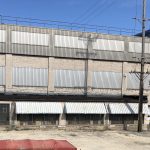
A developer has proposed building a data facility on the grounds of the old mill — which anchored the community economy for over 100 years before COVID closed major operations there.
However, that proposal has met significant pushback from residents who worry about both the old mill site and the future of the community. They wonder why a data center is necessary, why it can’t be stopped and why the project can’t be anything else.
And Zacher says the local government and city staff are caught between locals dead set against the project, and developers trying to create a new economic opportunity in town.
“It’s bad for the people that are caught in the crosshairs, and we should find a better way,” he said.
Zacher said the city has been in talks with the community and developer both, trying to find ways to create what he calls a “good data center” — one that meets community concerns and needs on noise and light levels.
The city will host its next Planning Commission meeting Monday at the local junior high auditorium, to offer more room for residents to attend. It follows a local event put on by developer PNK Group at which residents jeered and heckled former New York City Mayor Eric Adams, who was representing the developer.
That sort of community feedback has become more common across Wisconsin and the nation as public hostility toward data centers has grown. A national survey by the Marquette Law School Poll in July found 73 percent of respondents believed the costs of data centers outweigh the benefits — up from 62 percent in January.
In Wisconsin Rapids, the proposal has been opposed by a local group of residents and comedian Charlie Berens.
The fight has real stakes in the community, according to Zacher, and there’s a challenge for the community to forge a path on data centers without state guidance. The mayor said he feels that without some leadership at the state level, communities have to fend for themselves on regulations — while also listening to locals and developers needs.
“It really has the chance to tear apart the community,” he said.
Both Democratic and Republican lawmakers earlier this year introduced bills that would have regulated data centers in Wisconsin. The GOP bill, which passed in the state Assembly, would have required data centers to pay for power grid work. That bill was the first attempt in Wisconsin to regulate data centers. It died in the state Senate.
As a result of existing laws, local concerns and needing new ordinances, Zacher said the city’s role in the proposal process is complicated.
“We weren’t able to zone them out or prohibit an industry from coming into our city,” he said.
Business groups have said data centers represent a real opportunity for economic growth. The projects are also often favored by labor unions, which gain work on their construction and maintenance.
In a new data center report from the University of Wisconsin-Madison’s Center for Research on the Wisconsin Economy, researchers advocated for a potential two-year moratorium that would allow time for the state to create a policy.
“A statewide moratorium would replace those local decisions with one state decision, including in communities willing to host projects on negotiated terms,” the report states.
While the report focused mainly on payments for data centers, it also highlighted how state policy could address land use, cost allocations and disclosures.
Zacher said he thinks it’s important the developer for the Rapids site understands that the community needs a quiet, low-water use and small-scale electric operation.
Still, he wishes there was more of a framework from the state to help with the data center process, and he said the city has limited power over the proposal.
“This is a private entity to a private entity, so the government really doesn’t have much say until they start building,” he said.
At least 15 different manufacturers and data-connected companies have looked at the project in the past two years, he said. But, the proposed developers are the first to his knowledge who talked about purchasing the land.
“The government, we inserted ourselves with a conditional use permit, and that was the only way that we could have some control over what was built,” Zacher said.
State Rep. Scott Krug, R-Rome, supported a push to keep the paper mill open, and says in talks with locals there are still many unanswered questions from the developer.
“A Conditional Use Permit is not a blank check,” Krug wrote in a social media post. “It exists to ensure a specific proposal substantially complies with the City’s zoning ordinance before approval is granted.”
However, Krug said the process only works when the public knows what they’re being asked to approve. With unanswered questions, Krug opposes granting the CUP.
Zacher said he hopes that as the process moves forward, residents will think about city officials and staff who are trying to listen, manage proposals and address local concerns.
“(It) would be appreciated if you just understand that we’re the neighbors, and we are the ones that set ourselves up to do this, volunteered for these positions,” he said.
As data center debate roars in Wisconsin Rapids, mayor says lack of state rules harms cities was originally published by Wisconsin Public Radio.
If you think stories like this are important, become a member of Urban Milwaukee and help support real, independent journalism. Plus you get some cool added benefits.






















If WI Rapids is not careful they won’t have water for cranberries. Data Centers are being built to surveil and limit our freedom of movement and speech.