
Wildfire Smoke Chokes Tourism Up North, Alters Routine At Milwaukee County Zoo
Apostle Islands tours, zoo animals and staff all adapt when hazardous haze settles over Wisconsin.
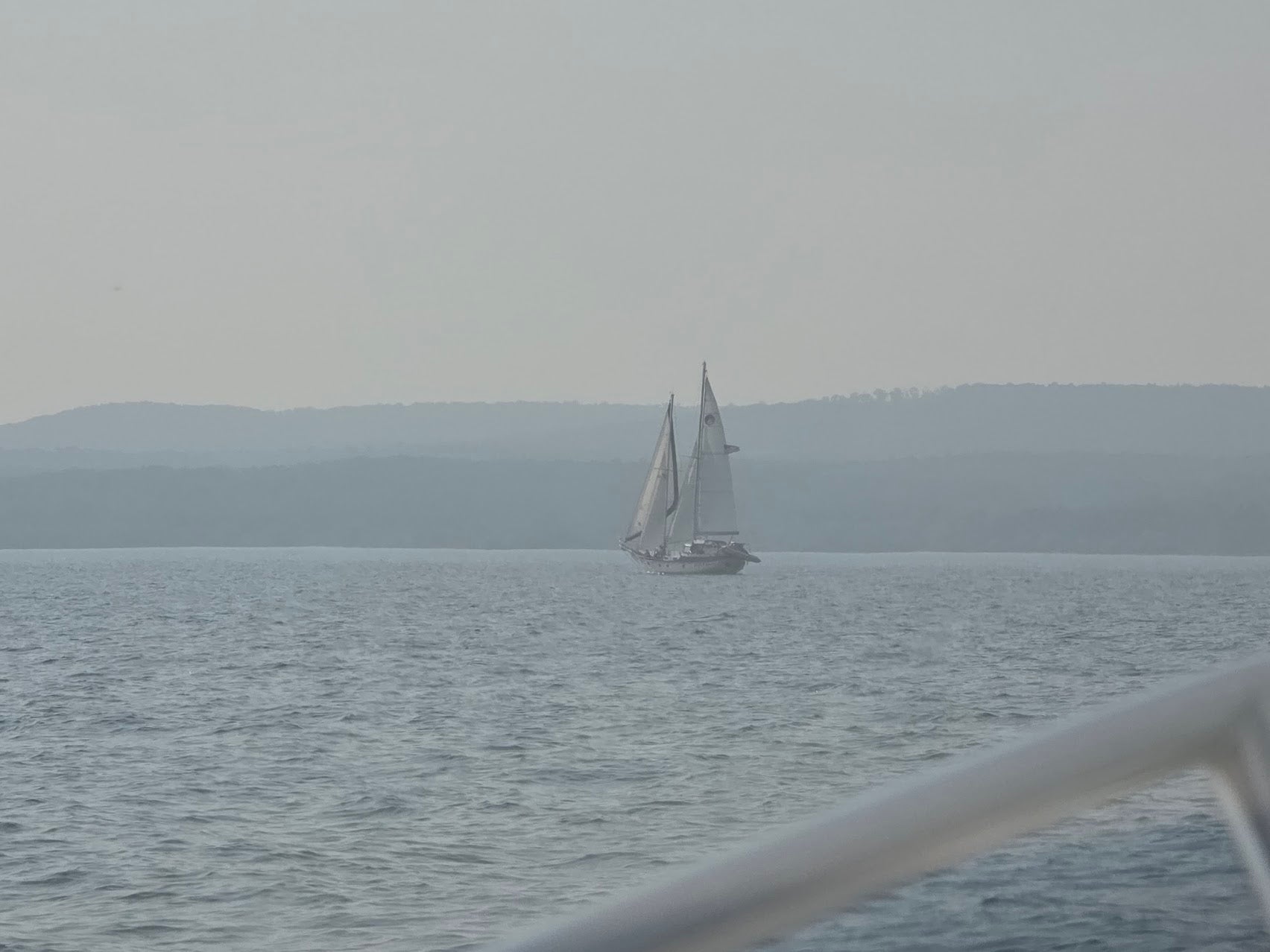
A hazy view of the shoreline around the Apostle Islands from Sean and Savanna Campbell’s Northern Lights Adventures Boat Charters and Tours in Bayfield. Photo courtesy of Savanna Campbell
Massive wildfires roaring through Canada and Minnesota’s Boundary Waters Canoe Area Wilderness last week created a stream of smoke across much of the Midwest, causing nearly all of Wisconsin to experience record-setting hazardous air quality conditions.
Such poor air from smoke can cause breathing trouble, eye stinging and worsen health conditions like asthma, according to the Environmental Protection Agency. Lung disease and an increased risk of heart attack can occur for people exposed to the smoke for longer periods of time.
Some of the fires around Canada and the Boundary Waters might not go out until the first snowfall, according to National Weather Service meteorologists. And the Wisconsin State Climatology Office says warming weather and shorter winters from human-caused climate change are a leading cause for drought conditions and an increased likelihood of severe Canadian wildfires.
Across the state, Wisconsin businesses and organizations must now deal with the lingering possibility of smoke limiting time outdoors throughout the peak summer months. WPR’s “Wisconsin Today” checked in with business owner-operators in the Apostle Islands area, as well as the Milwaukee County Zoo.
Concern in the Apostle Islands
Near the Apostle Islands National Lakeshore, extreme smoky conditions last week caused a number of local outdoor events to close down, according to Sean and Savanna Campbell, owners and operators of Northern Lights Adventures Boat Charters and Tours in Bayfield.
Sean said their business remained operational and mostly booked through the worst smoke conditions, but he worries future wildfire smoke events could harm business moving forward.
“There is a lot of concern,” he said. “A lot of other places have already canceled tours over the safety of their workers and guests.”
The Campbells’ charters offered N95 masks for guests on their boats. During the worst of the smoke, Sean said visibility around the Apostle Islands dropped to only a few hundred feet, making navigation and sightseeing difficult.
Sean primarily captains the charter boat while Savanna leads some of their land tours of the islands. Savanna said she doesn’t remember a time before 2023’s Canadian wildfire outbreak when smoky conditions and poor air quality was a concern.
“I’ve lived here all my life … I don’t remember this as a youth, having to consider the wind direction for the smoke forecasts,” Savanna said. “It’s definitely a different phenomenon here for me.”
Both Sean and Savanna’s line of work involves many hours working outdoors. Sean said even while wearing protective gear, he could feel the effects from the smoke in his lungs and eyes.
“The back of your throat kind of burns after a while,” he said. “You do get used to the smell, though. I noticed that a couple of days after the smoke showed up, I wasn’t really smelling the smoke anymore, even though you still couldn’t see.”
Care for animal health
For the Milwaukee County Zoo’s animals, where they go to avoid the worst of wildfire smoke can depend on the species.
“We don’t have a one-size-fits-all for all of our animals,” Tracy Dolphin, director of Animal Management and Health for the zoo, told “Wisconsin Today.” “We take care of small reptiles to our largest elephants. It really depends on species and their habitat on what that plan is going to look like.”
Some animals are better at handling poor air conditions and given the option to stay outdoors, while others like primates remained entirely indoors through poor air quality days.

A bonobo qasai at the Milwaukee County Zoo. Photo courtesy of the Milwaukee County Zoo
One of the main factors, Dolphin said, is if animals have preexisting respiratory or heart conditions, making them more sensitive to poor air quality. For some, she said the animals could find the move to an indoor space more stressful than remaining outdoors, so they’d stay outside.
Dolphin said the zoo keeps a 24/7 staff monitoring all animals, especially those that remained outdoors, for concerning symptoms.
“Over the past few years, we’ve been seeing more and more conditions like this, so we have to make sure that we have our plans in place to keep our animals safe, but also to keep our staff safe during these times as well,” she said.
For the humans at the zoo, Dolphin said, all staff wear masks when faced with smoky air. The zoo canceled many of its outdoor activities for the safety of the staff, but remained open for visitors through the smoke, directing them to the indoor exhibits.
How wildfire smoke impacted Milwaukee Zoo animals and Apostle Islands economic activity was originally published by Wisconsin Public Radio.
If you think stories like this are important, become a member of Urban Milwaukee and help support real, independent journalism. Plus you get some cool added benefits.