
Bloody Red Shrimp Have Invaded Lake Superior
Invasive species native to Black Sea area spread to other Great Lakes first.
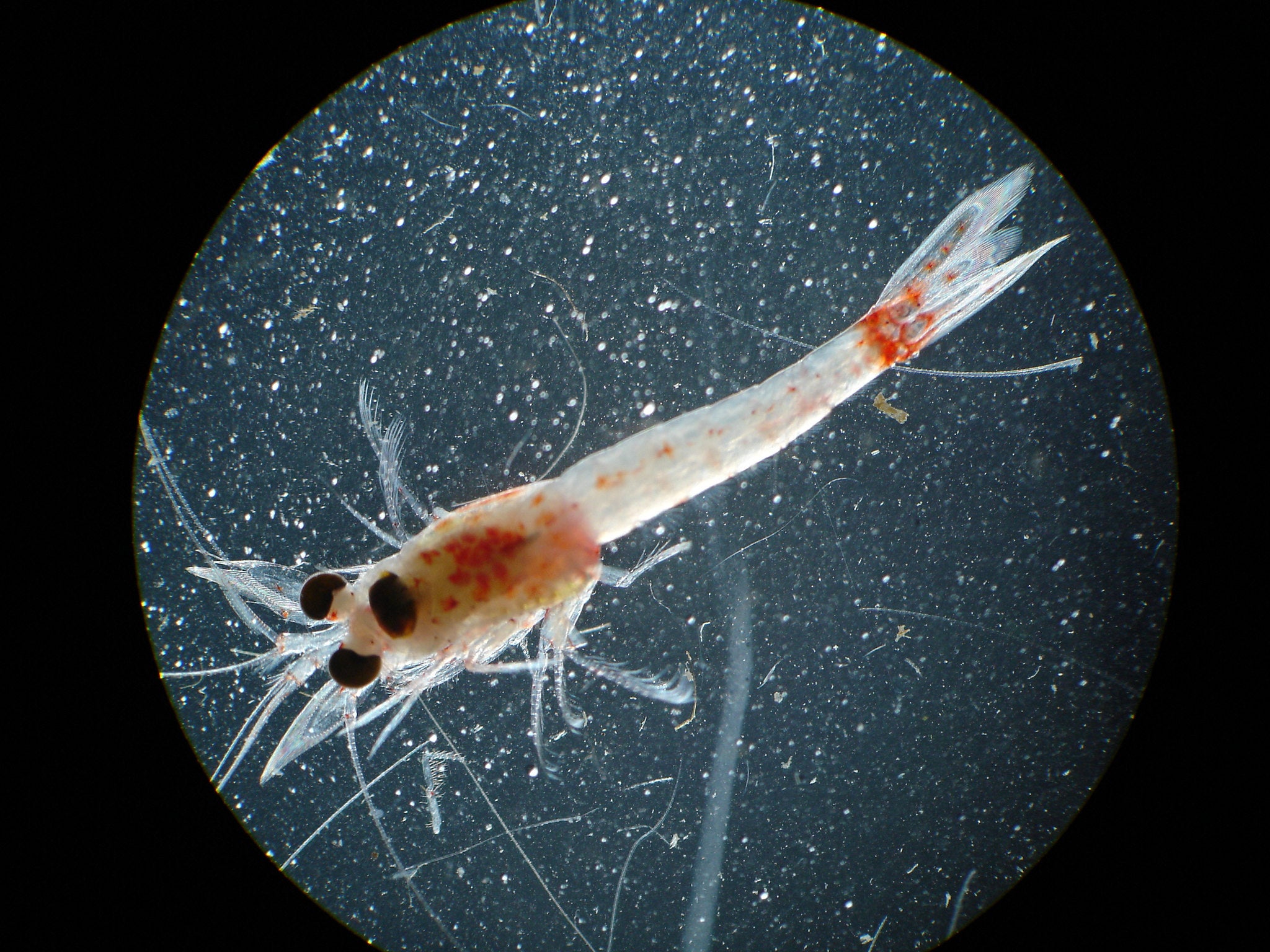
Hemimysis anomala or bloody red shrimp. A microphotograph by S. Pothoven, NOAA’s Great Lakes Environmental Research Lab, December 2006. Flickr CC BY-SA 2.0
After the sun goes down, Donn Branstrator and his team get to work.
For the past couple years, they’ve been using nets and setting light traps at several locations in a Lake Superior harbor on a quest to find an invader: the bloody red shrimp. The freshwater shrimp is known for its red pigment and translucent or ivory-yellow appearance.
Branstrator, a biology professor at the University of Minnesota-Duluth, said the organism that grows up to a half-inch in length tends to come out at night because they’re vulnerable to fish.
“They hide on the bottom within the cracks and crevices of the break wall and bouldered environments during the day,” Branstrator said. “You can go out there during the day and sample all you want, and you’re going to be hard-pressed to find them.”
Bloody red shrimp are a type of zooplankton native to the Black Sea and Caspian Sea between Europe and Asia. The invader likely hitched a ride aboard the ballast water of oceangoing vessels. They were first detected 20 years ago in the Great Lakes. But evidence was lacking that they had become established in Lake Superior.
Until now.
Last year, Branstrator and others collected 81 bloody red shrimp in light traps and nets at Wisconsin Point and Montreal Pier in Superior. He said they found enough individuals at various life stages, including pregnant adult females, for them to be confident that a self-sustaining population is living in the lake. Findings from their study were recently published in the Journal of Great Lakes Research.
“It is there, in perpetuity one would think, if they can continue to grow and reproduce,” Branstrator said.

A researcher is processing a sample from a net used to collect bloody red shrimp in the Duluth-Superior Harbor. Photo by Donn Branstrator/University of Minnesota-Duluth
The findings make Lake Superior the final of the five Great Lakes to see an established population of the invasive species. The U.S. Fish and Wildlife Service first detected a single specimen from the Duluth-Superior harbor in 2017.
Researchers found more the following year at Wisconsin Point, and they published a study showing that Great Lakes ships were moving bloody red shrimp and other invaders from the lower lakes to Lake Superior.
Matt TenEyck is director of the Lake Superior Research Institute and co-authored the study with Branstrator. Now that bloody red shrimp are here to stay, he said their effects remain unclear.
“It’s just too soon to tell if and when they will cause problems with our local communities, if they’ll disrupt the food web,” TenEcyk said. “We just won’t know yet.”
As juveniles, Branstrator said bloody red shrimp feed more on algae. As they grow, they eat more zooplankton and could become a potential competitor to small fish. But they could also become a potential new food source for fish.
Research has found that the introduction of bloody red shrimp can cause the collapse of zooplankton abundances in European reservoirs. Even so, Branstrator said there have been no reports of adverse or positive effects since their introduction to the Great Lakes. But swarms of thousands of bloody red shrimp have been found in waters connected to Lake Michigan in Muskegon, Michigan.
“We haven’t seen a single swarm yet in our work,” Branstrator said.
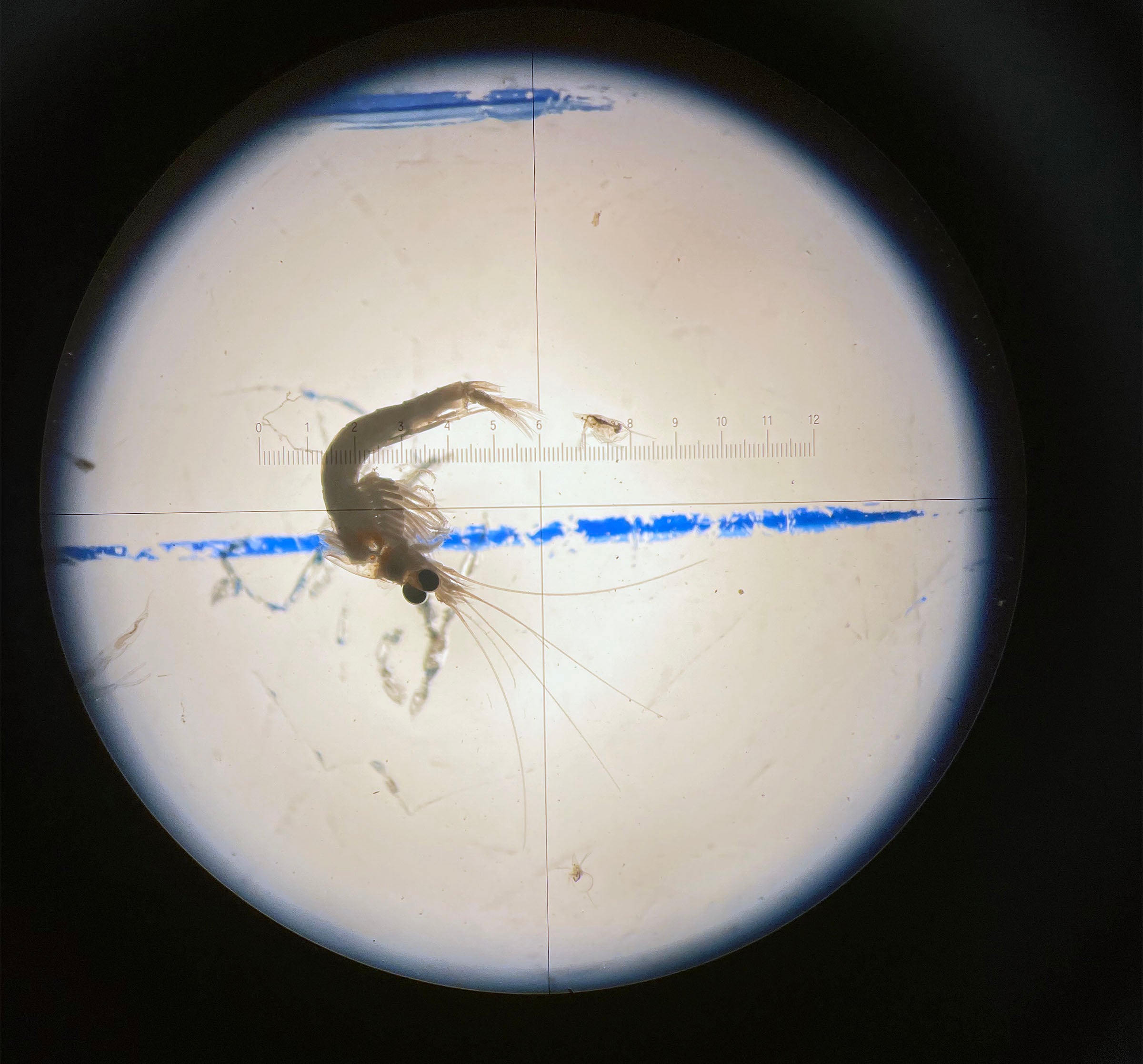
A 6 to 7 millimeter long sample of bloody red shrimp collected by researchers. Photo by Donn Branstrator/University of Minnesota-Duluth
However, both he and TenEyck are concerned about what their establishment could mean for inland lakes.
“What happens if someone picks that up in their bait bucket or their live well and goes to an inland lake?” TenEyck said. “This is the classic example of likely how (other invasive species like) zebra mussels and spiny water fleas have made this slow migration inland. This could be the next concern.”
So far, they haven’t been found in any inland lakes in Wisconsin or Minnesota.
While progress has been made, TenEyck stressed that the spread of invasive species has not stopped and work must continue. He and others have been working on the Great Waters Research Collaborative at the University of Wisconsin-Superior. The project aims to prevent the spread of invasive species through ballast water by testing ballast water treatment systems for ships.
Meanwhile, Branstrator said his team has expanded sampling for bloody red shrimp to other areas of the Duluth-Superior harbor and Two Harbors to find out more about how they’re spreading in Lake Superior.
In Lake Superior, researchers find invasive bloody red shrimp are here to stay was originally published by Wisconsin Public Radio.
If you think stories like this are important, become a member of Urban Milwaukee and help support real, independent journalism. Plus you get some cool added benefits.