
Wisconsin’s Wolf Population Declines for Second Straight Year
Total in state dips below 1,200. Mild winters may make it harder to raise wolf pups.
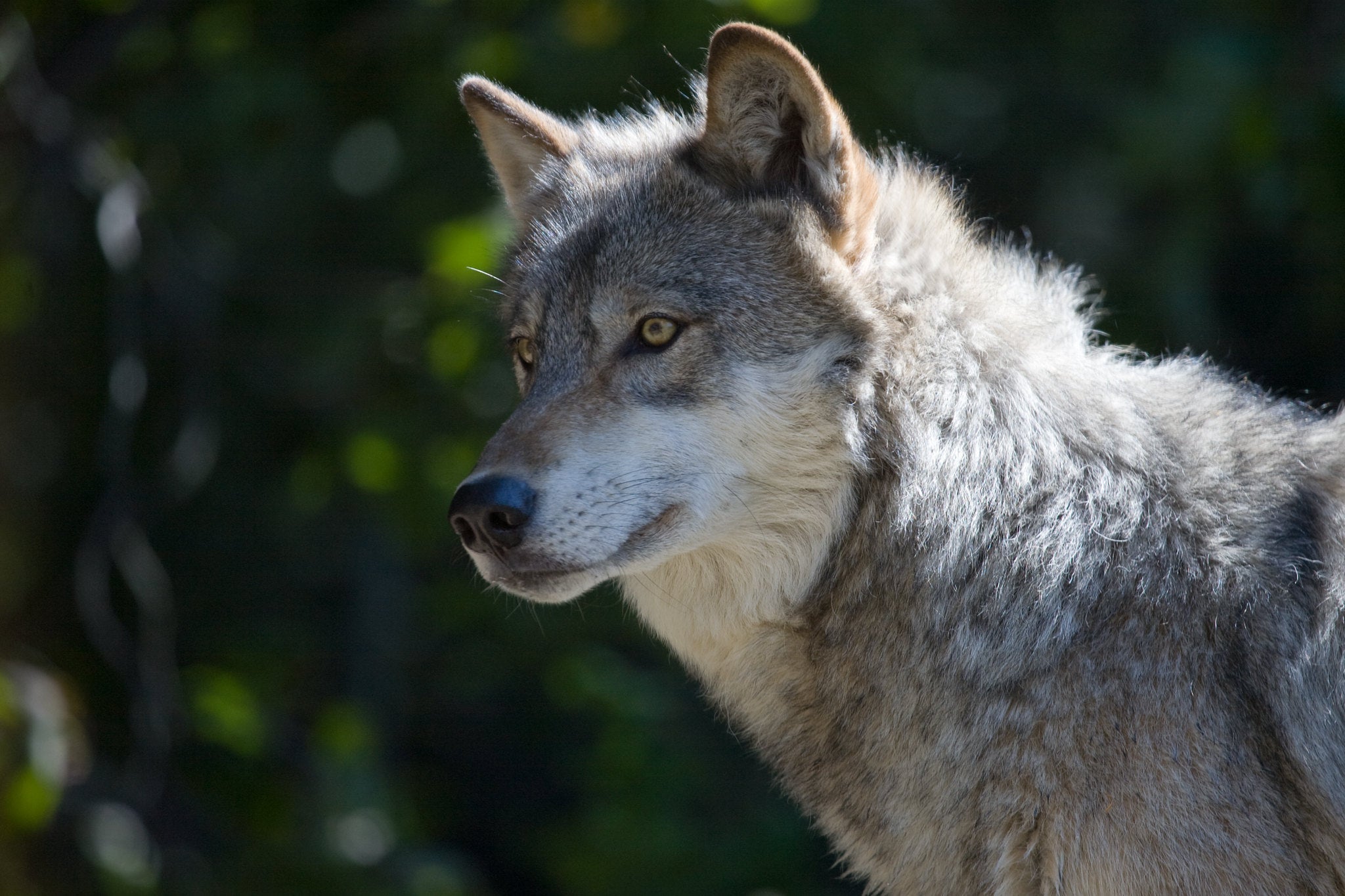
The Natural Resources Board has approved the DNR’s wolf management plan, which does not set a population goal for wolves in Wisconsin. Photo: dalliedee (CC BY)
Wisconsin’s wolf population fell slightly this year, according to estimates from the Department of Natural Resources.
The department has been monitoring the number of wolves in the state since the 1970s by surveying snow-covered roads for tracks and other signs. Since 1995, volunteers have worked with DNR staff on the annual census. This winter, the surveys covered about 17,000 miles of road and tracks.
The estimates also use data from wolves that have been trapped and fitted by DNR staff with GPS collars — there are about 45 wolves with actively monitored collars in the state.
“This is a huge effort that a lot of people, way beyond the DNR, put into,” said Randy Johnson, large carnivore specialist with the DNR. “We’re tracking, like, two-thirds of the state multiple times. A lot of effort goes into the model.”
Lydia Margenau, a wildlife population research scientist with the DNR, presented population estimates Thursday to the agency’s Wolf Advisory Committee. She told the committee the estimated 2026 population is 1,162 wolves in about 321 packs, slightly down from last year’s estimate of 1,225 and the 2024 estimate of 1,311.
Margenau said the 2026 estimate range is from a low of 1,026 wolves to a high of 1,307.
“Overall the population has been stable and nothing drastic to note here,” Margenau said.
Those numbers are in the range DNR research previously found was the state’s biological carrying capacity of 1,242 wolves.
The full annual wolf population report is likely to be released next week.
Wolves were considered extirpated in Wisconsin, with a bounty system paying people to kill them for nearly 100 years. That bounty was lifted in the state in 1957. The species began returning to the state in the 1970s, moving back into the northern forests from neighboring Minnesota.
The population grew relatively steadily until about 2000, and since then estimates have ranged from a high of 1,300 to this year’s low.
Johnson said the survey looks at territory in five management zones covering about two-thirds of the state. The largest number of wolves are in the northern forests, especially in Zone One in the northwest corner of the state.
Johnson said the wolf population may have fallen slightly in the last two years because lower snowfall totals in recent winters have made it tougher for packs to successfully raise pups.
“Mild winters tend to be bad for wolves,” Johnson said. He said mild winters drive up deer populations, but make it tougher for wolves to hunt successfully.
“We expect to see the impacts of a given winter in the following winter’s estimates, so there’s this one-year time lag. I think what we are seeing is some of the impacts from the winters basically two or three years ago playing out now through reduced pup survival, maybe some changes in dispersal. … The populations are complex, but on this big scale it plays out through time.”
He said the population could swing back up, but it’s limited by the availability of habitat and likely will not change drastically.
Following a federal court ruling in 2022, gray wolves are listed as an endangered species in the lower 48 states including Wisconsin.
In December, the U.S. House of Representatives passed a bill that would remove federal protections for gray wolves nationwide. Rep. Tom Tiffany, the leading Republican candidate for governor in Wisconsin, cosponsored the bill.
The Senate version of the bill, sponsored by Wisconsin Republican U.S. Sen. Ron Johnson, has not moved forward. Democratic Sen. Tammy Baldwin has also supported delisting.
Wisconsin’s wolf population declines slightly for second consecutive year was originally published by Wisconsin Public Radio.
If you think stories like this are important, become a member of Urban Milwaukee and help support real, independent journalism. Plus you get some cool added benefits.