Wisconsin Trails Nation in HPV Vaccine Rate
Can cause cancer in teens. Only half of Wisconsin youth aged 13 to 18 have gotten vaccine.
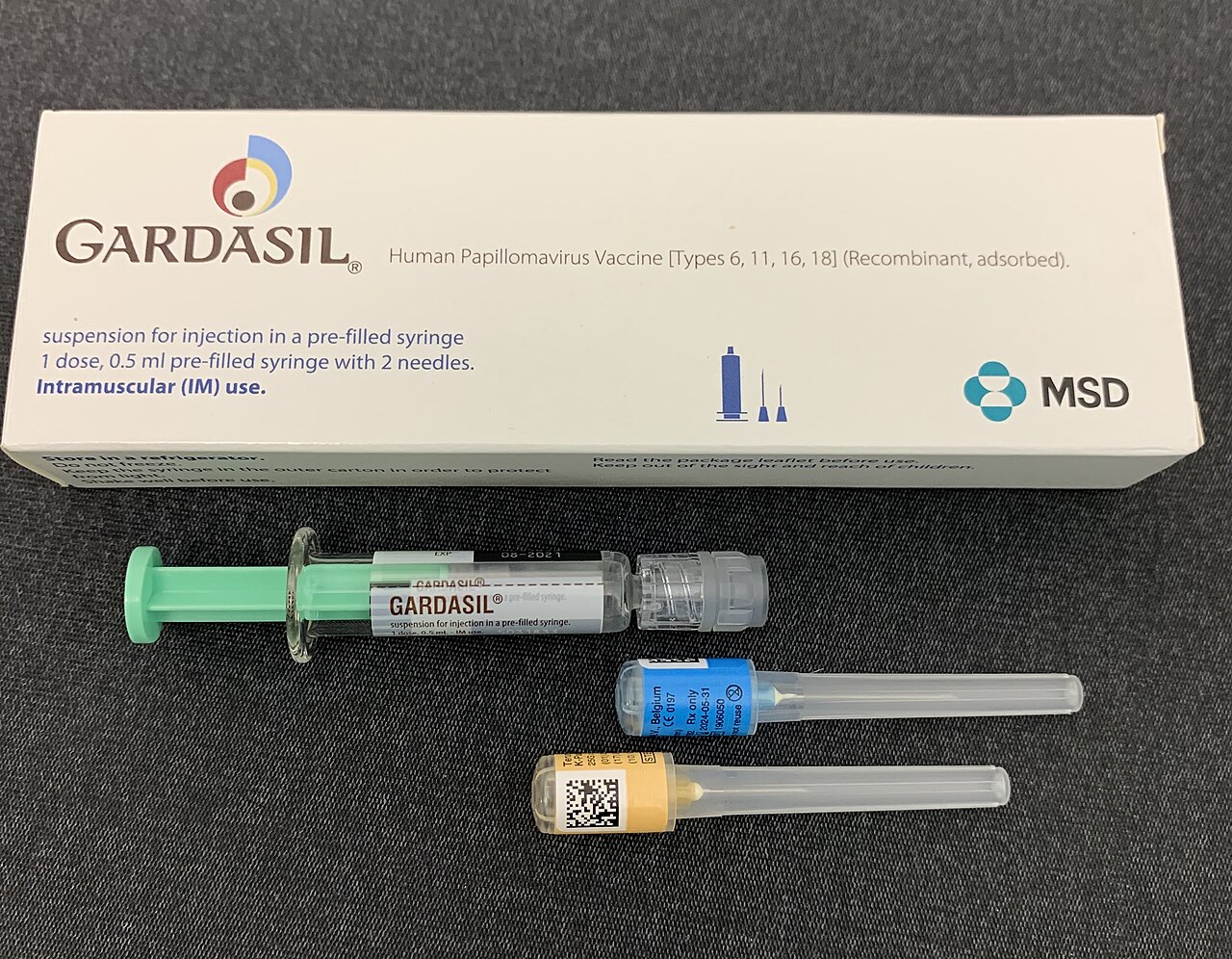
Gardasil vaccine, trade name for Human Papilloma Vaccine (types 6, 11, 16, 18), prefilled syringe. Photo by Whispyhistory, (CC BY-SA 4.0), via Wikimedia Commons
Wisconsin pediatricians are celebrating two decades of a cancer-preventing vaccine. But state data shows nearly half of the state’s teenagers aren’t getting the shots.
A vaccine for human papillomavirus, or HPV, was approved by the U.S. Food and Drug Administration on June 8, 2006.
HPV infections are very common, according to the Centers for Disease Control and Prevention, with about 13 million Americans, including teens, becoming infected each year. The virus is spread during sex or other intimate skin-to-skin contact, and most infections go away by themselves.
But some can lead to cancer of the cervix, genitals and throat, affecting both women and men. These cancers take years to develop, the CDC reports, and there is no way to know who will develop cancer from an HPV infection.
It’s what prompted the creation of the vaccine, which has been proven to prevent 90 percent of HPV-related cancers.
Dr. Liz Hansen, pediatrician at Emplify Health in Onalaska, said she was in her second year of residency as a doctor when the vaccine was approved 20 years ago.
“Now we know that the actual cases of cancer have declined as a result of the HPV vaccine,” she said. “The impact that it’s had on our patients as they age and on our young adults has been noticeable, so it’s pretty cool over my relatively short career to have seen that change so significantly.”
HPV infections among teen girls across the U.S. have dropped 88 percent since 2006, according to the CDC. Among vaccinated women, the percentage of cervical pre-cancers caused by HPV has dropped by 40 percent since the vaccine was approved.
The vaccine’s success story deserves more celebration and promotion, said Dr. Megan Yanny, pediatrician at UW Health.
“We are always looking for a cure for cancer, and that’s what a lot of our research goes into,” she said. “But we have something even better right now, which is this vaccine, because it prevents cancer.”
Yanny said she starts recommending the HPV vaccine for kids starting at age 9, following the American Academy of Pediatrics guidelines. She said it can be confusing or even unsettling to parents and caregivers, who often aren’t thinking about their children being sexually active.
But Yanny said she wants to separate the cancer-preventing shot from conversations about sex.
“We want to protect kids at a young age, when we can reach everyone equally,” she said.
There are other benefits to starting the two-dose vaccine series at age 9, according to Hansen. Younger children have a stronger immune response to the shot than teens and adults, making the shot more effective. And starting the series early gives families and their doctors more time to make sure kids are getting both shots before they turn 15 years old.
Just over half of Wisconsin’s 13- to 18-year-olds had completed the HPV vaccine series in 2025, according to data from the state Department of Health Services. Nearly 65 percent of teens had received at least one shot last year.
The state’s rates are significantly lower than national averages. CDC data show 78 percent of 13 to 17-year-olds had at least one dose in 2024, the latest data available, and nearly 63 percent had completed the series.
Hansen said she sees the disparity between HPV vaccination rates and other types of shots at her own health system. She said internal data shows around 92 percent of their pediatric patients get two other shots given during the teenage years: a tetanus booster and a meningitis vaccine. But only 85 percent of the department’s patients get the HPV vaccine.
It’s hard to know why Wisconsin kids and teens are not getting the shot, she said. It could be affected by limited access to preventive care, or parents’ perception of vaccines.
“The thing that does kind of come to mind is we have a pretty permissive (school) vaccine exemption allowance in Wisconsin,” Hansen said. “HPV is not a required vaccination for school attendance, but folks might be opting out of vaccines in general for that 11 to 12-year-old age range.”
Yanny theorized the shot may also be getting deferred if doctors and families are focused on addressing other health problems or getting caught up with school-required shots. But she thinks providers should be prioritizing conversations about the HPV vaccine to reduce future rates of cancer.
“I think we can just do a better job of making sure we’re doing it every single time, every family, and really promoting this because it is such an incredible thing,” she said.
Wisconsin doctors say HPV vaccine has cut cancer rates. Only half of teens get the shots. was originally published by Wisconsin Public Radio.
If you think stories like this are important, become a member of Urban Milwaukee and help support real, independent journalism. Plus you get some cool added benefits.