Democrats Split with Gov. Tony Evers Over School Funding Deal
'Three lame ducks' reached the agreement? But GOP legislators praise the deal.
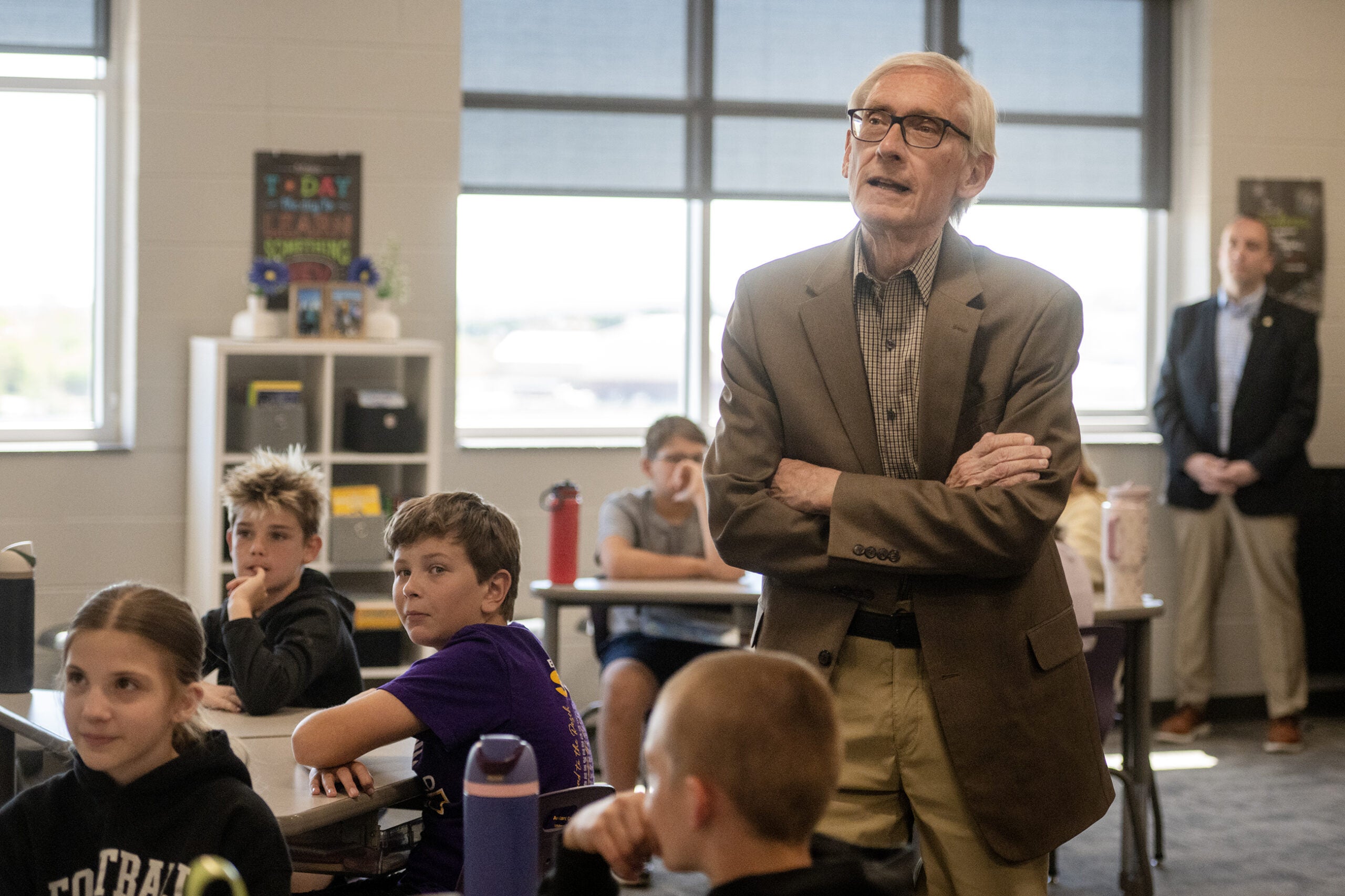
Gov. Tony Evers visits a class Monday, May 11, 2026, in Barneveld, Wis. Angela Major/WPR
As the Legislature’s budget committee convened Tuesday to debate a deal that would trade tax relief for education funding, one lawmaker wore a tie with ducks on it — a reference, he said, to the “three lame ducks” who reached the agreement.
The lawmaker was Rep. Tip McGuire, D-Kenosha, and he’s a frequent critic of two of those dealmakers: Assembly Speaker Robin Vos, R-Rochester, and Senate Majority Devin LeMahieu, R-Oostburg. But the third “duck” in this case, Gov. Tony Evers, is from McGuire’s own Democratic party.
All three are set to leave the state Capitol when their current terms end in January. But Evers, the former state superintendent who has made education spending the cornerstone of his agenda across two terms in office, has rankled some in his own party for what they describe as a bad deal that wastes the state surplus and doesn’t do enough for schools.
“Our schools aren’t going to be getting the resources fully that they need. They’ve been struggling for 15 years under legislative Republican leadership,” McGuire said during the committee hearing. “We return to the same kind of half-measures and talking point politics, rather than addressing the long term structural problems that face our schools yet again.”
The full Legislature is set to consider the bill Wednesday.
Light shines through windows inside the Wisconsin State Capitol on Monday, July 14, 2025, in Madison, Wis. Angela Major/WPR
After months of negotiations between Evers, Vos and LeMahieu, the final deal puts about $610 million toward schools, split between general state aids and increased special education reimbursement.
The state aid is aimed at lowering property taxes because it reduces how much districts must rely on local funding under revenue caps.
The increase in special education reimbursement comes after lawmakers in the state budget agreed on increasing the rate at which the state pays back districts for the cost of special education needs, which they are required to cover. The deal includes a larger reimbursement rate from the state than was agreed on last summer, to cover rising costs.
That amounts to a “pretty substantial increase … over what the state has already been spending on special education,” said Tyler Byrnes, a senior research associate at the Wisconsin Policy Forum.
But Byrnes, who spoke to WPR’s “Wisconsin Today,” added that this won’t put a stop to the frequent referendums that communities have voted on about raising their own property taxes.
“We’ll likely see referendums continue in the future,” he said.
In statements, educational leaders praised the package, but described it as a first step.
“This investment is a down payment on what Wisconsin kids need and deserve and I hope this momentum continues,” said state Superintendent Jill Underly. “Students should not have to resort to suing the state to receive stable funding for public education. I hope today marks the beginning of continued partnership and progress.”
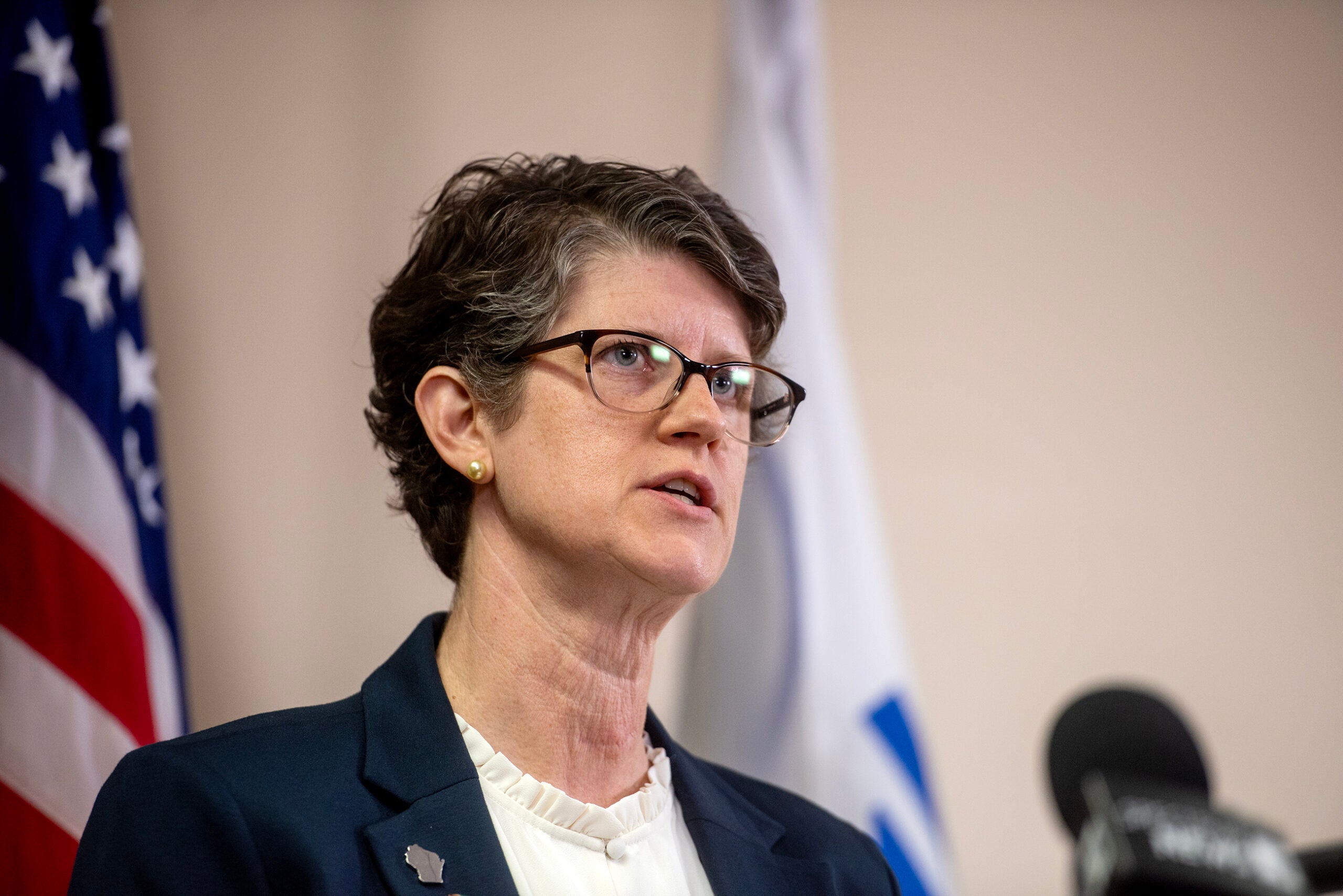
Wisconsin Superintendent Jill Underly speaks during a press conference Tuesday, Nov. 4, 2025, at the Tommy G. Thompson Center in Madison, Wis. Angela Major/WPR
And the superintendent of the Madison Metropolitan School District, the state’s second-largest district, said the deal would “finally begin to address the funding gap that has long strained public school districts.”
But Democratic lawmakers were not as kind to the governor. At the budget committee hearing, the bill passed on party lines, with all Democrats voting against it.
“We know that property taxes are high and that people are struggling to afford their housing, and we also know that our schools are struggling,” said McGuire. “That the general school aids ultimately is not going to end up being spendable dollars for schools, I think is disappointing.”
“It does not fix the problem, and Wisconsin voters deserve a long term solution made by responsible people who actually care about the fiscal condition of the state,” said Sen. Kelda Roys, D-Madison, who is running for governor and previously criticized what she described as a “backroom” deal.
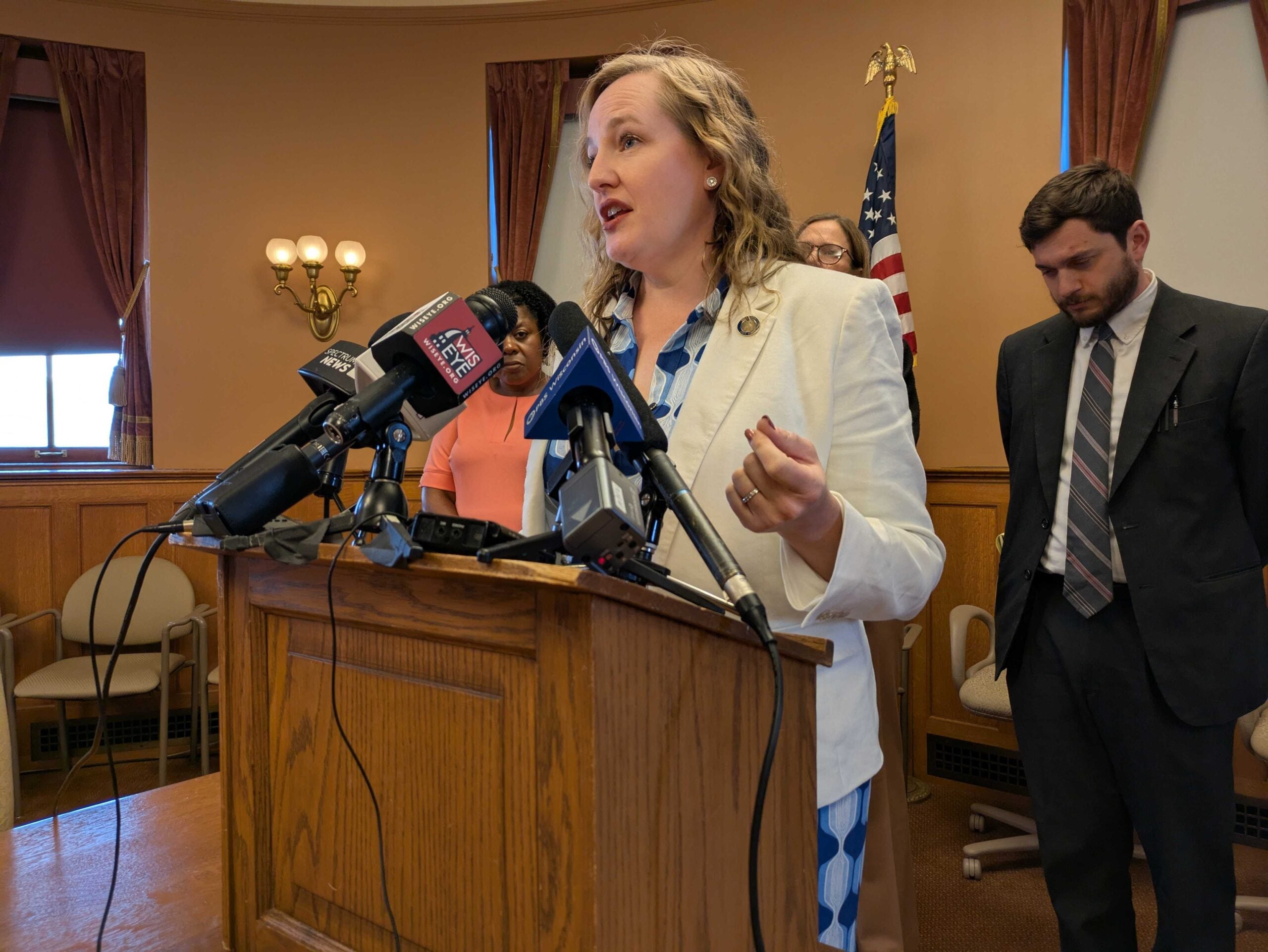
Sen. Kelda Roys, D-Madison, speaks at a state Capitol news conference on June 10, 2025. Shawn Johnson/WPR
Candidates for governor, including Republican Tom Tiffany, criticize the deal
In the short time since the deal was announced, Democrats have been especially outspoken in their disappointment.
On social media, Assembly Minority Leader Greta Neubauer, D-Racine, said she won’t support spending down the state surplus at a time of uncertainty. Her counterpart in the state Senate, Sen. Dianne Hesselbein, D-Middleton, previously voiced her opposition to the plan.
Along with Roys, other Democratic candidates for governor have largely criticized the deal, too. Of the seven major candidates, only former Wisconsin Economic Development Corporation Secretary Missy Hughes has expressed support, with Lt. Gov. Sara Rodriguez offering a lukewarm critique aimed at Republican power in the Legislature. Rep. Francesca Hong, D-Madison, former Department of Administration Secretary Joel Brennan, and former Lt. Gov. Mandela Barnes all expressed some opposition.
That opposition won’t matter if Republicans are unanimous in support of the plan. The GOP still holds an 18-15 majority in the state Senate and a 54-45 majority in the Assembly. GOP legislative leaders have praised the most expensive provision of the deal, that would send $300 checks to taxpayers, based on their 2024 returns.
But U.S. Rep. Tom Tiffany, R-Minocqua, who is the only major Republican candidate for governor, also said he opposed the deal, claiming the tax cut provisions don’t do enough.
“Governor Evers is acting like the arsonist who wants praise for spraying a drop of water on the fire he started,” Tiffany said, calling the rebate checks a “gimmick” that “barely scratches the surface.”
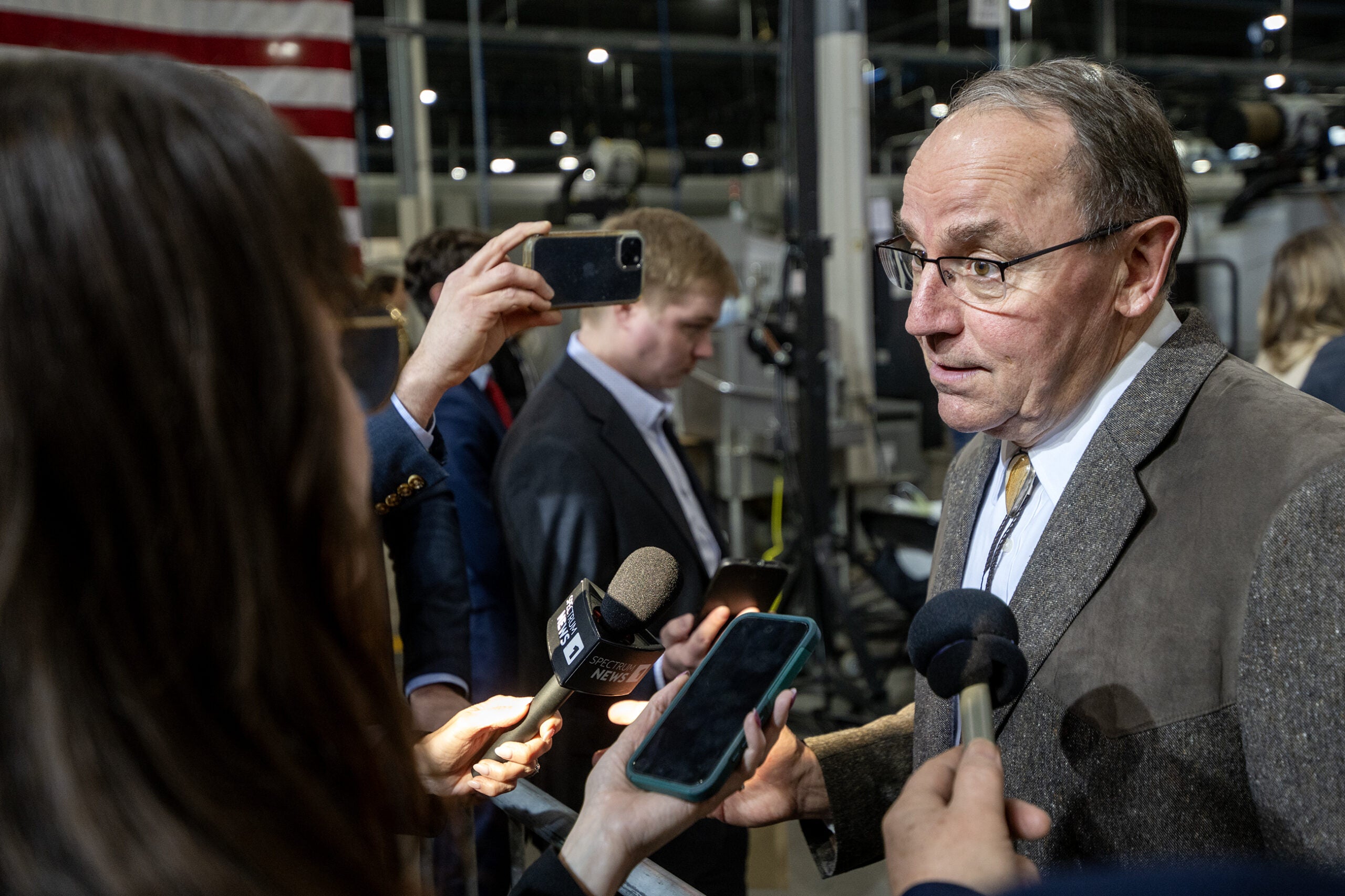
U.S. Rep. Tom Tiffany speaks to reporters Thursday Feb. 26, 2026, at Pointe Precision in Plover, Wis. Angela Major/WPR
Nevertheless, the bill was moved forward by all Republicans on the Joint Finance Committee Tuesday afternoon. Rep. Mark Born, R-Beaver Dam, a co-chair of the panel, called it a “big, beautiful bipartisan agreement.”
And Sen. Romaine Quinn, R-Birchwood, argued that Republicans were offsetting Evers’ 400-year veto, which increased school revenue limits for centuries, allowing school districts to raise revenue without going to referendum.
“This is absolutely new dollars through special education funding, and it’s buying down the burden that you’re going to see next year when all of your schools levy that money again against you without having to ask your permission,” said Quinn.
The Wisconsin Policy Forum has found that the increased revenue limits, imposed by Evers’ veto, have contributed to rising property taxes, as has the lack of any general school aid increase in the budget Republicans passed last year.
The Evers-Vos-LeMahieu deal is scheduled to go before the full Legislature on Wednesday.
Wisconsin Democrats split with Gov. Tony Evers over school funding deal was originally published by Wisconsin Public Radio.
If you think stories like this are important, become a member of Urban Milwaukee and help support real, independent journalism. Plus you get some cool added benefits.