Rising Fuel Costs Slamming Wisconsin School Districts
Gasoline costs thousands more than already cash-strapped schools budgeted for.
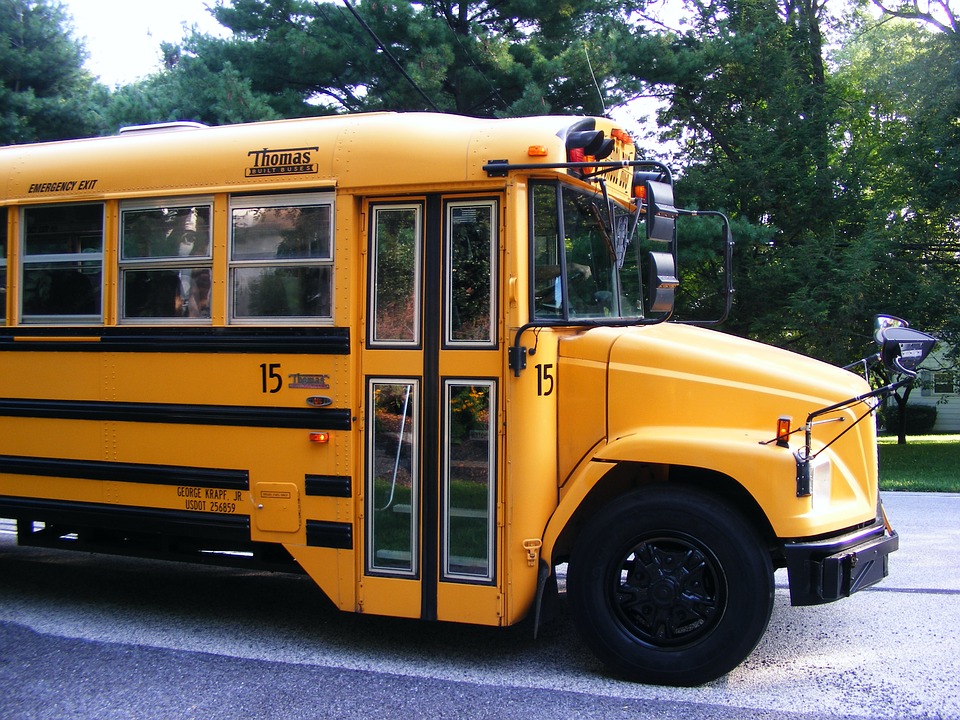
School bus. (Pixabay License)
Prices at the pump have everyone feeling uneasy, but the anxiety is 738 times worse in the Chequamegon School District.
That’s how many square miles the district’s school buses cover every day.
District administrator Kyle Cronan said the district’s nine buses use three types of fuel: gasoline, diesel or propane.
Propane and diesel are stored on site. The district, located in northern Wisconsin, is about 35 miles west of Lac Du Flambeau.
A few weeks ago, Chequamegon administrators purchased diesel at $4.14 a gallon — well below the current statewide average — that will hopefully get the district through the fall, Cronan said
Propane is running about $1.99 a gallon.
“Gasoline is our volatile-priced fuel at the moment,” Cronan said. “Fuel is running $4.49 a gallon. So at 5 miles a gallon, you know, they fill up quite a bit on these long routes and transfers.”
In March, the Chequamegon buses traveled 19,382 miles.
“The good news is gasoline started fairly inexpensive, so maybe we’ll come in at budget this year,” Cronan said. “But if those fuel prices continue into next year, that will create some challenges with our fuel budget next year.”
Diesel prices up almost a dollar from last month
The average price of a gallon of diesel fuel in Wisconsin is $5.67, according to AAA, that’s up from $4.86 since last month and from $3.26 last year.
Regular gasoline is averaging $4.38 a gallon across the state, up from $3.81 last month and $2.95 last year, according to AAA.
Like Chequamegon, many school district administrators say they use a combination of gasoline, diesel or propane buses. Or, they contract out transportation services.
About eight years ago, the School District of Superior switched more than half of its school buses to propane. Doing so has protected the district from a surge in prices.
“The money we have saved with propane has absorbed the diesel increase,” said spokesperson David Coy.
The Racine Unified School District uses a combination of gasoline and diesel. District spokesperson Stacy Tapp said because the transportation budget is planned so far in advance, the unexpected increase in fuel prices is hitting the district hard, especially with more than 100 buses on the road every day.
In February, fuel cost Racine Unified $56,840. In March, that cost jumped to $96,991.
Milwaukee Public Schools and the Madison Metropolitan School District both contract with bus companies for transportation services.
Ian Folger, with the Madison district said it hasn’t gotten a bill for April, but saw a significant jump in costs from February to March, even with using about 750 fewer gallons of gas due to spring break.
Average overall fuel prices for the Madison district rose from $3.13 per gallon in February to $5.27 in March, a roughly 68 percent increase, which drove a 44 percent increase in total fuel cost, Folger said.
“That translated to an increase of several thousand dollars in March, despite lower usage,” Folger said.
Increase in gas prices could almost pay for a new teacher
Gilman School District Superintendent Wally Leipart said the increase in fuel costs could almost pay for a new classroom teacher.
Gilman, which is about 40 miles northeast of Chippewa Falls, runs five buses across 426 square miles.
The district contracts with local business owners and farmers who own the buses. They give the district a base rate for the service but increase their cost if fuel prices rise, Leipart said.
“We’re paying about $33,000 more than we contracted,” Leipart said. “That is about 70 percent of a starting teacher’s salary.”
Leipart said spending an additional $33,000 beyond the budget means fewer classroom supplies, possible changes to the summer school program and possibly cutting field trips.
“You look at all those little fine details in various budgets that, if you take a little from each area, maybe we can offset the cost,” Leipart said.
Rising fuel costs slamming already cash-strapped Wisconsin school districts was originally published by Wisconsin Public Radio.
If you think stories like this are important, become a member of Urban Milwaukee and help support real, independent journalism. Plus you get some cool added benefits.


Transportation
-
See Costs, New Details For 794 Replacement Options
 May 1st, 2026 by Jeramey Jannene
-
See Design Concepts for 30th Street Corridor Trail
 Apr 30th, 2026 by Graham Kilmer
-
Why Milwaukee’s Potholes Are So Bad, And What’s Changing
 Apr 28th, 2026 by Jeramey Jannene