

Backyard Chickens Linked to Salmonella Infections in Wisconsin
34 cases in 13 states, including Wisconsin, are part of outbreak.
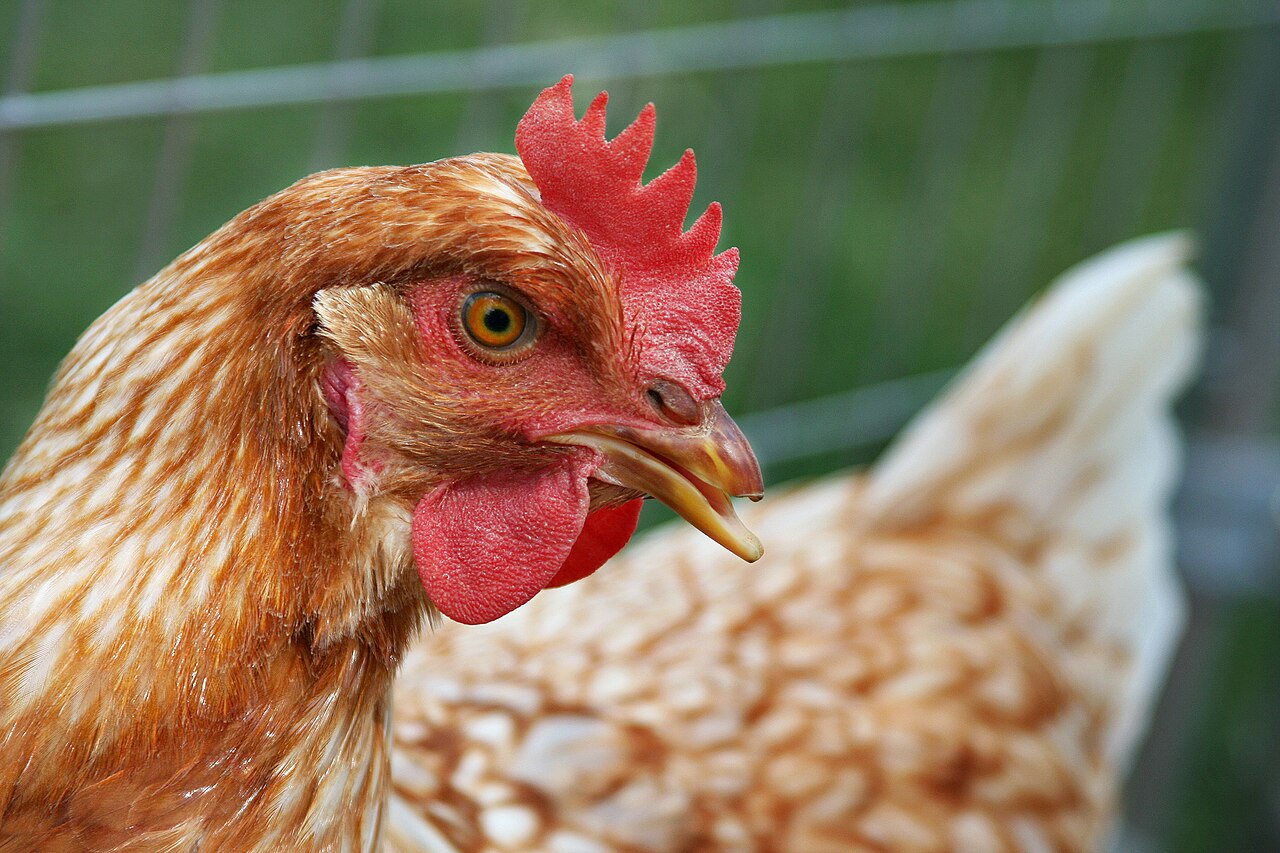
Chicken. Photo by Chicken. Thegreenj, (CC BY-SA 3.0), via Wikimedia Commons
Backyard poultry have been linked to a multistate outbreak of salmonella, which includes at least five cases in Wisconsin.
Thirty-four cases of salmonella across 13 states have been linked to the outbreak, according to the Centers for Disease Control and Prevention.
Most people became sick between the end of February and the end of March, with more than a third of those infected under age 5. No deaths have been reported.
The state Department of Health and Human Services declined WPR’s request for an interview on the outbreak. But an agency spokesperson said cases have been identified in Brown, Kenosha, Marquette, Oneida and Wood counties.
The CDC reported that the majority of sick people who were interviewed reported contact with backyard chickens, ducks or other poultry. Nearly all of the people who reported owning a flock had purchased a bird since the start of the year.
Public health officials are still working to identify the source of the outbreak.
Ron Kean, poultry specialist for the University of Wisconsin-Madison’s Division of Extension, said many types of salmonella don’t affect poultry, and birds that carry the bacteria can appear perfectly healthy.
“A lot of these chicks are coming from mail-order hatcheries, even if you get them at a farm store,” Kean said. “I think there’s some concern that it’s being spread that way. A hatchery in one state might be shipping chicks to a lot of different places across the country.”
It’s the second year in a row that backyard poultry have been linked to a multistate outbreak.
Last year, 559 people across 48 states, including Wisconsin, were infected with salmonella that traced back to birds coming from four hatcheries. The CDC reported the outbreak led to 125 hospitalizations and two deaths.
The true number of sick people related to this year’s outbreak is likely much higher than the number currently reported by public health officials.
Salmonella infection causes diarrhea, nausea and fever. Most people are able to recover from the bacteria at home.
Dr. Jeff Pothof, emergency medicine physician at UW Health, said even people who are treated in an emergency room may not be tested for salmonella. It usually takes a patient needing hospitalization to prompt providers to identify the specific bacteria making a person sick.
“In that situation, antimicrobials, or things like antibiotics, do have some value to that patient,” said Pothof, who is also Chief Quality Officer for UW Health. “So a lot of those cases that get diagnosed are just the tip of the iceberg of the people who got exceptionally ill from it, where we actually send off the test.”
CDC testing found that bacteria in all of the cases had predicted resistance to at least one antibiotic, with eight samples showing resistance to additional antibiotics.
Salmonella is notorious for developing resistance to common antibiotics, Pothof said, which can make it hard for providers to find an effective drug to treat infections.
Young children, people over the age of 60 and individuals who are immunocompromised have the highest risk of becoming severely ill from salmonella. Pothof said in some cases, the bacteria can also leave a person’s gastrointestinal tract and infect other organs like the brain or heart in what’s called invasive disease.
When the bacteria carrier is a fuzzy little chick, he said, it’s easy to understand how an infection can happen.
“Those little things are adorable,” he said. “They’re soft, like you just want to be near them, not realizing that they do carry a little bit of risk.”
Kean’s recommendation is the same for both children and adult poultry owners: “Don’t kiss your chickens.”
“General cleanliness and just being careful can help a lot,” he said. “Wash your hands after you’ve handled the birds; don’t eat and drink food around them.”
For anyone getting eggs or meat from a backyard flock, Kean said food safety practices, like preventing cross contamination on cutting boards and following recommended cooking temperatures, can help kill any bacteria that may be present.
Backyard poultry linked to salmonella infections in Wisconsin, across US was originally published by Wisconsin Public Radio.
If you think stories like this are important, become a member of Urban Milwaukee and help support real, independent journalism. Plus you get some cool added benefits.