Rare Wisconsin Mussel At Center Of New Federal Lawsuit
Suit says delay in endangered listing leaves salamander mussel and 2,000 miles of habitat at risk.
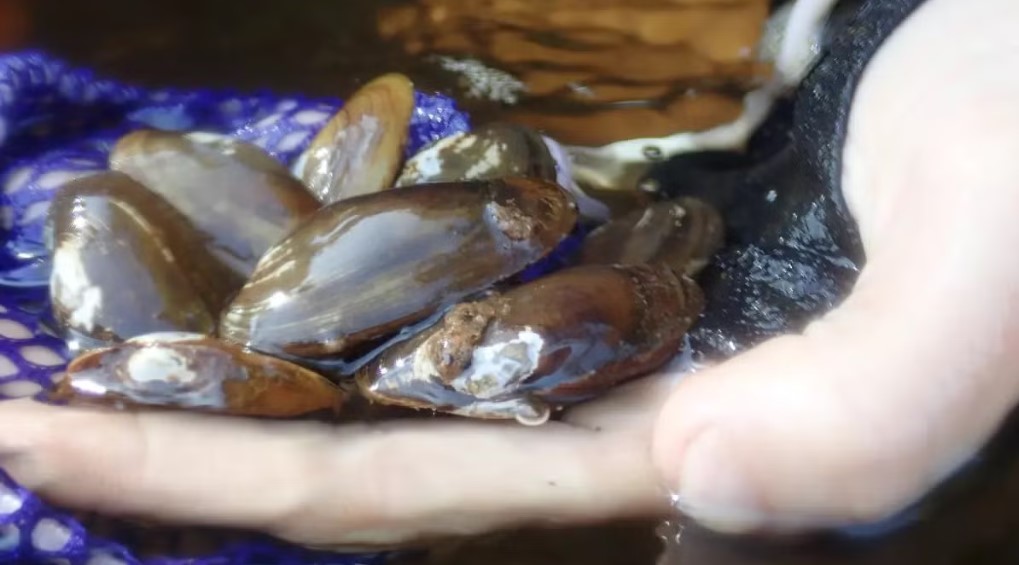
A biologist holds a handful of salamander mussels from the Chippewa River in Wisconsin. Photo by Megan Bradley-USFWS
The Center for Biological Diversity is suing federal wildlife regulators for their alleged failure to protect the rare salamander mussel, an endangered species at risk of extinction.
In 2023, the U.S. Fish and Wildlife Service proposed protections for the freshwater mussel, which is listed as threatened in Wisconsin. It’s known to exist in 14 states. The thin-shelled mussel is about 2 inches long and makes its home in swift-flowing rivers, hiding under rocks or ledges of rock walls.
The agency found 66 out of 110 populations that historically occurred across its range are still surviving, but it noted more than 80 percent are at high risk of extinction from one or more threats. Polluted runoff from industry, construction and agriculture are among threats to the at-risk species.
Laurel Jobe, an attorney for the conservation group, said federal regulators failed to meet a one year deadline to publish regulations in 2024 that would protect the mussel and around 2,000 miles of critical habitat.
“We are seeing these mussels die off because their habitat has been compromised,” Jobe told WPR. “Even though they can filter pollutants and toxins out of the water, we’re pretty much putting in more that they can take in.”
The mussel is also contending with invasive species, changing water flows from building dams and the decline of its host species. It’s the only freshwater mussel in North America that relies on the mudpuppy salamander as its host to reproduce, releasing fertilized eggs into its gills.
Salamander mussels have been found in rivers spanning 24 counties in Wisconsin that include St. Croix, Eau Claire, Marathon, La Crosse, Dane and Shawano counties. They’ve been spotted in the St. Croix, Chippewa and Wisconsin rivers.
It’s important to protect the salamander mussel because they’re a canary in the coal mine as it relates to water quality in Wisconsin, said Lisie Kitchel, a conservation and aquatic biologist with the Wisconsin Department of Natural Resources.
“By protecting the rarest of those guys, the other species get protected as well because they’re often found adjacent to the others,” Kitchel said. “I think when you lose your native mussel population, your water quality declines significantly in systems that have had mussel die-offs.”
Wisconsin has 50 species of freshwater mussels that can filter up to 15 gallons of water daily. Kitchel said the salamander mussel can live for decades, and mussels more than 100 years old have been found on the St. Croix River. However, pollution from heavy metals and urban runoff can affect the survival of younger mussels, limiting reproduction and their numbers.
Federal wildlife regulators had planned to designate around 400 river miles as critical habitat for the mussel in Wisconsin.
Kitchel said the designation would require developers to survey those stretches to determine whether the salamander mussel is present when proposing to dredge or install rip rap along river banks. The total cost of designating around 2,000 miles of habitat wasn’t expected to exceed more than $120,000 each year.
The mussels are also under threat from climate change as warmer and wetter weather can drive extreme storms that send more runoff into waterways, as well as drought conditions or flooding. Kitchel said salamander mussels can’t withstand high flows on rivers similar to those seen in the last week due to spring flooding.
More than 70 percent of roughly 300 freshwater mussel species in North America are currently at risk of extinction, according to the Center for Biological Diversity.
“The good thing is these guys can recover, if they’re allowed to recover,” Kitchel said.
A spokesperson for the U.S. Fish and Wildlife Service said the agency doesn’t comment on pending litigation.
Group sues over lack of federal protections for rare mussel found in Wisconsin was originally published by Wisconsin Public Radio.
If you think stories like this are important, become a member of Urban Milwaukee and help support real, independent journalism. Plus you get some cool added benefits.