Wisconsin Cleaning Up After 14 Tornadoes, Severe Storms and Flooding
Rainfall totals near Milwaukee and Green Bay were up to 700% higher than normal.
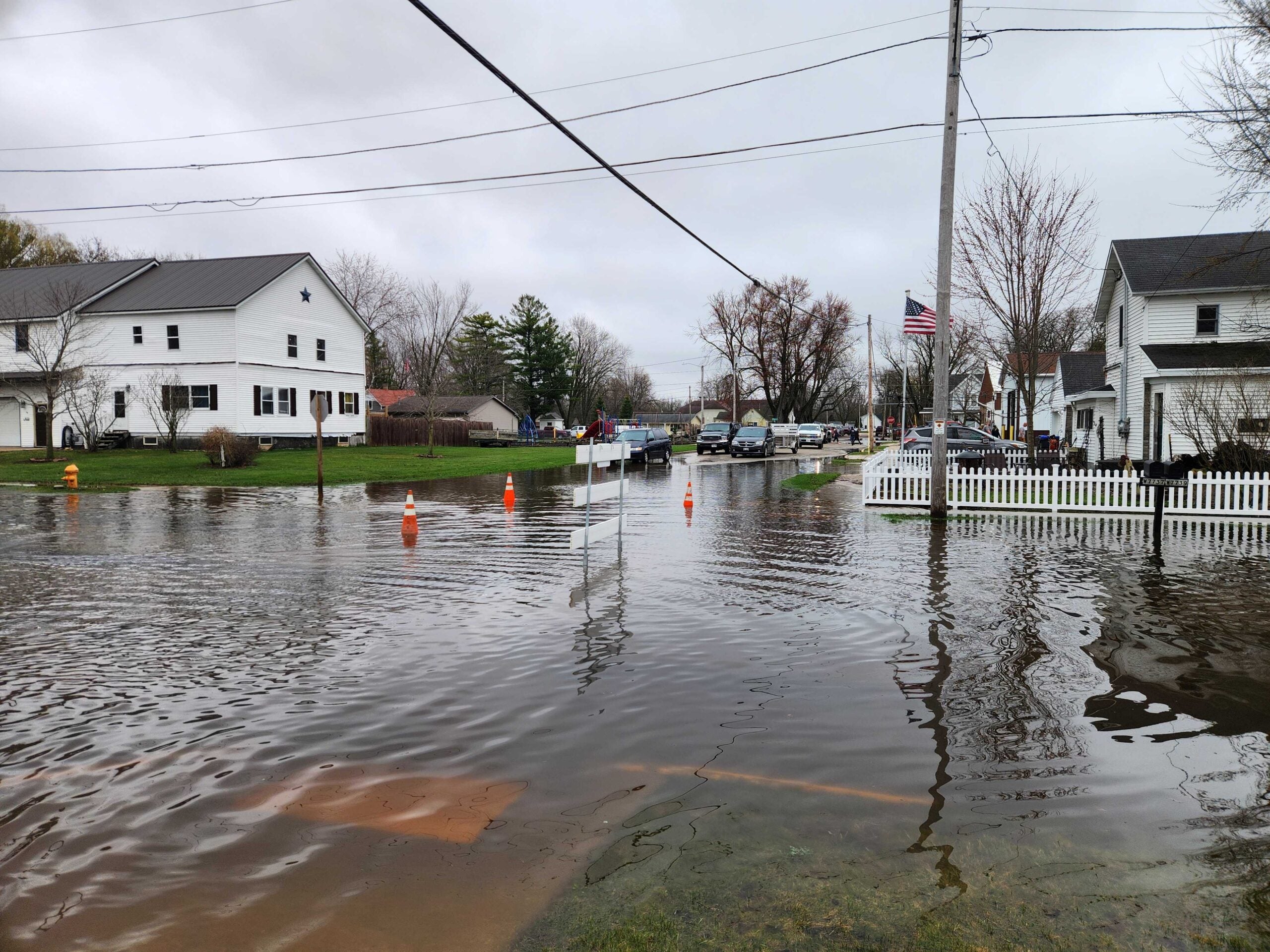
A flooded residential street is seen with water covering the road and lawns, traffic cones blocking access, and overcast sky in Shiocton, Wis., on April 15, 2026. Joe Schulz/WPR
The National Weather Service says at least 14 confirmed tornadoes hit Wisconsin during last week’s spate of severe storms that caused widespread flood damage in areas around Milwaukee and Green Bay.
The tornadoes touched down across the lower half of the state and storm damage assessment teams are still looking for signs of others. There were two EF3 tornadoes, with wind speeds at or above 145 miles per hour that hit the Buffalo County unincorporated community Cream and the Marathon County town of Ringle. The Ringle tornado was on the ground for more than 13 miles and went through a housing development near the Riverside Elementary School.
Ringle Town Board Chair Al Christensen told WPR Monday morning that no one was hurt thanks to the warnings from the National Weather Service, but around 140 homes were damaged and most of the trees are gone. He said cleanup is underway, and the Red Cross, Salvation Army and county emergency services personnel are assisting. Christensen said a local church group had just delivered sandwiches to volunteers.
“Yeah, we’re just being overwhelmed with the amount of generosity that we’ve had,” said Christensen.
The National Weather Service in La Crosse told WPR that 14 tornadoes have been confirmed and storm damage teams are still finishing their assessments.
Cleanup from extensive flooding underway
The series of severe storms also produced torrential rainfalls that led to widespread urban flooding between Janesville and Milwaukee. On Monday afternoon, the School District of Janesville posted security camera footage on Facebook showing floodwaters breaking open doors and inundating the cafeteria.
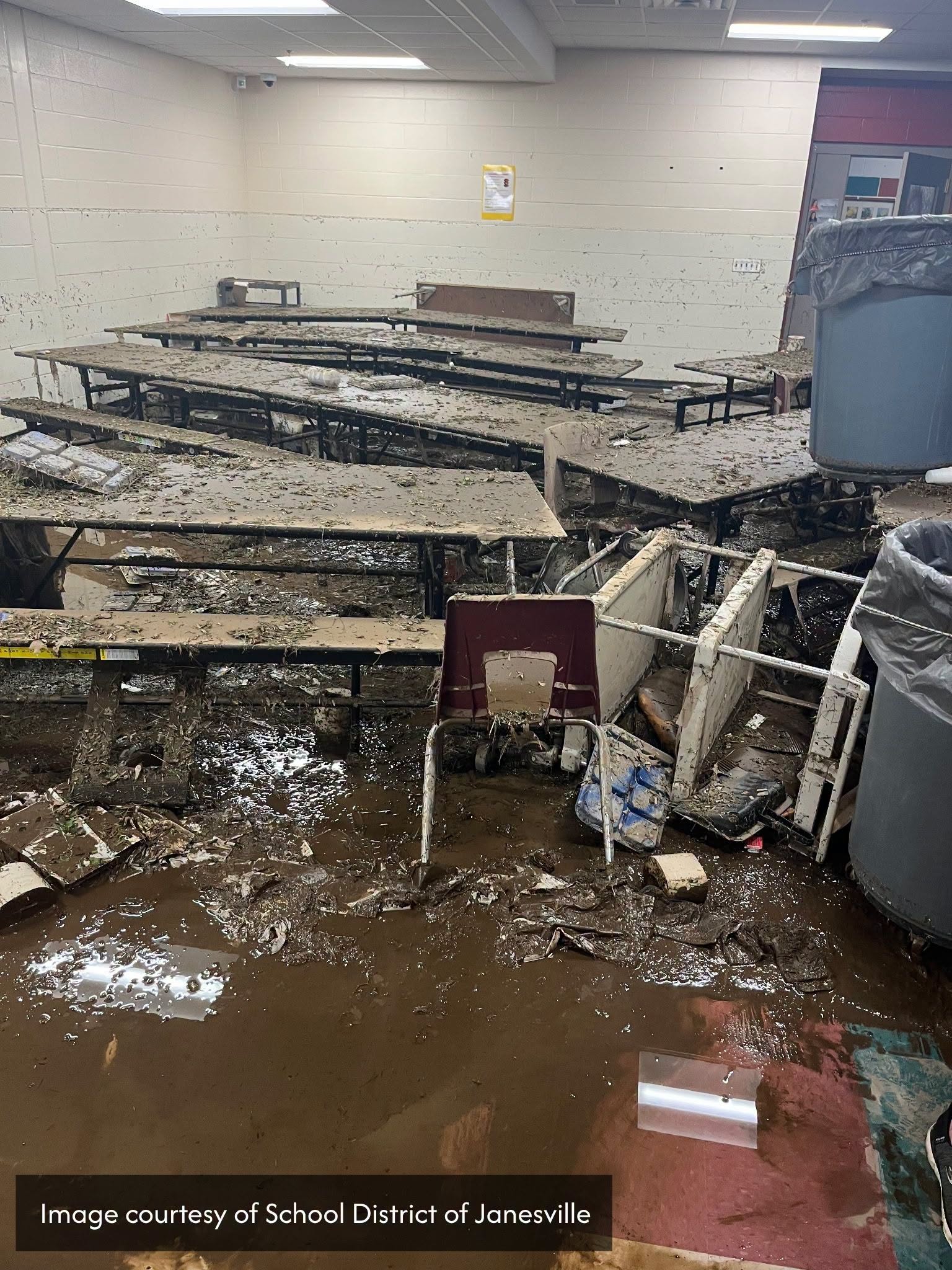
A Monday Facebook post from the School District of Janeseville shows the remnants of a flooded room in the Washington Elementary School, which the district says will remain closed “for the foreseeable future.” Image courtesy of the School District of Janesville.
The post also showed muddy floors and equipment knocked over by the water in the school’s cafeteria and utility room. The post said the school will “remain closed for the foreseeable future due to water damage.”
Cameron Miller, a meteorologist at the National Weather Service in Sullivan, told WPR that last week’s rainfall totals between Janesville and Milwaukee and around Green Bay were between 500 percent and 750 percent higher than during the same period over the past 30 years.
Miller said what’s interesting about last week’s spate of storms was the lack of any strong cold fronts to sweep out the warm, moist air that lingered over the state until the weekend.
“So we had multiple days where this air mass would basically recharge over the upper Mississippi valley,” said Miller. “We have storms one day, it would clear at night, and then the low pressure would just sit there, and it would bring up more warm, moist air for the next day.”
From one emergency to the next
In Waupaca County, the trouble for County Emergency Management Director Zac Van Asten started a week ago with a 9 p.m. call on April 13. He told WPR the first report was substantial flooding at the Clintonville dam, where those operating it were worried it might fail. Another call came at 1 a.m. about a potential dam failure north of the county in Marion. The dam there had lost power, leaving tenders to open floodgates the old fashioned way.
“They were doing it by hand and hand cranking that,” said Van Asten. “And that takes substantial manpower to try and do that, but those efforts paid off tremendously, and the water did get to nine inches to overtaking it. So that’s how close we were.”
Van Asten then got a call from the city of Manawa, which reported its water treatment plant was flooding.
“We were able to build several feet high embankments all the way around that, and I’m happy to say that that infrastructure was protected, saved and in great operational order,” said Van Asten.
Lastly, he said, he was alerted that a state of emergency had been declared in New London and natural gas had been cut off to parts of the city that were underwater. He said while the floodwaters are starting to recede, residents need to know roads might be undermined, manhole covers have been popped open by floodwaters and emergency responders have to clear areas one-by-one until the gas can be turned back on.
“The message we want to get out there is the homes that have been impacted by flooding, that had water encroach and come inside the home, those will need to be inspected by a certified HVAC (heating, ventilation and air conditioning) technician to ensure that those appliances, those furnaces, are safe for We Energies to reenergize them with natural gas, before it can be turned on,” said Van Asten.
April rainfall ‘off the charts’
State climatologist Steve Vavrus told WPR April has been “extremely wet” overall across Wisconsin, with every part of the state running a surplus of precipitation. He said Milwaukee alone reported 9 inches of rain in April.
“That’s more than double the normal,” said Vavrus. “It broke the previous April record by more than an inch. I mean, it’s just … it shattered it. It’s just incredible. We’re off the charts right now in terms of rainfall for April.”
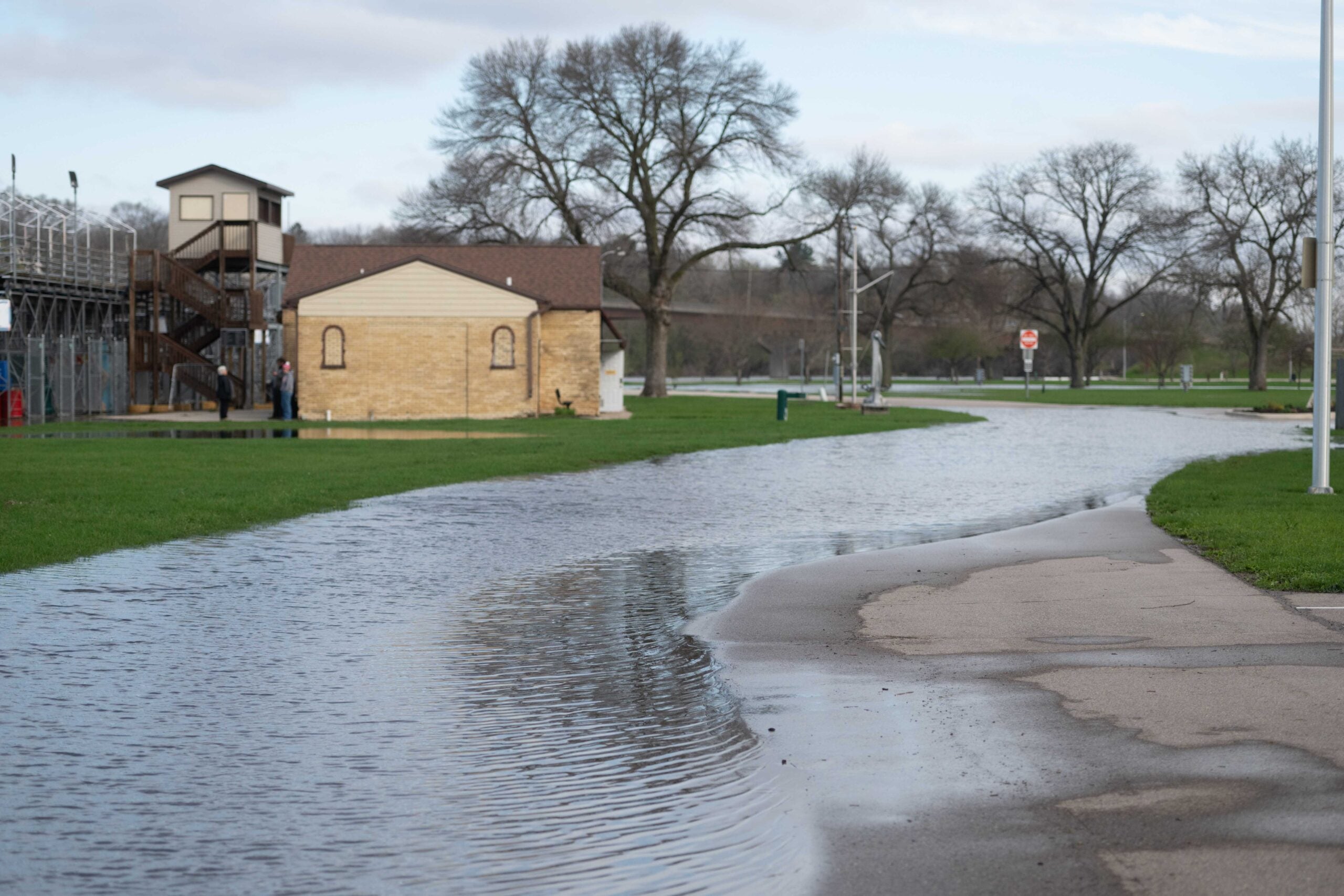
Roads and pathways are flooded at Traxler Park near the Rock River on Saturday, April 18, 2026, in Janesville, Wis. Angela Major/WPR
Vavrus also noted it’s been five years since Wisconsin had its last EF3 tornado. He said the irony is that April 13-17 was Wisconsin’s Severe Weather Awareness week, which prefaces the actual start of the state’s severe weather season.
“As the climate warms, we’re seeing more opportunities for severe weather to happen out of season, instead of just happening during our May through August window,” said Vavrus. “So we’re really seeing a widening of this severe weather season in Wisconsin.”
Wisconsin cleaning up after week of storms, 14 tornadoes and extensive flooding was originally published by Wisconsin Public Radio.
If you think stories like this are important, become a member of Urban Milwaukee and help support real, independent journalism. Plus you get some cool added benefits.