

WI Democrats Float $1.3 Billion Plan for Schools Amid Tax Cut Talks
Proposal hikes funding for special education and general school aid.
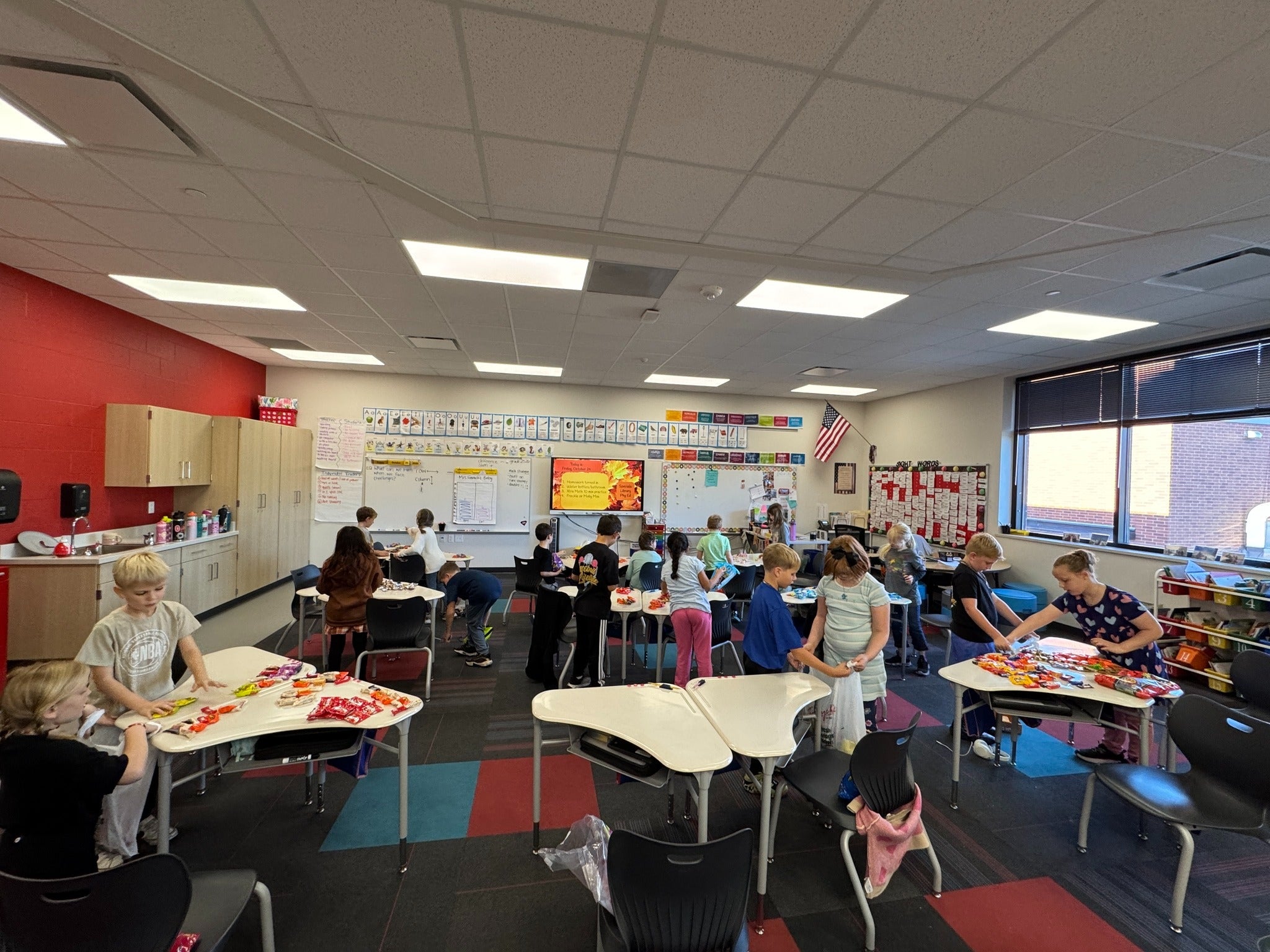
Photo courtesy of Sevastopol School District Facebook page
As Wisconsin’s Republican leaders and Gov. Tony Evers continue working to hammer out a deal to provide both tax relief and money for schools, the state’s legislative Democrats have come up with their own plan.
A new proposal would spend $1.3 billion of the state’s $2.5 billion surplus on education.
The money would be spent three ways:
- This school year, special education would be funded at 60 percent of mandated costs. This would cost the state $432 million.
- In the 2026-27 school year, that 60-percent funding for special education funding would continue, costing $421 million.
- The proposal also includes a $445 million increase in general school aid for the 2026-27 school year.
“If we’re funding our schools in meaningful ways, the result of that will be to provide property tax relief,” said bill co-author state Rep. Angelina Cruz, D-Racine.
That’s because school costs not covered by the state are funded through local property taxes. Wisconsin’s K–12 public schools have gone without cost-of-living adjustments from the state since 2009. At the same time, a promised increase in funding for students with disabilities was less than expected this school year.
The state Assembly adjourned last month without agreeing to a deal to use some of the state’s surplus to provide some relief to property taxpayers and schools.
At the time, Assembly Speaker Robin Vos, R-Rochester, said the Assembly could convene a special session to address this if Republicans and Evers can come to an agreement.
Cruz said her caucus is not at the negotiating table, but this proposal has been sent to Evers’ office for his consideration.
“From our perspective, it’s a reliable funding approach,” Cruz said. “We’ve heard time and time again that school districts are looking for stability to plan their budgets. So by increasing both general aid and special education, as we propose, it creates a reliable funding structure for schools and for taxpayers.”
Cruz said funding special education at 60 percent would immediately help school districts. For the Racine Unified School District, it would mean about $13 million more a year, Cruz said.
But this proposal is unlikely to happen.
At a luncheon on Tuesday, Vos said the plan was “not serious.”
“We’re negotiating with the governor,” Vos told reporters after the event in Madison. “As I look at the Assembly Democrats’ plan, it’s really just more spending without any accountability.”
Evers’ office did not respond to requests for comment.
In Wisconsin, public schools are primarily funded through property taxes and state money in the form of general school aid.
Jason Stein, president of the Wisconsin Policy Forum, said while this proposal would reduce the growth in K-12 property taxes compared to current law, there is some uncertainty about how much this would reduce districts’ need to go to referenda to increase local taxes.
Next month, more than 70 school districts will have referendum questions on the ballot, including 60 operational referendum requests — that is, funding routine district operations as opposed to new facilities or programming.
The most recent Marquette University Law School Poll found Wisconsin voters are more concerned with reducing their property taxes than increasing funding for public schools.
Voters also say they’re less inclined to support a school referendum.
Editor’s note: WPR Reporter Anya van Wagtendonk contributed to this report.
Wisconsin Democrats float $1.3B school funding proposal amid tax cut negotiations was originally published by Wisconsin Public Radio.
If you think stories like this are important, become a member of Urban Milwaukee and help support real, independent journalism. Plus you get some cool added benefits.


















How does any of this make sense to the average property owner/taxpayer in Wisconsin?
– Communities are bombarded by referendums that increase spending for school systems where enrollment is down and
teacher numbers have increased
– Property values are reassessed, making property taxes increase dramatically, sometimes to the point of forcing people
out of their homes
– The state of Wisconsin proposes handing $1.3 billion MORE to school districts, even after many school districts “won”
more cash from the aforementioned referendums
Wisconsin taxpayers are getting fleeced by the school districts in which they reside. Residents are told that the sky is falling and that the poor kids are going to suffer the consequences of every property tax owner not ponying up hundreds of dollars per year more for school upkeep, school buildings being replaced, teacher’s salaries, and God knows what else, when what should be happening is a targeted and realistic study to reduce costs by consolidating some schools, closing others, and commensurately reducing teacher staffing based upon lower student enrollment.
Timing on these issues is the key. The state legislature is at fault for not fully funding school districts, resulting in the referendums these communities feel they need to fill the financial void.
This is sheer insanity.
Interesting proposal for funding public education in Illinois (from last month CBS News article)
“Gov. JB Pritzker is proposing a statewide fee on social media companies in an effort to raise $200 million a year for education, as the state grapples with a $2 billion budget shortfall.
The proposal would require social media platforms to pay a monthly fee based on the number of active users in Illinois, with larger companies paying higher fees.
“Social media algorithms have been proven to create mental health issues in adolescents and foster polarization and misinformation in society as a whole. Those companies are profiting from online engagement of Illinois consumers, and they currently contribute nothing to ameliorate the negative effects of their platforms,” Pritzker said in prepared remarks for his annual State of the State address in Springfield on Wednesday.
The fee would be similar to a new social media tax that the Chicago City Council approved as part of the city’s 2026 budget. Starting Jan. 1, the city began taxing social media companies 50 cents per month per active user over 100,000 in Chicago.
The revenue from Chicago’s social media tax will be dedicated to funding mental health clinics and the city’s mental health crisis response program.
Tech companies (NetChoice) are suing to stop the tax and have it ruled unconstitutional. “The tax violates free speech rights, unfairly discriminates against digital publications, violates federal law and harms Chicago residents and their businesses. NetChoice is suing to ensure protected online content is able to flourish without unlawful burdens”.