Rep Makes ‘Piano Lesson’ Sing
August Wilson's rhythmic dialogue and juicy characters brought to life in strong staging.
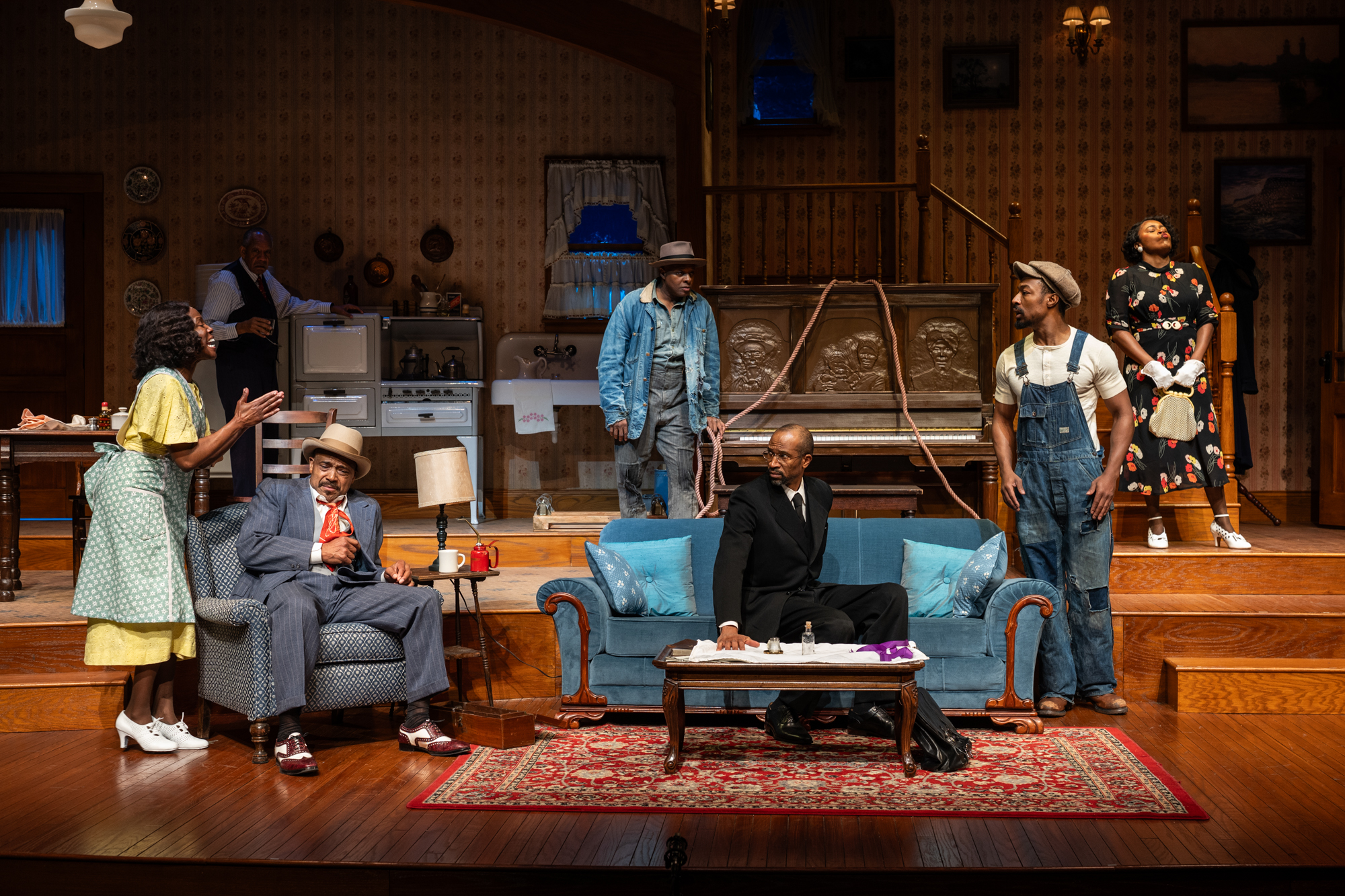
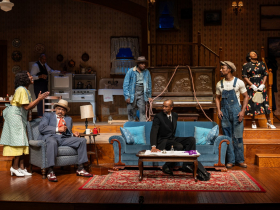
Milwaukee Repertory Theater presents August Wilson’s The Piano Lesson, February 24 – March 22, 2026. Pictured L to R: Nubia Monks, Lester Purry, James T. Alfred, Anthony Irons, La’Tevin Alexander, Ny’ajai Ellison. Photo by Michael Brosilow.
August Wilson’s The Piano Lesson remains one of his most fascinating and most difficult plays, laced with dialogue interplays that also read like soliloquies (some of the best in American drama), turning the Black experience with slavery and folklore rituals into living room battles and wisecracks.
Perhaps time is helping the late Wilson look prescient for the 21st century. In today’s films and theater, there is much more freedom and acceptance for Black artists mixing genres, examining how naturalism and the mystical can live side by side, how humor flirts with tragedy. Even illogical, primitive conceptions of the mind have a historical power in this world.
The Piano Lesson was written in 1987 and set in the 1930s, but it is not just dealing with Depression-era realities. It is marrying naturalism with ghostly invasions from the spiritual world. The deliberate playing around with reality is something patrons expect more from contemporary artists than from someone who already has classical stature in drama books. Yet his characters resurrect slave-era foot-stamping to make a point – and after an extended demonstration of their slavery past, they look somber, realizing how the past infects the present.
The gifts of Wilson’s plays – particularly his Pittsburgh Cycle of plays – require a cast that can get inside the vernacular, display a range of voices that bounce off each other like an opera sextet, and pick up a sense of immediacy even when the script suggests they haven’t seen each other for years.
In truth, Wilson’s plays often defy the tight dramatic construction associated with commercial plays. But in the right hands they sing.
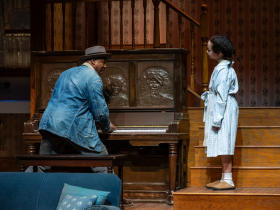
Relying on a cast of Wilson veterans led by director Lou Bellamy, founder of the most experienced company in the world (the Penumbra Theatre of Minnesota) with Wilson’s plays, the Milwaukee Rep also makes the parlor piano another character in the play. From the opening moment, it warns us of its central presence.
It is not only front and center in designer Vicki Smith’s utilitarian home environment, but we can almost feel its intricate wood carvings that capture the slave family history and unearthly legends.
The carvings on the piano also make it a valuable heirloom — valuable as in money to tempt Boy Willie, the visiting brother with a truckload of watermelons to sell and his eye on a piece of property. A subplot is whether Boy Willie killed the slave-owner Sutter, whose ghost haunts the house.
This money vs. tradition issue exposes a historic dilemma that many Black playwrights have dealt with. The piano represents hard money in land to buy for Boy Willie – whose mouth and dreams never stop flapping. But it represents family history and something ethereal to his sister, Berneice.
Ethereal? At times when the piano is threatened by the extreme difference in views, the home shakes, the lights flicker, thunder roars and glimpses of a ghost whisk by – all thanks to special effects that deliberately break the atmosphere of homespun quarrels and confrontations.
Wilson is challenging us to accept the spiritual feelings of the slave-era past going to war with the pragmatism of making money. This has long been a topic for breakthrough Black plays — Lorraine Hansberry’s Raisin in the Sun of 1959 being the most famous example of the conflict. It is also another case of a strong earth mother fighting off the financial desires of an impulsive man (a comparison that I think Wilson wants us to make).
Wilson is going deeper into the spiritual role of Black culture – how slave chants, country preachers, myths about faith and vulgar putdowns all blend together in tight cadences and a desire to make the conversations sound spontaneous.
The cast’s sense of those language rhythms is strong, though sometimes a bit too automatic. I worry about the play being over-rehearsed (this is co-produced for a run in April at the Cincinnati Playhouse in the Park) because Wilson’s plays work best for me when the rhythms sound immediate rather than practiced and the riffs just seem to erupt.
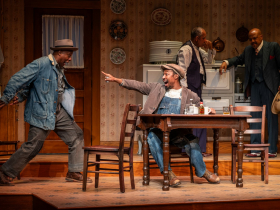
The first half contains some of the most expressive character exchanges – and some of the Wilson speeches and character explanation I most appreciate. But the payoff for the audience may be in the second half, a series of vignettes where the humor bubbles and the play gets more down and dirty with the character motives.
As Doaker Charles, the senior member of the family whose house this is, James Craven brings a sly humor and delightful elder energy. Boy Willie is the most outrageous and mouthy part, where I think a fine actor, James T. Alfred, was pushing too hard. Sneaky good, however, is La’Tevin Alexander, as Lyman, the sidekick who quietly explodes into new dimensions.
Anthony Irons, as the homegrown preacher, arrests us with his skill with Wilson’s language. Ny’ajai Ellison turns a fleeting turn as Grace into a giddy highlight. Another fine performance is Lester Purry as flashy dresser and gambler Winning Boy.
In the central role as Berneice, Nubia Monks has the right look, the right sass and all the right moves, but relied more on a demonstration of skill than spontaneity.
There is smart fashion sense from designer Matthew J. LeFebvre in a play where costumes do speak to us. The sound and light designers, Scott W. Edwards and Don Darnutzer, combine on the sudden uproars of the ghostly elements, moments meant to create something frighteningly magical about everyday disturbances.
One of Wilson’s trademarks is giving room for the characters to develop and grow on us through unhurried interaction. So this is not a quick evening of theater. The Piano Lesson runs 3 hours and 20 minutes with one intermission. There are matinees and 7:30 p.m. shows through March 22 at the new Checota Powerhouse Theater. Tickets and more information: https://milwaukeerep.com/shows/show/august-wilsons-the-piano-lesson/
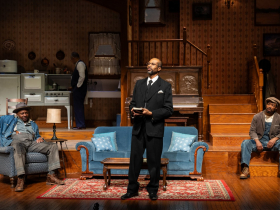
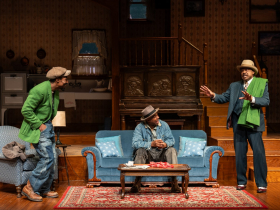
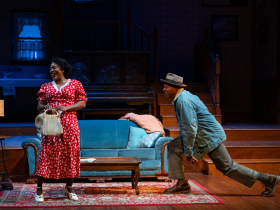
The Piano Lesson Gallery
Dominique Paul Noth served for decades as film and drama critic, later senior editor for features at the Milwaukee Journal. You’ll find his blog here and here. For his Dom’s Snippets, an unusual family history and memoir, go to domnoth.substack.com.
If you think stories like this are important, become a member of Urban Milwaukee and help support real, independent journalism. Plus you get some cool added benefits.


Review
-
Honeypie Cafe Boasts Good Home Cooking
 Mar 14th, 2026 by Cari Taylor-Carlson
-
‘Ain’t Misbehavin’ Is High Quality Fun
 Mar 9th, 2026 by Dominique Paul Noth
-
Sobelman’s Offers Classic Burgers
 Mar 7th, 2026 by Cari Taylor-Carlson
Theater
-
‘Ain’t Misbehavin’ Is High Quality Fun
Mar 9th, 2026 by Dominique Paul Noth
-
Rep Hosts National Gathering of Theater Leaders, Critics
 Mar 3rd, 2026 by Dominique Paul Noth
-
‘The Spitfire Grill’ Offers Good Home Cooking
 Mar 2nd, 2026 by Dominique Paul Noth