

Milwaukee Continues Preparing for Possible ICE Surge
1,800 letter writers urge Common Council to sign ICE OUT proposals.
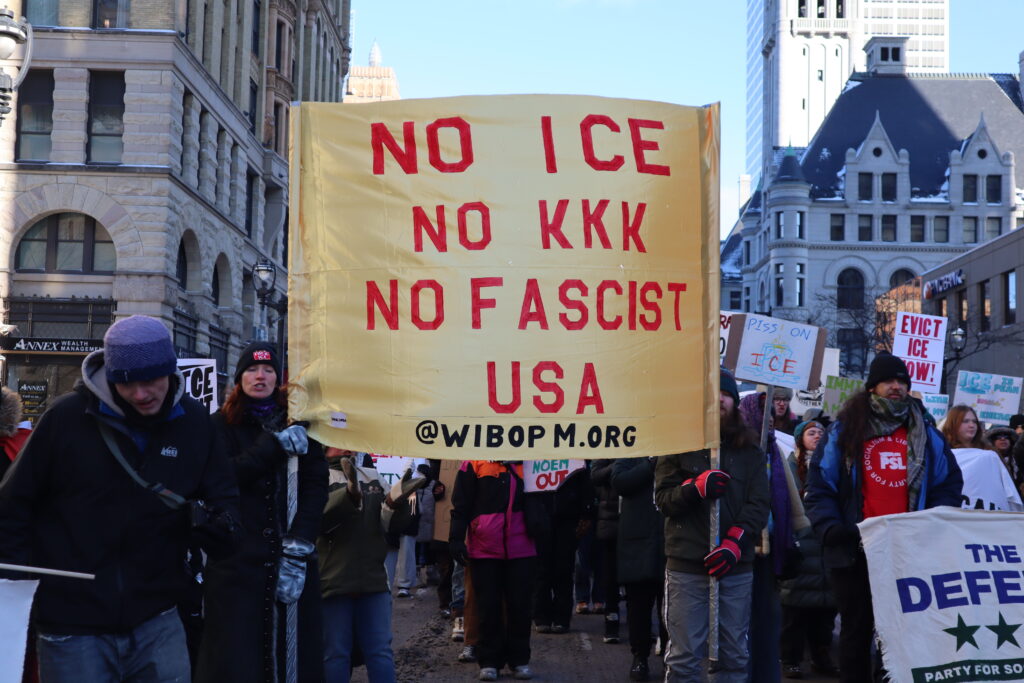
Protesters gather in downtown Milwaukee in January 2026 to voice opposition to the actions of federal immigration agents. (Photo by Isiah Holmes/Wisconsin Examiner)
Milwaukee Ald. Alex Brower was aware of fears in his community about immigration enforcement. Like many Wisconsinites, Brower had watched as Operation: Metro Surge in Minnesota led to thousands of arrests, community resistance, and the killings of Renee Good, and Alex Pretti by federal agents and the nonfatal shooting of Julio Sosa Colis. Hundreds of residents packed a town hall Brower held in early February. “People are ready to be engaged,” Brower told the Wisconsin Examiner. “People are just sick of what’s going on.”
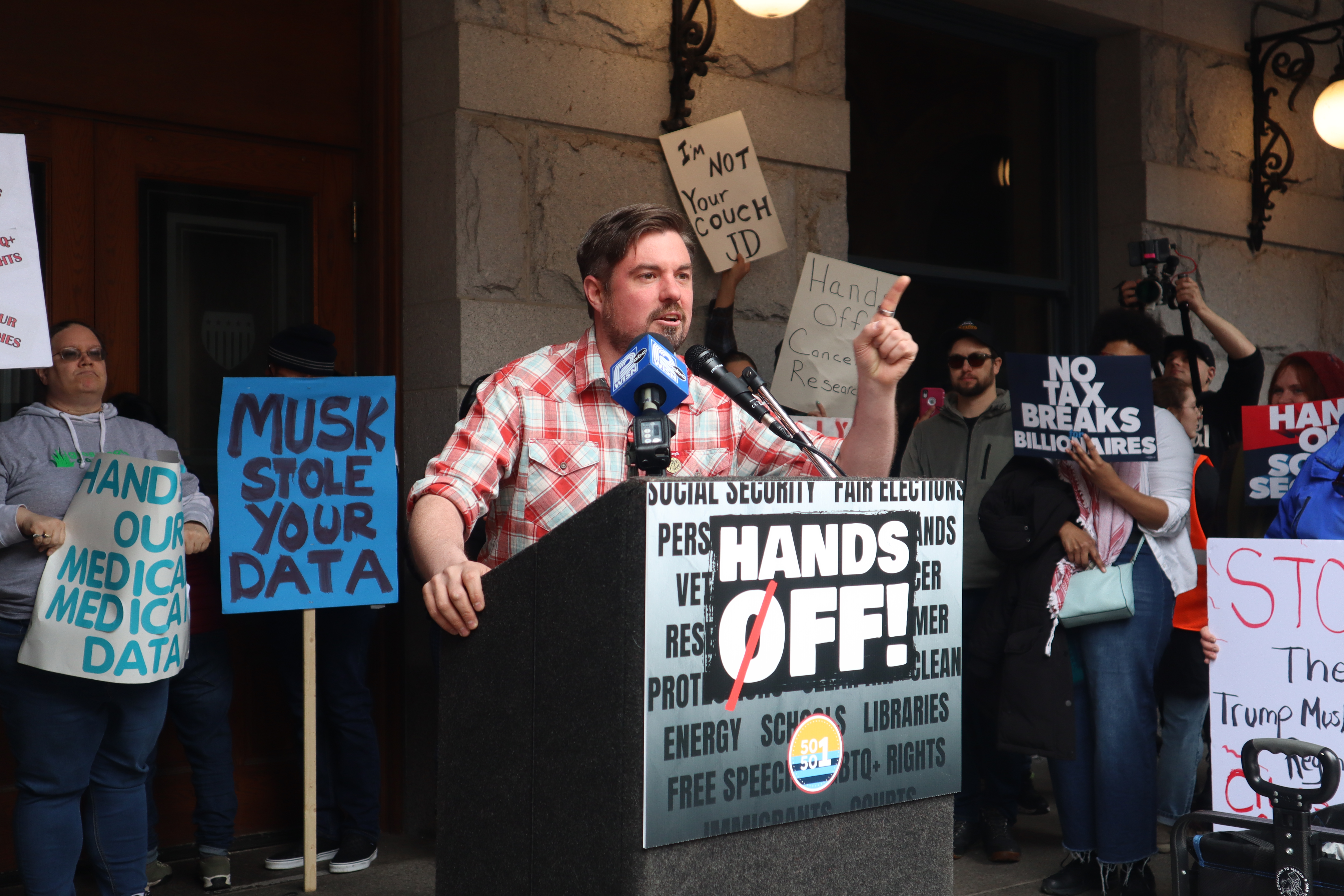
Alex Brower, a recently elected alderman in Milwaukee, speaks during a protest outside of the Federal Courthouse in Milwaukee. (Photo by Isiah Holmes/Wisconsin Examiner)
On Wednesday, elected officials will host a bilingual ICE awareness community discussion on Milwaukee’s South Side. Earlier this month, Brower and other Milwaukee alders announced a package of local ordinances that aim to prepare Milwaukee for a surge in Immigration and Customs Enforcement (ICE) operations.
The package would require all ICE agents to be unmasked when interacting with the public in Milwaukee, and prohibit agents from staging raids on county property such as libraries and parks. Ald. JoCasta Zamarripa said that the local push is “an effort to deescalate fear, tensions and confusion,” WUWM reported. Ald. Marina Dimitrijevic said at the alders’ Feb. 11 news conference, “I stand here today to talk about something we can say yes to…You heard a lot of what we’re willing to say no to. We’re going to set the standards high in the city of Milwaukee, the largest city in the state of Wisconsin, that is built on our diversity. It is our strength.”Common Council President Ald. Jose Perez joined Zamarripa, Brower, Dimitrijevic, and community members in announcing the package. The proposals will need to be approved by the council, and then head to Mayor Cavalier Johnson’s desk. The Milwaukee Democratic Socialists of America have also been circulating a letter writing campaign to compel the common council to sign the ICE Out package. Over 1,800 letters have been sent so far, with the group’s goal being a total of 3,200 letters.
People in Milwaukee want to see their local government try to do something to protect against abuses by the federal government, even city ordinances could be struck down in court, Brower said. When he asked residents who attended his town hall if they would want local officials to at least try to do something, he told the Examiner, the crowd unanimously yelled “yes!”
“So many people are ready, themselves individually, to take action,” he said, ”either by supporting a mutual aid effort, getting trained to be an ICE verifier, or participating in any sort of picketing or protesting that happens at the site of an ICE abduction. So that’s No. 1 – I heard that almost universally. And then the second thing that I heard was that people want the City of Milwaukee to do everything it can to fight ICE.”
A question for local law enforcement
As a matter of policy, the Milwaukee Police Department (MPD) does not engage in immigration enforcement. MPD’s policy states that “proactive immigration enforcement by local police can be detrimental to our mission and policing philosophy when doing so deters some individuals from participating in their civic obligation to assist the police.”
The Milwaukee County Sheriff’s Office — which oversees the county jail — does not hold people in custody for ICE. Prior to the arrest and conviction of former Circuit Court Judge Hannah Dugan, local judges had been debating the creation of a draft policy after several immigration arrests by plain-clothes federal agents at the county courthouse.
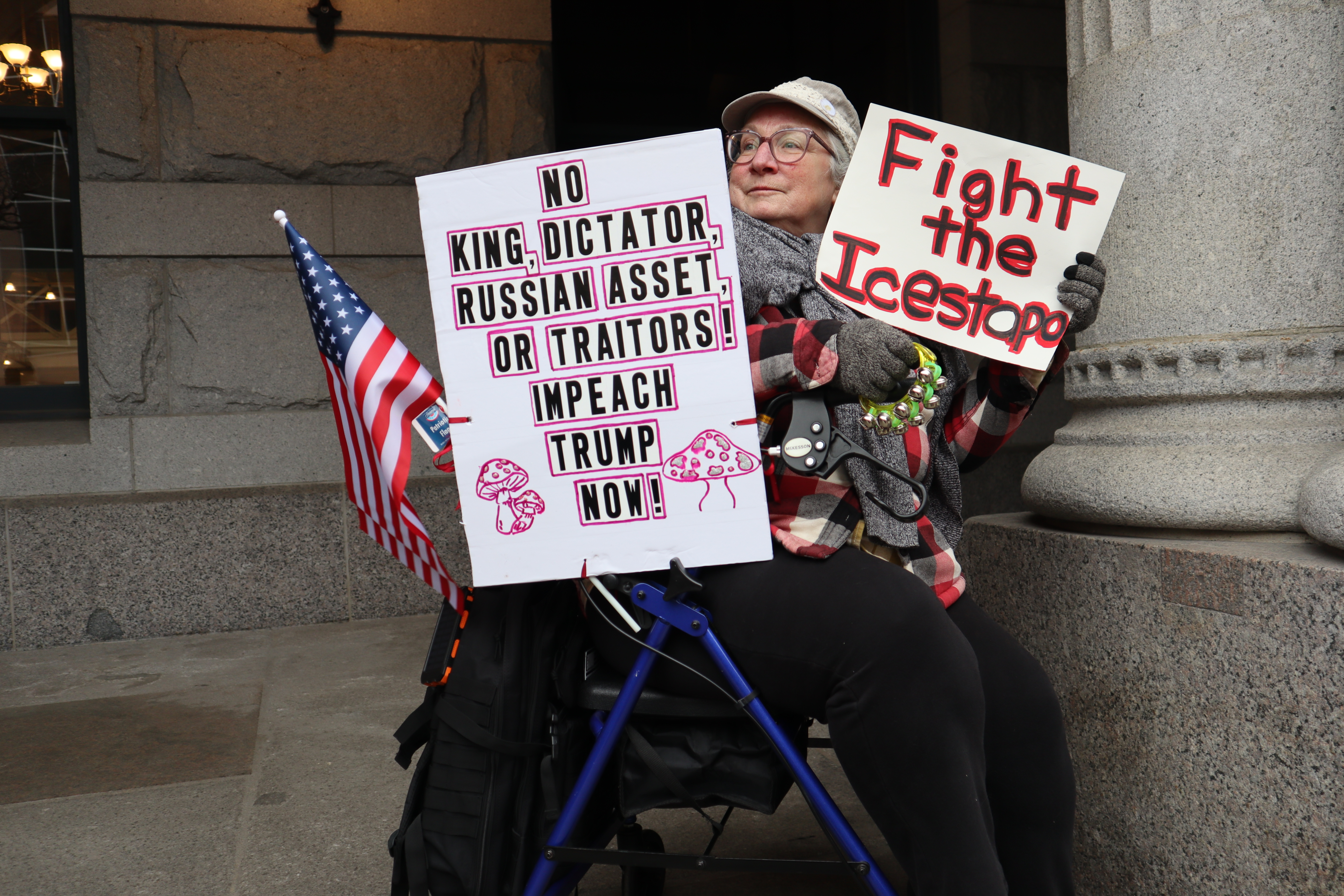
Protesters gather outside the Federal Building in Milwaukee to denounce the arrest of Circuit Court Judge Hannah Dugan. (Photo by Isiah Holmes/Wisconsin Examiner)
Limiting cooperation with ICE is a philosophy shared by some police departments across the country, but not all. Under the second administration of President Donald Trump, more sheriffs and police departments have joined the federal 287(g) program, which deputizes local law enforcement to conduct immigration enforcement. The counties of Waukesha and Washington, which border Milwaukee County to the west and north, both have 287(g) agreements.
For counties that do not want to collaborate with ICE, it’s not clear what can be done to avoid the warrantless searches, mass arrests, and use of force Chicago and Minneapolis have experienced. When asked how police would respond to a Minneapolis or Chicago-style immigration surge, the Milwaukee Police Department said it would rely on its existing policies. Beyond that, however, the department said “we do not have an operation like Chicago therefore cannot provide information about a policy of something that we do not have in our city.”Brower said that answers provided by MPD officials who attended his town hall did not satisfy community members. “I chimed in as well, sharing with the police department, and with those present, that I believe that MPD should commit to the very least investigating, if not arresting, individuals who break the law,” even if they’re federal agents.
Back in 2020, when masked and militarized federal agents cracked down on Black Lives Matter protesters in Portland and other cities, then-Milwaukee County District Attorney John Chisholm responded to videos showing people being beaten, sprayed, gassed and arrested by agents who also loaded detainees into unmarked vehicles, saying, “Kidnapping, false imprisonment, unlawful assault, those are crimes.”
“Those are crimes no matter who commits them,” Chisholm said in 2020, “whether you’re a federal agent or a citizen. You can’t do that, not in the United States, and it won’t be tolerated here.”
Would a shooting investigation be independent in Wisconsin?
After federal agents killed Good and Pretti within three weeks of each other, local and state officials in Minnesota called for independent investigations. Yet the federal government refused, and even blocked Minnesota state law enforcement investigators from accessing the scenes of the two killings. That lack of cooperation from the federal government continues today, as the FBI refuses to provide access to evidence from the Pretti shooting to Minnesota’s state Bureau of Criminal Apprehension (BCA).
In a statement reported by the Minnesota Reformer, the state agency’s superintendent Drew Evans said that “while this lack of cooperation is concerning and unprecedented, the BCA is committed to thorough, independent and transparent investigations of these incidents, even if hampered by a lack of access to key information and evidence.” Recently, ICE was also admitted that two of its agents are currently being investigated after giving false statements under oath about the non-fatal shooting of Sosa-Celis. Sosa-Celis originally faced felony charges for assaulting an officer, but those charges have now been dropped.
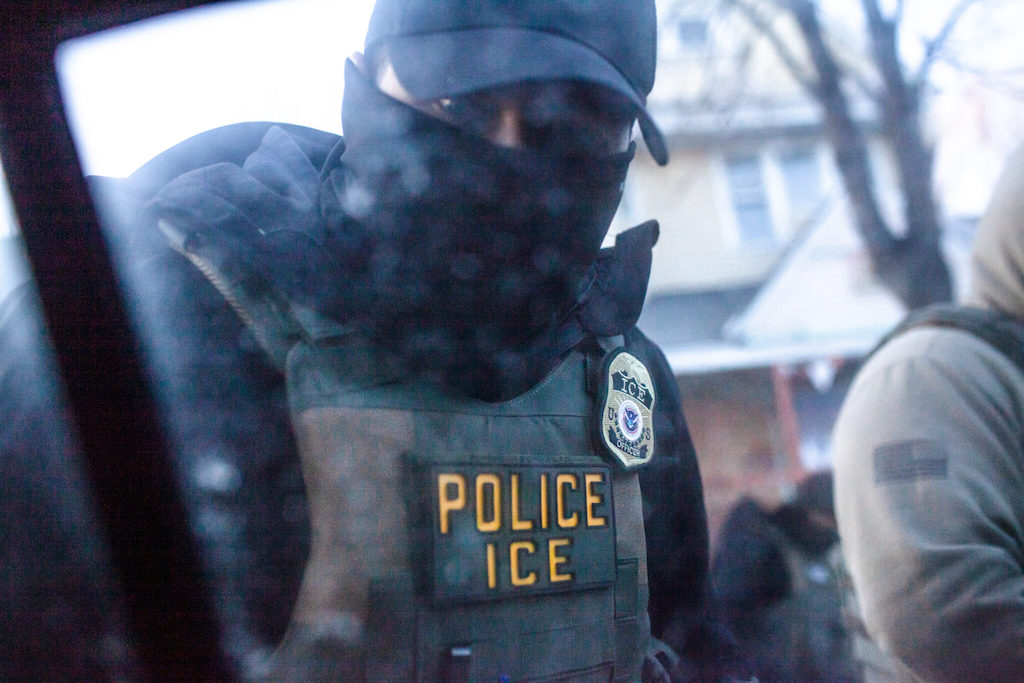
A masked U.S. Immigration and Customs Enforcement agent knocks on a car window in Minnesota on Jan. 12, 2026. (Photo by Nicole Neri/Minnesota Reformer)
Wisconsin state law prevents police from leading investigations into fatal shootings of civilians by members of their own agencies. Passed a decade after the Kenosha Police Department quickly cleared a killing by one of its officers, the Michael Bell law has required that such investigations be led by an agency uninvolved in the death. Local prosecutors then decide whether officers will be charged or cleared.
Which agency leads the investigation depends on where you are. While the state Department of Justice (DOJ) leads many officer-involved shooting investigations across Wisconsin, sometimes local police departments and sheriffs need to step in. Since 2015, a component of the Wisconsin DOJ known as the Division of Criminal Investigation has investigated 136 killings of civilians by police from Racine to Blue Mounds, New Berlin to Pine River.In Milwaukee, however, those sorts of investigations are led by a group of nearly two dozen law enforcement agencies from Milwaukee County, Waukesha and Brookfield, known as the Milwaukee Area Investigative Team (MAIT). The team, which has existed for over a decade, rotates responsibility for investigating officer-involved deaths between its various member agencies. MAIT’s practices, however, have been criticized for being too lenient to officers who kill civilians.
The Examiner asked both MAIT and the Wisconsin DOJ how an investigation into a shooting by a federal agent would be handled, especially considering that DHS had prevented local agencies from accessing evidence. A DOJ spokesperson said in an emailed statement that “investigations of officer-involved critical incidents should be conducted fully, transparently, and impartially by an independent agency.” The statement added that the state DOJ’s Department of Criminal Investigation “regularly serves in this independent investigatory role and is prepared to investigate if necessary.”
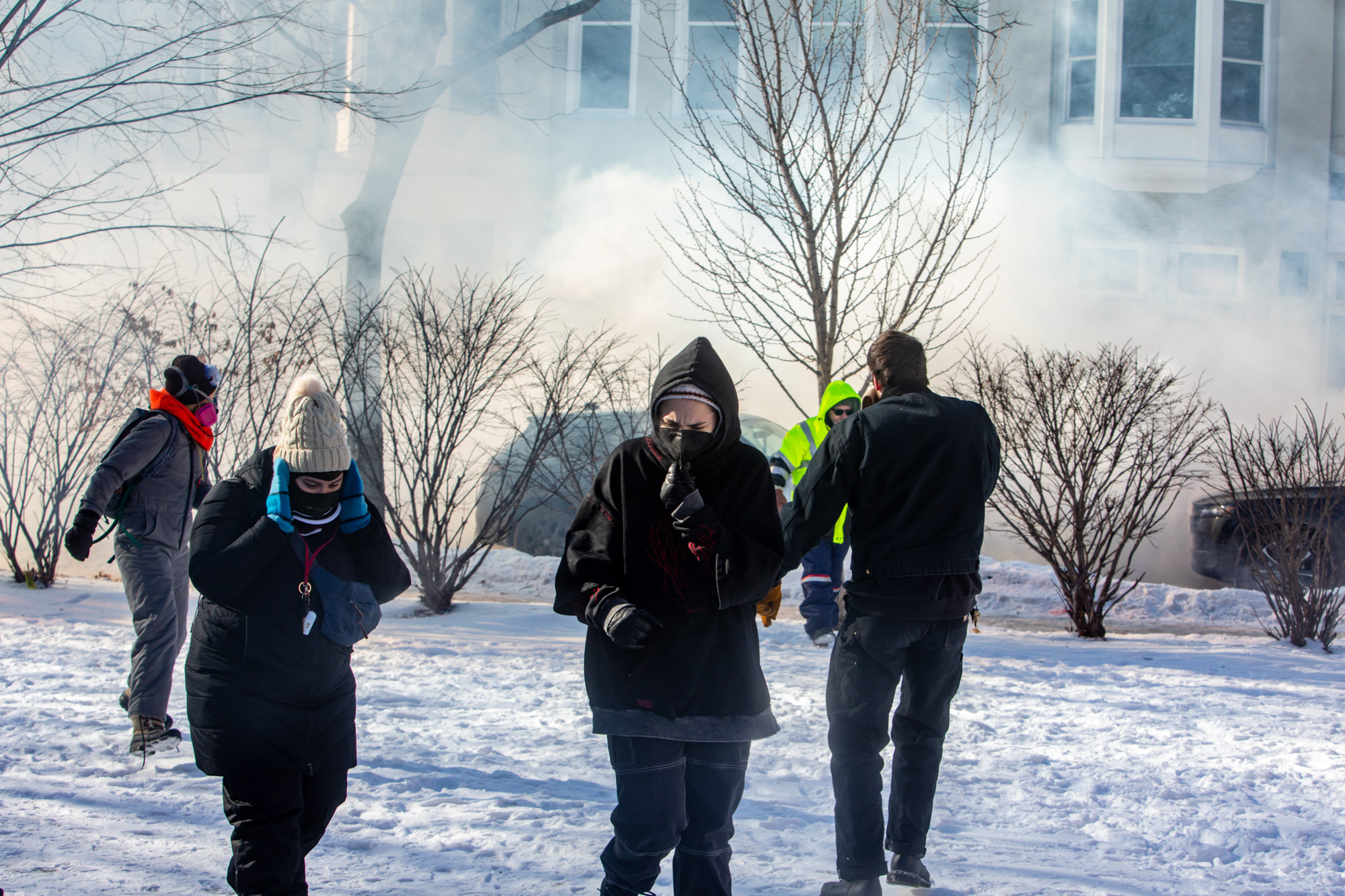
People react to tear gas and flash grenades deployed by federal agents near the scene in Minneapolis where federal agents shot and killed Alex Pretti (Photo by Nicole Neri/Minnesota Reformer)
But MAIT will only investigate incidents involving its own members, the team’s appointed commander, Wauwatosa Police Department Lt. Joseph Roy, wrote in an emailed statement to the Examiner. “MAIT is not a department, entity, or unit,” Roy said. Instead, he described MAIT as “a cooperative effort” which has not partnered with any federal agency to date. “Per our bylaws, MAIT is restricted to investigating officer-involved shootings from agencies in the cooperative. While we share a close partnership with our local federal entities, MAIT would not investigate those incidents. That responsibility would lie with the jurisdiction in which the shooting occurred, in coordination with the involved agency.”
If federal immigration agents killed someone within the jurisdiction of a MAIT member agency, such as Milwaukee or Wauwatosa, then that local agency would need to rely on its own resources to investigate, and coordinate with the federal agency responsible for the shooting.Although shootings by federal agents are rare in Milwaukee, they’re not unheard of. In 2017, task force officers from the city police departments of West Allis and Milwaukee were working alongside Drug Enforcement Administration (DEA) agents to track down 32-year-old Jermaine Claybrooks as part of a drug investigation. WISN reported that Claybrooks sped away in his vehicle upon realizing that unmarked vehicles were attempting to block him in, crashing into a nearby tree. Officers said that Claybrooks appeared to be armed as they broke out his windows, and fired when they said he pointed a gun.
Although local media and prosecutors focused on the DEA’s involvement, a DHS agent’s firearm was also inspected by investigators. More recently, DEA agents have supported arrest teams for immigration operations, including the team former Judge Dugan confronted outside her courtroom last year.
The Claybrooks investigation was handled by an early version of MAIT called the Milwaukee County Suburban Investigations Team, with the Wauwatosa Police Department serving as the lead agency. Later that year, prosecutors decided against charging the officers who shot Claybrooks. Although this earlier iteration of MAIT did investigate a shooting involving federal agents, the team in its current form would not step in.
Brower said that at the very least, he’d expect MPD to “at least attempt” to conduct a serious investigation. During his town hall, Brower said that law enforcement officials expressed doubts that prosecutors would be able to secure a conviction against federal agents who kill local residents during immigration operations. “OK, that doesn’t mean that they shouldn’t try,” he said.
A community preparing itself
On Wednesday, local elected officials will host a bilingual ICE awareness community discussion at the Sister Joel Read Conference Center on the campus of Alverno College. Dubbed the “Safety in Numbers: Protecting Our Historically Immigrant South Side” meeting, the discussion will provide residents another opportunity to share their concerns about immigration enforcement, and prepare for a surge in Milwaukee.
“As an immigrant-rich community, the South Side deserves clear, accurate information and reassurance that our local institutions are focused on safety, dignity, and the rule of law,” said Ald. Peter Burgelis. “This meeting is about empowering residents with knowledge, connecting them to trusted resources, and making sure people know they are not alone.”
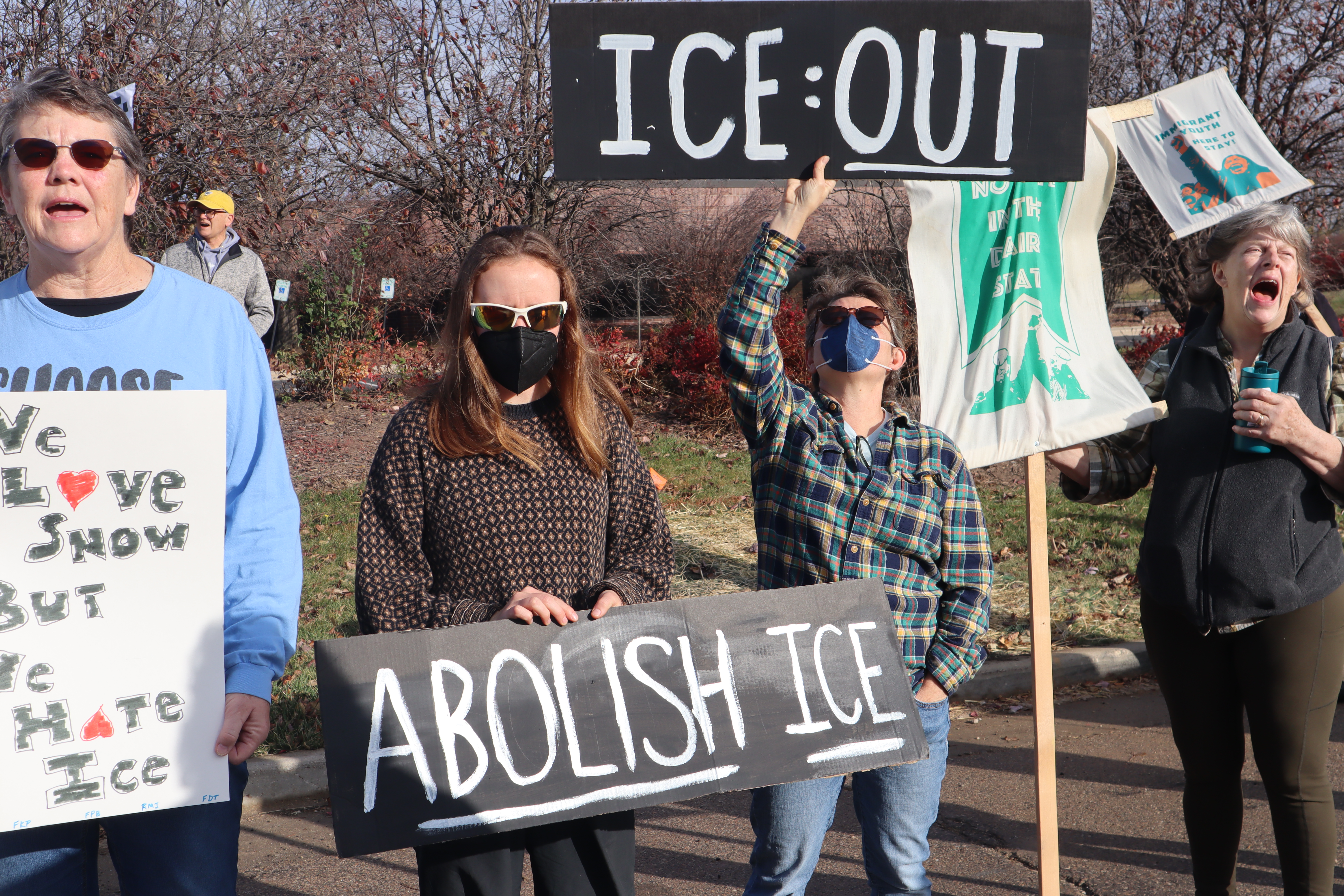
Protesters march outside of a new ICE facility being constructed in Milwaukee. (Photo by Isiah Holmes/Wisconsin Examiner)
County Supervisor Sky Capriolo said in a statement that “community safety starts with transparency and trust.” Capriolo said that “by bringing people together and sharing accurate information, we can reduce fear, combat misinformation, and strengthen our neighborhoods.” MPD Chief Jeffrey Norman, Milwaukee County Sheriff Danita Ball, and representatives from Voces de la Frontera and the Milwaukee Turners will also attend the Wednesday community meeting.
Tamping down on misinformation has been a growing concern in Milwaukee, with unverified rumors of ICE agents roaming the city having floated around since January. The city and county governments in Milwaukee have also created Know Your Rights resource webpages.
“Our South Side is strong because of its diversity and deep sense of community,” Zamparripa said in a statement ahead of the Wednesday meeting. “This conversation is about standing together, ensuring residents know their rights, and reinforcing that Milwaukee is a city that values all of its people.”
Milwaukee continues preparing for possible ICE surge was originally published by Wisconsin Examiner.
Political Contributions Tracker
Displaying political contributions between people mentioned in this story. Learn more.
- April 23, 2019 - JoCasta Zamarripa received $100 from Peter Burgelis




















I wrote my Alderman when the proposal was first introduced, he always replies quickly, but still no answer. I wonder how alderman Westmoreland stands on this issue.
Alderman Alex Brower’s proposal is a proactive measure. Remember, “An ounce of prevention is worth a pound of cure”.
I see no reason the why the Common Council would not support Brower’d common sense proposal.
That what democracy looks like.
ICE OCCUPATION in Minnesota became a warzone killing two (2) Citizens.
ICE swarmed Chicago with thousands of agents terrorizing the city.
NOTE: ICE ADMINISTRATION ALLOWS AGENTS TO ROUND UP & ARREST PEOPLE PEOPLE WITHOUT A JUDICIAL WARRANT.
An “Administrative Warrant” isn’t with The paper it’s written on!
That’s exactly what happened in the Milwaukee Courthouse when Judge Hannah Dugan did the right thing showing a man in her Court to exit by side door. He was arrested as he was leaving. The Federal Administration made Judge Dugan a scapegoat for preventing an unlawful arrest in her Court.