Downtown Parking Building’s Collapse Leads to Oversight Plan
Council proposal requires regular structural inspections of parking structures.
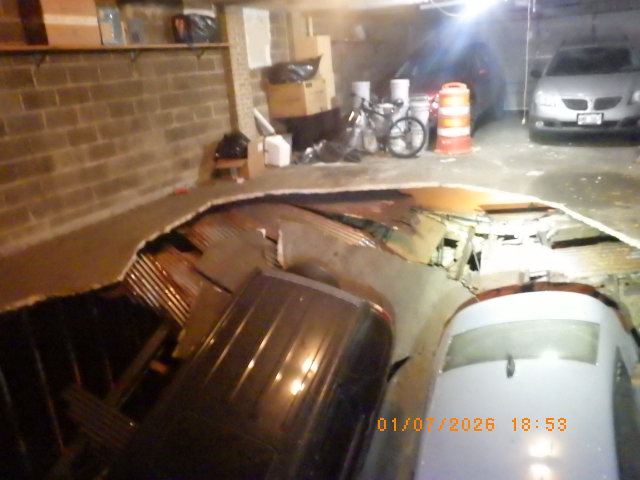
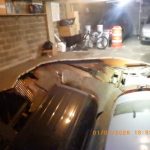
Parking structure collapse at 1041 E. Knapp St. Image from Department of Neighborhood Services.
The partial collapse of a parking structure within a downtown apartment building is likely to result in more mandatory inspections for all parking-structure owners.
A proposal pending before the Milwaukee Common Council would require third-party engineers to conduct regular structural inspections of parking structures.
The concrete floor failed at The Empire Building, 1041 E. Knapp St., on January 7, sending two vehicles into the basement.
“No injuries, no loss of life, but it did raise the issue of ‘do we do post-construction inspection of parking structures and parking decks?'” Ald. Robert Bauman told the Zoning, Neighborhoods & Development Committee Tuesday.
Bauman, inspired by a suggestion from Interstate Parking CEO Tony Janowiec, has worked with the Department of Neighborhood Services (DNS) and Legislative Reference Bureau to craft an inspection ordinance.
It largely mirrors the existing facade inspection requirement for buildings five or more stories in height. Since 2001, the city has required property owners to hire a licensed engineer or architect to inspect building facades and submit reports to DNS.
DNS is already inspecting parking structures, but not for structural issues.
“We perform periodic inspections, not specific to the structural evaluation of that building, but we do have three different inspectors that are going through that building annually,” said DNS Deputy Commissioner Michael Mazmanian on Feb. 3. He said the frontline inspectors identify issues for specialists to follow up on.
Currently, parking structures are required annually to receive life-safety inspections. Mazmanian said elevator and sprinkler inspections could also result in inspectors spotting potential structural issues.
Jumaane Cheatham, DNS commercial division manager, said the January collapse was related to cracks in the foundation repeatedly being penetrated by water, including saltwater during the winter. DNS evaluated the building about six months before the collapse.
“It’s just the nature of the climate we see in Wisconsin and it’s a concern for everybody,” said Cheatham.
The committee unanimously approved the proposed ordinance. The full council is slated to consider it next week.
According to the proposal, inspection reports would be required to be filed with DNS on a phased schedule based on a building’s age and exterior-wall construction, unless the commissioner orders otherwise.
The ordinance creates four categories: Category I buildings use noncorrodible metal in their exterior walls — materials that do not rust, such as certain stainless or specialty metals. Category II buildings rely on corrosion-resistant metal, which can withstand rusting but is not entirely immune. Category III buildings use corrodible metal, meaning materials more prone to rust over time. Category IV buildings have exterior walls primarily attached with adhesive bonds or masonry headers, rather than metal reinforcement.
For all categories, buildings constructed before 1920 must file their first report by Dec. 1, 2028; those built between 1920 and 1950 by Dec. 1, 2029; and those built in 1951 or later, once they are at least 15 years old, by Dec. 1, 2030. After that, Category I buildings must be inspected every 12 years, Category II and IV buildings every eight years, and Category III buildings — considered more vulnerable due to corrodible metal — every five years.
For multiple years, a proposal has been pending before the Wisconsin State Legislature to require all parking structures to be inspected every five years. But with the Assembly adjourning for the year, the proposal is virtually certain not to be passed until 2027 at the earliest.
Legislation Link - Urban Milwaukee members see direct links to legislation mentioned in this article. Join today
Existing members must be signed in to see the interactive map. Sign in.
If you think stories like this are important, become a member of Urban Milwaukee and help support real, independent journalism. Plus you get some cool added benefits.
Political Contributions Tracker
Displaying political contributions between people mentioned in this story. Learn more.
- May 7, 2015 - Robert Bauman received $386 from Tony Janowiec